

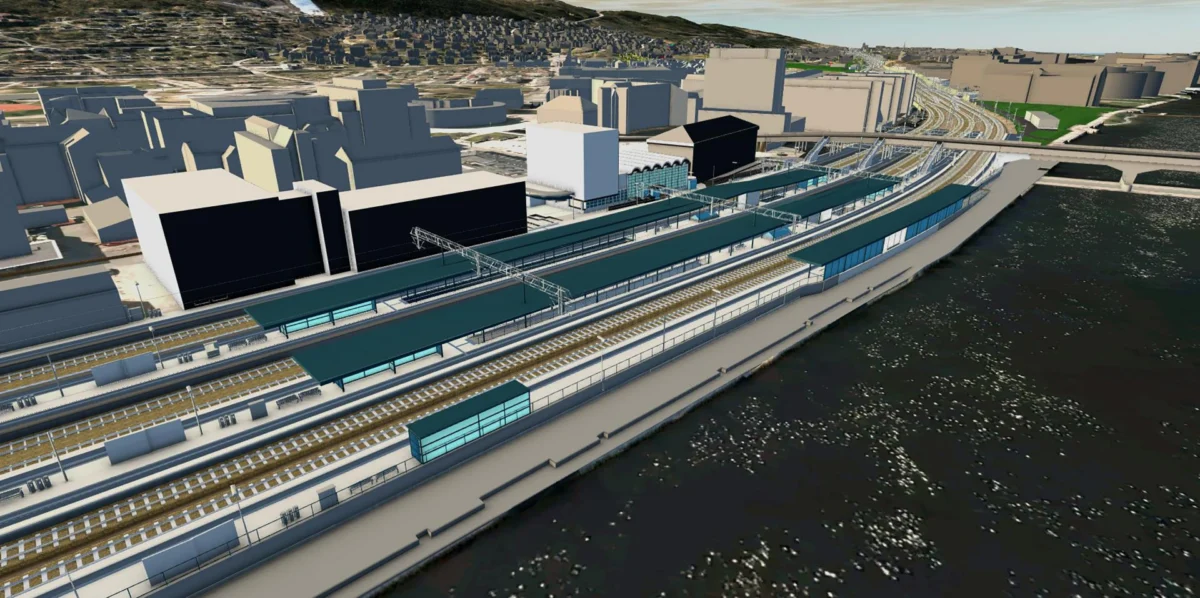
OSLO, Norway — In a major push for both regional transportation infrastructure and economic resilience, Bane NOR, Norway’s state-owned railway infrastructure manager, has officially launched a trio of high-value tenders for the Vestfold Line project. Valued at approximately NOK 2 billion (EUR 180.9 million), the procurement package forms a critical cornerstone of the broader double-track expansion initiative connecting Drammen and Kobbervikdalen.
Beyond its primary transit objectives, the timing of the tender rollout carries profound economic significance. Unveiled during a period of acute macroeconomic uncertainty driven by the global COVID-19 pandemic, the initiative was strategically accelerated to inject vital liquidity into the Norwegian construction and engineering sectors, safeguarding jobs and maintaining commercial momentum when many industries faced unprecedented contraction.
1. Main Facts: The Vestfold Line Tenders and Project Scope
The newly announced procurement package comprises three distinct, highly specialized contracts designed to fast-track the ongoing development of the Drammen–Kobbervikdalen section. This engineering feat is itself a vital segment of the expansive 270-kilometer track-doubling master plan spanning Eastern Norway (Østlandet).
The Three Tender Contracts Explained:
- Civil Works and Station Reconstruction: The first contract encompasses the comprehensive reconstruction of Drammen station, structural interventions at the nearby Bybrua bridge area, and essential peripheral road repairs. These civil works are vital for establishing the staging grounds and logistical corridors required for the heavier construction phases ahead.
- Track Construction and Electrification: The second tender focuses on permanent way engineering. Contractors will be responsible for laying new tracks and installing robust overhead electrification systems (OCS) designed to support high-speed, high-frequency operations along the route.
- Electrical and Telecommunications Infrastructure: The third contract targets the digital and electrical backbone of the railway. This entails the installation of advanced signaling, low-voltage power supply, and sophisticated telecommunication networks critical for modern train control systems and passenger safety compliance.
When completed, the Drammen–Kobbervikdalen section will feature a 10-kilometer double-track alignment. Significantly, 7 kilometers of this upgraded route will run through a newly bored tunnel beneath Strømsåsen, presenting unique geotechnical and logistical challenges that demand state-of-the-art tunneling and civil engineering methodologies.
2. Chronology: From Conception to 2024 Completion
The trajectory of the Vestfold Line upgrade represents years of meticulous planning, regulatory approvals, and phased execution. Understanding the timeline highlights the scale of coordination required for a mega-project of this magnitude.
- Pre-2020 (Planning and Early Works): Bane NOR’s Development Division lays the groundwork for the comprehensive modernization of the Østlandet rail network, focusing heavily on bottleneck reduction between Oslo and Tønsberg.
- Spring 2020 (Strategic Acceleration): Amid the onset of the global pandemic, Bane NOR finalizes documentation for the three core Vestfold Line tenders. Recognizing the vulnerability of the domestic construction market, leadership greenlights an accelerated release schedule to function as an economic stimulus.
- Late 2020 / Q1 2021 (Contract Awards): Tenders are evaluated, and formal contract signings are scheduled for the first quarter of 2021, ensuring seamless continuity into the spring construction season.
- Spring 2021 (Full-Scale Mobilization): Groundwork and specialized installation teams mobilize on-site, initiating structural overhauls at Drammen station and underground excavation works.
- 2024 (Projected Commissioning): The entire Drammen–Kobbervikdalen double-track project is slated for completion, unlocking maximum operational capacity across the corridor.
3. Supporting Data and Technical Specifications
The modernization of the Vestfold Line is underpinned by robust quantitative targets designed to radically transform mobility patterns across Eastern Norway.
- Total Project Investment: NOK 2 billion (approx. EUR 180.9 million) allocated across the three newly tendered packages, nested within a broader multi-billion-kroner modernization framework for the Østlandet region.
- Geographical Reach: A 10-kilometer upgraded double-track corridor between Drammen and Kobbervikdalen, featuring a 7-kilometer subterranean tunnel through Strømsåsen.
- Service Frequency Improvements: Upon completion in 2024, the corridor will double its current capacity, enabling up to four trains per hour, per direction on the vital Oslo–Tønsberg route.
- Demographic Impact: The enhanced rail network directly benefits approximately 1.5 million inhabitants living in the wider region, offering improved punctuality, shorter journey times, and seamless connectivity.
- Broader Master Plan: Part of an ambitious 270-kilometer track-doubling initiative intended to unify regional economic hubs throughout Eastern Norway.
4. Official Responses and Leadership Perspectives
The announcement drew widespread praise from industry stakeholders and public sector leaders alike, who emphasized the dual benefits of infrastructural advancement and macroeconomic stabilization.
Gorm Frimannslund, Chief Executive Officer of Bane NOR, underscored the strategic rationale behind the accelerated tender launch during a time of crisis:

"The development division has long worked with the goal of getting these three contracts to the market in the spring of 2020, but with the corona crisis now affecting business, we see that this will at the same time be an important contribution to keep activity in the market," stated Frimannslund.
His remarks reflect a growing trend among European infrastructure managers during the pandemic: leveraging public capital projects as counter-cyclical buffers against private sector contractions. By ensuring that tender timelines remained uninterrupted, Bane NOR provided Norwegian contractors with a predictable pipeline of high-value work, preserving specialized engineering jobs and maintaining supply chain stability.
Industry associations and labor representatives similarly welcomed the move, noting that predictability is the single most important factor for sustaining investor and contractor confidence during periods of macroeconomic volatility.
5. Implications: Economic, Environmental, and Social Impact
The completion of the Vestfold Line project in 2024 carries far-reaching implications that extend well beyond the rail sector, touching upon regional economics, environmental sustainability, and long-term urban planning.
Economic Catalyst and Regional Integration
By effectively doubling track capacity between Drammen and Tønsberg, the project removes one of the most notorious bottlenecks in Norway’s southern rail network. Greater frequency and reliability directly translate into a more integrated regional labor market. Residents in Vestfold can access employment opportunities in Oslo—and vice versa—with greater confidence, reducing the friction of distance and stimulating regional productivity. Furthermore, the construction phase itself supports thousands of direct and indirect jobs across civil engineering, electrical manufacturing, project management, and logistics.
Environmental Sustainability and Climate Goals
Norway has positioned itself as a global leader in green transition policies, with aggressive targets for carbon neutrality and sustainable transport. Rail transport is inherently more energy-efficient and carbon-friendly than private road vehicles or short-haul aviation. By offering a high-capacity, highly punctual alternative to highway travel along the heavily congested E18 corridor, the Vestfold Line encourages modal shift. The modern overhead electrification and telecommunications infrastructure tendered in this latest package ensure that the expanded line will operate at maximum energy efficiency, utilizing Norway’s predominantly renewable hydropower grid.
Long-Term Urban Resilience
As population density increases in the Greater Oslo and Østlandet regions, car-dependent urban sprawl is becoming increasingly unsustainable. The Vestfold Line upgrade empowers municipalities along the corridor to adopt transit-oriented development (TOD) models. Denser, pedestrian-friendly housing and commercial zones can be clustered around modernized stations like Drammen and Bybrua, reducing per capita carbon footprints while enhancing the overall quality of urban life for the 1.5 million citizens serviced by the route.
Conclusion
Bane NOR’s decision to advance NOK 2 billion in tenders for the Vestfold Line is a masterclass in strategic public infrastructure management. By refusing to let external health and economic crises derail long-term planning, the agency has simultaneously safeguarded the Norwegian construction industry during a turbulent era and laid the permanent tracks for a greener, more connected future. As work proceeds toward the 2024 completion date, passengers, businesses, and environmental advocates alike stand to reap the dividends of this visionary rail expansion.

