

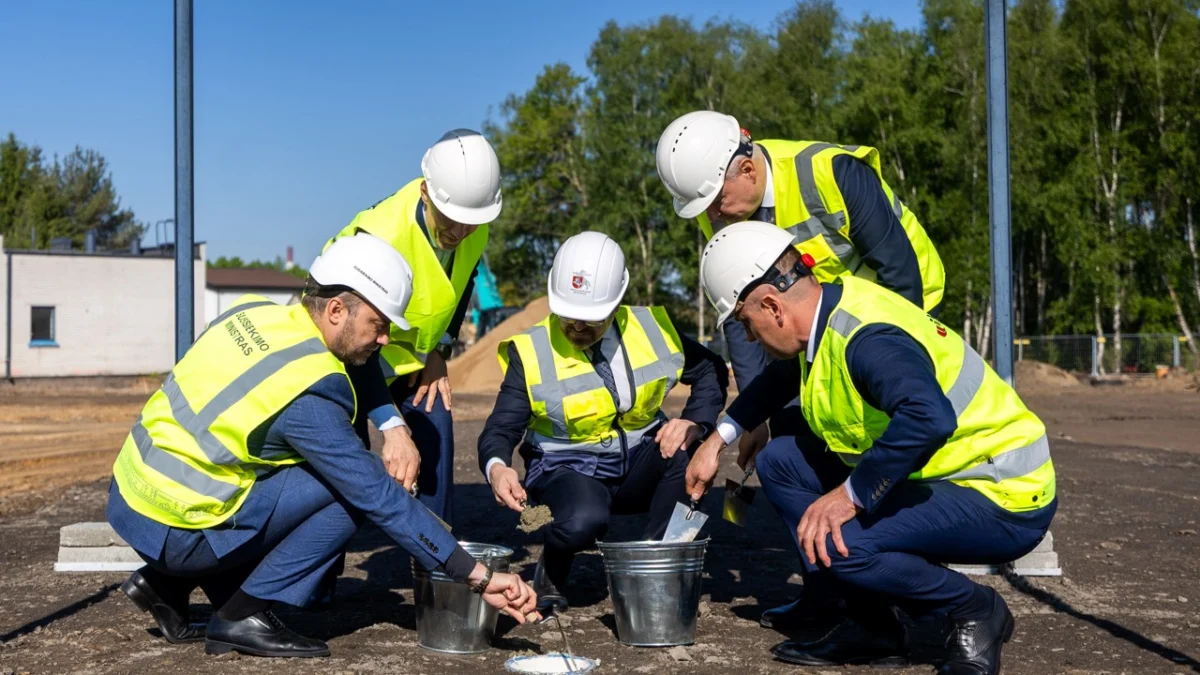
VILNIUS — In a landmark development for regional security and European transport logistics, LTG Infra, the Lithuanian railway infrastructure manager, has officially commenced construction on a dual-use civilian and military terminal in Palemonas. The ambitious project is designed to fundamentally upgrade Lithuania’s logistical capabilities, enabling the country to seamlessly receive, process, and deploy heavy NATO military transports, while simultaneously enhancing day-to-day civilian freight capabilities.
Valued at €37.4 million, the project represents a crucial milestone in Lithuania’s alignment with European military mobility standards. By bridging the gap between Europe’s standard 1,435 mm railway gauge and the region’s traditional 1,520 mm broad gauge, the Palemonas terminal is poised to become a vital logistics node connecting the Baltic states to the broader Western defense network.
Main Facts
The Palemonas intermodal terminal upgrade is a multi-faceted infrastructure overhaul designed to address both national defense and civilian economic demands. The core components of the project include:
- Project Scope and Budget: The total investment amounts to €37.4 million, covering comprehensive planning, architectural design, technical expertise, actual construction, and rigorous on-site technical supervision.
- Contracting Consortium: The public procurement process successfully awarded the construction and engineering contracts to a consortium of specialized firms, namely Gevalda, Kauno keliai, and Statybų techninė priežiūra.
- Dual-Use Capabilities: The upgraded facility is engineered to serve both commercial intermodal logistics and rapid military deployments, reinforcing Lithuania’s status as a dependable host nation for allied forces.
- Gauge Integration: The terminal bridges the European standard gauge (1,435 mm) and the regional broad gauge (1,520 mm), ensuring frictionless transshipment of personnel, heavy armor, and supplies from Western Europe toward Latvia, Estonia, and the strategic port of Klaipėda.
- Technological Innovation: The entire design and construction workflow is being executed using advanced Building Information Modeling (BIM) methodologies, ensuring maximum efficiency, resource optimization, and precise lifecycle management.
Chronology
The realization of the Palemonas terminal project is the culmination of years of strategic foresight, geopolitical shifts, and rigorous technical planning aimed at hardening the Baltic states’ infrastructure against emerging security threats.
Early Planning and Strategic Alignment
Following the shifting geopolitical landscape in Eastern Europe, the necessity for robust military mobility within the European Union and NATO became paramount. Lithuania identified its rail network—specifically the transition point between European and Baltic track gauges—as a critical logistical bottleneck. Planning for the expansion of the Palemonas hub began to take shape as LTG Infra sought to integrate defense requirements into national transportation strategies.
Tendering and Public Procurement
LTG Infra launched comprehensive public tenders to source specialized engineering, construction, and oversight firms capable of executing a project of this scale and sensitivity. Following competitive evaluations, the contracts were awarded to Gevalda, Kauno keliai, and Statybų techninė priežiūra, setting the stage for physical engineering works to commence.
Groundbreaking and Time Capsule Ceremony
The official launch of construction was commemorated with a symbolic time capsule burial ceremony. This high-profile event brought together key political and industrial figures, including Lithuania’s Minister of Transport, Juras Taminskas, and Minister of National Defense, Robertas Kaunas, alongside senior leadership from the LTG Group and the winning contracting firms. The ceremony underscored the unified national consensus regarding the project’s critical importance to state security and allied defense frameworks.
Supporting Data and Technical Specifications
To meet the rigorous demands of modern armored brigades and heavy logistics trains, the Palemonas terminal is undergoing extensive structural modernization. The technical parameters of the project highlight the sheer scale of the engineering feat:
Surface Infrastructure and Load-Bearing Capacities
- Reinforced Loading Platform: A newly built and modernized loading platform spanning approximately 36,000 m² is being constructed to withstand immense mechanical stress.
- Weight Tolerances: The platform is engineered to support concentrated cargo loads of up to 100 tons and heavy military vehicles weighing up to 120 tons, accommodating Main Battle Tanks (such as Leopard 2 variants), infantry fighting vehicles, and specialized recovery equipment.
- Total Hard Surfaces: In total, approximately 46,000 m² of hard surfaces will be constructed or structurally upgraded across the terminal grounds.
Track Layout and Signaling Systems
- Mixed Gauge Network: The terminal will feature the construction of two dedicated 1,435 mm (European gauge) lines and one 1,520 mm (broad gauge) line equipped with specialized terminal ramps for roll-on/roll-off and crane-assisted loading.
- European Gauge Expansion: The 1,435 mm European gauge railway infrastructure is being significantly expanded through the addition of three brand-new lines, each boasting a minimum usable length of 750 meters—the standard benchmark for European freight trains. Furthermore, three existing lines will be extended to meet this 750-meter length requirement.
- Track Reconstruction and Switches: The project entails the complete reconstruction of approximately 5.5 kilometers of railway tracks, the installation of 12 new railway switches, and the total overhaul or modernization of underground utility networks, advanced security systems, and specialized noise and vibration reduction barriers to protect local communities.
Official Responses
The groundbreaking ceremony drew remarks from top government officials and corporate leaders, emphasizing the dual economic and security dividends of the investment.
Juras Taminskas, Minister of Transport:

"Railways are particularly important for both civilian evacuation and the rapid movement of military forces in Europe. By investing in the development of military mobility infrastructure in Palemonas, we are strengthening the security of Lithuania and the entire Baltic region."
Robertas Kaunas, Minister of National Defense:
"By investing in military mobility today, we are investing in Lithuania’s security, readiness, and closer cooperation with our allies. Modern infrastructure—roads, railways, and logistics hubs—is an essential part of a strong state. The loading area at the Palemonas terminal will ensure that Lithuania is prepared to rapidly receive allied forces, efficiently coordinate logistics, and strengthen the resilience of NATO’s eastern flank."
Arūnas Rumskas, Acting CEO of the LTG Group:
"The expansion of the military mobility infrastructure in Palemonas is a strategic step that strengthens Lithuania’s readiness to receive large volumes of military transport and ensures that our railway network operates as reliably as the logistics hubs of the most advanced NATO countries. It is an investment that is equally important for both defense and civilian logistics."
Implications
The completion of the Palemonas dual-use terminal carries profound geopolitical, tactical, and economic implications for Lithuania and the wider transatlantic alliance.
Enhancing NATO’s Eastern Flank Readiness
For decades, a major logistical hurdle in reinforcing the Baltic states has been the "break-of-gauge" issue—where the 1,520 mm broad-gauge tracks prevalent in the former Soviet sphere meet the 1,435 mm standard European gauge. While the Rail Baltica megaproject addresses this at a macro level, local transshipment hubs like Palemonas are vital operational bottlenecks. By providing reinforced loading platforms and extended 750-meter sidings, the terminal drastically reduces the time required to transfer heavy armor and supplies arriving from Western Europe onto regional networks bound for Estonia, Latvia, or the port of Klaipėda.
Supporting the Permanent German Brigade
Lithuania is currently hosting a permanent combat-ready German brigade, a historic deployment that requires robust, reliable, and high-capacity logistics networks to sustain its operations, conduct rotations, and receive heavy equipment. The Palemonas terminal directly answers this requirement, providing a secure, heavy-duty staging ground capable of managing the complex supply chains associated with a mechanized brigade headquarters and its subordinate battalions.
Dual-Use Synergy and Economic Resilience
Crucially, the €37.4 million investment is not a static defense expenditure that sits idle during peacetime. Because the terminal is designed for dual civilian and military use, it simultaneously supercharges Lithuania’s commercial intermodal freight capabilities. Enhanced surface areas, streamlined rail lines, and modern utility networks will allow commercial freight operators to handle greater container volumes more efficiently, boosting Kaunas’s position as a premier logistics crossroads in Eastern Europe.
Setting a Benchmark for Regional Security
As NATO continues to adapt its deterrence posture along its eastern borders, seamless military mobility has transitioned from a theoretical concept to an urgent operational necessity. Lithuania’s proactive approach—combining transparency, cutting-edge BIM design methodologies, and robust inter-ministerial cooperation—serves as a blueprint for other frontline allied nations. When operational, the Palemonas terminal will stand as a physical testament to allied cohesion, ensuring that distance is no barrier to collective defense and rapid reinforcement.

