

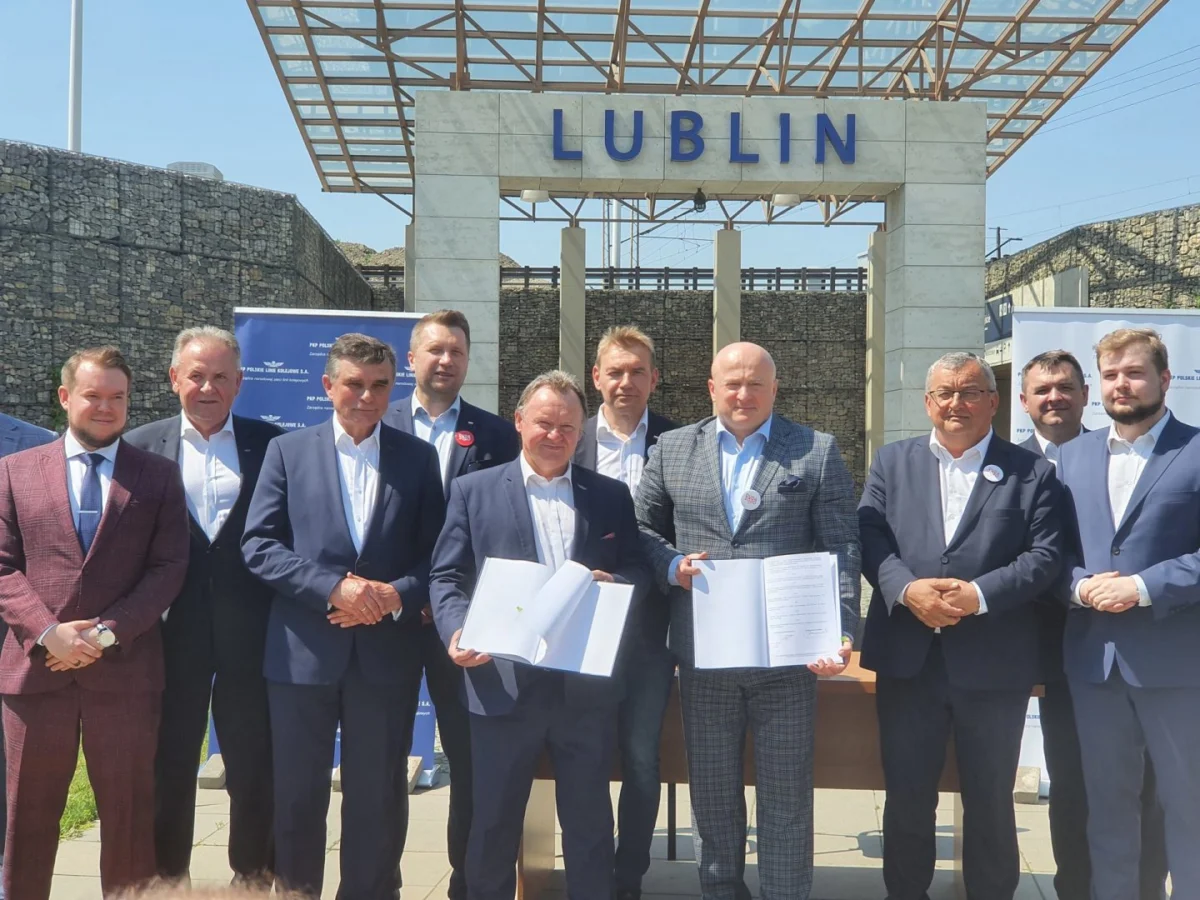
The landscape of regional transport in Poland is undergoing a seismic shift. In a landmark move to enhance passenger connectivity and promote sustainable transit, PKP Polskie Linie Kolejowe (PKP PLK), the nation’s railway infrastructure manager, has formalized a strategic partnership with the government of the Lublin Province. This agreement marks the official commencement of the Lublin Rail Agglomeration development project—a visionary initiative designed to transform how residents commute, work, and interact with the regional capital.
By modernizing existing corridors and conceptualizing new lines, the project aims to integrate the provincial capital, Lublin, with key regional hubs, effectively creating a high-speed, reliable, and environmentally conscious transit network.
The Strategic Core: Main Facts and Objectives
The collaboration between PKP PLK and the Lublin Voivodeship is not merely a localized upgrade; it is a foundational pillar of Poland’s broader national transport strategy. The primary objective is to alleviate the mounting pressure on road infrastructure in the center of Lublin while providing regional cities—including Puławy, Parczew, Chełm, and Kraśnik—with seamless, efficient access to the capital.
Key Pillars of the Project:
- Modernization of Existing Infrastructure: Upgrading aging trackage to support higher speeds and increased capacity.
- Network Expansion: Identifying and constructing new rail corridors to connect previously underserved or disconnected regions.
- Intermodal Integration: Creating transit hubs where rail, bus, and urban transport systems converge, minimizing "first-mile and last-mile" friction for passengers.
- Universal Design: Ensuring all new platforms and facilities are fully accessible to passengers with limited mobility, adhering to modern European Union standards.
A Timeline of Transformation: From Concept to Construction
The development of the Lublin Rail Agglomeration is structured as a phased, long-term commitment. By breaking the project down into distinct temporal segments, stakeholders hope to ensure both fiscal responsibility and operational efficiency.
2020–2021: The Design and Concept Phase
During this period, the focus is entirely on technical documentation. PKP PLK and the provincial government have committed to a joint funding model, where costs are split equally. This phase involves the creation of a comprehensive design concept and a subsequent feasibility study. This study will serve as the "blueprint" for the future, detailing the exact scope, financial requirements, and engineering challenges of every proposed segment. PKP PLK is tasked with the procurement process, launching tenders, and maintaining rigorous oversight of the technical output.
2021–2027: The Implementation Framework
The actual physical manifestation of the project—the breaking of ground and the laying of steel—is slated to occur within the 2021–2027 financial framework. This period aligns with European Union funding cycles, allowing the project to potentially leverage significant subsidies aimed at lowering the carbon footprint of regional transport networks.

Expanding the Reach: Proposed Technical Developments
The scope of the feasibility study is ambitious, looking far beyond the immediate city limits of Lublin. The project explores several critical infrastructure additions designed to reshape the regional map:
New Corridors
- The Szastarka–Janów Lubelski–Biłgoraj Line: This segment represents a significant push into the southern reaches of the province, potentially opening up isolated areas to faster, more direct economic links with the capital.
- The Lublin–Łęczna Link: A crucial connection designed to capture the growing commuter traffic between these two increasingly integrated population centers.
Infrastructure Enhancements
- Electrification of the Lublin–Łuków Section: By transitioning away from diesel-reliant locomotives, the project aims to lower operational costs and drastically reduce the environmental impact of the line.
- Lublin Airport Connectivity: A landmark proposal involves constructing a new rail connection to the Lublin Airport starting from the direction of Chełm. This would solidify the airport’s position as a regional gateway, providing international travelers with direct rail access to the provincial center.
Official Perspectives: The Environmental and Economic Rationale
The government’s endorsement of the project is rooted in a philosophy of "green transport." Minister of Infrastructure, Andrzej Adamczyk, has been a vocal proponent of the project, framing it as a necessary evolution for the Polish rail sector.
"As railway is the most environmentally friendly mode of transport, the government makes efforts to develop the infrastructure across the country," Adamczyk noted during the signing ceremony. "We are currently building an agglomeration railway in Szczecin and Rzeszów. I hope that Lublin will soon join these cities. The establishment of the Lublin agglomeration railway is a chance to reduce road traffic in the center of Lublin."
The Minister’s comments underscore a critical realization: that urban congestion is no longer just an issue for major metropolises like Warsaw or Krakow, but a pressing concern for regional capitals. By shifting the modal share of commuters from private vehicles to rail, the project is expected to deliver significant reductions in noise pollution, carbon emissions, and the economic drain caused by traffic gridlock.
Implications: A National Context
The Lublin project is part of a larger, coordinated push by PKP PLK to harmonize rail transit across the country. By focusing on "rail agglomerations," the Polish government is effectively decentralizing economic growth, ensuring that smaller regional cities can benefit from the prosperity typically reserved for Tier-1 cities.
Comparative Projects
- Warsaw Rail Agglomeration: As the country’s busiest rail hub, the Warsaw project focuses on high-frequency, short-distance commuter loops. In April, PKP PLK launched a massive tender to modernize these arteries, signaling that the national infrastructure manager is prioritizing the "commuter experience" on a country-wide scale.
- Poznań Railway Junction: Since November 2019, development studies for the Poznań area have been underway, looking at how to untangle complex junctions and increase throughput.
For Lublin, these precedents are vital. The successes and challenges encountered in Warsaw and Poznań provide a technical and procedural roadmap that the Lublin project can utilize to avoid common pitfalls in large-scale infrastructure deployment.
Challenges and Future Outlook
While the vision is robust, the road to completion is complex. The success of the Lublin Rail Agglomeration depends on three critical variables:
- Financial Continuity: While the 2021–2027 framework provides a clear window for execution, projects of this magnitude are susceptible to inflation and shifting market costs. The integrity of the initial feasibility study will be the primary shield against cost overruns.
- Public Integration: The project’s success will not be measured solely by the quality of the tracks, but by the "last-mile" experience. The proposed creation of interchanges near rail stops will be the defining factor in whether the public chooses the train over the car. If the transfer from a regional train to an urban bus is inconvenient, the project may fail to meet its ridership targets.
- Technological Integration: As the industry moves toward digital signaling and automated traffic management, the project must ensure that its infrastructure is "future-proofed"—capable of integrating with next-generation train control systems.
A New Era for the Lublin Province
The transformation of the Lublin rail network is a bold step toward a more integrated, sustainable, and prosperous future for Eastern Poland. By prioritizing the passenger experience, the project aims to turn rail travel from a necessity into a preference.
As the feasibility studies conclude and the first construction contracts are awarded, the residents of Lublin and its surrounding districts stand on the precipice of a more mobile life. If executed with the precision and foresight promised by the agreement between PKP PLK and the Lublin government, this rail agglomeration could serve as a model for regional connectivity across Central and Eastern Europe.
The project is more than just steel and concrete; it is a commitment to the idea that geography should not dictate opportunity, and that reliable, modern, and green transit is the key to unlocking the full potential of Poland’s regions.

