

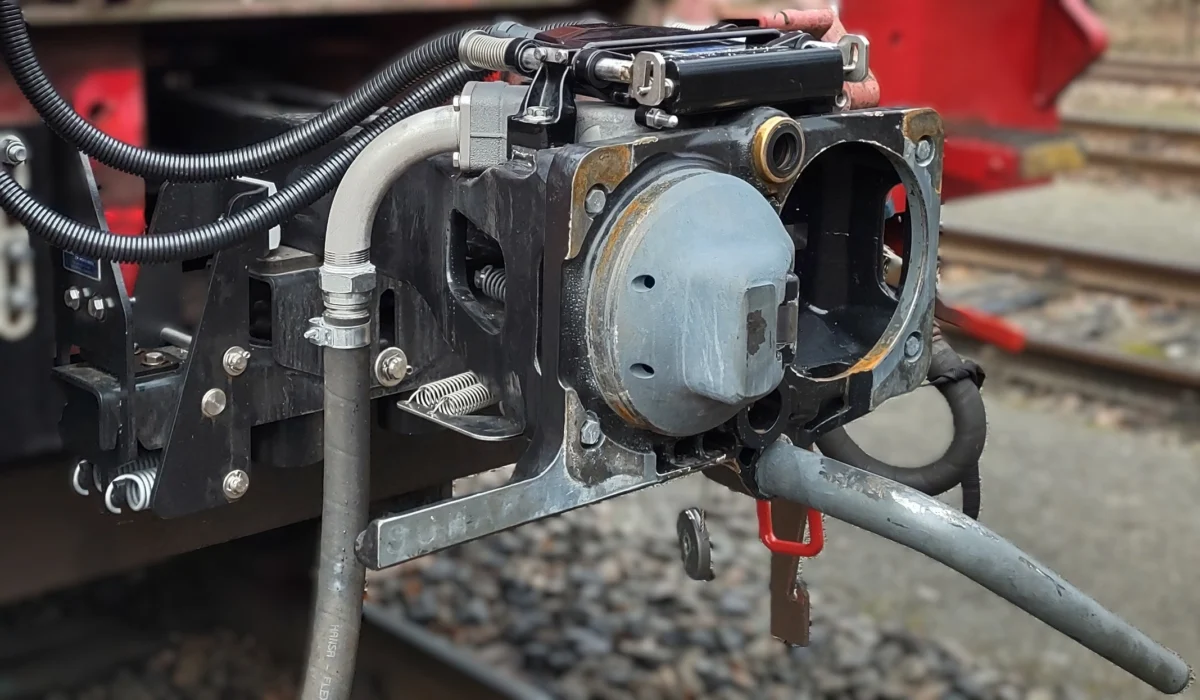
The European rail freight sector stands at a critical juncture. For decades, the manual coupling of wagons has been a bottleneck—a labor-intensive, physically demanding, and time-consuming process that limits the efficiency of the entire logistics chain. Today, that paradigm is shifting. PJ Monitoring (PJM), in strategic collaboration with Voith, has unveiled a comprehensive, all-in-one solution for the commercial deployment of Digital Automatic Coupling (DAC). This partnership is not merely a technical upgrade; it is an end-to-end integration package that addresses the most significant hurdles to railway digitalization: technical reliability, regulatory compliance, and seamless operational transition.
Main Facts: The DAC 4.5 Solution
At the core of this innovation is the "DAC 4.5" package, a robust, field-tested solution that combines Voith’s CargoFlex coupling technology with PJM’s advanced digital intelligence. Unlike theoretical models, this system is designed for the harsh realities of daily commercial operations.
The system facilitates mechanical, pneumatic, and electrical coupling automatically, eliminating the need for manual intervention between wagons. Key features include:
- Automated Brake Testing: An industry-first, approved digital system that replaces the traditional, time-consuming manual brake checks.
- Operational Intelligence: Real-time data on wagon sequencing, train integrity, and continuous power supply to every wagon in the consist.
- User-Centric Design: Simple, "push-button" operation that allows personnel to uncouple carriages without manual exertion, significantly enhancing workplace safety.
- Minimal Locomotive Modification: The integration is engineered to be non-intrusive, requiring only minor adjustments to the locomotive, thereby lowering the barrier to entry for fleet operators.
This is the only DAC solution currently in operation that has moved beyond the pilot phase and into the rigors of daily, commercial limestone transport.
Chronology: From Innovation to Commercial Reality
The evolution of this project follows a deliberate path of iterative testing and regulatory engagement:
- Initial Research and Development: Recognizing the limitations of manual systems, PJM leveraged its WaggonTracker platform—originally designed for UIC standard couplers—to develop digital train functions.
- Strategic Partnership: PJM and Voith combined their respective expertise—Voith in robust mechanical coupling and PJM in digital monitoring and certification—to create the integrated DAC 4.5 package.
- Pilot and Operational Trials: The solution underwent extensive testing in live, challenging railway conditions. Unlike laboratory-based tests, these trials involved the transport of heavy industrial goods, proving the system’s durability under load.
- Regulatory Navigation: Recognizing the lack of established reference paths for DAC, the PJM Group utilized its internal specialized companies to manage the complex certification process, ensuring the technology met the 4th Railway Package requirements.
- Current Status: The technology is currently deployed in commercial operations, marking a milestone as one of the first DAC-equipped freight trains to secure full operational approval in Europe.
Supporting Data: The Power of the PJM Group
The complexity of implementing DAC cannot be overstated. A technical solution is only as good as the infrastructure supporting its approval. PJM has mitigated this risk by consolidating the entire project lifecycle within its group of seven specialized companies.

The PJM Ecosystem:
- Development & Integration (PJ Monitoring & PJ Motion): Drafting modification concepts and providing the documentation required for seamless vehicle integration.
- Testing & Simulation (PJ Messtechnik GmbH): An ISO/IEC 17025 accredited body that provides simulations for derailment safety, push-on tests, and EMC radio interference emissions.
- Certification & Safety (RCC Railway Competence and Certification GmbH): Acting as an AsBo (Assessment Body) for risk management and a NoBo/DeBo (Notified/Designated Body) for conformity assessment.
- Operational Expertise (PJ Motion): Managing the labyrinthine process of authorization under the 4th Railway Package.
This internal synergy is why PJM has been recognized with 12 international awards, including the State Prize for Digitalization. Their "WaggonTracker" platform, which enables load weight monitoring, bogie health diagnostics, and real-time brake status, provides the digital foundation upon which the DAC system is built.
Official Responses and Industry Implications
The implications of the PJM-Voith collaboration extend far beyond a single freight train. By solving the "integration puzzle," the partners have provided a blueprint for the European rail industry’s transition toward full digitalization.
"The DAC project is significantly more than just hardware," says a spokesperson from the PJM communications team. "It is about the delicate process of certification in a regulatory environment that is still evolving. By covering the entire chain—from initial simulation to final authorization—we ensure that operators are not left to navigate the complex landscape of European rail safety regulations alone."
Industry analysts observe that this "Full-Service Package" model is likely to become the standard for future infrastructure upgrades. By bundling product delivery, installation, and certification, PJM removes the "innovation friction" that often causes rail operators to delay digital adoption.
Implications: The Shift Toward Efficiency
The shift to digital coupling represents a fundamental change in the economics of rail freight.
1. Operational Efficiency
Manual train preparation is one of the most time-consuming aspects of rail logistics. By automating the brake test and coupling process, the time a train spends in the terminal is drastically reduced. This increases the total throughput of the rail network without requiring additional physical track capacity.

2. Enhanced Safety
The traditional manual uncoupling process is a leading cause of workplace accidents in the rail sector. The "push-button" interface moves the operator away from the "danger zone" between the wagons, aligning with modern industrial safety standards and protecting the human workforce.
3. Data-Driven Logistics
The integration of a constant power supply and digital monitoring turns every wagon into a "smart" asset. Real-time data on brake performance and wagon health allows for predictive maintenance, shifting the industry from reactive repairs to a proactive, data-informed maintenance cycle.
4. Sustainability
Rail is already the most sustainable mode of inland transport. However, by increasing the efficiency of freight trains and reducing the time spent idling in terminals, the PJM-Voith solution further improves the carbon footprint of the supply chain, making rail even more attractive to shippers looking to reduce their Scope 3 emissions.
Conclusion: A Model for the Future
The PJM and Voith collaboration is a testament to the fact that digitalization in rail is no longer a futuristic concept—it is a current, operational reality. Through their "DAC Basic Package," they have provided a scalable, safe, and efficient solution that addresses both the mechanical requirements of heavy-haul transport and the rigorous documentation needs of European regulators.
As the industry moves toward a more interconnected, automated future, the ability of companies like PJM to provide end-to-end support—from initial R&D at the Mellach innovation centre to final certification by their accredited bodies—will be the key differentiator. By proving that their DAC solution can thrive in the daily, real-world rigors of limestone transport, PJM has set a new benchmark for the entire European freight network, proving that the digital revolution in rail is not only possible but already underway.
For more information, please visit: www.pjmonitoring.com/en
Contact: Birgit Rami-Jauk, Head of Corporate Communications, [email protected]

