

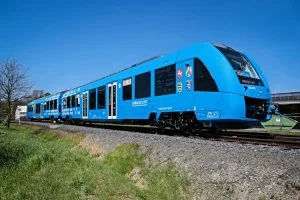
MADRID — In a decisive move underscoring its long-term commitment to sustainable transportation, global rail leader Alstom has officially joined the Spanish Hydrogen Association (Asociación Española del Hidrógeno – AeH2). This strategic alliance highlights the accelerating momentum behind hydrogen as a pivotal energy vector capable of transforming the European transport sector. As societies worldwide race to meet aggressive climate targets, the collaboration between Alstom and AeH2 aims to spearhead the deployment of hydrogen fuel cell technology across non-electrified rail networks in Spain and the broader European market, replacing legacy diesel fleets with emission-free alternatives.
Main Facts
The partnership between Alstom Spain and AeH2 brings together a premier global rolling-stock manufacturer and Spain’s leading technical authority on hydrogen technologies. At its core, the collaboration focuses on advancing zero-emission mobility solutions, specifically hydrogen-powered trains, to eliminate the carbon footprint of regional and rural rail corridors.
Key elements of this strategic development include:
- Alstom’s Strategic Integration: By joining AeH2, Alstom reinforces its position as an industry pioneer in alternative traction, aligning its corporate roadmap with Spain’s national decarbonization strategies.
- The Technology: Hydrogen fuel cell trains represent a sustainable, noiseless, and zero-emission alternative to traditional diesel locomotives, offering comparable performance without the multi-million-dollar capital expenditures required for overhead catenary electrification.
- The Spanish Rail Landscape: Spain currently operates more than 5,000 kilometers of non-electrified railway lines—accounting for roughly 35% of its total rail network—reliant on over 200 diesel-powered passenger and freight trains.
- National Policy Alignment: The Spanish Government’s newly approved "Hydrogen Roadmap" sets ambitious targets, aiming for at least two commercial hydrogen train routes to be operational by 2030, paving the way for complete climate neutrality by 2050 via a 100% renewable electricity grid.
- AeH2’s Leadership: Founded in 2002, the Spanish Hydrogen Association acts as a vital bridge between industrial stakeholders, research institutions, and public regulators, championing green hydrogen development across the Iberian Peninsula.
Chronology: The Evolution of Hydrogen Rail and Institutional Partnerships
To understand the significance of Alstom joining AeH2, it is essential to trace the parallel timelines of European hydrogen train development and the maturation of Spain’s hydrogen sector.
2002–2015: Laying the Groundwork
- 2002: The Spanish Hydrogen Association (AeH2) is established to foster technological and industrial research into hydrogen as an energy vector, uniting private enterprises, academic bodies, and public institutions.
- 2014–2015: Alstom accelerates the development of its flagship hydrogen train, the Coradia iLint, conceptualizing a commercial vehicle capable of matching the range and operational availability of diesel multiple units (DMUs) while emitting only water vapor.
2016–2019: Technological Validation and European Breakthroughs
- September 2016: Alstom officially unveils the Coradia iLint at the InnoTrans trade fair in Berlin, generating immense international interest.
- 2018–2020: The Coradia iLint completes rigorous passenger-service trials on regional lines in Lower Saxony, Germany, proving the operational reliability, safety, and economic viability of fuel cells in commercial rail environments. Similar pilot programs and testing frameworks are initiated or planned across the Netherlands, Austria, Italy, and the United Kingdom.
2020–Present: National Roadmaps and Industrial Alliances
- Late 2020: The Spanish Government officially approves the national "Hydrogen Roadmap," outlining a strategic vision to scale renewable hydrogen production and integrate green H2 into heavy transport sectors, including rail.
- November 2020: Alstom formally formalizes its membership in the Spanish Hydrogen Association (AeH2), signaling its readiness to assist Spanish authorities and rail operators in executing the national hydrogen strategy.
- 2021 and Beyond: AeH2, supported by the Ministry of Industry, Trade and Tourism (MINCOTUR), begins developing the comprehensive Sectoral Agenda of the Hydrogen Industry, engaging industry agents to establish supply chains, refueling infrastructure, and manufacturing capabilities.
Supporting Data: The Scale of the Challenge and Opportunity
The transition from diesel to hydrogen rail is not merely an environmental preference; it is an economic and infrastructural necessity dictated by the current state of European railway networks.
The European Context
Across the European Union, the rail infrastructure presents a clear operational divide between trunk high-speed corridors and regional feeder routes:
- Non-Electrified Trackage: Approximately 80,000 kilometers of primary European railway lines remain un-electrified, representing nearly 40% of the continent’s total rail network.
- Legacy Fleets: Traffic along these non-electrified routes is currently managed by roughly 12,000 diesel-powered vehicles, comprising approximately 5,900 diesel trains and 5,800 heavy diesel locomotives.
- The Electrification Dilemma: Electrifying a single kilometer of railway via overhead catenary lines can cost millions of euros, making it financially unfeasible for low-density regional lines. Consequently, hydrogen fuel cells and battery-hybrid technologies provide a cost-effective alternative that avoids prohibitive infrastructure costs.
The Spanish Railway Market
Spain mirrors the broader European challenge, characterized by a well-developed high-speed rail network running parallel to extensive regional and rural routes dependent on fossil fuels:
- Network Composition: Spain boasts a total rail network exceeding 14,000 kilometers, of which more than 5,000 kilometers (35%) lack overhead electrification.
- Active Diesel Units: More than 200 diesel traction units navigate these regional tracks daily, serving both passenger communities and vital freight logistics networks.
- The 2030/2050 Targets: Aligned with the European Green Deal, Spain’s Hydrogen Roadmap mandates that at least two regional lines must feature commercial hydrogen operations by the end of the decade, serving as stepping stones toward total decarbonization by 2050.
Official Responses and Perspectives
Industry leaders and association executives have welcomed Alstom’s integration into AeH2, emphasizing the collaborative nature of the green transition.
Leopoldo Maestu, Managing Director of Alstom Spain:
"Hydrogen technology is a sustainable, noiseless, and emission-free alternative for non-electrified lines. The hydrogen train is a demonstration of Alstom’s commitment to the development and implementation of innovative sustainable mobility solutions that contribute to the global energy transition and decarbonisation."
Maestu’s remarks underscore Alstom’s corporate philosophy of pairing technological innovation with environmental stewardship. By leveraging its experience with the Coradia iLint in Germany and other European nations, Alstom aims to transfer proven engineering frameworks directly to the Iberian market.
Perspectives from the Spanish Hydrogen Association (AeH2):
Speaking on behalf of the association’s diverse membership base, AeH2 leadership highlighted the importance of welcoming multinational industrial heavyweights like Alstom. Since its inception nearly two decades ago, AeH2 has maintained that the decarbonization of heavy transport cannot be achieved in isolation.
The association acts as a primary counselor to public institutions—collaborating closely with bodies such as the Ministry of Industry, Trade and Tourism (MINCOTUR). Through upcoming initiatives like the Sectoral Agenda of the Hydrogen Industry, AeH2 aims to unite rail operators, energy producers, and equipment manufacturers to build a robust domestic hydrogen economy that generates skilled jobs, industrial resilience, and lasting environmental benefits for Spanish society.
Implications: Transforming Rail Transport and the Energy Matrix
Alstom’s membership in the Spanish Hydrogen Association carries profound implications for the future of European mobility, industrial policy, and environmental protection.
1. Technological Validation and Local Adaptation
The success of hydrogen trains in countries such as Germany, Austria, the Netherlands, Italy, and the United Kingdom has definitively removed the stigma of experimental uncertainty from fuel cell technology. With Alstom bringing this battle-tested expertise to Spain, regional rail operators can bypass protracted research phases. Instead, they can focus immediately on route-specific feasibility studies, passenger capacity planning, and the deployment of localized hydrogen refuelling infrastructure.
2. Synergy Between Rail and the Broader Hydrogen Economy
Rail does not exist in a vacuum. The deployment of hydrogen-powered trains creates reliable, high-volume anchor demand for green hydrogen producers. By guaranteeing daily fuel consumption schedules along fixed rail corridors, hydrogen trains help stabilize the supply chain, making green hydrogen more commercially viable for other hard-to-abate sectors such as chemical processing, urban transit, and heavy-duty freight trucking.
3. Economic and Industrial Renaissance
Through its collaboration with AeH2 and public institutions like MINCOTUR, Alstom is helping to position Spain as a southern European hub for hydrogen technology development. The creation of the Sectoral Agenda of the Hydrogen Industry will stimulate domestic manufacturing, engineering services, and technical training. Rather than importing foreign green technologies, Spanish industries are poised to design, build, and export components integral to the global hydrogen economy.
4. Environmental Impact and Climate Goals
Ultimately, replacing diesel locomotives with hydrogen fuel cell systems directly eliminates particulate matter, nitrogen oxides ($NO_x$), and carbon dioxide ($CO_2$) emissions along Spain’s scenic rural and regional rail corridors. By turning the vision of the Spanish Hydrogen Roadmap into operational reality, this partnership bridges the gap between ambitious political declarations and tangible, everyday environmental improvements—ensuring that rail remains the greenest form of motorized mass transit well into the 21st century and beyond.

