

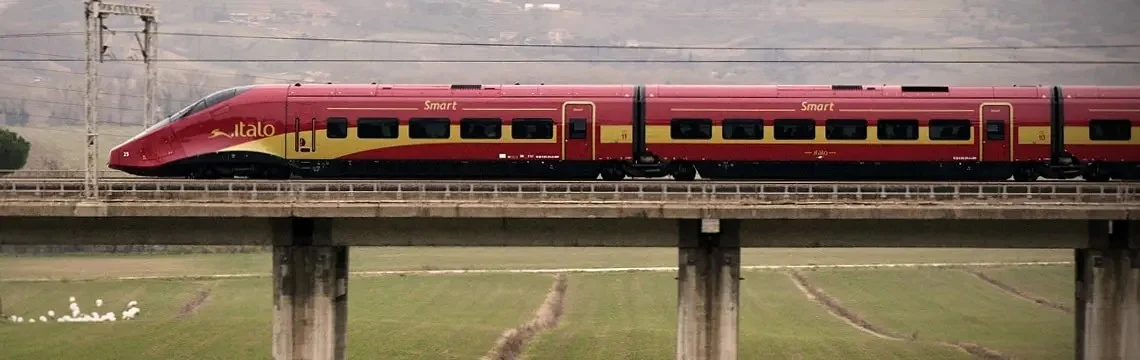
The landscape of European high-speed rail is poised for a significant transformation. Italo, Italy’s premier private high-speed operator, has officially signaled its intent to evolve from a national champion into a pan-European rail powerhouse. With a strategic focus currently anchored in a landmark entry into the German market, the company is already laying the architectural foundation for a cross-border network that aims to connect the heart of Europe—linking Belgium, the Netherlands, and potentially Eastern Europe—by the turn of the decade.
This ambitious roadmap is powered by a massive, multi-billion-euro investment in next-generation rolling stock, specifically designed to bypass the traditional technical fragmentation that has long hindered international rail travel. By leveraging the versatility of the Siemens Velaro Multi System platform, Italo is positioning itself to be a primary disruptor in the continental passenger transport market.
Main Facts: The Strategic Pivot
Italo’s expansion strategy is built upon a dual-track approach: immediate market penetration in Germany, followed by a broader expansion into the Benelux region and beyond. Central to this vision is an order for 26 Siemens Velaro Multi System high-speed trains. This procurement, valued at approximately EUR 3 billion, represents more than a simple equipment purchase; it is a long-term commitment that includes a 30-year maintenance contract, ensuring the fleet remains at the cutting edge of performance and safety.
The first phase of this rollout is set for June 1, 2028, when the initial four units are scheduled to commence commercial operations within Germany. These trains are not merely high-speed vehicles; they are sophisticated, multi-system platforms engineered to handle the varying electrification standards and signaling protocols that define Europe’s patchwork rail network. By ensuring these trains are "market-ready" for Belgium and the Netherlands from the moment they are delivered, Italo is effectively shortening the lead time required to launch international services between 2030 and 2031.
Chronology: A Roadmap to Expansion
Italo’s path to becoming a cross-border operator is meticulously planned, moving through distinct phases of technical certification and market entry:
- Phase 1: The Procurement Milestone (Ongoing): The formalization of the Siemens partnership and the order for 26 Velaro units. This stage establishes the technical capability for the entire expansion plan.
- Phase 2: The German Entry (June 2028): The official launch of Italo’s German high-speed services. This serves as the primary operational base for the company’s future international hubs.
- Phase 3: The Benelux Extension (2030–2031): Leveraging the established German network to extend high-speed connectivity into Belgium and the Netherlands. This phase will utilize the pre-authorized multi-system capabilities of the Velaro fleet.
- Phase 4: Eastern and Western Frontiers (Long-term): Exploratory phases targeting France to the west and Poland and the broader Eastern European region to the east. While these lack specific timelines, they represent the final realization of Italo’s pan-European connectivity goals.
Supporting Data: Engineering the Future of Connectivity
The backbone of Italo’s strategy is the Siemens Velaro platform. With over 3 billion kilometers of cumulative operational experience across global rail networks, the Velaro family is the gold standard for high-speed travel.
Technical Versatility
The "Multi System" designation is critical. European rail corridors are often separated by technical barriers, including different voltage systems (e.g., 25kV AC vs. 15kV AC) and varying train control systems (ETCS vs. national legacy systems). The Velaro units ordered by Italo are being manufactured at Siemens Mobility’s plant in Krefeld, Germany, with bespoke configurations that allow them to seamlessly cross these technical borders.
Financial Commitment
The EUR 3 billion investment underscores the scale of the operation. By bundling the purchase with a 30-year maintenance agreement, Italo is de-risking its long-term operational costs. This ensures that the high-speed trains are not just bought, but managed under a "full-service" model, guaranteeing maximum uptime and reliability—two metrics that are essential for competing against established state-owned incumbents and low-cost airlines.
Official Responses and Strategic Vision
Gianbattista La Rocca, CEO of Italo, has been vocal about the company’s vision. In recent interviews with the Italian financial press, including Il Sole 24 Ore, he emphasized that the company’s current focus on Germany is merely the gateway to a larger European project.

"At present, we are focusing on Germany," La Rocca stated. "From there, we can reach Belgium, the Netherlands, and France if we look westwards, and Poland and the countries of Eastern Europe if we look eastwards."
La Rocca highlighted that the decision to ensure the trains are authorized for Belgium and the Netherlands upon delivery is a calculated move to avoid the typical "bottlenecks of bureaucracy" that often plague international rail expansion. "Our agreement with Siemens will enable us to be competitive not only in Germany but also internationally," he noted. By front-loading the certification process, Italo is buying agility, allowing them to pivot quickly as demand grows in the Benelux region.
Implications: The Competitive Landscape
Italo’s move into the broader European market has profound implications for the rail industry, passengers, and incumbent operators.
1. Disrupting State Monopolies
For decades, international rail travel in Europe has been dominated by state-owned carriers working in loose cooperation. Italo, as a private operator, brings a "consumer-first" philosophy that has already revolutionized the Italian market. By entering Germany, Belgium, and the Netherlands, Italo forces incumbent operators to justify their service levels and pricing structures, likely leading to increased competition, lower fares, and improved service frequency for the end consumer.
2. The Sustainability Factor
As the European Union pushes its "Green Deal" and encourages a shift from short-haul flights to rail, Italo’s expansion fits perfectly into the continent’s climate goals. By providing a high-speed, comfortable alternative to air travel on routes like Berlin–Brussels or Amsterdam–Frankfurt, Italo is helping to accelerate the modal shift toward rail.
3. Operational Efficiency
The ability to use the same fleet for both German domestic routes and international corridors is a major operational advantage. It simplifies maintenance, reduces the need for redundant spare parts, and allows for greater flexibility in fleet allocation. This "single-fleet" approach is a classic strategy for achieving economies of scale in the transportation sector.
4. Future Challenges: France and Eastern Europe
While the plans for Belgium and the Netherlands are concrete, the mention of France and Poland adds an element of long-term uncertainty. France, in particular, has a notoriously complex regulatory environment for new entrants, despite the liberalization of the market. Similarly, while Poland represents a high-growth market, the infrastructure requirements and the need for significant capital expenditure mean that expansion into the East will likely be a slower, more deliberate process.
Conclusion
Italo is not merely adding routes; it is positioning itself as a pan-European integrator. By utilizing the technological prowess of the Siemens Velaro Multi System trains and executing a phased, intelligence-led expansion, the company is bridging the technical and operational gaps that have long defined the European rail market.
As the 2028 launch date approaches, all eyes will be on Germany. If Italo can successfully replicate its Italian success story in the German market, the subsequent expansion into Belgium, the Netherlands, and potentially beyond will likely follow, fundamentally changing how Europeans travel. The era of a truly connected, competitive, and high-speed European rail network is finally coming into focus, with Italo at the center of the transformation.

