

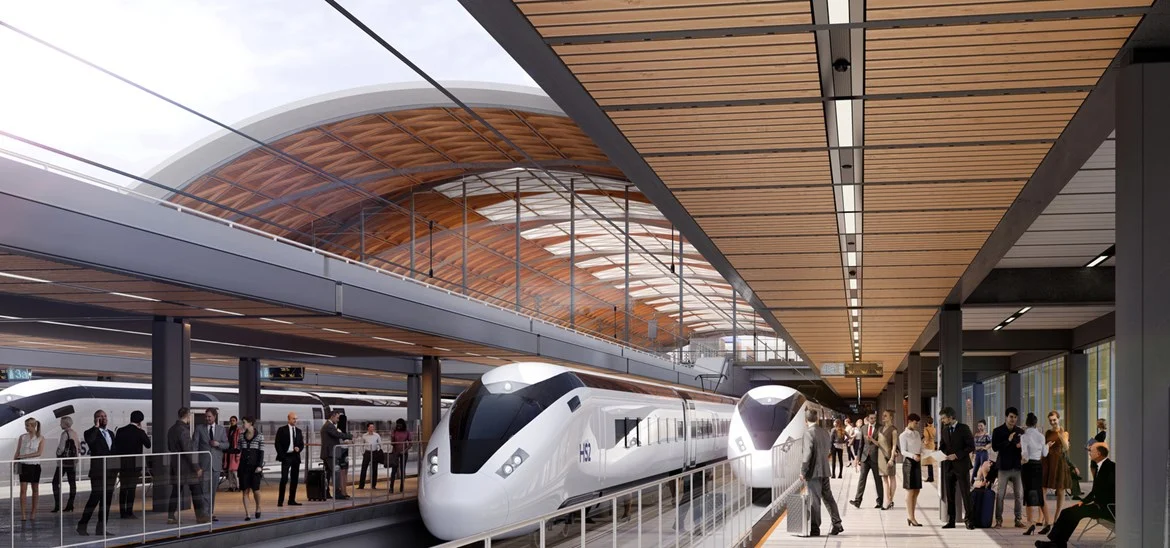
The United Kingdom’s ambitious High Speed 2 (HS2) project—a cornerstone of the nation’s future transport infrastructure—has officially moved into its primary construction phase. The Department for Transport (DfT) has issued the formal "Notice to Proceed" to the project’s main works civil engineering contractors, signaling a definitive transition from planning and enabling works to the full-scale delivery of the high-speed rail network.
This long-awaited mandate follows the British Government’s definitive decision in February to uphold the project despite years of political debate, cost scrutiny, and logistical hurdles. By greenlighting the transition to full construction, the government has reaffirmed its commitment to rebalancing the UK economy and addressing the chronic capacity constraints currently stifling the nation’s rail network.
The Scope of the Notice to Proceed
The Notice to Proceed (NtP) is not merely an administrative formality; it is the vital legal and financial instrument that allows the four primary civil engineering joint ventures to transition into the "full detailed design and construction" phase of Phase One.
Phase One of the HS2 project covers the construction of 225 kilometers (approximately 140 miles) of high-speed track stretching from London Euston to the West Midlands. This section is the backbone of the entire endeavor, designed to alleviate the bottleneck on the existing West Coast Main Line (WCML).
Under the terms of the notice, contractors are authorized to:
- Finalize detailed engineering designs.
- Commence comprehensive site preparation.
- Execute major civil works, including tunnel boring, viaduct construction, and track laying.
- Commit to long-term sub-contracts, providing stability to the supply chain.
A Chronological Journey: From Concept to Construction
The trajectory of HS2 has been marked by significant milestones, intense debate, and rigorous parliamentary scrutiny.
The Origins (2009–2012)
The project was first formally proposed by the Labour government in 2009. The vision was clear: to create a high-speed spine that would connect the UK’s major economic hubs, effectively "shrinking" the distance between London, the Midlands, and the North. In 2012, the government officially announced its commitment to the full Y-shaped network.
Parliamentary Hurdles (2013–2017)
The subsequent years involved an exhaustive legislative process, including the introduction of the High Speed Rail (London – West Midlands) Bill. During this period, the project faced challenges ranging from environmental protests and property acquisition disputes to rising cost projections. Despite these, the project received Royal Assent in 2017, formally authorizing the government to acquire land and proceed with construction.
The Contracts (2017)
In July 2017, HS2 Ltd announced the winners of the multi-billion-pound main works civil engineering contracts. These joint ventures were tasked with the design and construction of the tunnels, bridges, and earthworks required for Phase One. However, these contracts remained in a "pre-construction" state while the project faced renewed uncertainty regarding its final budget and timeline.
The Oakervee Review and the 2020 Pivot
Following a critical review chaired by Doug Oakervee, which questioned the escalating costs and the potential for scope creep, the government paused to reconsider the project’s viability. In February 2020, Prime Minister Boris Johnson confirmed that the government would proceed with HS2, marking the end of the uncertainty and clearing the path for the Notice to Proceed issued shortly thereafter.
Supporting Data: Why HS2 Matters
The necessity of HS2 is rooted in the structural limitations of Britain’s Victorian-era railway infrastructure. The West Coast Main Line is currently one of the busiest and most congested mixed-use railways in Europe.
Capacity and Connectivity
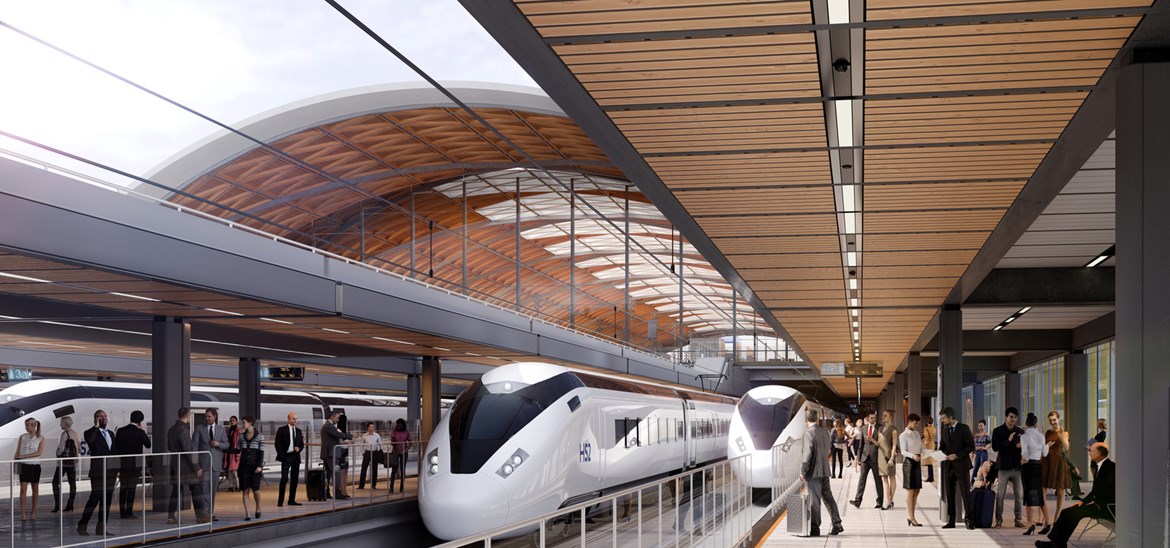
- Passenger Capacity: Once operational, HS2 will serve over 25 stations, connecting roughly 30 million people. By removing high-speed intercity trains from the existing network, the WCML will gain significantly more capacity for local commuter services and freight.
- Strategic Reach: While Phase One connects London to the West Midlands, the network is designed to integrate seamlessly with the existing rail network. Trains will continue onto the conventional network to reach Manchester, Glasgow, Liverpool, Preston, and Wigan.
- Economic Impact: The project aims to act as a catalyst for "levelling up"—a government strategy to reduce the regional economic divide between the South East and the rest of the UK.
Environmental Sustainability
Central to the HS2 mandate is the commitment to a greener future. The project is a primary driver in the government’s "Net Zero" strategy. By shifting long-distance travel from short-haul domestic flights and private automobiles to an electric high-speed rail network, the UK expects a substantial reduction in transport-related carbon emissions. Furthermore, the project includes extensive ecological mitigation efforts, such as the "Green Corridor" initiative, designed to plant millions of trees and create new wildlife habitats along the route.
Official Responses and Industry Outlook
The announcement was met with a mix of relief and optimism from government officials and industry leaders, particularly given the backdrop of the global pandemic and the resulting economic uncertainty.
Government Perspective
HS2 Minister Andrew Stephenson emphasized the stability the decision provides: "Following the decision earlier this year to proceed with the project, this next step provides thousands of construction workers and businesses across the country with certainty at a time when they need it, and means that work can truly begin on delivering this transformational project."
Industry Perspective
Mark Thurston, CEO of HS2 Ltd, highlighted the project’s role as an economic engine: "In these difficult times, today’s announcement represents both an immediate boost to the construction industry—and the many millions of UK jobs that the industry supports—and an important investment in Britain’s future: levelling up the country, improving our transport network and changing the way we travel to help bring down carbon emissions and improve air quality for the next generation."
The construction industry views the Notice to Proceed as a vital lifeline. With billions of pounds of investment now flowing into the supply chain, thousands of small and medium-sized enterprises (SMEs) across the UK are expected to benefit from sub-contracting opportunities in engineering, logistics, and professional services.
Implications: The Road Ahead
As the project shifts into high gear, the implications for the United Kingdom are profound. However, the path forward is not without challenges.
The Engineering Challenge
Constructing a high-speed line through the dense geography of Southern England and the Midlands involves complex engineering. This includes the delivery of record-breaking tunnel lengths and massive viaducts that must adhere to stringent environmental and safety standards. The engineering prowess required for this project is comparable to the greatest infrastructure achievements in British history, such as the construction of the Channel Tunnel.
The Socio-Economic Transformation
The "levelling up" agenda relies heavily on the success of HS2. By improving connectivity between the North and the South, the government hopes to attract investment to the Midlands and Northern England, fostering job creation and reducing the "brain drain" of talent toward London. The integration with existing networks ensures that the benefits of high-speed rail are not localized to the major hubs but are dispersed across regional towns and cities.
Long-Term Value
Critics of the project often point to the initial budget estimates. However, supporters argue that in the context of long-term national development, the cost must be weighed against the century-long lifespan of the infrastructure. A modern, reliable, and high-capacity rail network is considered an essential asset for a competitive 21st-century economy.
Conclusion
The issuance of the Notice to Proceed marks the end of the conceptual and preparatory phase of HS2 and the beginning of a physical transformation of Britain’s landscape. By providing the authorization for full-scale construction, the government has signaled that, despite the political and financial noise of the past decade, the commitment to modernizing the UK’s transport spine remains steadfast.
As the heavy machinery moves onto the sites and the detailed designs begin to take shape, the true impact of HS2 will start to emerge. For the thousands of workers currently embarking on the project, this is more than just a job; it is the construction of a legacy that will define the efficiency, connectivity, and environmental sustainability of the British rail network for generations to come. The era of High Speed 2 has officially arrived.

