

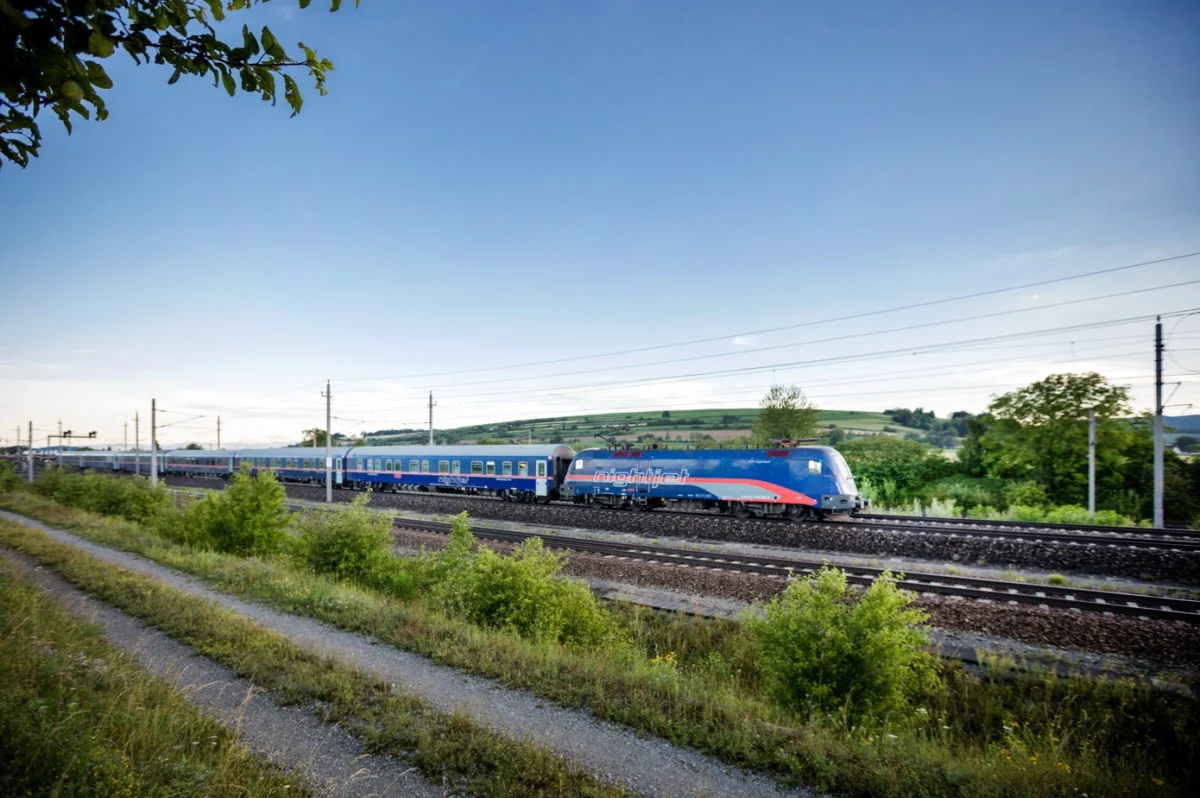
VIENNA, Austria — In a landmark decision underlining its unwavering commitment to sustainable transportation and economic modernization, the Austrian Council of Ministers officially approved the ÖBB (Österreichische Bundesbahnen) Framework Plan for the years 2022 through 2027. Backed by a colossal investment of EUR 18.2 billion, this ambitious six-year blueprint represents the largest railway expansion and modernization package in the history of the republic.
Designed to fundamentally transform passenger experiences, elevate freight logistics, and drive Austria toward its ambitious climate neutrality targets, the program allocates approximately EUR 3 billion annually. Compared to previous budgetary cycles—most notably the 2020 baseline—this new framework plan scales up funding by an impressive EUR 700 million, signaling a profound shift in how the Alpine nation views the future of mobility.
Main Facts: A Blueprint for the Future of Austrian Mobility
The EUR 18.2 billion ÖBB Framework Plan 2022–2027 is a comprehensive infrastructural overhaul touching every facet of Austria’s rail ecosystem. Rather than focusing solely on high-speed prestige projects, the strategy adopts a holistic approach that balances major arterial expansions with vital regional upgrades, cutting-edge digitalization, and robust freight capacity enhancements.
Core Pillars of the Investment Program:
- Unprecedented Financial Scale: EUR 18.2 billion deployed over six years, translating to an average annual injection of EUR 3 billion into the national rail grid.
- Passenger Experience and Speed: Upgrades to major trunk routes to drastically reduce travel times between Austria’s major metropolitan centers.
- Freight Sector Competitiveness: Infrastructure modifications to accommodate longer, heavier freight trains, shifting heavy cargo away from congested highways and onto eco-friendly rail corridors.
- Digitalization and Safety: Heavy investments in digital customer information systems, enhanced train safety architectures, and seamless mobile network coverage along all major and regional rail corridors.
- Regional Revival: Continuation of aggressive electrification programs and service enhancements across regional rail lines to make sustainable commuting viable and attractive in rural areas.
This massive financial commitment does not exist in a vacuum. It forms part of a broader, long-term capital expenditure strategy by ÖBB. Earlier in the spring, the national railway operator announced a staggering EUR 25 billion total investment envelope running through 2026—a broader figure that incorporates comprehensive rolling stock renewals (such as the massive tender for up to 540 new electric multiple units) and clean energy generation projects designed to power the rail network entirely with renewable electricity.
Chronology: The Evolution of Austria’s Modern Rail Strategy
To understand the weight of the 2022–2027 framework plan, it is essential to trace the deliberate, step-by-step evolution of Austria’s transport policy over recent years, moving from localized upgrades to a synchronized national strategy.
- Late 2010s — Laying the Groundwork: Recognizing the impending pressures of climate change and rising road congestion, the Austrian government began formulating long-term strategies to prioritize rail transport. Planning for mega-projects such as the Koralm Railway and the Semmering Base Tunnel entered critical phases of construction.
- Spring 2021 — The Broader Vision: ÖBB unveiled its expansive EUR 25 billion medium-term investment vision extending to 2026, setting the stage for massive fleet modernizations, digital transformations, and green energy initiatives.
- Late 2021 — Council Approval of the 2022–2027 Framework: The Austrian Council of Ministers formally greenlit the EUR 18.2 billion infrastructure framework plan. This milestone legally bound the state to a predictable, high-volume funding schedule spanning six years.
- Introduction of the KlimaTicket: Running parallel to the infrastructure investments, the Austrian government launched the nationwide KlimaTicket. This subsidized, flat-rate annual transit pass revolutionized public transport adoption by allowing citizens to travel on almost all public transport across the country for a single, affordable annual fee.
- 2022 and Beyond — Implementation and Expansion: With the framework plan active, ÖBB initiated the systematic rollout of its five additional core projects, alongside continuous track maintenance, tunnel completions, and regional electrification milestones designed to link rural communities directly into the national high-speed grid.
Supporting Data: Numbers Behind the Transformation
The scale of the ÖBB Framework Plan 2022–2027 can only be fully appreciated when examining the underlying economic, logistical, and environmental metrics that justify the expenditure.
Financial and Budgetary Breakdown
- Total Infrastructure Budget: EUR 18.2 billion over six years.
- Annual Investment Rate: ~EUR 3 billion per year.
- Budgetary Increase: A EUR 700 million uplift compared to the 2020 funding metrics, demonstrating a clear acceleration in governmental spending priorities.
- Wider Capital Commitment: Up to EUR 25 billion in total capital expenditure earmarked by ÖBB through 2026, covering infrastructure, clean energy, and rolling stock.
Operational and Logistical Metrics
- Capacity Expansion: Infrastructure designed to handle significantly higher track densities, allowing more frequent passenger services to operate without bottlenecking.
- Freight Efficiency: Upgraded clearances and passing loops enabling the operation of longer and heavier freight compositions, directly challenging the dominance of long-haul trucking.
- Digital Integration: 100% continuous mobile network coverage goals across major and regional routes to ensure passengers can work and communicate seamlessly while traveling.
- Fleet Modernization: Integration of modern electric multiple units capable of faster acceleration, higher passenger capacities, and superior energy efficiency.
Official Responses: Voices Driving the Green Transition
The announcement of the framework plan drew enthusiastic praise from key political and corporate leaders in Austria, who framed the investment not merely as a transport upgrade, but as a defining pillar of the nation’s environmental and economic future.
Leonore Gewessler, Federal Minister for Climate Action, Environment, Energy, Mobility, Innovation and Technology:
"The largest railway expansion package in the republic will be topped up again. (…) This is an important building block for more climate protection. Because a modern network and a cheap KlimaTicket make public transport more attractive than ever before. And every kilometre by train protects our climate."
Minister Gewessler’s remarks highlight the symbiotic relationship between hardware and policy. While the physical rails, tunnels, and signaling systems provide the foundational capacity, demand-side policy instruments—most notably the KlimaTicket—ensure that citizens actively abandon carbon-heavy private automobiles in favor of electric-powered rail transit.
Andreas Matthä, CEO of ÖBB:
"The new master plan will make rail travel in Austria even better and more efficient. Investments in the large main routes bring faster connections between the large metropolitan areas of Austria. In addition to the large main routes, the regional railways will be made even more attractive and electrified. This makes switching to rail more interesting in rural areas as well. This is a gain for the passengers and for the environment."
CEO Matthä emphasized the egalitarian nature of the master plan. By refusing to focus exclusively on inter-city high-speed corridors, ÖBB is intentionally pouring resources into rural electrification and regional connectivity. This ensures that citizens living outside major urban centers like Vienna, Graz, or Linz can seamlessly plug into the national transit network, democratizing access to green mobility.
Implications: Economic Growth, Environmental Impact, and European Leadership
The implementation of the ÖBB Framework Plan 2022–2027 carries profound implications that extend far beyond Austria’s borders, positioning the nation as a standard-bearer for European rail policy.
1. Environmental Protection and Climate Targets
Transport remains one of the most stubborn sectors in the global fight against carbon emissions. By pouring EUR 18.2 billion into rail expansion—and coupling it with clean energy mandates that ensure trains run on renewable power—Austria is directly attacking its greenhouse gas footprint. Every modal shift from diesel-powered trucks to electrified freight rail, and from private combustion-engine cars to zero-emission passenger trains, brings the Alpine republic closer to its ultimate climate neutrality goals.
2. Economic Stimulus and Industrial Competitiveness
The injection of EUR 3 billion annually acts as a powerful macroeconomic catalyst for Austrian industry. Engineering firms, construction contractors, signaling technology providers, and rolling stock manufacturers benefit from a predictable, long-term pipeline of high-value public contracts. Furthermore, by upgrading freight corridors to handle heavier and longer loads, Austrian logistics companies gain a distinct competitive edge, lowering transit times and supply chain costs for domestic manufacturing sectors.
3. Social Equity and Regional Cohesion
Modern infrastructure must serve all citizens, not just urban elites. Through targeted regional electrification and network enhancements, the framework plan bridges the urban-rural divide. Commuters in smaller towns gain reliable, rapid access to employment and educational hubs without being forced to maintain private automobiles. Combined with upgraded digital infrastructure—such as reliable onboard mobile data and modern passenger information displays—train travel becomes an efficient, productive, and stress-free daily routine.
4. A European Benchmark
As the European Union pushes relentlessly toward its "Fit for 55" legislative package and the overarching goals of the European Green Deal, the continent is searching for scalable models of successful modal shift. Austria’s proactive, state-backed, and generously funded railway strategy serves as an inspiring blueprint for member states struggling to reconcile economic development with aggressive decarbonization.
Conclusion
The approval of the ÖBB Framework Plan 2022–2027 marks a defining chapter in modern Austrian history. By marrying visionary political leadership with robust corporate execution, Austria is proving that the future of mobility is not paved with asphalt, but laid upon steel rails. As construction begins, new trains are ordered, and digital networks expand, the republic is laying down tracks toward a cleaner, faster, and more connected tomorrow.

