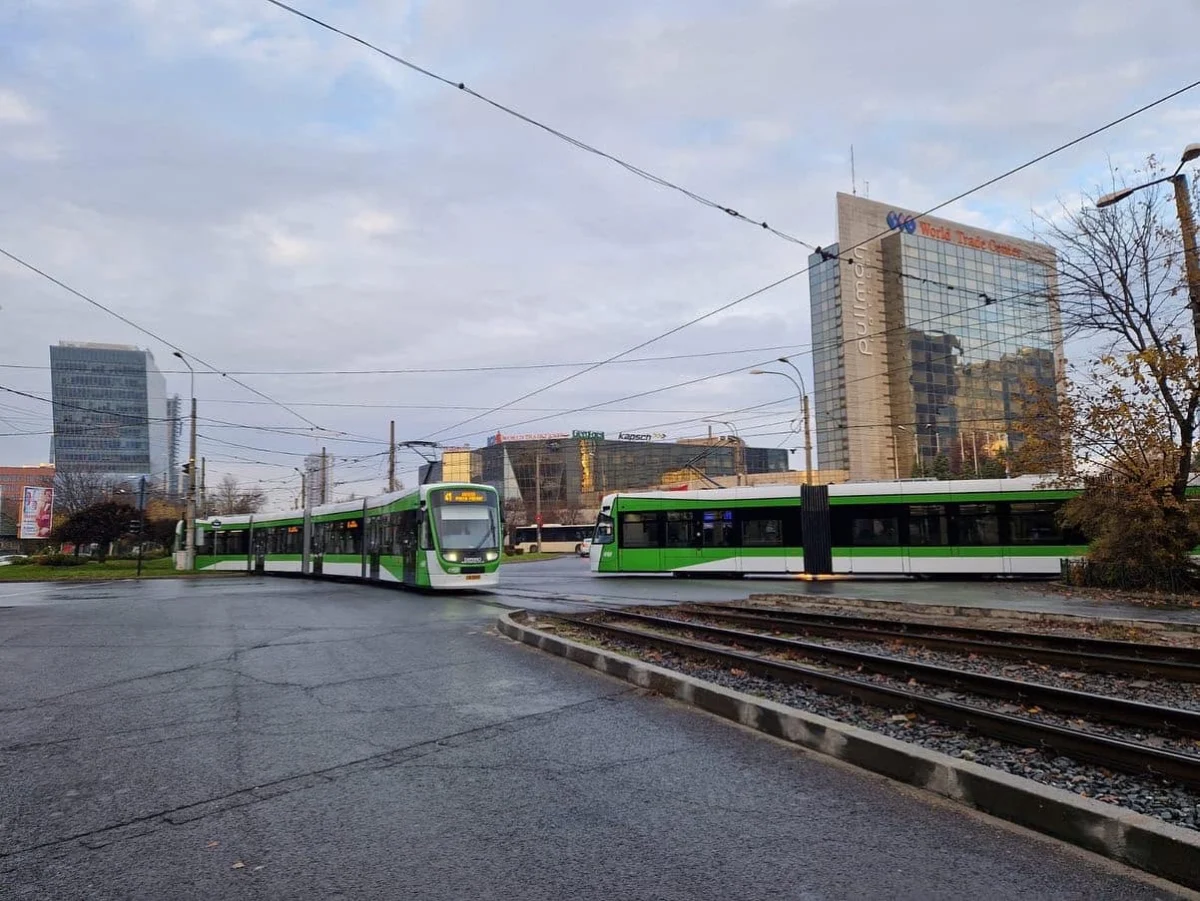
Bucharest Takes a Major Leap Forward: City Hall Awards Contracts for 15 Kilometers of New Tramway Feasibility Studies
Nila Kartika Wati
September 14, 2026
8 min read
Share Article
BUCHAREST, Romania — In a decisive move to modernize its aging urban transport network, the Bucharest City Hall has officially awarded four crucial feasibility study contracts for the expansion of the city’s tram network. Valued at a combined RON 7.75 million (approximately EUR 1.58 million), these contracts mark the foundational step toward constructing 15 kilometers of brand-new tram tracks designed to bridge critical gaps in the capital’s public transit grid.
This ambitious initiative forms the cornerstone of a broader municipal strategy spearheaded by Mayor Nicușor Dan to elevate public transportation, alleviate chronic traffic congestion, and align the Romanian capital with modern European green mobility standards. By weaving disconnected lines together and extending service to high-traffic commercial and residential hubs, Bucharest is laying the groundwork for a more cohesive, efficient, and sustainable urban future.
Main Facts: Breaking Down the Four Lots
The public procurement procedure for the feasibility studies was meticulously divided into four distinct lots, ensuring that specialized engineering firms could target specific infrastructural bottlenecks across the city. Two major players in the civil engineering and transport planning sectors—Metroul S.A. and Intergroup Engineering—secured the contracts, committing to deliver the comprehensive studies within a strict nine-month window.
Lot 1: The Unirii Square Link
Contractor: Metroul S.A.
Value: RON 1 million (approx. EUR 212,247)
Scope: Construction of a vital 900-meter tram track cutting through Unirii Square in the heart of the city center, spanning from Dealul Mitropoliei to Sfânta Vineri Street.
Strategic Impact: This seemingly short stretch of track is of monumental importance to the network topology. It serves as the missing link that will seamlessly connect Tram Line 32 (running from the south-west) and Tram Line 21 (serving the eastern and north-eastern corridors), enabling cross-city transit without the need for cumbersome transfers or detours.
Lot 2: The Grand Cross-City Corridor
Contractor: Metroul S.A.
Value: RON 3.98 million (approx. EUR 810,822)
Scope: Engineering a massive 10.8-kilometer new tram line connecting the south-eastern quadrant of Bucharest to the north-east. The proposed route traverses Chișinău Boulevard and Alexandru Anghel Street, running via Nicolae Grigorescu Boulevard, Iuliu Hațieganu Street, the Vitan-Bârzești trunk, and Sergent Ion Iriceanu, Turnu Măgurele, and Luica streets.
Strategic Impact: Representing the lion’s share of the newly planned kilometers, this arterial connection will drastically cut travel times between densely populated peripheral neighborhoods, bypassing the congested city center and providing direct access to key recreational, residential, and commercial zones.
Lot 3: The Băneasa Commercial Connection
Contractor: Intergroup Engineering
Value: RON 1.2 million (approx. EUR 260,156)
Scope: Design and feasibility analysis for a 1.4-kilometer branch linking Grațioasa Street to the bustling Băneasa commercial center in the northern sector of the capital.
Strategic Impact: As northern Bucharest continues to densify with retail and office spaces, this extension will absorb high-volume commuter traffic, offering a sustainable alternative to private automobiles for shoppers and employees alike.
Lot 4: The Mezeș to Colosseum Retail Link
Contractor: Intergroup Engineering
Value: RON 1.46 million (approx. EUR 297,746)
Scope: Development of a 1.6-kilometer section connecting the existing tram loop on Mezeș Street to the Colosseum commercial center in north-eastern Bucharest.
Strategic Impact: This project bridges residential sectors with major retail and employment destinations, ensuring that outer-ring communities are not left isolated from the city’s broader economic and transit ecosystem.
Chronology of Reform: From Vision to Execution
To fully understand the weight of the recent contract awards, one must examine the timeline of Bucharest’s recent transit renaissance. For decades, the city’s surface public transport system struggled under the weight of underfunding, deferred maintenance, and political stagnation. However, the narrative began to shift dramatically following the local administration changes and strategic planning sessions initiated between 2021 and 2023.
Late 2021 – Early 2022: Recognizing the severe degradation of municipal rail infrastructure—where sections of track had deteriorated to speeds that discouraged daily ridership—Bucharest City Hall initiated comprehensive audits of the STB (Societatea de Transport București) network.
Mid-2022: Mayor Nicușor Dan formally announced an expansive vision for the city’s rail transit. He unveiled the comprehensive Bucharest Tram Expansion Programme, committing the city to constructing 30 kilometers of brand-new tracks to meet surging public demand and expand the modal share of public transport.
Late 2022: Municipal authorities simultaneously prioritized a massive modernization and rehabilitation initiative targeting 50 kilometers of existing tram tracks, backed by an estimated investment envelope of EUR 500 million. Securing European Union funds and structural grants became a central pillar of this financial strategy.
January 2023: The bureaucratic groundwork materialized into concrete action as the acquisition procedures for the feasibility studies were finalized, culminating in the awarding of the four specific lots to Metroul S.A. and Intergroup Engineering.
2023–2024 (Current Phase): With nine-month contract deadlines in motion, engineering teams are conducting rigorous topographical, geotechnical, environmental, and socio-economic evaluations. These studies will dictate the final engineering designs, budgetary forecasts, and construction timelines necessary to transition these projects from blueprint to reality.
Supporting Data: The Financial and Structural Landscape
The modernization of Bucharest’s public transit network is not merely an aesthetic or convenience-driven upgrade; it is a complex financial and logistical undertaking backed by hard numbers.
Project Metric
Detail / Value
Total Feasibility Study Value
RON 7.75 million (~EUR 1.58 million)
Total New Track Length Covered by Studies
15 kilometers
Broader Municipal Expansion Goal
30 kilometers of new tracks (announced 2022)
Track Rehabilitation Priority Program
50 kilometers of existing tracks
Estimated Budget for Track Rehabilitation
EUR 500 million
Contract Execution Window
9 months per lot
Primary Engineering Partners
Metroul S.A., Intergroup Engineering
This financial commitment reflects a paradigm shift in how municipal funds are allocated. Rather than continuously pouring temporary patches onto failing infrastructure, City Hall is investing in long-life capital assets. The cost efficiency of the feasibility studies—averaging roughly EUR 105,000 per kilometer of planned track—demonstrates a competitive procurement process that attracted top-tier Romanian engineering expertise.
Official Responses and Municipal Vision
The leadership in Bucharest has been vocal about the necessity of these infrastructural overhauls. Mayor Nicușor Dan has repeatedly emphasized that a modern European capital cannot function efficiently if its public transit system remains anchored in the past.
"To meet the ever-growing demand of our citizens, to drastically increase the public transport modal share, and to provide the critical connections that have been missing for decades, our administration is moving past mere discussions and into active delivery," Mayor Dan noted when outlining the broader 30-kilometer expansion framework.
Municipal transport directors have echoed these sentiments, pointing out that Bucharest suffers from a historically fragmented tram network where several lines terminate frustratingly short of major interchange nodes or commercial hubs. By closing these gaps—particularly the high-profile Unirii Square connection—the city aims to transform the tram network from a disjointed collection of legacy routes into a unified, high-capacity backbone.
Industry stakeholders and urban planners have also welcomed the awards. Representatives from Metroul S.A. and Intergroup Engineering have expressed confidence in meeting the rigorous nine-month delivery schedules, emphasizing that modern digital surveying, BIM (Building Information Modeling), and traffic simulation software will accelerate the design phases without compromising safety or environmental compliance.
Implications: What This Means for Bucharest
The awarding of these four feasibility study contracts carries profound implications for the future of Bucharest, touching upon economic vitality, environmental health, and everyday quality of life.
1. Relief for Chronic Traffic Congestion
Bucharest consistently ranks among the most congested cities in Europe. Private vehicle dependency has reached unsustainable levels, clogging arterial boulevards and degrading air quality. By introducing 15 kilometers of new track—and modernizing 50 kilometers of existing lines—the city creates a compelling alternative to driving. Trams, unencumbered by rubber-tire traffic when operating on dedicated rights-of-way, offer predictable, high-speed transit that can reliably beat rush-hour gridlock.
2. Environmental Sustainability and Green Compliance
As part of the European Union, Romania is bound by stringent climate targets. Decarbonizing urban transport is non-negotiable. Electric tramways produce zero direct tailpipe emissions. By shifting thousands of daily commuters out of diesel and gasoline-powered passenger cars and into electric mass transit, Bucharest will make significant strides toward reducing its urban carbon footprint and lowering particulate matter ($PM2.5$ and $PM10$) pollution.
3. Economic Stimulation and Urban Cohesion
Infrastructure investment acts as a powerful economic multiplier. Connecting residential districts like Luica and Turnu Măgurele directly to commercial powerhouses like the Băneasa and Colosseum retail centers reduces economic friction. Workers gain faster, cheaper access to job centers, while businesses benefit from a wider, more mobile talent pool and increased customer footfall. Furthermore, the revitalization of urban spaces around new tram corridors often triggers complementary private and public real estate improvements, breathing new life into neglected urban sectors.
4. Future-Proofing the STB Network
Ultimately, these studies are the first domino in a long-term transformation. Once the feasibility studies are successfully delivered within their nine-month windows, City Hall will proceed to detailed engineering designs, funding acquisitions (tapping into EU structural funds such as the Regional Operational Program), and physical construction tenders.
Conclusion
Bucharest is at a crucial inflection point in its urban development. The awarding of these RON 7.75 million feasibility contracts proves that the municipal administration is serious about upgrading its transit DNA. As Metroul S.A. and Intergroup Engineering set to work over the coming months, residents of the Romanian capital can look forward to a future where getting across the city is faster, greener, and infinitely more connected.