

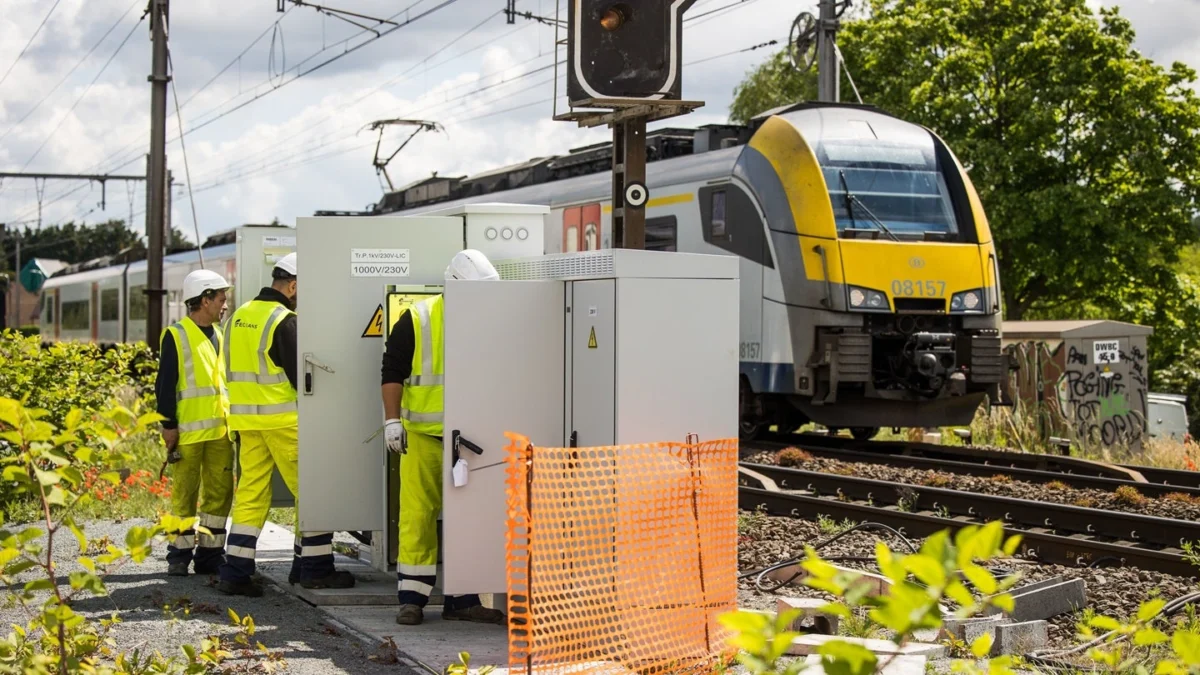
In a monumental achievement for European rail transport, Belgium has officially completed the nationwide rollout of the European Train Control System (ETCS) Level 2. This multi-year infrastructural endeavor, finalized in December 2025, marks a definitive transition from legacy signalling systems to a cutting-edge, digitalized rail environment. By successfully modernizing 2,274 kilometers of track, the project positions Belgium at the forefront of the European Union’s goal to create a unified, safe, and highly efficient trans-European transport network.
The project was executed through a strategic partnership between Belgian infrastructure manager Infrabel, technology giant Siemens Mobility, and the multi-technical services firm Equans. The completion of the "ETCS Masterplan" serves as a benchmark for how complex, dense railway networks can be upgraded without disrupting the vital flow of daily passenger and freight traffic.
A Chronology of Transformation: From 2015 to 2025
The journey toward a fully digitalized Belgian rail network began in 2015, driven by the necessity to replace aging, heterogeneous signalling systems that had become a bottleneck for both domestic reliability and international interoperability.
The Foundation (2015–2018)
The initial phase focused on defining the technical specifications and establishing the "ETCS Masterplan." Recognizing that the Belgian network is one of the densest in the world, the consortium prioritized key European corridors—vital arteries for cross-border freight—to ensure that the digital transition would immediately benefit international logistics. During these formative years, the focus remained on pilot lines and the establishment of the Radio Block Centres (RBCs) that would eventually act as the "brains" of the network.
The Scaling Phase (2019–2022)
As the project gained momentum, the focus shifted to the core national network. This period was characterized by intense civil engineering and hardware deployment. Equans played a pivotal role during this phase, managing the intricate site-level logistics—cabling, electrical fitting, and the physical installation of thousands of trackside components. This period also saw the gradual decommissioning of legacy systems in regions surrounding major hubs like Ghent and Mons.
The Final Push (2023–2025)
The concluding years of the project involved the most complex technical challenges: integrating the new ETCS technology into existing, high-traffic interlockings while maintaining operational continuity. Despite the logistical hurdle of working on active tracks, the consortium successfully navigated the final rollout, meeting the ambitious December 2025 deadline.
Supporting Data: The Scale of the Digital Infrastructure
The magnitude of the ETCS implementation in Belgium is best understood through the sheer volume of hardware and software integration required. The modernized network now operates as a cohesive, real-time digital ecosystem.
- Network Coverage: A total of 2,274 kilometers of railway track has been upgraded to ETCS Level 2 standards.
- Signalling Infrastructure: The network now integrates 46 advanced interlockings and 37 Radio Block Centres (RBCs), which facilitate continuous communication between the track and the train.
- Trackside Deployment: To ensure precise train positioning and safety, the project installed over 19,000 balises (transponders) and 4,536 signals, providing a robust layer of redundancy and safety.
- Communication Backbone: The system utilizes GSM-R (Global System for Mobile Communications – Railway), a dedicated digital radio network that ensures secure, low-latency data transmission for train management.
This infrastructure allows for "moving block" signaling concepts, which inherently increases capacity by allowing trains to run closer together safely, effectively expanding the network’s throughput without the need for laying additional tracks.
The Roles of the Consortium: A Synergistic Approach
The success of the Belgian ETCS project was predicated on a clear division of expertise. Siemens Mobility took the lead on the "intelligence" of the system, providing the signaling technology, ETCS Level 2 software, and the complex interlocking logic that governs the movement of trains. Their proprietary technology serves as the engine for the network’s newfound efficiency.
Equans, meanwhile, served as the "hands and feet" of the operation. Managing the physical site installation was a logistical challenge of immense proportions. The company’s scope included:
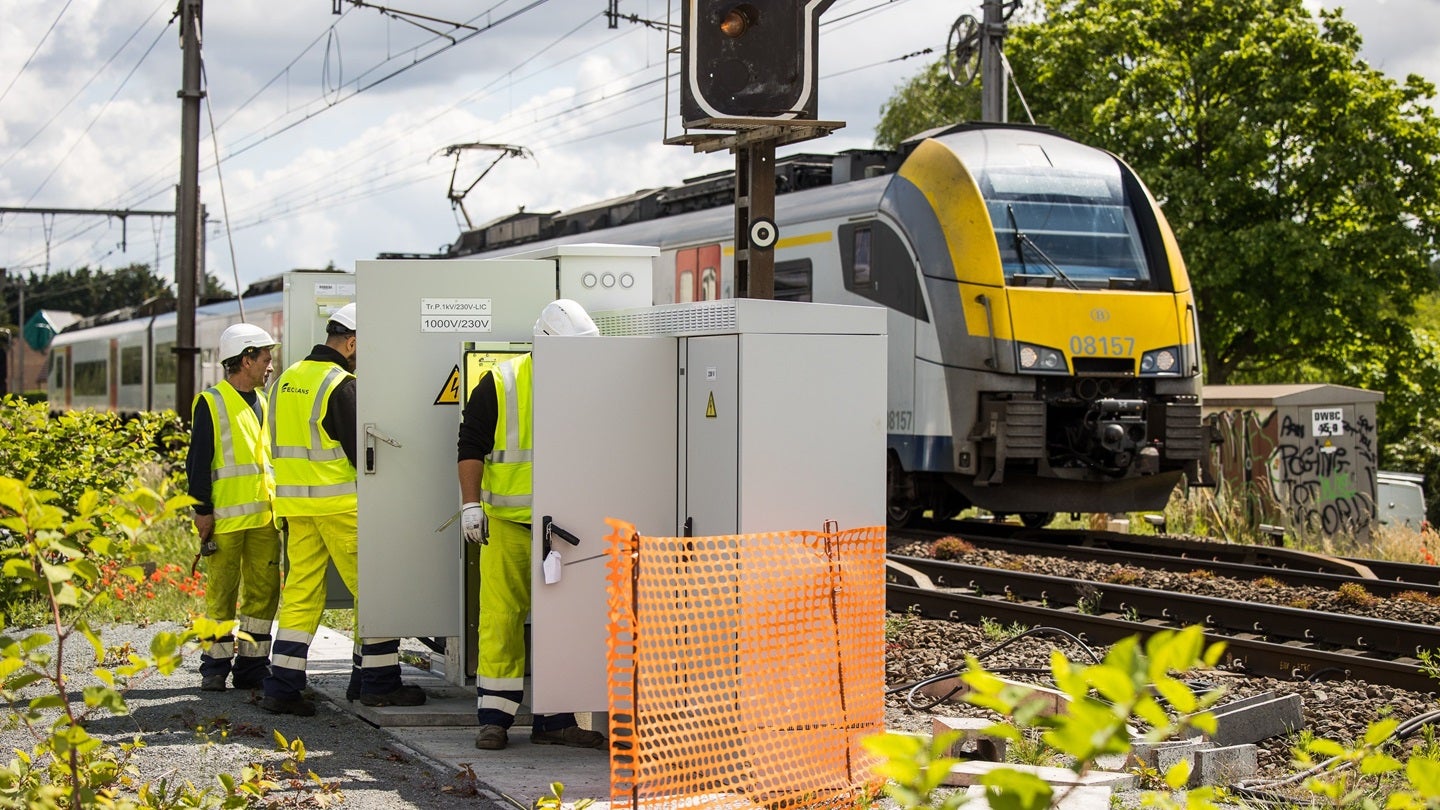
- Civil Engineering: Preparing the physical environment for digital hardware.
- Cabling: Installing vast networks of fiber-optic and electrical cabling to connect the RBCs and interlockings.
- Hardware Deployment: The installation of trackside equipment that must withstand decades of environmental wear and tear.
Official Responses and Strategic Vision
The completion of the project has drawn praise from industry leaders, who highlight the project’s unique status as a model for the rest of Europe.
Michael Peter, CEO of Siemens Mobility, underscored the difficulty of the project, noting: "Belgium is the first country to implement ETCS across a highly complex network under rolling conditions with almost no closures—setting the example Europe must follow. The on-time completion of this project, exactly ten years after its start, reflects the strength of our partnership with Infrabel and the consortium’s unwavering commitment."
Mark Dirckx, CEO of Equans Belux, highlighted the broader societal impact of the endeavor: "With the nationwide installation of the European train control system ETCS and the achievement of the ETCS Masterplan, we have made an important contribution to safer, more efficient, and future-proof rail transport in Belgium. Thanks to a partnership with Siemens Mobility, we realized a technically and logistically complex project of impressive scale."
Implications: A Future-Ready Rail Network
The shift to ETCS Level 2 has profound implications for the Belgian economy and the broader European transport landscape.
Enhanced Operational Efficiency
Before the upgrade, Belgium’s legacy signaling was a patchwork of localized systems, often incompatible with modern digital standards. The new system provides a uniform, high-speed, and reliable communication protocol. This reduces the risk of human error and allows for automated speed management, leading to more consistent arrivals and departures.
Cross-Border Interoperability
As a central hub in the European rail network, Belgium’s transition is critical for international connectivity. Trains traveling from France, Germany, or the Netherlands can now traverse Belgium without needing to switch to different national signaling systems, drastically reducing dwell times at borders and streamlining the movement of freight across the continent.
Safety as a Priority
ETCS Level 2 is fundamentally a safety-first technology. By providing the driver with a continuous display of speed limits and movement authorities via the on-board DMI (Driver Machine Interface), the system acts as a constant supervisor. If a train exceeds a safe speed or ignores a signal, the system automatically triggers a brake application, ensuring that accidents are prevented before they can occur.
A Blueprint for Europe
Belgium’s successful completion of this project serves as a "proof of concept" for other European nations struggling with aging rail infrastructure. It demonstrates that the transition to digital rail is not only possible but can be achieved without shutting down a nation’s economy. As the EU pushes toward a "Single European Railway Area," the Belgian model provides a clear, actionable roadmap for infrastructure managers across the bloc.
In conclusion, the completion of the ETCS Level 2 rollout is more than a technical upgrade; it is a fundamental re-engineering of the Belgian railway system. By embracing digital integration, Belgium has solidified its position as a modern, efficient, and interconnected link in the European transport chain, ensuring that its rail network is equipped to meet the demands of the 21st century.

