

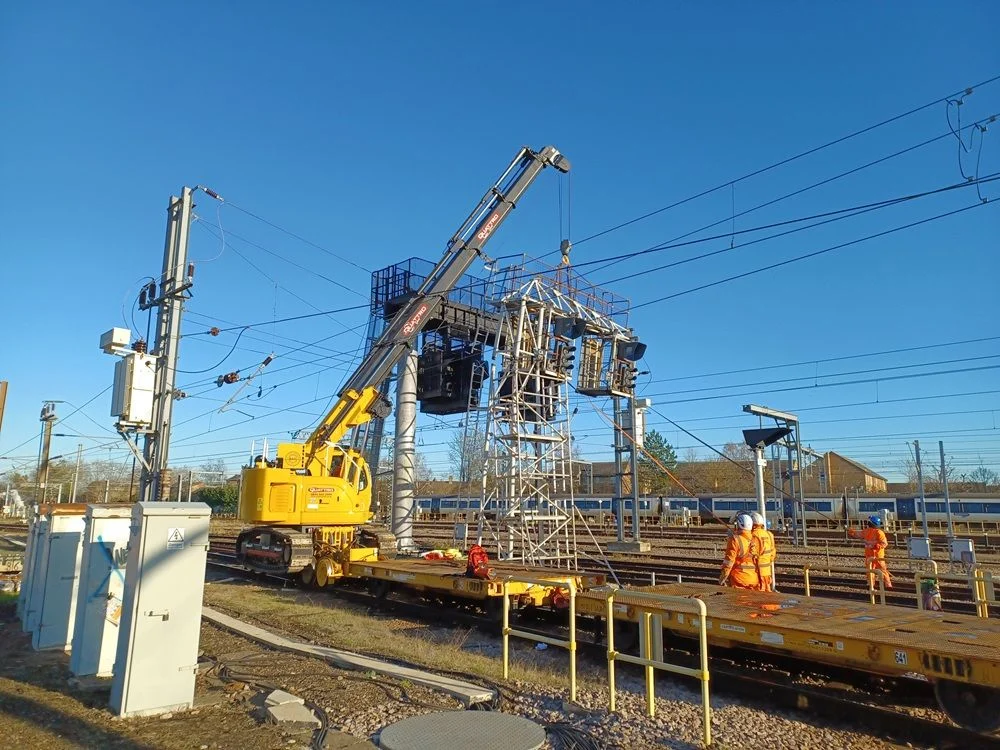
CAMBRIDGE, UNITED KINGDOM — In what marks a monumental milestone for the modernization of Britain’s railway network, Alstom has successfully completed Phase Two of the Cambridge Resignalling, Relock and Recontrol (C3R) project. Delivered precisely on schedule to Network Rail following an intense 11-day festive engineering blitz, this achievement stands as the largest resignalling project ever undertaken by Alstom within the United Kingdom.
The successful transition represents a critical leap forward for the East Anglian rail corridor, promising enduring improvements in passenger safety, operational reliability, and network capacity. The works form a cornerstone of a broader £200 million regional modernization investment program designed to replace antiquated infrastructure that has served the region for more than forty years.
Main Facts
The completion of Phase Two was achieved during a total operational closure of Cambridge station and its adjacent routes, running uninterrupted from December 25, 2025, to January 5, 2026. This high-stakes, meticulously planned logistical operation required the orchestration of approximately 250 specialists per shift deployed across 23 grueling shifts, ultimately accumulating upwards of 50,000 hours of specialized engineering work.
The core of the project centered around the definitive retirement of the legacy Cambridge Power Signalling Box (PSB) panel. At midnight on Christmas Day, the vintage panel was permanently decommissioned after more than four decades of continuous, faithful operation—a moment symbolically marked by operators with the simple, poignant message: “FAREWELL.”
In place of the outdated analog infrastructure, Alstom integrated its cutting-edge Smartlock 400 interlocking technology alongside the advanced MCS Infinity control platform. This modern architectural framework provides unmatched operational flexibility, enhanced system reliability, and crucially, future-proofs the corridor for the impending rollout of digital train control systems, including the European Train Control System (ETCS).
The sheer scale of the engineering feat is underscored by the physical assets brought into service during the 11-day window:
- Over 100 modern signals
- 76 points machines
- More than 300 axle counter sections
- 323 signaled routes
- Nine modernized level crossings
Among these improvements, the newly upgraded Meldreth Road level crossing achieved national attention by reopening a full week ahead of schedule. The crossing now features state-of-the-art full barriers integrated directly into the primary signaling architecture and is remotely managed via closed-circuit television (CCTV), substantially elevating safety standards for motorists, cyclists, and pedestrians alike.
Chronology
The journey toward the realization of the C3R project spans multiple years of strategic planning, heavy engineering, and precise stakeholder coordination, unfolding across a clearly defined multi-phase timeline:
The Prelude and Contract Award (2022)
The foundational chapter of the modern Cambridge resignalling initiative began in 2022, when Network Rail awarded Alstom a landmark £130 million contract to design and deliver the comprehensive C3R scheme. This contract represented the single largest award issued by Network Rail under the Major Signalling Framework Agreement (MSFA), setting a high benchmark for future rail infrastructure partnerships in the UK.

Planning and Phase One Preparations (2023–2025)
Over the subsequent three years, Alstom’s engineering teams worked in close tandem with Network Rail to survey the territory, design the intricate software logics for the Smartlock 400 system, and lay the groundwork for physical installations without severely disrupting day-to-day passenger services. Detailed contingency plans were drafted, and community outreach programs were initiated to prepare regional commuters for the inevitable holiday disruptions.
The Christmas Blitz: Phase Two Delivery (December 25, 2025 – January 5, 2026)
The defining operational window commenced at midnight on Christmas Day 2025. With passenger services halted across the target zone, a round-the-clock army of engineers flooded the tracks. Over 50,000 man-hours were expended during this 11-day blockade to extract legacy cabling, install new trackside equipment, test thousands of circuits, and migrate control to the updated digital architecture. The meticulous planning paid off when the network successfully reopened on January 5, 2026, fully operational and on schedule.
Immediate Success at Meldreth Road (Early January 2026)
Following the general network restart, localized testing and fine-tuning permitted the early reopening of the Meldreth Road level crossing a week ahead of its initial projection, offering an immediate tangible benefit to the local community.
Future Horizons: Phase Three (2026) and Phase Four (2027)
With Phase Two firmly in the rearview mirror, attention has immediately turned to the remaining stages of the master plan. Phase Three, slated for execution throughout 2026, will encompass the bulk of the remaining level crossing upgrades and the complex re-control operations along the Ely–Norwich route. Finally, Phase Four—scheduled for delivery in 2027—will see the integration of the brand-new signaling systems for the Newmarket and Bury St Edmunds routes, bringing the entire regional transformation to completion.
Supporting Data
To fully comprehend the magnitude of Alstom’s achievement at Cambridge, one must evaluate the technical data and financial frameworks supporting the undertaking:
- Total Regional Investment Program: £200 million funded by Network Rail to overhaul four-decade-old infrastructure across the Cambridge region.
- Alstom Contract Value: £130 million, secured in 2022 under the MSFA framework.
- Closure Duration: 11 consecutive days (December 25, 2025 – January 5, 2026).
- Labor Force: ~250 specialists per shift, operating across 23 continuous shifts.
- Total Working Hours: Over 50,000 hours logged during the holiday intervention window.
- Legacy Lifespan: The retired Cambridge PSB signal panel served faithfully for over 40 years before its decommissioning.
- Asset Integration Metrics:
-
100 signals installed and commissioned.
- 76 points machines deployed.
-
300 axle counter sections integrated.
- 323 distinct signaled routes established.
- 9 modernized level crossings managed.
-
Official Responses
The successful delivery of Phase Two has drawn widespread acclaim from industry leaders, project directors, and rail authorities alike, emphasizing the collaborative ethos required to execute such a complex engineering challenge during the festive period.
While specific executive soundbites continue to resonate across the engineering sector, representatives from both Alstom and Network Rail have lauded the dedication of the workforce. Project leads noted that executing an intervention of this scale without safety incidents, whilst beating tight weather and logistical windows, is a testament to the high caliber of modern rail engineering talent in the United Kingdom.

Local community leaders and regional transport bodies have likewise expressed gratitude for the prompt restoration of services and the early reopening of critical community links like the Meldreth Road crossing, praising the proactive communication strategies employed by Network Rail and Alstom ahead of the holiday closures.
Implications
The completion of Phase Two of the Cambridge Resignalling project carries profound, long-lasting implications for the future of British rail transport:
Technical Readiness for the Digital Railway
Perhaps the most significant long-term implication is the establishment of a future-proof digital backbone. By deploying Alstom’s Smartlock 400 interlocking and MCS Infinity control platforms, the Cambridge region is no longer tethered to aging, fault-prone analog technologies. The new infrastructure provides an open, flexible runway for the future rollout of the European Train Control System (ETCS) and other digital signalling iterations, aligning perfectly with Network Rail’s broader strategy for a modernized, digital national railway.
Enhanced Reliability and Passenger Experience
Decades-old signaling equipment has historically been a major contributor to regional delays and maintenance bottlenecks. The installation of modern axle counters, points machines, and solid-state interlockings dramatically reduces the likelihood of weather-related and mechanical failures. For daily commuters, leisure travelers, and freight operators traversing the Cambridge hub, this translates into significantly improved timetable reliability, smoother journeys, and fewer frustrating cancellations.
Increased Network Capacity
Modern signaling systems allow trains to safely operate closer together and optimize junction throughput without compromising safety margins. As Phase Three and Phase Four come online over the next two years, the cumulative effect of the £200 million investment will unlock desperately needed capacity across East Anglia, accommodating future growth in passenger demand and supporting regional economic development.
A Blueprint for Future Mega-Projects
The successful execution of a 50,000-hour engineering blitz during the depths of the winter holiday season establishes a gold standard for project delivery. By managing complex supply chains, mobilizing hundreds of skilled specialists under tight time constraints, and delivering ahead of schedule on critical path items like Meldreth Road, Alstom and Network Rail have demonstrated how major infrastructure upgrades can be achieved with minimal long-term disruption to the traveling public.
As the industry looks ahead to Phase Three in 2026 and the ultimate conclusion of the program in 2027, the Cambridge Resignalling, Relock and Recontrol project stands tall as a shining example of engineering excellence, technical foresight, and collaborative partnership driving the UK railway into a safer, more reliable digital future.

