

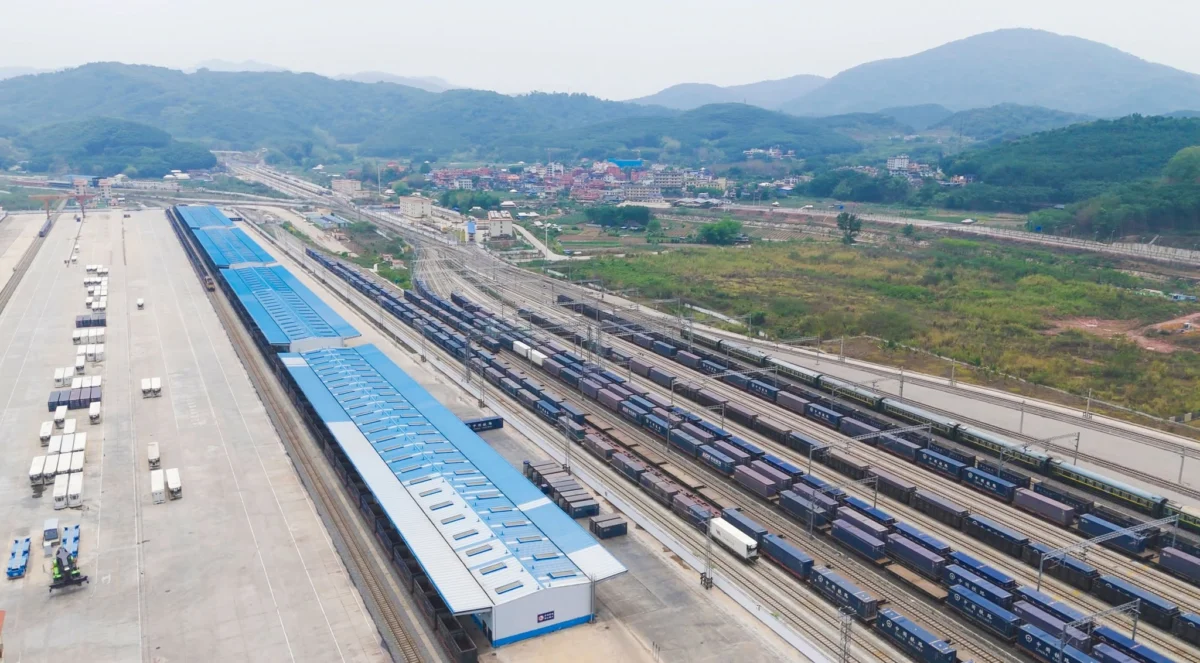
In a move that signals a paradigm shift for the Asian rail logistics landscape, Knorr-Bremse, the global market leader for braking systems and other rail and commercial vehicle systems, has entered into a landmark memorandum of understanding (MoU) with the China Academy of Railway Sciences (CARS). This strategic partnership, formalized in Beijing, establishes the “Cooperation Programme for Rail Freight Transport in China,” a multifaceted initiative designed to overhaul the efficiency, safety, and technological backbone of the nation’s massive freight rail network.
This collaboration marks the next chapter in a two-decade-long industrial relationship. By moving beyond traditional product procurement and into the realm of deep-system integration and research and development (R&D), the two entities aim to set new benchmarks for digitalized, automated, and high-performance rail freight.
Main Facts: The Scope of the Partnership
The newly inaugurated program is not merely a commercial agreement; it is an R&D powerhouse. Knorr-Bremse and CARS have identified four critical pillars of cooperation that will define their joint efforts over the coming years:
- Digital Train Architecture: Transitioning from analog freight operations to a fully networked "Digital Freight Train."
- Next-Generation Braking Systems: Engineering high-capacity braking solutions tailored specifically for China’s unique heavy-haul and long-distance geography.
- Automation and Driver Assistance: Deploying intelligent software to optimize energy consumption and reduce human error, utilizing systems analogous to the globally proven LEADER platform.
- Digital Automatic Couplers (DAC) and Monitoring: Enhancing the physical and digital connectivity of rolling stock to ensure real-time fleet health diagnostics.
By aligning Knorr-Bremse’s global expertise in braking and train-control systems with CARS’s deep understanding of China’s national rail infrastructure, the program seeks to provide a scalable framework that could eventually be exported or integrated into international logistics corridors.
Chronology: A Two-Decade Evolution
To understand the weight of this announcement, one must look at the historical trajectory of the collaboration between these two entities.
- Early 2000s (The Foundational Years): Knorr-Bremse began its entry into the Chinese market, focusing on the supply of critical braking components for passenger and freight rail. During this period, the relationship was defined by technology transfer and establishing local manufacturing footprints.
- 2010–2018 (The Expansion Era): As China’s high-speed rail network expanded, Knorr-Bremse deepened its technical cooperation with CARS to address the unique challenges of high-altitude and high-temperature rail operation. During this time, the focus began to shift toward localized R&D.
- 2019–2023 (The Shift to Digitalization): The rapid digitalization of global logistics compelled both companies to pilot smart-maintenance programs. Knorr-Bremse introduced its predictive maintenance tools, while CARS began evaluating the potential for automated freight processes.
- 2024–2025 (The Strategic Pivot): Preliminary discussions began regarding the move from a vendor-buyer relationship to a co-development partnership.
- 2026 (Present): The formalization of the “Cooperation Programme for Rail Freight Transport in China” represents the culmination of these efforts, moving from component supply to system-level innovation.
Supporting Data: Why This Matters for Global Rail
The necessity of this program is underscored by the immense scale of China’s rail freight operations. As the world’s second-largest economy, China relies on rail as the backbone of its domestic supply chain.
Scaling Efficiency
China’s rail network carries billions of tons of freight annually. However, efficiency gains are currently plateauing due to the limitations of legacy mechanical systems. Digital Automatic Couplers (DACs) are expected to reduce shunting times at terminals by up to 30%, significantly increasing the overall velocity of the network.
Energy Efficiency and Driver Assistance
The adoption of LEADER-style driver assistance technology is a direct response to rising energy costs. Data from deployments in Europe and Australia suggest that such systems can optimize driving patterns, leading to a 5–10% reduction in fuel/energy consumption per trip. In a network the size of China’s, a 5% energy saving translates to millions of tons of carbon emissions reduced annually, aligning with global ESG (Environmental, Social, and Governance) targets.
Fleet Health
Predictive maintenance is the final frontier in rail logistics. By utilizing sensors on railcars that communicate directly with central monitoring systems, operators can move from "scheduled maintenance" to "condition-based maintenance." This shift is projected to reduce unplanned downtime—currently a major source of revenue loss—by approximately 15–20%.
Official Responses and Perspectives
During the signing ceremony in Beijing, leadership from both organizations emphasized the long-term vision of the partnership.

A Spokesperson for Knorr-Bremse stated:
"Our partnership with CARS is a testament to the transformative power of collaboration. By integrating our global expertise in braking systems with the unparalleled scale of the Chinese rail network, we are not just improving components; we are defining the architecture of future freight. This MoU serves as a blueprint for how digital and physical rail technologies can converge to create a more resilient and sustainable global supply chain."
Representatives from CARS remarked:
"CARS has always been committed to fostering innovation that addresses the specific, high-demand requirements of China’s rail infrastructure. Working with Knorr-Bremse allows us to accelerate our modernization goals. Whether through advanced braking technologies or the development of intelligent, autonomous train systems, our focus remains on elevating the safety and efficiency standards of our rail freight services to a world-class level."
Industry analysts view these statements as a clear indicator that both organizations are preparing for a "smart rail" future, where the distinction between a locomotive and a data center becomes increasingly blurred.
Implications: The Road Ahead
The implications of this partnership extend far beyond the borders of China. The technology developed under this program will likely set the standard for heavy-haul freight globally.
Setting Global Standards
By developing technologies that are "ready for introduction onto the European market," Knorr-Bremse and CARS are essentially creating a bridge between Asian and European rail standards. As China continues to expand its "Belt and Road" rail connectivity, having interoperable, smart freight systems will be critical.
The Rise of Autonomous Freight
The integration of wireless functions powered by energy-harvesting railcar systems suggests that the industry is moving toward fully autonomous freight operations. If railcars can power their own sensors and monitoring equipment, the reliance on locomotives for power supply is diminished, paving the way for "smart wagons" that can report their status, location, and cargo integrity in real-time without external intervention.
Economic Impact
For the logistics industry, this means lower insurance premiums, more reliable delivery schedules, and optimized load management. For Knorr-Bremse, it secures a dominant position in the world’s largest rail market, ensuring that their proprietary technologies become the "operating system" for China’s future rail freight fleet.
Challenges to Overcome
Despite the optimism, the transition will not be without hurdles. The sheer complexity of retrofitting thousands of existing railcars with digital systems, coupled with the need for harmonized cybersecurity protocols, will require significant regulatory support from the Chinese government. Furthermore, the interoperability between legacy braking systems and new, software-driven solutions will be a technical challenge that will test the engineering prowess of the joint development teams.
Conclusion: A New Era of Logistics
The “Cooperation Programme for Rail Freight Transport in China” is a clear signal that the era of traditional, mechanical rail freight is coming to a close. As Knorr-Bremse and CARS merge their institutional knowledge, they are positioning themselves at the epicenter of a technological revolution.
By prioritizing digitalization, energy efficiency, and predictive diagnostics, this partnership is not only solving the immediate challenges of the Chinese freight network—it is drafting the blueprint for the next century of rail transport. As these technologies move from the lab to the tracks, the global rail industry will be watching closely, as the success of this program could well dictate the future of how goods are moved across continents in an increasingly interconnected world.

