

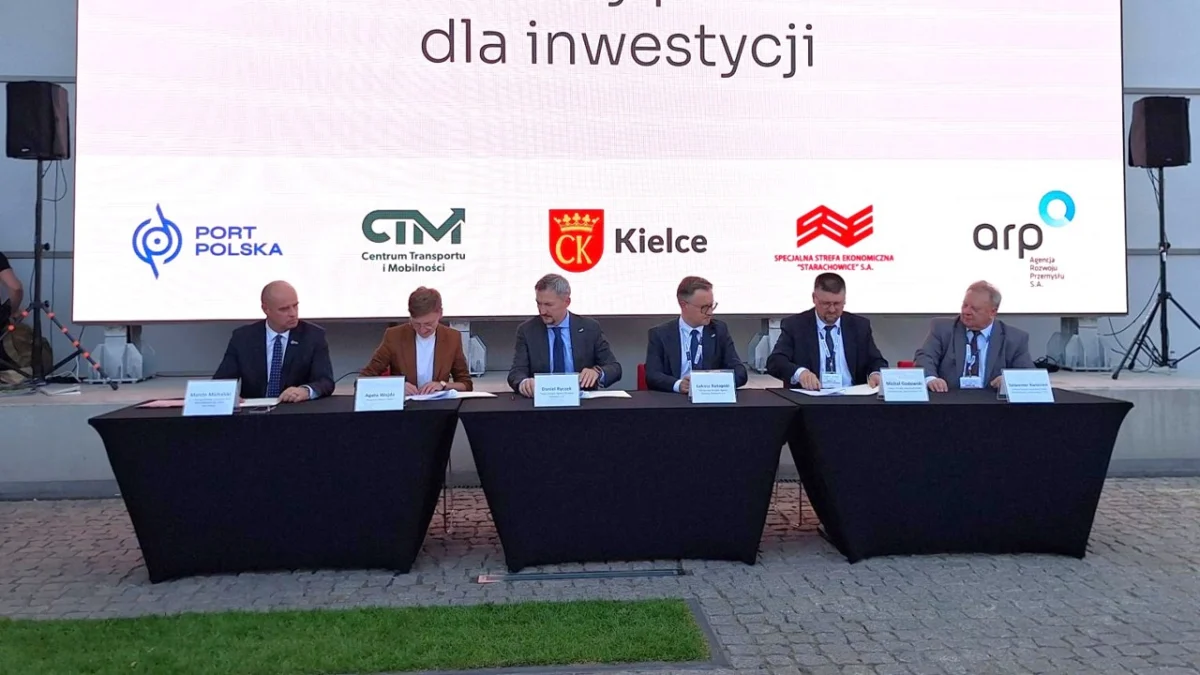
KIELCE, POLAND — In a landmark move designed to reshape the logistics and economic landscape of central Poland, Port Polska and the municipal authorities of Kielce have officially signed a letter of intent to develop a state-of-the-art intermodal rail terminal. Situated in Obice, approximately 20 kilometers north of Kielce, the ambitious project is poised to serve as a vital cargo hub for the Świętokrzyskie region—also known as the Holy Cross Voivodeship—while simultaneously plugging into broader European and international supply chains.
The agreement marks a decisive step forward in Poland’s ongoing efforts to modernize its freight transport capabilities, shift cargo from road to rail, and bolster regional economic resilience. By combining Port Polska’s national transport expertise with the strategic local vision of the Kielce municipality, the Obice terminal is set to transform central Poland into a thriving hub for multimodal logistics, international trade, and potentially strategic defense mobility.
Main Facts
The planned Obice intermodal rail terminal is a multifaceted infrastructure project designed to address growing logistical demands in central Poland while aligning with national and European transport decarbonization goals.
- Project Scope and Location: The terminal will span an estimated 25 hectares of land in Obice, located 20 kilometers north of Kielce within the Świętokrzyskie region.
- Railway Integration: The facility is slated to connect directly to Railway Line No. 73, a critical regional rail corridor in central Poland that serves Kielce and its surrounding urban centers.
- Strategic Dual-Use Potential: Alongside commercial freight operations, project planners are actively evaluating the infrastructure’s potential for dual-use capabilities, allowing it to support military logistics and national defense mobility.
- International Reach: Due to its central geographical position, the terminal is envisioned to facilitate trade corridors stretching across international boundaries, linking regional industries to the Benelux countries, the Baltic states, Ukraine, and broader Europe-Asia trade routes.
- Collaborative Framework: Port Polska will provide comprehensive technical, legal, environmental, and financial expertise to assist the Kielce municipality through the preparatory, analytical, and implementation phases of the project.
Chronology of the Project
The journey toward establishing a major intermodal terminal in the Kielce district has evolved through a series of strategic planning initiatives, regional assessments, and institutional alignments.
Phase 1: Identification within the Integrated Rail Network (ZSK)
The conceptual foundation for the Obice terminal was laid during the formulation of the Integrated Rail Network (ZSK) project. Developed by the Port Polska Centre for Transport and Mobility, the ZSK initiative sought to identify systemic gaps in Poland’s logistics network and pinpoint ideal geographical areas for modern freight infrastructure. Detailed analytical studies conducted by the center’s experts highlighted the Kielce district as a high-potential zone, citing its central location and growing industrial output.
Phase 2: Municipal Site Selection and Land Acquisition
Following the findings of the Port Polska Centre for Transport and Mobility, the municipality of Kielce undertook its own localized evaluations. After reviewing various territorial assets, local authorities identified Obice as the optimal location for a major logistics investment. The site offered distinct advantages, including sufficient available land, compatibility with regional spatial management plans, and favorable proximity to existing transport vectors.
Phase 3: Formalizing the Partnership
With the site selected and initial concepts validated, the institutional groundwork culminated in the signing of a formal letter of intent between Port Polska and the Kielce city authorities. This agreement formalizes cooperation between national transport experts and local government leaders, establishing a unified roadmap for project development.
Phase 4: Upcoming Feasibility and Technical Studies
As the initiative moves forward, the partners are embarking on a comprehensive series of preparatory assessments. These studies will encompass transport demand forecasting, spatial development planning, technical engineering designs, legal evaluations, environmental impact assessments, and financial modeling. The insights gathered during this phase will determine the terminal’s final parameters, layout, and implementation schedule.
Supporting Data and Technical Architecture
The success of the Obice intermodal terminal relies heavily on its integration into Poland’s broader rail network and its capacity to handle modern, high-volume freight operations.
Infrastructure and Spatial Layout
Spanning 25 hectares, the terminal footprint has been designed to accommodate modern container handling equipment, storage yards, administrative facilities, and dedicated railway sidings. Port Polska’s experts are currently drafting preliminary layout concepts for the internal rail tracks and evaluating optimal connection points to both the railway network—specifically Railway Line No. 73—and local high-capacity road networks.
Multimodal Interconnectivity
Intermodal transport relies on the seamless transfer of cargo units (such as containers, swap bodies, and semi-trailers) between different modes of transport without handling the freight itself when changing modes. The Obice facility will bridge road and rail networks, allowing local manufacturers, agricultural producers, and industrial enterprises to dispatch goods across vast distances with reduced carbon emissions.
Comprehensive Feasibility Matrix
To ensure long-term economic viability, the collaborative team will subject the project to a rigorous multi-criteria analysis:

- Transport Analysis: Evaluating freight volumes, modal split shifts, and regional traffic flows.
- Spatial Development: Ensuring harmony with local zoning laws and urban planning strategies.
- Technical and Legal Framework: Assessing engineering constraints, permitting requirements, and regulatory compliance.
- Environmental Impact: Mitigating ecological disruptions and minimizing the carbon footprint of construction and operation.
- Economic and Financial Modeling: Establishing cost-benefit ratios, funding mechanisms, and potential public-private partnership (PPP) structures.
Official Responses and Stakeholder Perspectives
The announcement of the letter of intent has drawn positive reactions from regional leaders, national transport experts, and industrial stakeholders, all of whom emphasize the transformative nature of the investment.
Municipal leaders in Kielce have underscored the project’s potential to redefine the city’s economic future. By positioning Kielce as a premier logistics hub, local authorities expect the terminal to attract foreign direct investment (FDI), encourage manufacturing clusters to set up operations nearby, and generate high-value employment opportunities in engineering, supply chain management, and logistics operations.
Representatives from Port Polska emphasized the strategic alignment between regional needs and national transport policy. Through the Centre for Transport and Mobility, Port Polska continues to champion initiatives that decentralize freight logistics and reduce congestion on national roadways. By lending its technical expertise, legal know-how, and strategic foresight to the Kielce municipality, Port Polska ensures that the Obice terminal will be built to the highest European engineering and operational standards.
Regional business associations and chambers of commerce in the Świętokrzyskie region have likewise welcomed the news. For years, local businesses have faced logistical bottlenecks when attempting to access international rail freight networks. The establishment of a local intermodal terminal is expected to significantly lower transport costs for regional exporters, thereby increasing their competitiveness on the European stage.
Implications for Regional Development and International Trade
The development of the Obice intermodal rail terminal carries profound implications not only for Kielce and the Świętokrzyskie region, but also for Poland’s broader geoeconomic strategy in Central and Eastern Europe.
Boosting the Świętokrzyskie Economy
Historically recognized for its rich natural resources, construction materials, and manufacturing industries, the Świętokrzyskie region has occasionally lagged behind Poland’s western voivodeships in modern logistics infrastructure. The Obice terminal will bridge this gap, providing local enterprises with direct access to global supply chains. By facilitating faster, cheaper, and greener transport options, the terminal will stimulate industrial expansion, encourage technological innovation within local supply chains, and attract ancillary logistics service providers to the area.
Strategic Dual-Use and National Security
In an era of evolving geopolitical landscapes, the dual-use nature of transport infrastructure has gained renewed prominence across Europe. The possibility of integrating the Obice terminal into military logistics networks offers a significant strategic advantage. Dual-use infrastructure ensures that civilian transport assets can be efficiently mobilized to support national and allied defense mobility when required, enhancing the resilience of Poland’s eastern flank.
Expanding International Corridors
While the terminal will undoubtedly serve domestic and regional markets, its strategic location imbues it with a strong international dimension. Planners envisage the facility acting as a key node connecting central Poland to Western European markets, including the Benelux countries, as well as northern trade corridors linking to the Baltic states.
Furthermore, the terminal is well-positioned to handle eastbound transport flows. As trade dynamics shift—particularly concerning economic cooperation with Ukraine and the broader development of Eurasian transport corridors linking Europe and Asia—the Obice facility could serve as a vital transshipment point for goods moving across international borders.
Contributing to European Green Deal Goals
By shifting significant volumes of freight from carbon-intensive road transport to energy-efficient rail networks, the Obice terminal directly supports the European Union’s decarbonization objectives. The reduction in highway congestion, lower greenhouse gas emissions, and optimized fuel consumption will contribute measurably to Poland’s national climate targets while fostering sustainable industrial growth.
Conclusion
The signing of the letter of intent between Port Polska and the Kielce city authorities marks the beginning of an exciting chapter in Poland’s transport modernization. By transforming 25 hectares of land in Obice into a cutting-edge intermodal rail hub, the project promises to unlock the economic potential of the Świętokrzyskie region, streamline national logistics, and strengthen international trade corridors. As feasibility studies commence and technical concepts take shape, the Obice terminal stands as a testament to the power of strategic foresight, public collaboration, and sustainable infrastructure development in Central Europe.

