

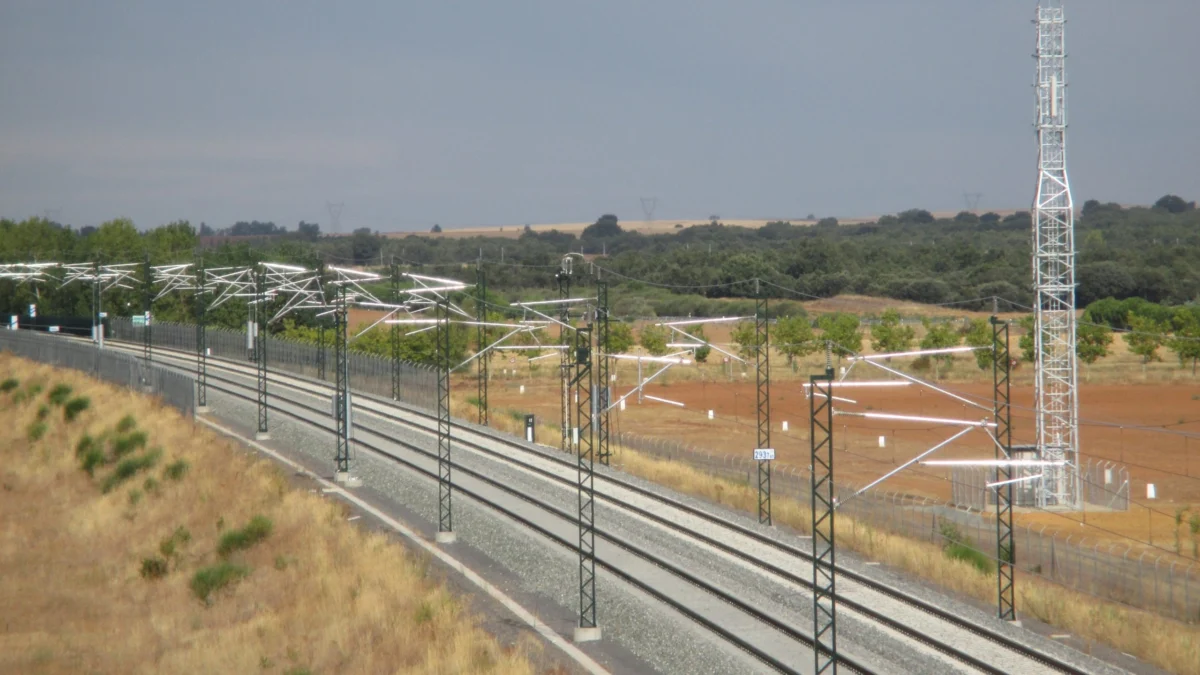
MADRID — In a major move to reinforce the safety, efficiency, and future-proofing of one of Europe’s most advanced rail networks, Spain’s railway infrastructure manager, Adif (Administrador de Infraestructuras Ferroviarias), has officially launched a high-stakes public tender. Valued at nearly €175.5 million, the comprehensive contract focuses on the comprehensive maintenance, operation, and technological modernization of critical telecommunications and power control systems across Spain’s extensive high-speed rail (AVE) network.
This sprawling 48-month contract is designed to guarantee the uninterrupted reliability, availability, and rigorous safety standards that passengers and freight operators have come to expect from the Spanish rail ecosystem. As high-speed rail passenger numbers continue to shatter pre-pandemic records and face increasing competition from low-cost operators, the seamless integration of robust digital infrastructure has never been more vital.
Main Facts: Scope, Scale, and Systems
At its core, the tender encompasses a wide array of mission-critical systems that form the digital and electrical nervous system of Spain’s high-speed lines. While the headline-grabbing component is the upgrade and management of the GSM-R (Global System for Mobile Communications – Railway) network, the scope of work reaches deeply into almost every facet of operational control and passenger security.
Comprehensive Operational Scope
The 4-year service contract is built on a multi-layered maintenance and operational framework. It addresses:
- GSM-R and Voice Communications: Centralized equipment and trackside infrastructure enabling secure, uninterrupted voice and data communication between locomotive engineers (train drivers) and traffic control centers.
- Fixed Telecommunications Networks: Expansive fiber-optic backbones, voice and data transmission channels, and structural connectivity spanning hundreds of kilometers of track, stations, and technical buildings.
- Security and Monitoring Platforms: End-to-end video surveillance (CCTV), access control systems, tunnel safety installations, public address systems, intercoms, and perimeter intrusion detection systems.
- Energy Remote Control Systems: Centralized power management platforms that provide real-time monitoring, distribution, and control of the high-voltage electrical infrastructure powering the high-speed overhead catenary lines.
- Commercial Telecom Infrastructure: Specialized infrastructure shared or utilized by commercial mobile network operators to ensure continuous cellular and data coverage along the rail corridors.
Key High-Speed Corridors Covered
The geographical footprint of the tender is vast, incorporating the backbone routes that connect Spain’s major economic, cultural, and political hubs. The specified corridors under the contract include:
- The Madrid–Valladolid line, piercing through northern mountain passes and tunneling ecosystems.
- The heavily trafficked Madrid–Barcelona–French border corridor, a vital artery for international and domestic high-speed travel.
- The Zaragoza–Huesca and Camp de Tarragona–La Boella regional branches.
- The southern and eastern vectors, including the Madrid–Valencia, Madrid–Seville, Córdoba–Málaga, La Sagra–Toledo, and Albacete–Bifurcación Albacete routes.
Chronology: The Evolution of Spain’s High-Speed Digital Backbone
To understand the weight of this €175.5 million investment, it is helpful to place Adif’s current tender within the broader historical and evolutionary timeline of Spain’s railway modernization efforts.
- April 1992 (The Genesis): Spain inaugurates its first high-speed rail line between Madrid and Seville in time for the Expo ’92 universal exhibition. Communication systems at the time relied on analog and early digital iterations, which were state-of-the-art for the era but quickly outpaced by technological advances.
- Early 2000s – 2010s (Rapid Expansion): As Adif rapidly expands the network—opening the Madrid–Barcelona, Madrid–Valladolid, and Madrid–Valencia lines—the European Union begins standardizing cross-border rail communication under the European Rail Traffic Management System (ERTMS) and its wireless counterpart, GSM-R. Adif begins transitioning its lines to digital platforms.
- Mid-2010s (Integrated Operations): Adif adopts integrated service models to manage telecommunications and signaling maintenance under unified contracts, moving away from fragmented, localized provider agreements to streamline troubleshooting and system updates.
- 2020–2024 (Post-Pandemic Surge and Digitalization): With the liberalization of the Spanish passenger rail market—bringing low-cost high-speed operators like Ouigo and Iryo to compete with state-owned Renfe—network congestion and track utilization skyrocket. The demand for flawless, real-time data transmission reaches unprecedented levels.
- Late 2024 / 2026 (The Current Tender): Adif initiates the formulation and eventual launch of this massive 48-month, €175.5 million framework. The project is structured not just to maintain status-quo operations, but to execute a profound technological leap forward, integrating predictive maintenance and energy-efficiency upgrades across legacy and modern high-speed lines alike.
Supporting Data: Maintenance Methodologies and Financial Breakdown
The sheer financial magnitude of the tender—€175,500,000 spread over four years—reflects the complex, high-availability demands of modern railway engineering. Adif has structured the work requirements to move far beyond traditional "fix-it-when-it-breaks" paradigms, utilizing a three-tier maintenance approach:
1. Preventive Maintenance
Routine, scheduled interventions carried out at strict calendar or operational intervals. Technicians inspect physical hardware, fiber connections, power supplies, and antenna arrays to preempt degradation caused by environmental exposure, weather extremes, and mechanical wear and tear.
2. Predictive Maintenance
A data-driven approach leveraging continuous monitoring of equipment performance and operating parameters. By tracking telemetry and signal integrity in real-time, Adif and its contractors can anticipate component failures before they impact train operations, minimizing unexpected line closures and delays.
3. Corrective Maintenance
Rapid-response protocols designed to immediately isolate, troubleshoot, and repair sudden faults, ensuring system performance is restored to baseline levels with minimal disruption to train schedules.
Beyond Maintenance: Modernization and Energy Efficiency
Crucially, a significant portion of the capital and operational expenditure within the contract is earmarked for equipment upgrades and total replacements. Adif’s objectives in this domain are twofold:
- Technological Modernization: Phasing out legacy hardware in favor of next-generation digital processing units, higher-bandwidth fiber systems, and cyber-secure operational technology (OT) architectures.
- Energy Efficiency: Reducing the carbon footprint and operational power draw of the telecommunications and control networks themselves. With European energy markets experiencing historical volatility, optimizing the energy efficiency of auxiliary systems along the high-speed corridors is a major institutional priority for Adif.
Official Responses and Strategic Vision
While individual corporate bids and winning contractors will be announced as the public procurement process advances through its legal stages, Adif’s executive leadership has repeatedly emphasized the strategic rationale underpinning large-scale infrastructure investments of this nature.
In public statements regarding network operations, Adif representatives have stressed that the competitiveness of Spain’s railway system rests entirely on its perceived and actual reliability. Unlike conventional rail networks, high-speed rail operates at narrow headways and extreme velocities where even a minor telecommunications glitch or momentary loss of control contact can cascade into widespread network delays, affecting tens of thousands of passengers.
"Our commitment is not merely to maintain the rails and wires, but to safeguard the digital intelligence that orchestrates the entire ecosystem," noted an Adif infrastructure development official familiar with the tender design. "By integrating advanced predictive analytics, centralized energy management, and resilient GSM-R protocols into a single, unified operational framework, we are future-proofing Spain’s high-speed network against the growing demands of liberalization, climate stress, and technological evolution."
Industry analysts have similarly lauded the decision to bundle these services into a comprehensive 4-year package. Fragmentation in rail telecom maintenance has historically led to coordination friction between distinct subsystem providers. By consolidating oversight of fixed networks, wireless GSM-R, CCTV security, and energy remote control under cohesive management, Adif minimizes bureaucratic delays during emergency interventions and ensures a uniform standard of cybersecurity across all corridors.
Implications: What This Means for Passengers, Operators, and the Economy
The launch of the €175.5 million modernization tender carries profound implications for multiple stakeholders across the Spanish and European transportation landscapes.
For Passengers: Enhanced Safety and Punctuality
For the average traveler boarding an AVE, Ouigo, or Iryo train in Madrid, Barcelona, Seville, or Valencia, the inner workings of GSM-R and fiber-optic backbones are invisible. However, the dividends of this tender will be felt directly through improved punctuality, heightened safety margins, and enhanced onboard connectivity. By hardening the digital infrastructure against unexpected failures, Adif aims to keep Spain’s high-speed network operating at world-class punctuality rates—consistently among the highest in Europe.
For Rail Operators (Renfe, Ouigo, Iryo)
Liberalization has transformed Spain’s high-speed rail network into a fiercely competitive market. For operating companies, predictable, high-availability track infrastructure is an absolute commercial necessity. Unscheduled maintenance halts or signaling anomalies cost operators significant revenue and damage brand reputation. This comprehensive modernization contract provides operators with the operational stability needed to expand schedules, increase frequencies, and plan long-term fleet rotations with confidence.
For the Spanish Economy and Regional Cohesion
Spain’s high-speed rail network is widely recognized as a triumph of regional integration, shrinking travel times between distant provinces and fusing disparate regional economies into a unified national market. By maintaining and upgrading the digital arteries of lines stretching from the French border down to Málaga and out to Valencia, Adif ensures that business travel, tourism, and logistics remain fluid.
Furthermore, the scale of the tender creates substantial opportunities for specialized engineering firms, technology providers, telecommunications contractors, and local supply chains within Spain. Winning contractors will be tasked with deploying advanced engineering talent over a 48-month horizon, driving innovation in digital railways, cybersecurity, and green infrastructure operations.
Looking Ahead
As the procurement process moves forward and bids are evaluated, Adif’s €175.5 million telecommunications overhaul stands as a benchmark for modern railway management. In an era where rail travel is increasingly championed as the sustainable backbone of European mobility, investments in digital resilience, predictive maintenance, and energy efficiency ensure that Spain’s high-speed network will retain its status as a global gold standard for decades to come.

