

On September 13, 2026, a century of planning and a decade of intense construction culminated in a historic moment for New Zealand’s urban mobility. With the first passenger trains gliding through the newly inaugurated City Rail Link (CRL), Auckland officially entered a new era, transitioning from a city with a "dead-end" rail network to one defined by seamless, through-city connectivity.
As the largest transport infrastructure project in the country’s history, the CRL is more than just a feat of engineering; it is the backbone of Auckland’s future growth, promising to reshape the economic and social landscape of New Zealand’s most populous region.
Main Facts: Engineering a New Backbone for Auckland
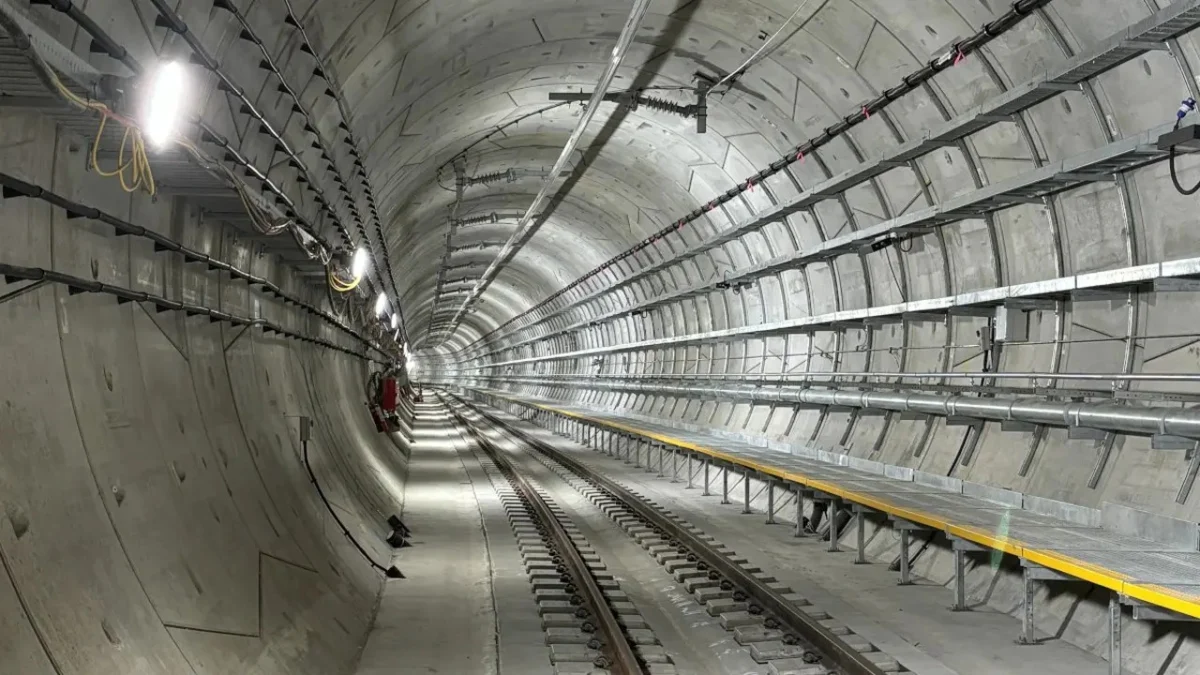
The City Rail Link represents a paradigm shift for Auckland’s rail commuters. At its core, the project consists of two parallel 3.45-kilometre tunnels connecting the existing Waitematā Station (formerly Britomart) in the downtown waterfront district to the redeveloped Maungawhau Station in Mount Eden.
This subterranean artery reaches depths of up to 42 metres below the city surface, navigating complex geological conditions and dense urban foundations. The infrastructure project encompasses the construction of two state-of-the-art underground stations—Te Waihorotiu and Karanga-a-Hape—alongside the comprehensive reconstruction and modernization of the Waitematā and Maungawhau hubs.
Designed to future-proof the city, the system is engineered to accommodate longer, high-capacity electric trains consisting of nine railcars. This upgrade is critical, as it allows the network to handle significantly higher passenger volumes, supporting a city that continues to experience rapid demographic expansion. By removing the physical barrier of the city centre as a terminal point, the CRL effectively doubles the capacity of the entire regional rail network.
A Century in the Making: The Chronology of the CRL
The vision for an underground link in Auckland is not a modern invention; it is a concept that has been debated in civic circles for approximately one hundred years. However, the path to the current realization began in earnest during the early 21st century as Auckland’s population density reached critical levels.
- 2012: The project gains significant momentum as the British engineering consultancy Mott MacDonald is brought on board as the lead technical consultant. This marked the beginning of a long-term partnership that would see the firm oversee conceptual design, procurement, and complex construction coordination.
- 2016: Enabling works begin, setting the stage for the massive excavation required to carve tunnels through the heart of the city.
- 2019–2022: The primary tunneling phase, involving complex TBM (Tunnel Boring Machine) operations, proceeds through the central business district. Despite global supply chain disruptions and the challenges posed by the COVID-19 pandemic, construction continues to progress.
- June 2026: A major milestone is achieved as the project reaches practical completion. The infrastructure is formally handed over to Auckland Transport and KiwiRail, initiating the final rigorous testing and commissioning of control systems, fire safety, and communication networks.
- September 11, 2026: The official inauguration ceremony is held, marking the completion of the NZD 5.5 billion (EUR 2.75 billion) endeavor.
- September 13, 2026: The first passenger trains officially enter revenue service, signaling the beginning of a new chapter for Auckland commuters.
Supporting Data: Efficiency and Connectivity
The impact of the CRL on daily travel times is nothing short of revolutionary. By eliminating the need for trains to terminate at Waitematā, the network now operates as a through-flow system.
Dramatic Reductions in Commute Times
The efficiency gains are measured in significant time savings for residents across the region:
- Henderson to Te Waihorotiu: Commuters from the west can now bypass the previous requirement to detour via Newmarket, reaching the city center in approximately 35 minutes.
- Panmure to Karanga-a-Hape: The commute time has been slashed by 14 minutes, with the new journey taking just 21 minutes.
- Ellerslie to Karanga-a-Hape: Passengers save 19 minutes on this route, with a total travel time of just 17 minutes.
These metrics highlight how the CRL is effectively "shrinking" the city, making central employment hubs and cultural centers more accessible to outer-suburban residents.

The Consultant’s Perspective: Mott MacDonald’s Role
The successful delivery of a project of this magnitude required a decade of meticulous oversight. Mott MacDonald’s involvement since 2012 was instrumental in navigating the "most challenging transport project" in the country’s history.
The firm’s scope of work was comprehensive, covering the entire project lifecycle. This included:
- Technical Design: Coordinating complex specialists in rail systems, structures, and utilities.
- Risk Management: Navigating the authorization and procurement procedures in a high-stakes political and financial environment.
- Systems Integration: During the final phase, the consultancy played a pivotal role in the testing and commissioning of the infrastructure, ensuring that fire safety systems, automated control systems, and communication networks were fully integrated.
- Operational Handoff: Working closely with Auckland Transport and KiwiRail, Mott MacDonald ensured a smooth transition from construction site to operational railway, facilitating the handover of assets to those responsible for daily service delivery.
Official Responses and Implications
Government officials have hailed the completion of the CRL as a triumph of persistence and vision. Speaking at the inauguration, stakeholders emphasized that the project was not merely a construction job, but an essential investment in the social and environmental fabric of Auckland.
Addressing Urban Density and Sustainability
The primary implication of the CRL is the enablement of higher-density urban development. By creating high-frequency transit nodes at Te Waihorotiu and Karanga-a-Hape, the city is encouraging transit-oriented development (TOD). The increased capacity is expected to shift a significant portion of daily commuters from private vehicles to public rail, playing a crucial role in New Zealand’s commitment to reducing carbon emissions in the transport sector.
A Catalyst for Future Growth
The rail link effectively changes the geography of Auckland’s rail network. No longer a series of radial lines terminating at the waterfront, the system is now a cohesive, cross-town network. This configuration allows for "turn-up-and-go" frequency, which is expected to drive further investment in the regions surrounding the new stations.
Furthermore, the integration of KiwiRail’s national network with Auckland’s urban services creates potential for future expansion. The project’s ability to accommodate nine-car electric trains ensures that the system will not reach capacity for several decades, providing a scalable solution to Auckland’s growth.
Conclusion: A New Horizon for Auckland
The opening of the City Rail Link is a landmark moment that redefines the urban identity of Auckland. By tunneling through the center of the city, New Zealand has demonstrated that it is capable of delivering world-class infrastructure that meets the demands of a modern, growing population.
As the city adjusts to this new connectivity, the long-term benefits will become increasingly apparent. Reduced commute times, increased transit capacity, and a shift toward sustainable urban mobility are the immediate legacies of the CRL. However, perhaps the most significant outcome is the symbolic shift: Auckland is no longer a city defined by where its trains stop, but by where they can take its people.
The successful completion of this project stands as a testament to the collaborative efforts of engineers, policy-makers, and the public, providing a blueprint for future infrastructure development across the Pacific region. As the first commuters step off at the new underground stations, they are walking into a future that is faster, more connected, and undeniably more accessible.

