

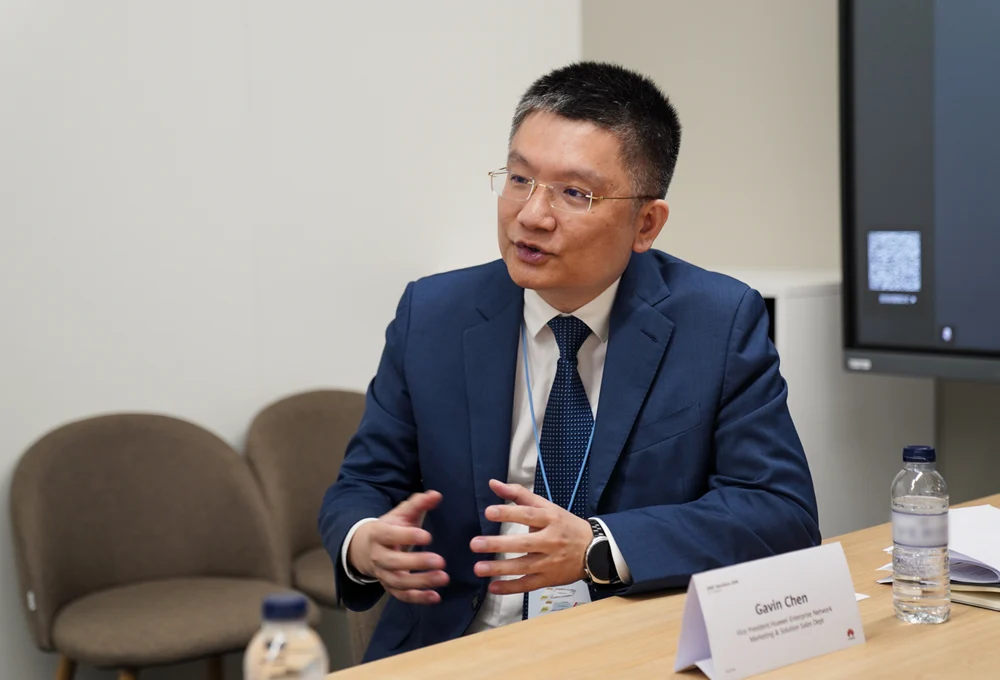
At MWC Barcelona 2026, the global telecommunications stage witnessed a fundamental shift in how digital infrastructure is perceived. Huawei, a long-standing leader in optical transmission technology, unveiled a strategy to transition optical transport networks (OTNs) from their traditional role as passive, high-capacity "data pipes" into dynamic, intelligent, and autonomous digital ecosystems. By embedding artificial intelligence (AI) directly into the physical and logical layers of the network, Huawei aims to provide the backbone required for the next generation of critical infrastructure in power, rail, and government sectors.
Main Facts: The AI-Driven Paradigm Shift
For nearly two decades, Huawei has maintained a dominant position in the global optical transmission market. However, the company’s latest unveiling represents a departure from purely capacity-driven innovation. The core of this new vision is the integration of AI computing power directly into network hardware, enabling the infrastructure to perform real-time sensing, self-healing, and quantum-secure communication.
Gavin Chen, Vice President of Huawei Enterprise Network Marketing & Solution Sales, characterized the evolution as the “intelligentization of the pipeline.” Unlike legacy systems that require external management platforms to interpret network health, Huawei’s new OTN architecture treats the network as an intelligent agent. By leveraging the fgOTN (fine-grained OTN) foundation—a technology that allows for more granular traffic scheduling—Huawei has now added an AI-driven "brain" capable of predictive maintenance and automated security protocols.
Chronology of Development: From Backbone to Brain
The journey to this moment began long before the 2026 exhibition. The timeline of Huawei’s optical evolution illustrates a strategic commitment to R&D:
- 2009–2023: Huawei solidified its market leadership, securing approximately 30% of global core patents in the optical space and driving over 100 international industry standards.
- MWC 2024: Huawei launched the fgOTN solution, which successfully addressed the industry’s need for more flexible and reliable data transmission, setting the stage for high-density, low-latency traffic.
- 2025 (Development Phase): The integration of AI modules into optical boards began in pilot projects, focusing on deep learning models for fiber quality assessment.
- MWC 2026 (The Present): Official deployment of AI-native OTNs, featuring NOEMate conversational interfaces and integrated Quantum Key Distribution (QKD) capabilities.
Supporting Data: Engineering the Future
Huawei’s innovation engine is fueled by a workforce of over 8,000 R&D experts. The technical breakthroughs showcased at the event provide a window into the sheer scale of the company’s ambition:
1. Sensing and Surveillance
By repurposing standard optical fibers as distributed sensors, Huawei has eliminated the need for secondary monitoring hardware. The system utilizes AI to analyze Optical Time-Domain Reflectometry (OTDR) signals, detecting minute fluctuations in temperature, mechanical stress, or vibration. This allows operators to identify physical threats—such as construction work near a fiber line—before a service disruption occurs.
2. Quantum Security
Traditional QKD systems have historically been hindered by the need for dedicated fiber strands and fragile, climate-sensitive equipment. Huawei’s new solution integrates QKD into the existing OTN chassis. By utilizing wavelength isolation—where distinct bands handle data, quantum keys, and management signals—Huawei enables "absolute security" on existing infrastructure. In real-world deployments, such as the China Southern Power Grid’s Shenzhen Power Supply Bureau, this has reduced deployment timelines from months to mere weeks.
3. AI-Powered Operations (NOEMate)
The NOEMate module functions as a "talking O&M assistant." By utilizing a conversational interface, engineers can query the status of the network in plain language. The system, powered by the NCE-T management platform, uses chain-of-thought reasoning to diagnose faults. Data suggests this transition to AI-assisted O&M can reduce manual troubleshooting manpower requirements by more than 70%.
Official Responses and Strategic Vision
During an exclusive briefing at MWC Barcelona, Gavin Chen emphasized that the move toward intelligent optical networks is not merely an upgrade but a necessity for modern critical industries.
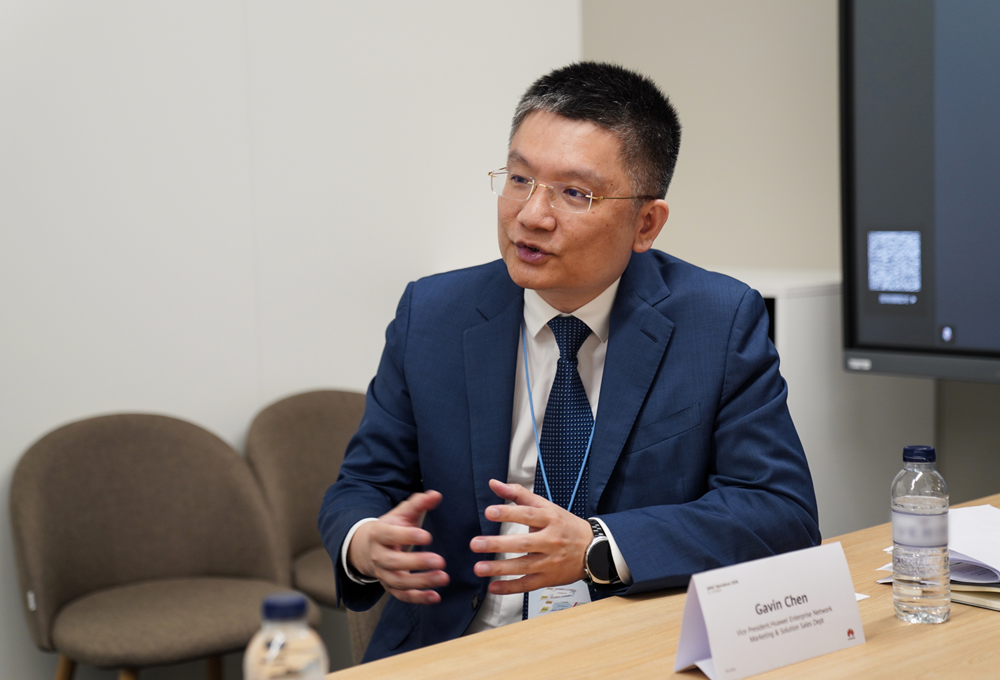
"Huawei has been leading the optical transmission field for 17 years straight," Chen stated. "We are moving beyond market share to shape industry thinking. By weaving AI into transmission, sensing, and operations, we are tackling the explosive growth of terminal connections while addressing the urgent need for edge computing power."
Chen highlighted that for sectors like energy and transportation, reliability is non-negotiable. "Our goal is to lower the skill threshold for O&M engineers while increasing the overall resilience of the network. When the network can diagnose itself, we reduce TCO (Total Cost of Ownership) significantly, allowing our partners to focus on their core service delivery rather than firefighting infrastructure failures."
Implications for Global Infrastructure
The implications of Huawei’s AI-powered OTN vision are profound, particularly for the digital transformation of critical industries.
The Rise of Proactive Maintenance
The industry has long operated on a reactive basis—waiting for a fiber break or a signal degradation before taking action. Huawei’s AI-driven approach shifts this model toward proactive prevention. By analyzing network quality models, the system can predict up to 40% of potential faults before they materialize, effectively creating a "self-healing" backbone. This is a game-changer for railways and power grids, where downtime can lead to significant economic or safety risks.
Simplified Management and Reduced Complexity
The consolidation of multiple, disparate systems into a single intelligent layer—managed by the NCE-T and assisted by NOEMate—addresses the complexity bottleneck that has plagued enterprise networks for years. By embedding security and management features natively into the hardware, Huawei is essentially lowering the barrier to entry for advanced, secure network architectures.
The Path to Industrial Autonomy
As industries like EDM in Mozambique and State Grid Liaoning Electric Power in China continue to deploy these fgOTN backbones, the data gathered will serve as a blueprint for global adoption. The transition marks a turning point where optical networks are no longer viewed as static, inert lines, but as active participants in the industrial internet of things (IIoT).
Conclusion: The Next Wave of Digital Transformation
The unveiling at MWC Barcelona 2026 suggests that the future of telecommunications lies not just in faster speeds, but in smarter management. By marrying the raw transmission capacity of fiber optics with the cognitive capabilities of AI, Huawei has provided a roadmap for how critical infrastructure can survive and thrive in an era defined by data intensity.
As the industry moves forward, the success of this intelligent infrastructure will be measured by its ability to provide seamless, secure, and self-optimizing connectivity. For the power, rail, and government sectors, the "passive pipeline" era has come to an end. In its place, Huawei is building an intelligent, adaptive, and highly secure foundation—one that promises to underpin the next decade of global digital transformation. Whether through the integration of quantum-grade security or the conversational efficiency of AI-driven O&M, the message from Barcelona is clear: the optical network has finally woken up.

