

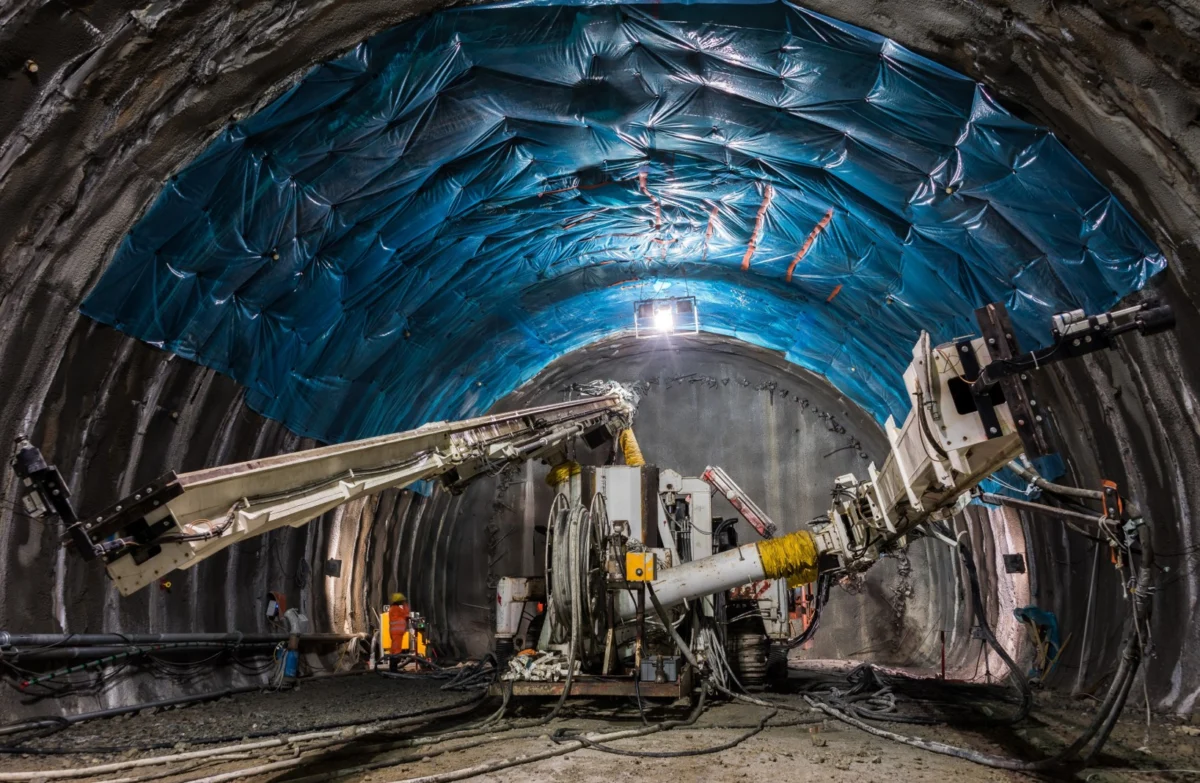
In a move that marks a pivotal moment for European trans-alpine connectivity, Rete Ferroviaria Italiana (RFI), the state-owned infrastructure manager of Italy’s rail network, has officially launched a monumental tender valued at approximately €1.5 billion. The contract seeks to secure a design-and-build partner for the southern approach to the Brenner Base Tunnel (BBT)—a critical infrastructure project that promises to reshape freight and passenger logistics across the European continent.
The tender covers the construction of the Fortezza–Ponte Gardena section, a 22.5-kilometer high-capacity railway line that will serve as the essential southern gateway connecting the Italian railway network to the Austrian tunnel portal at Innsbruck. As the deadline for submissions approaches on October 12, 2020, with bid openings scheduled for the following day, the project stands as a testament to the European Union’s commitment to the TEN-T (Trans-European Transport Network) Scandinavian-Mediterranean corridor.
The Scope of Work: Engineering the Future of Rail
The Fortezza–Ponte Gardena connection is not merely a track expansion; it is a complex engineering feat designed to navigate the rugged topography of the South Tyrol region. The project encompasses two primary twin-bored tunnels: the 15.4-kilometer Scaleres tunnel and the 6.3-kilometer Gardena tunnel. These tunnels will be linked by a sophisticated bridge structure crossing the Isarco River, requiring precision engineering to ensure seamless integration into the existing landscape while adhering to stringent environmental and seismic safety standards.
With a total investment value pegged at €1.52 billion, the project allocates roughly €1.15 billion specifically to design and construction works. The funding is secured through a robust planning agreement between RFI and the Italian Ministry of Transport, ensuring that the financial foundation of the project remains stable as it moves toward the construction phase.
Chronology: A Decade of Planning and Preparation
The journey to this tender has been characterized by meticulous planning, legislative approvals, and stakeholder negotiations spanning several years:
- 2017: The project received a critical seal of approval from the Inter-ministerial Committee for Economic Programme (CIPE). This milestone was followed by the formalization of agreements with the Bolzano Province and the eight municipalities directly impacted by the construction: Fortezza, Velturno, Bressanone, Varna, Chiusa, Laion, Ponte Gardena, and Funes.
- 2018: Recognizing the high-stakes nature of such a significant public investment, RFI took proactive steps to safeguard the project’s integrity. In October 2018, the company signed a comprehensive "legality protocol" with the Government Commissariat for the Province of Bolzano. This agreement was specifically designed to prevent the infiltration of organized crime and ensure total transparency and compliance throughout the bidding and construction phases.
- 2020: The launch of the current tender represents the culmination of this preparatory period, transitioning the project from administrative planning to concrete physical realization.
- 2025 (Target): The long-term objective is to synchronize the commissioning of the Fortezza–Ponte Gardena section with the inauguration of the Brenner Base Tunnel itself, creating a unified, high-speed, and high-capacity corridor.
Supporting Data: Why the Brenner Corridor Matters
The Brenner Base Tunnel is, in essence, the "heart" of the Scandinavian-Mediterranean corridor. Once completed, it will stretch for 64 kilometers between Tulfes/Innsbruck and Fortezza. The significance of this project lies in its ability to eliminate the "mountain barrier" that has historically throttled rail efficiency between Verona and Munich.
Technical Specifications
- Total Tunnel Length (BBT): 64 km.
- Southern Access (Fortezza-Ponte Gardena): 22.5 km of new high-capacity line.
- Primary Structures: Scaleres Tunnel (15.4 km) and Gardena Tunnel (6.3 km).
- Corridor Integration: A core component of the TEN-T Scandinavian-Mediterranean corridor, connecting the Mediterranean Sea to the Baltic.
By replacing steep, winding mountain tracks with a base tunnel that runs at a much lower altitude, the project allows for heavier freight trains and higher speeds. This shift is expected to significantly reduce the travel time for both cargo and passengers, providing a viable, low-carbon alternative to the heavily congested road freight transit currently clogging the Brenner Pass.
Official Responses and Stakeholder Governance
The governance structure of the project is perhaps as complex as its engineering requirements. Because the tunnel traverses ecologically sensitive areas and multiple administrative jurisdictions, RFI has fostered a cooperative governance model.
The Environmental Observatory Consortium, which has been operational since the early stages, serves as the primary watchdog for the project. Its mandate has been extended to cover the first access section, ensuring that construction activities minimize disruption to local ecosystems and communities. Local authorities in the Bolzano Province have played an active role in negotiations, ensuring that the project provides long-term value to the municipalities involved while respecting regional planning autonomy.

"The objective is not just to build a railway, but to integrate a modern, sustainable transport system into the heart of the Alps," noted an RFI spokesperson during the preliminary briefings. The commitment to legality, overseen by the Government Commissariat, serves as a cornerstone of the public relations strategy, aiming to instill confidence among taxpayers and international stakeholders alike.
Implications: A New Era for European Freight
The implications of completing the Fortezza–Ponte Gardena link, and by extension the Brenner Base Tunnel, are profound.
1. Shift from Road to Rail
The current reliance on road haulage across the Brenner Pass is a major source of carbon emissions and noise pollution in the alpine valleys. By providing a high-capacity rail alternative, the project aims to shift a significant volume of freight from heavy goods vehicles to electric trains, directly contributing to the European Union’s Green Deal objectives.
2. Economic Connectivity
For Northern Italy and Southern Germany, the project represents an economic multiplier. Faster transit times will increase the competitiveness of regional industries, allowing for more efficient logistics chains. Verona and Munich, already significant economic hubs, will see their commercial ties strengthened through a more reliable and frequent connection.
3. Strengthening the TEN-T Corridor
The project is a physical manifestation of European integration. By removing one of the most stubborn bottlenecks in the TEN-T network, the project enhances the fluidity of the entire North-South European axis. This ensures that the Scandinavian-Mediterranean corridor can handle the increasing demand for cross-border trade, which is expected to rise steadily over the coming decades.
Challenges and Future Outlook
Despite the enthusiasm surrounding the tender, the project faces ongoing challenges. The sheer scale of the construction in a mountainous environment presents inherent geological risks, which the bidding contractors must account for in their proposals. Furthermore, the coordination required between the Italian and Austrian segments of the corridor necessitates a high level of cross-border cooperation that must be maintained until the 2025 target date and beyond.
As the October deadline looms, the construction industry is watching closely. The €1.5 billion tender is expected to attract major international consortia capable of managing both the high-tech tunneling requirements and the complex logistics of working in a constrained alpine environment.
In conclusion, the launch of the Fortezza–Ponte Gardena tender is more than just a procurement exercise; it is the next major step in a decades-long endeavor to bridge the Alps. As the Brenner Base Tunnel moves closer to reality, the focus shifts toward ensuring that the southern access is ready to receive the high-speed and high-capacity traffic that this massive infrastructure project will ultimately unlock. The project stands as a benchmark for how modern European infrastructure can balance economic development, environmental stewardship, and the highest standards of legal and technical oversight.

