
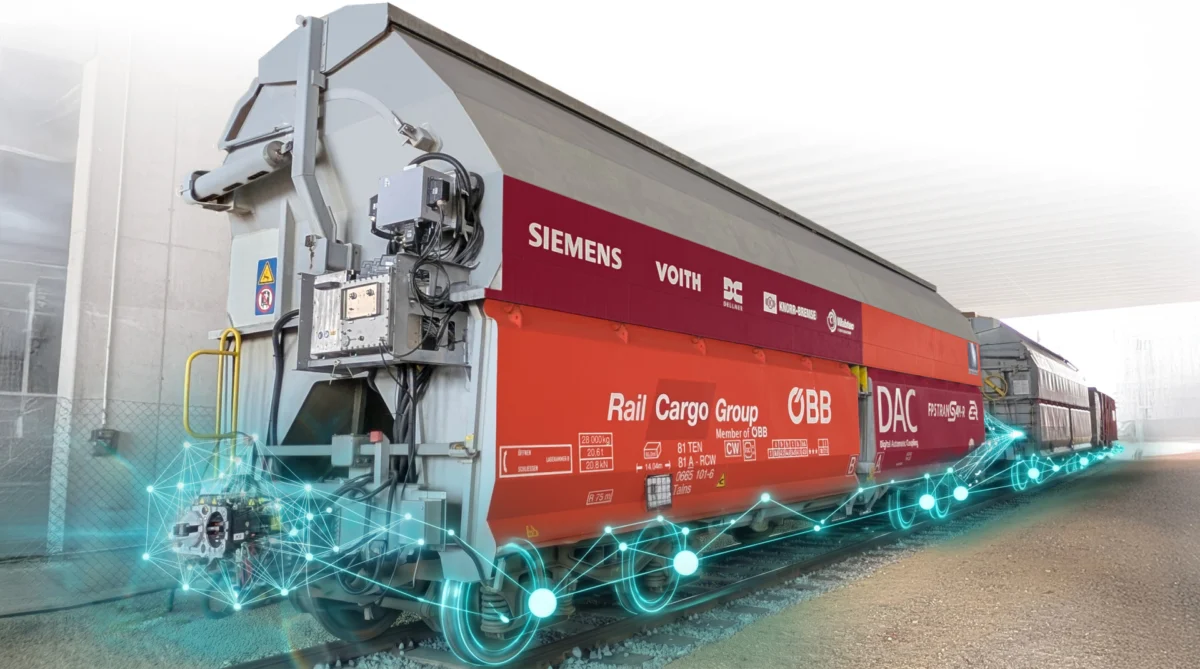
In a landmark development for the European rail sector, Knorr-Bremse and the ÖBB Rail Cargo Group (RCG) have officially signed the continent’s first commercial contract to implement Digital Automatic Coupling (DAC) technology. This agreement marks a pivotal shift from decades of manual, labor-intensive freight operations toward a fully digitized, automated, and hyper-efficient rail network. By integrating DAC into a commercial fleet, the partners are not merely upgrading hardware; they are laying the digital foundation for the future of European logistics.
Main Facts: The Dawn of Automated Rail Freight
The contract, signed between industry leader Knorr-Bremse and the Austrian-based ÖBB Rail Cargo Group, signals the transition of DAC from the prototype stage to active commercial deployment. The technology is slated to enter regular service starting in 2028, operating under the umbrella of the European Union-backed "PioDAC" (Pioneer Digital Automatic Coupling) project.
At its core, the DAC system replaces the traditional, century-old screw coupling—a manual process that requires significant physical effort and poses inherent safety risks to shunting staff—with a sophisticated, automated mechanical and electronic connection. Unlike its predecessor, DAC provides continuous power and data connectivity across the entire train consist. This connectivity allows for real-time monitoring of vehicle health, load status, and train integrity, effectively transforming a collection of individual wagons into a single, "smart" digital entity.
The pilot program, which will serve as the proving ground for this technology, involves a dedicated train consisting of 23 freight wagons and one locomotive. Knorr-Bremse is responsible for supplying the full suite of hardware, including advanced electronic control units and an array of sensors designed to monitor vehicle functions and technical condition in real-time.
Chronology: From Concept to Commercial Reality
The road to this historic contract has been characterized by years of rigorous research, development, and multi-stakeholder collaboration within the European rail ecosystem.
- The Foundational Phase (2018–2021): Discussions regarding the need for a standardized European coupling system gained momentum under the umbrella of the European DAC Delivery Programme (EDDP). The goal was clear: to create a single, interoperable standard that could be adopted across all EU member states.
- The Europe’s Rail Initiative (2021–2023): Through successive research projects under the "Europe’s Rail" joint undertaking, manufacturers and operators conducted extensive field testing. These trials focused on the mechanical robustness of the coupling, its performance in extreme weather conditions, and the reliability of the data transmission systems.
- The PioDAC Announcement (2024): With the technical viability proven, the PioDAC project was established to bridge the gap between laboratory testing and commercial implementation. The focus shifted toward operational integration and regulatory compliance.
- The Commercial Milestone (2026): The signing of the Knorr-Bremse and ÖBB contract marks the definitive shift. It represents the first time a commercial entity has committed to a long-term deployment plan, moving the industry beyond the "research project" phase into a "business-as-usual" operational model.
- Future Outlook (2028 and beyond): The scheduled entry into service in 2028 represents the next major milestone, where the technology will be stress-tested under real-world, high-volume logistics demands.
Supporting Data: Why DAC Matters for the EU
The push for DAC is driven by cold, hard arithmetic. The current European rail freight system is often criticized for its relative lack of competitiveness compared to road haulage, particularly regarding the time required for train formation and shunting.
Operational Efficiency Metrics
Manual coupling is a bottleneck that adds hours to every freight transit. By automating the coupling process, operators can reduce shunting times by as much as 30–50%. Furthermore, the "push-button" capability allows a single operator to manage the coupling of an entire train via a handheld tablet, drastically reducing the labor-intensive requirements of current terminal operations.
Data-Driven Logistics
The integration of data connectivity is arguably more transformative than the mechanical automation itself. By providing a continuous data bus throughout the train, DAC allows for:
- Automated Brake Testing: Replacing manual checks, which can take up to 45 minutes, with an instantaneous digital confirmation.
- Real-time Asset Monitoring: Constant reporting on wheel-set temperature, load distribution, and potential technical defects, allowing for predictive maintenance rather than reactive repairs.
- Energy Efficiency: The system optimizes power distribution throughout the train, contributing to a lower carbon footprint for the rail transport sector as a whole.
Economic Impact
For the European Union, the adoption of DAC is a strategic imperative to meet its "Green Deal" objectives. By making rail freight more reliable, faster, and cheaper, the EU aims to shift a significant percentage of heavy goods transport from road to rail. This shift is essential to meeting the goal of climate neutrality by 2050, given that rail is significantly more energy-efficient than long-haul trucking.
Official Responses: A Vision for the Future
The signing of the contract has been met with enthusiasm from industry leaders who view this as a turning point for the sector.
Nicolas Lange, Member of the Executive Board responsible for the Rail division at Knorr-Bremse AG, highlighted the gravity of the announcement: "By putting Digital Automatic Coupling into live operation for the first time, Knorr-Bremse and ÖBB Rail Cargo Group are taking an important step towards the digital freight train. This is not just a technological upgrade; it is the fundamental modernization of the European rail backbone."
For the ÖBB Rail Cargo Group, the project represents a commitment to innovation and leadership in the Central European market. The RCG has long been a proponent of digitalizing the "last mile" of freight transport, and the PioDAC initiative is seen as the final piece of the puzzle to ensure that rail remains the premier choice for sustainable logistics.
Industry analysts suggest that the success of the PioDAC project will likely influence the European Commission’s upcoming mandates regarding the mandatory rollout of DAC across all European freight wagons. The partnership between a Tier-1 supplier like Knorr-Bremse and a major operator like ÖBB provides the necessary "proof of concept" to reassure investors and other national rail operators.
Implications: A Transformed Logistics Landscape
The implications of this contract extend far beyond the immediate technical deployment. The move toward DAC will trigger a ripple effect across the entire supply chain.
The Shift in Workforce Dynamics
The automation of shunting operations will fundamentally change the role of rail workers. While the physical danger of manual coupling is eliminated—improving safety metrics significantly—it requires a transition toward more tech-oriented roles. Rail operators will need to invest in training programs to ensure that their staff can navigate the new digital interface, effectively upgrading the skill set of the European rail workforce.
Interoperability and Cross-Border Trade
One of the greatest historical challenges for European rail has been the lack of standardization across borders. Different mechanical systems and communication protocols have often hampered the seamless movement of goods. DAC, as a standardized European system, ensures that a wagon equipped with Knorr-Bremse technology can seamlessly link with another unit, regardless of which operator owns it or which country it is passing through. This is the cornerstone of a truly unified European "Single Rail Area."
Competitive Edge Against Road Transport
Road transport has historically benefited from the ease of "plug-and-play" logistics. With the implementation of DAC, rail finally achieves a similar level of agility. The ability to form trains faster and provide real-time tracking information to customers makes rail a viable competitor for time-sensitive logistics, including parcels and consumer goods, which have traditionally been the domain of the trucking industry.
Conclusion: The Path Ahead
The contract between Knorr-Bremse and ÖBB Rail Cargo Group is more than a commercial agreement; it is a signal to the global rail industry that the digital freight train is no longer a concept—it is a reality. As 2028 approaches, the eyes of the global logistics community will be on the PioDAC project. If the deployment proves as successful as early trials suggest, it will pave the way for a massive, continent-wide upgrade that will cement rail’s role as the engine of the European economy and the primary vehicle for sustainable, green transport in the 21st century.

