

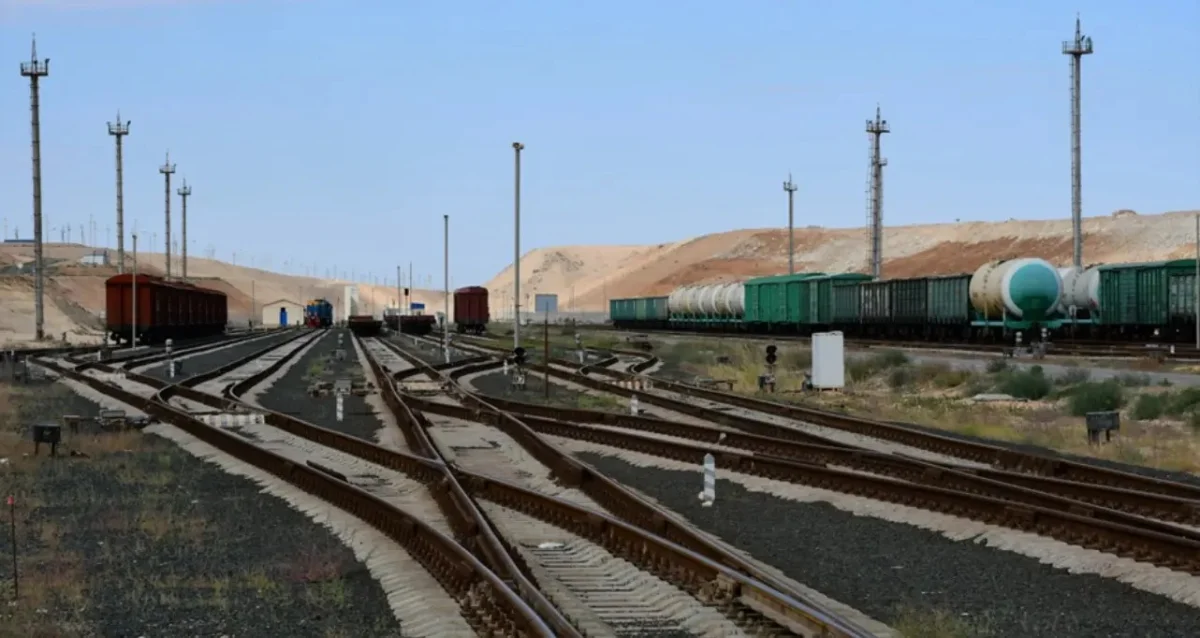
The European Bank for Reconstruction and Development (EBRD) has officially announced a significant financial commitment to Kazakhstan’s transport sector, pledging up to USD 125 million toward a major Eurobond issuance by Kazakhstan Temir Zholy (KTZ), the nation’s national railway operator. This investment marks a pivotal moment in the development of Central Asian infrastructure, aiming to bolster the operational capacity of a critical link in the Eurasian supply chain.
The Eurobond issue, which has reached a total value of USD 1 billion, is now officially listed on both the London Stock Exchange and the Kazakhstan Stock Exchange. By participating in this issuance, the EBRD is not merely providing capital; it is signaling a strong vote of confidence in Kazakhstan’s role as a vital transit hub connecting the markets of East Asia and Europe.
Main Facts: The Scope of the Investment
The financing package is designed to be multi-faceted, addressing both the physical infrastructure of passenger terminals and the strategic corridor capacity required for international freight. The USD 125 million from the EBRD will serve as a cornerstone for KTZ’s broader modernization roadmap.
At the heart of the project is the enhancement of the Trans-Caspian International Transport Route (TITR)—frequently referred to as the "Middle Corridor." As global supply chains have faced increasing volatility, the Middle Corridor has emerged as a essential alternative to northern transit routes. By improving the efficiency of the rail network that traverses Kazakhstan, KTZ aims to reduce transit times and increase the reliability of goods moving from China toward Europe via the Caspian Sea, the Caucasus, and Turkiye.
Furthermore, the investment mandates a focus on social responsibility and technical advancement. A significant portion of the funds is earmarked for the comprehensive modernization of passenger stations. These upgrades are not limited to aesthetics; they are designed to enhance safety, improve passenger throughput, and integrate advanced, energy-efficient lighting and signaling systems.
Chronology: A History of Strategic Engagement
The relationship between the EBRD and Kazakhstan is deep-rooted, spanning over three decades. Since its initial engagement in the country, the bank has invested nearly EUR 11 billion across 352 projects, cementing Kazakhstan’s status as the largest and most long-standing recipient of EBRD funding in the Central Asian region.
- 1990s–2000s: The EBRD’s early involvement focused on stabilizing the post-Soviet transition, providing initial support for energy and banking reforms.
- 2010s: As Kazakhstan sought to diversify its economy away from oil and gas, the focus shifted toward infrastructure, logistics, and private sector development. KTZ began receiving technical assistance to align its operations with international benchmarks.
- 2020–2023: With the geopolitical shift in Eurasian trade routes, the Middle Corridor gained international prominence. The EBRD ramped up its focus on "green" logistics and digital transformation within KTZ.
- 2026 (May): The formalization of the USD 125 million investment into the USD 1 billion Eurobond issue marks the latest milestone in this ongoing partnership, reflecting the scale of capital required to upgrade 16,400 kilometers of rail network.
Supporting Data: The Scale of KTZ Operations
To understand the magnitude of this investment, one must look at the sheer scale of KTZ’s current operations. As the backbone of the Kazakh economy, KTZ manages an expansive and complex rail network.
- Network Length: 16,400 kilometers of track.
- Rolling Stock Assets: The operator manages a fleet of over 1,700 locomotives, 46,800 freight cars, and 2,300 passenger cars.
- Market Position: KTZ is not merely a domestic carrier; it is a regional powerhouse that serves as the primary conduit for cargo moving between the world’s second-largest economy (China) and the European Union.
- Financial Context: The USD 1 billion bond issue, supported by the EBRD, provides the company with the long-term capital necessary to overhaul assets that have, in many instances, reached the end of their design life.
Official Perspectives and Strategic Implications
The EBRD has been vocal about the necessity of this project, noting that the investment is about more than just steel and concrete. It is about "modernizing connectivity."

Improving Passenger Experience and Accessibility
One of the most notable stipulations of the EBRD-supported project is the mandate for inclusive design. The modernization of passenger stations will prioritize accessibility for people with disabilities, a critical advancement for Kazakhstan’s public transit infrastructure. By updating ticketing systems, improving safety protocols, and enhancing terminal facilities, KTZ is effectively raising the standard of rail travel for the average citizen.
Cybersecurity and Digital Transformation
Perhaps the most forward-looking aspect of this collaboration is the focus on digital security. As rail networks become increasingly digitized—relying on complex IT systems for ticketing, freight tracking, and automated signaling—the risk of cyber-attacks increases. The EBRD is mobilizing technical cooperation funds to assist KTZ in adopting international cybersecurity standards. This ensures that as the network becomes faster and more efficient, it also becomes more resilient against modern digital threats.
The Middle Corridor as a Global Alternative
The Middle Corridor is no longer a peripheral route; it is a geopolitical necessity. By facilitating smoother transit through Kazakhstan, the EBRD is helping to reduce the carbon footprint of Eurasian trade. Rail transport is significantly more sustainable than road or air freight, and by increasing the efficiency of the KTZ network, the investment supports the global transition toward greener logistics.
Long-term Implications: A Gateway to the Future
The implications of this investment reach far beyond the borders of Kazakhstan. For international shippers, the modernization of the Middle Corridor means a more reliable, digitized, and secure route that can handle increased volumes. For the Kazakh economy, it represents a transition from a transit-dependent nation to a logistics hub that offers world-class infrastructure.
However, challenges remain. The integration of international standards into a legacy system requires significant organizational change. The technical cooperation component of the EBRD’s support is designed to mitigate these risks by providing the expertise needed to manage large-scale infrastructure projects effectively.
Furthermore, the success of this bond issue demonstrates that international capital markets are increasingly interested in the Central Asian transit story. By acting as an anchor investor, the EBRD has de-risked the KTZ bond for other institutional investors, ensuring that the company has access to the liquidity required for its long-term growth.
Conclusion
The partnership between the EBRD and KTZ serves as a blueprint for development finance. By combining direct capital investment in Eurobonds with essential technical assistance in cybersecurity and social inclusion, the EBRD is ensuring that the growth of Kazakhstan’s railway sector is both sustainable and equitable.
As KTZ moves forward with the modernization of its stations and the optimization of its 16,400-kilometer network, the impact will be felt not just by the passengers who traverse the country, but by the global supply chains that rely on the stability and efficiency of the Middle Corridor. In an era of shifting global trade, the rail lines of Kazakhstan are increasingly becoming the iron veins of a new, connected Eurasia.

