
TOURS, FRANCE — In a significant milestone for public transport development in central France, rolling stock manufacturer Construcciones y Auxiliar de Ferrocarriles (CAF) has officially signed a contract with the Syndicat des Mobilités de Touraine. The agreement outlines the delivery of 19 state-of-the-art Urbos trams destined for the city’s upcoming Tramway Line 2, which will establish a vital public transit axis connecting La Riche and Chambray-lès-Tours through the heart of Tours.
Beyond the manufacture and delivery of the 19 high-capacity vehicles, the comprehensive contract also encompasses the provision of associated fleet spare parts and specialized maintenance tools, ensuring long-term operational sustainability for the local transit authority. This major procurement underscores a broader European trend toward high-capacity, low-emission urban mobility solutions that respect historic architectural landscapes while meeting surging passenger demand.
Main Facts: The Project Scope and Technical Specifications
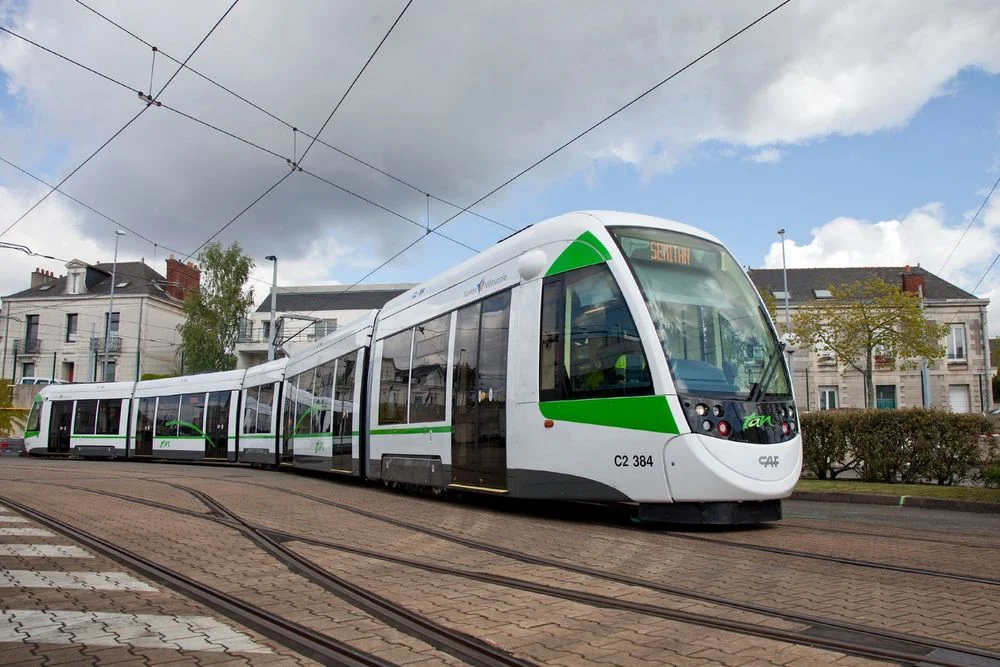
The newly commissioned CAF Urbos trams are engineered to integrate seamlessly into the existing urban fabric of Tours while introducing cutting-edge transit technology. Visually and structurally, the new fleet will bear a strong resemblance to the trams currently operating on Tours’ established Line 1, ensuring a unified aesthetic and streamlined operator familiarity across the city’s network.
Key Vehicle Characteristics:
- High-Capacity Design: Each bi-directional tram will measure an impressive 42 meters in length, providing ample internal space to comfortably accommodate up to 280 passengers per vehicle.
- Accessibility and Comfort: The trams feature a fully low-floor interior layout, eliminating internal steps to ensure seamless, barrier-free boarding for passengers with reduced mobility, the elderly, and travelers with luggage.
- Multipurpose Zones: Recognizing the evolving demands of multimodal urban commuters, the vehicles incorporate dedicated multipurpose areas specifically designed to accommodate baby strollers, bicycles, and wheelchair users safely and efficiently.
- Interoperability: The rolling stock is engineered to operate interchangeably on both the newly constructed Line 2 and the existing Line 1, offering the Syndicat des Mobilités de Touraine maximum fleet flexibility and optimized depot management.
Catenary-Free Technology in the Historic Center
One of the most notable engineering features of the new CAF Urbos fleet is the inclusion of advanced onboard energy storage modules. This cutting-edge technology will allow the trams to operate entirely without overhead catenary wires along a sensitive 2-kilometer stretch of the route running between the Tours railway station and Place Choiseul in the historic city center.
By eliminating unsightly overhead cables and poles in this culturally protected zone, the project preserves the architectural integrity and visual charm of Tours’ historic streetscapes. Furthermore, catenary-free operation significantly reduces the civil engineering costs and construction timelines associated with installing complex overhead electrification infrastructure through narrow, heritage-rich urban corridors.
Chronology: The Evolution of Tours’ Light Rail Network
The journey toward the realization of Tramway Line 2 represents years of strategic transport planning, public consultation, and phased infrastructure development within the Tours Métropole Val de Loire region.
Phase 1: The Success of Line 1 (2013–Present)
Modern light rail in Tours was inaugurated in September 2013 with the launch of Tramway Line 1. Spanning approximately 15 kilometers, Line 1 connected Joué-lès-Tours in the south-west through the city center to Auchan Nord in the north. The line proved to be an immediate operational and cultural success, transforming commuter habits, reducing inner-city vehicular congestion, and revitalizing public spaces along its corridor. Buoyed by the high ridership and public acceptance of Line 1, local authorities immediately began drafting long-term visions for a second trunk line to cross the metropolitan area on an east-west axis.
Phase 2: Planning, Route Selection, and Approval (2018–2023)
Initial feasibility studies for Line 2 began in the late 2010s. Following extensive public debates and environmental assessments, the final route alignment was confirmed to link La Riche in the west to Chambray-lès-Tours in the south, passing directly through central Tours and serving major demographic hubs. In subsequent years, the Syndicat des Mobilités de Touraine finalized the financial framework, regional subsidies, and technical requirements necessary for international competitive bidding.
Phase 3: Procurement and Construction Kickoff (2024–2025)
Following a rigorous tender process, Spanish manufacturer CAF emerged as the successful bidder for the rolling stock contract. Official announcements in early 2025 cemented the partnership between CAF and the transport authority. Concurrently, heavy civil engineering and utility relocation works for the 12.5-kilometer Line 2 commenced on the ground, setting the stage for track installation and depot expansion.
Phase 4: Delivery and Scheduled Opening (2025–2028)
With the contract now signed, manufacturing of the 19 Urbos trams is scheduled to ramp up over the coming years. Dynamic testing on test tracks and subsequently on the newly laid infrastructure in Tours will precede passenger service. Line 2 is officially slated to open to the public in 2028, marking a monumental leap forward for regional mobility.
Supporting Data: Urban Impact and Infrastructure Metrics
To fully appreciate the scope of the CAF contract, it is essential to examine the underlying metrics of the Line 2 infrastructure project and the socio-economic landscape of the Tours metropolitan area.
Line 2 Infrastructure Metrics:
- Total Route Length: 12.5 kilometers of fully integrated double-track light rail.
- Number of Stations: 22 modern, accessible stations designed to blend with neighborhood aesthetics.
- Projected Opening Date: 2028.
- Catenary-Free Zone: 2 kilometers traversing the historic city center between Tours railway station and Place Choiseul.
- Fleet Size: 19 CAF Urbos 42-meter vehicles.
- Passenger Capacity per Tram: Up to 280 commuters.
The Urban Context: Tours and the Loire Valley
Tours is globally renowned for its magnificent Gothic architecture, including the striking Cathedral of Saint-Gatianus, and serves as the primary economic, cultural, and tourism gateway to the picturesque Loire Valley—a region designated as a UNESCO World Heritage site. Balancing the preservation of this rich heritage with the mobility needs of a growing modern city requires sophisticated urban planning.
The introduction of Line 2 is not merely a transit project; it is a comprehensive urban renewal initiative. The construction of the tramway is being paired with extensive public realm enhancements, including:
- The creation of dedicated cycling lanes and pedestrianized zones to encourage active mobility.
- The complete redesign of public squares and streetscapes along the corridor to reduce asphalt coverage and increase urban greening.
- The implementation of advanced traffic light prioritization systems to guarantee high commercial speeds for the tram fleet.
Official Responses and Strategic Significance
The signing of the rolling stock contract has drawn enthusiastic commentary from municipal leaders, transit executives, and representatives of CAF, highlighting the cooperative nature of the venture and its long-term strategic benefits.
Strengthening Intermodality and Regional Connectivity
Local leaders have repeatedly emphasized that Line 2 is designed to act as the backbone of a newly integrated multi-modal transport network. The project aims to dramatically improve transfer efficiencies between the tram system, regional bus networks, cycling infrastructure, and pedestrian pathways.
The alignment has been strategically planned to stitch together crucial metropolitan nodes. Once operational, Line 2 will directly connect major regional hospitals, high-density residential zones, and educational institutions serving a staggering student population of nearly 30,000 individuals. Furthermore, the line will provide seamless access to numerous cultural venues, sports complexes, and major leisure facilities scattered across the metropolitan area, ensuring that transit-dependent residents enjoy equitable access to employment and recreation.
CAF’s Growing Footprint in the French Market
For CAF, securing the Tours contract represents yet another major strategic triumph in the highly competitive French rolling stock market. Over recent years, the Basque-based manufacturer has steadily expanded its presence across France, securing high-profile tramway and light rail contracts in major urban centers such as Montpellier and Marseille.
Industry analysts note that CAF’s ability to deliver customizable, high-capacity vehicles equipped with sophisticated green technologies—such as onboard energy storage systems for catenary-free operation—has positioned the company as a preferred partner for European cities aiming to modernize their public transport networks without compromising architectural heritage. Winning the Tours tender further solidifies CAF’s reputation for reliability, technical innovation, and customer-centric design in the French railway sector.
Implications: Economic, Environmental, and Social Outcomes
The implementation of Tramway Line 2 and the introduction of 19 advanced CAF Urbos trams carry profound implications for the future of Tours and the wider Touraine region.
Environmental Sustainability and Decarbonization
At a time when European municipalities face mounting pressure to meet stringent climate targets and reduce urban air pollution, the expansion of electric light rail offers a definitive solution. By shifting thousands of daily commuters out of private automobiles and into energy-efficient, electric-powered trams, Tours will significantly cut its municipal carbon emissions and lower levels of particulate matter and nitrogen dioxide in the city center. The incorporation of onboard energy storage modules further burnishes the project’s green credentials, eliminating the visual pollution of overhead wires while optimizing energy recovery during braking cycles.
Economic Catalyst and Property Valorization
Infrastructure investments of this magnitude invariably serve as powerful catalysts for local economic development. The construction phase injects substantial capital into the regional economy, supporting hundreds of local engineering, construction, and supply-chain jobs. Moreover, completed light rail lines historically catalyze urban regeneration along their corridors, attracting private investment, commercial development, and residential modernization. Properties located within proximity of the 22 new stations are expected to experience enhanced accessibility and long-term value appreciation.
Social Equity and Mobility Justice
A robust public transport network is intrinsically linked to social equity. By linking peripheral residential neighborhoods directly to major employment hubs, medical facilities, universities, and cultural centers, Line 2 breaks down spatial barriers within the metropolitan area. Affordable, reliable, and fully accessible public transit ensures that mobility is not restricted to those who own private vehicles, thereby fostering a more inclusive and cohesive society in Tours.
Conclusion
The formalization of the contract between CAF and the Syndicat des Mobilités de Touraine marks a defining moment for the urban evolution of Tours. By combining 19 cutting-edge, high-capacity Urbos trams with forward-thinking infrastructure design—including catenary-free operation through historic districts and enhanced multimodal integration—the city is setting a benchmark for modern European light rail development. As construction moves forward toward the anticipated 2028 launch of Line 2, Tours is poised to reap the rich rewards of a cleaner, more connected, and highly efficient public transit future.

