

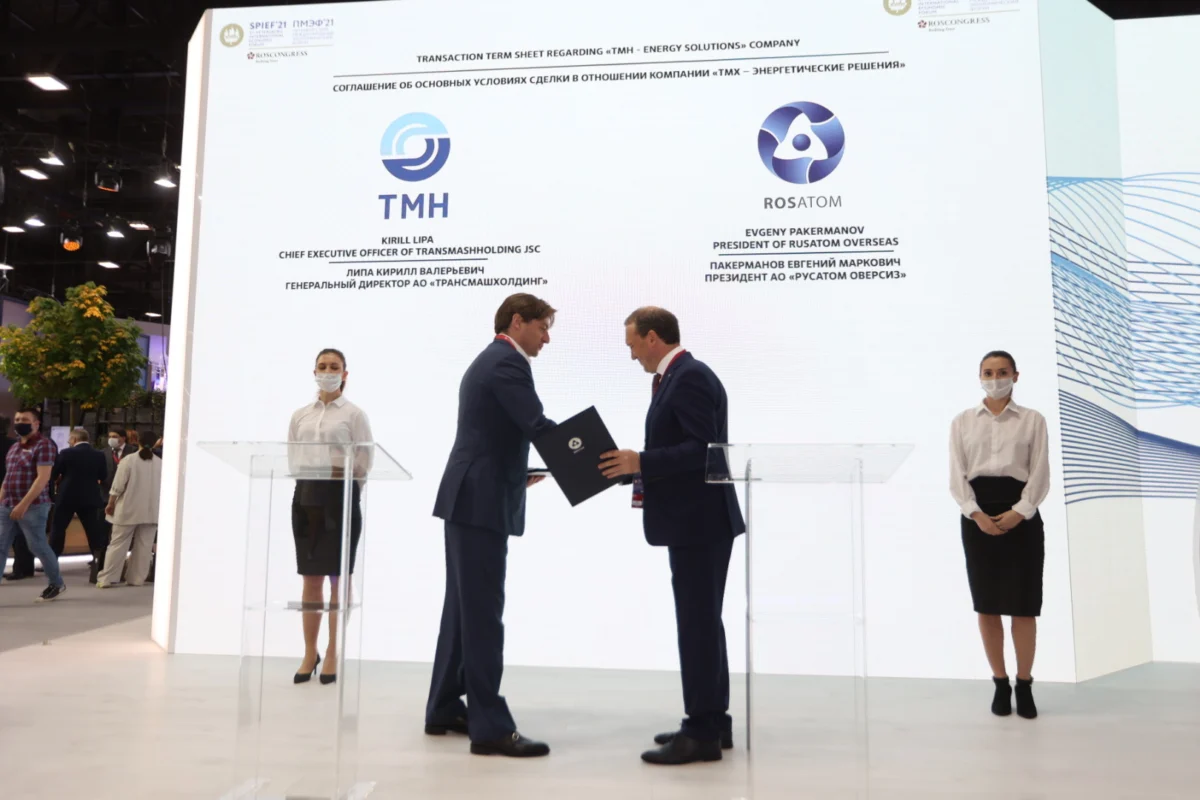
ST. PETERSBURG — In a strategic alignment that promises to reshape the landscape of sustainable transportation and industrial power generation in Russia, Rusatom Overseas—a subsidiary of the state nuclear corporation Rosatom—has agreed to acquire a significant shareholding in TMH-Energy Solutions. The agreement was formally sealed during the 24th St. Petersburg International Economic Forum (SPIEF), a premier platform for international business and economic dialogue.
The transaction, which brings together two industrial heavyweights, is slated for final completion by the end of 2021, pending the successful conclusion of standard due diligence procedures and comprehensive asset evaluations. While the specific financial terms of the equity acquisition have not been publicly disclosed, the partnership is underpinned by an anticipated market potential exceeding RUB 200 billion (approximately USD 2.72 billion) over the coming decade.
This alliance is designed to leverage Rosatom’s formidable technological and industrial competencies in the nuclear and high-tech sectors alongside Transmashholding’s (TMH) extensive footprint in heavy engineering and locomotive manufacturing. By pooling their resources, the two entities aim to accelerate the development of alternative fuel infrastructure, advance import substitution in critical diesel engine manufacturing, and pioneer hydrogen-powered transit solutions across the Russian Federation and international markets.
Main Facts of the Agreement
The core of the agreement centers on Rusatom Overseas entering the ownership structure of TMH-Energy Solutions, a specialized subsidiary established by TMH in 2020 to consolidate energy assets and address rapidly evolving market demands for integrated power solutions.
- Ownership Structure: Transmashholding will retain a controlling, majority stake in TMH-Energy Solutions, ensuring that TMH remains at the helm of its core manufacturing and transportation engineering operations. Rosatom Overseas will step in as a strategic partner and key investor.
- Scope of Collaboration: The partnership is structured to pursue several critical pillars of advanced industrial development:
- Alternative Fuels and Hydrogen Energy: Developing comprehensive hydrogen energy infrastructure and fuel cell technologies tailored for transport.
- Import Substitution: Enhancing the product portfolio and manufacturing capabilities for heavy-duty diesel engines to reduce reliance on foreign components.
- Power Generation: Implementing scalable projects in distributed and backup power generation.
- Synergistic Capabilities: Rosatom brings its vast scientific and industrial ecosystem—spanning nuclear technology, material sciences, and advanced manufacturing—to support TMH’s engineering prowess. Simultaneously, the partnership aims to expand global marketing channels and drive foreign sales for high-technology Russian industrial products.
- Immediate Initiatives: The partnership builds upon existing cooperative frameworks, most notably an ongoing hydrogen pilot project targeting the deployment of fuel-cell-powered passenger trains on the island of Sakhalin.
Chronology of Strategic Alignment and Partnership
The path toward the TMH-Energy Solutions share acquisition is the result of a progressive strengthening of ties between Rosatom and TMH, marked by key milestones in industrial cooperation and green energy development.
2020: Consolidation of Energy Assets
Recognizing a structural shift in global industrial demand toward integrated, sustainable power solutions, Transmashholding made the strategic decision to incorporate TMH-Energy Solutions. This dedicated entity was designed to bring together disparate energy assets under a single corporate umbrella, streamlining the company’s ability to meet modern ecological and operational requirements. The creation of this entity immediately drew the attention of forward-looking energy players, laying the groundwork for discussions with Rosatom.
Early 2021: Expanding Hydrogen Frameworks
The collaboration gained significant operational momentum prior to the SPIEF agreement through tripartite arrangements involving Rusatom Overseas, TMH, Russian Railways (RZD), and the regional government of Sakhalin. The parties initiated a groundbreaking pilot project aimed at introducing hydrogen fuel cell technologies to Russia’s railway passenger network, signaling a mutual commitment to decarbonizing public transport.
June 2–5, 2021: The 24th St. Petersburg International Economic Forum
Against the backdrop of the 24th SPIEF, executives from Rosatom and TMH finalized negotiations and formally signed the shareholder agreement. The announcement captivated industry analysts, positioning the deal as one of the most significant industrial partnerships of the forum.
H2 2021 (Projected): Deal Closure
Following the signing ceremony, both corporations entered a rigorous phase of due diligence and asset valuation. Executives from both sides expressed confidence that all regulatory and administrative conditions would be met, allowing for the formal closing of the transaction by the end of 2021.
Supporting Data and Market Projections
The strategic rationale for the Rosatom-TMH partnership is heavily supported by macroeconomic indicators and long-term industrial forecasts within the Russian energy and transport sectors.
- Market Valuation: Internal and industry assessments project that the addressable market volume for the joint business initiatives pursued by TMH-Energy Solutions will exceed RUB 200 billion (USD 2.72 billion) over the next ten years. This valuation reflects the massive capital expenditure expected as Russian industries modernize their power infrastructure and transition toward low-carbon alternatives.
- Decarbonization Demands: Global and domestic pressures to reduce greenhouse gas emissions have forced heavy transport sectors—traditionally reliant on fossil fuels—to seek viable alternatives. Hydrogen fuel cells and advanced distributed power systems represent vital components of this transition.
- Import Substitution Metrics: Russia’s industrial policy heavily emphasizes technological sovereignty. The domestic market for heavy diesel engines and specialized power generation equipment has historically relied on various imports. By combining Rosatom’s material science capabilities with TMH’s engineering capacity, the joint venture aims to manufacture high-efficiency, domestically produced engines that rival international standards, capturing significant market share previously held by foreign suppliers.
Official Responses and Leadership Perspectives
The signing of the agreement was met with enthusiasm by the leadership of both corporations, who emphasized the transformative potential of the collaboration for the Russian economy.

Kirill Lipa, Chief Executive Officer of Transmashholding, highlighted the market-driven origins of the partnership:
"There is a growing demand for integrated energy solutions. That is why in 2020 TMH incorporated a dedicated entity bringing together respective assets for addressing requirements of the market. Its value creating potential has ensured interest and participation of our partners from Rosatom."
Lipa underscored that retaining a majority stake allows TMH to maintain its operational focus while benefiting immeasurably from Rosatom’s investment and technological depth.
Echoing this sentiment, Kirill Komarov, First Deputy General Director for Global Business Development at Rosatom, framed the deal as a cornerstone of the state corporation’s broader diversification strategy:
"It is an important step for Rosatom towards development of new businesses. We see significant opportunities and joint prospects with Transmashholding, and we are committed for the future cooperation and implementation of advanced solutions for various sectors of the economy of Russia. Upon this, it is important that we are going to introduce and develop products which are currently not being made in our country."
Komarov’s remarks point to a core mandate of the partnership: introducing pioneering technologies—such as commercial hydrogen fuel cell applications for rail—that have no existing precedent in Russian domestic manufacturing.
Implications for Industry, Technology, and Sustainability
The integration of Rosatom into TMH-Energy Solutions carries profound implications across multiple dimensions of Russia’s industrial ecosystem.
1. Accelerating the Hydrogen Economy
While hydrogen energy has gained substantial traction globally as a zero-emission alternative for heavy transport, its commercial implementation in Russia has historically faced infrastructure and technological hurdles. The partnership between Rosatom and TMH bridges the gap between atomic energy expertise and heavy mechanical engineering. By leveraging Rosatom’s proficiency in hydrogen production and safety standards alongside TMH’s rolling stock design capabilities, the joint venture provides an immediate testbed—such as the Sakhalin rail project—for real-world hydrogen deployment.
2. Strengthening Technological Sovereignty
In an era of shifting global supply chains and international trade complexities, achieving domestic self-sufficiency in critical industrial sectors is paramount. The focus on import substitution within diesel engine manufacturing and distributed power generation ensures that Russia can independently sustain its transportation networks and decentralized energy grids. This technological sustainability insulates critical infrastructure from external supply disruptions.
3. Boosting High-Technology Exports
Beyond domestic applications, the collaboration is explicitly engineered to enhance Russia’s competitive edge in international markets. By pooling R&D budgets, engineering talent, and global marketing networks, TMH-Energy Solutions aims to export advanced, eco-friendly transport and energy solutions to emerging economies and international partners seeking reliable, green alternatives to traditional fossil-fuel systems.
4. A New Energy Pattern for Transport
Ultimately, the alliance is a catalyst for creating a new energy paradigm within the Russian Federation. By addressing the dual imperatives of decarbonization and industrial modernization, Rosatom and TMH are laying the infrastructural groundwork for a cleaner, more resilient future—proving that traditional heavy industries can successfully pivot toward sustainable, high-tech innovation.

