

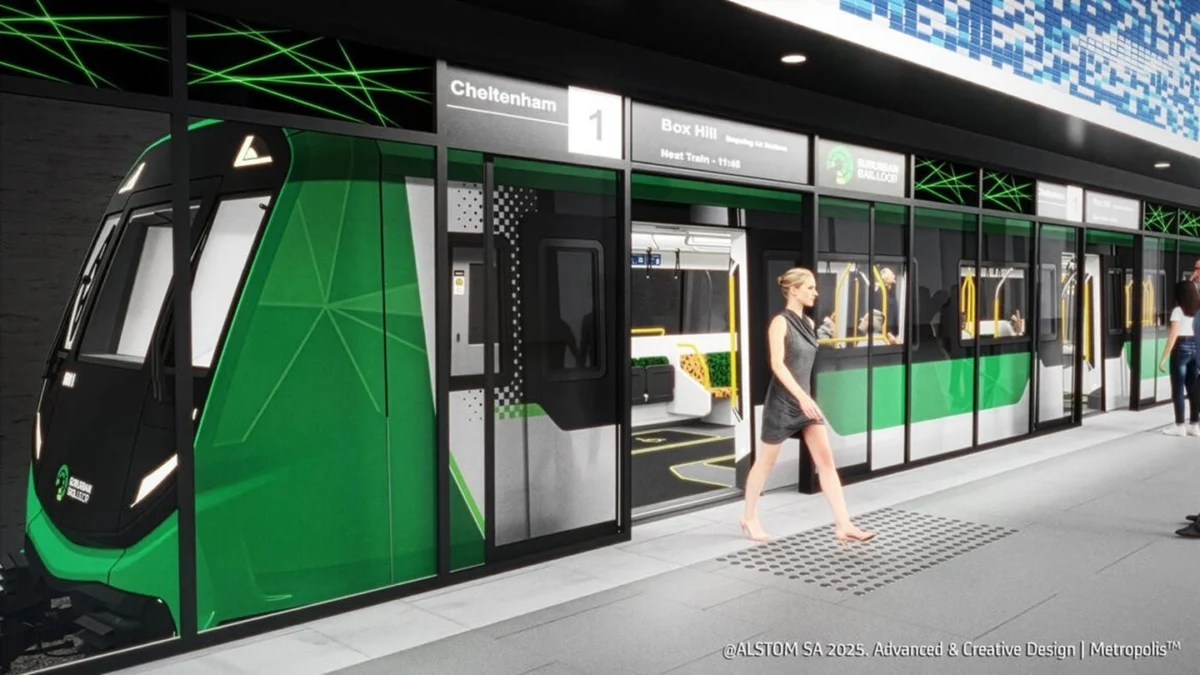
In a landmark development for Australia’s transport infrastructure, global rail giant Alstom has been awarded a €1bn ($1.17bn) contract as part of the massive Suburban Rail Loop (SRL) East project in Melbourne, Victoria. The project, which represents one of the most significant infrastructure investments in the nation’s history, is set to redefine urban mobility for Australia’s fastest-growing city.
The contract is part of a broader €4.9bn package awarded by the Suburban Rail Loop Authority to the TransitLinX Alliance. This consortium is a powerhouse of engineering and operational expertise, comprising Alstom, John Holland, KBR, WSP, and RATP Dev. Together, these entities are tasked with delivering the systems and infrastructure required to bring the 26km SRL East section to life.
The Core Mandate: Integrating Advanced Rail Technology
Alstom’s involvement in the project is comprehensive, spanning the entire lifecycle of the transit system. Under the terms of the agreement, the company is responsible for supplying cutting-edge rolling stock, digital infrastructure, advanced signalling systems, and long-term maintenance services.
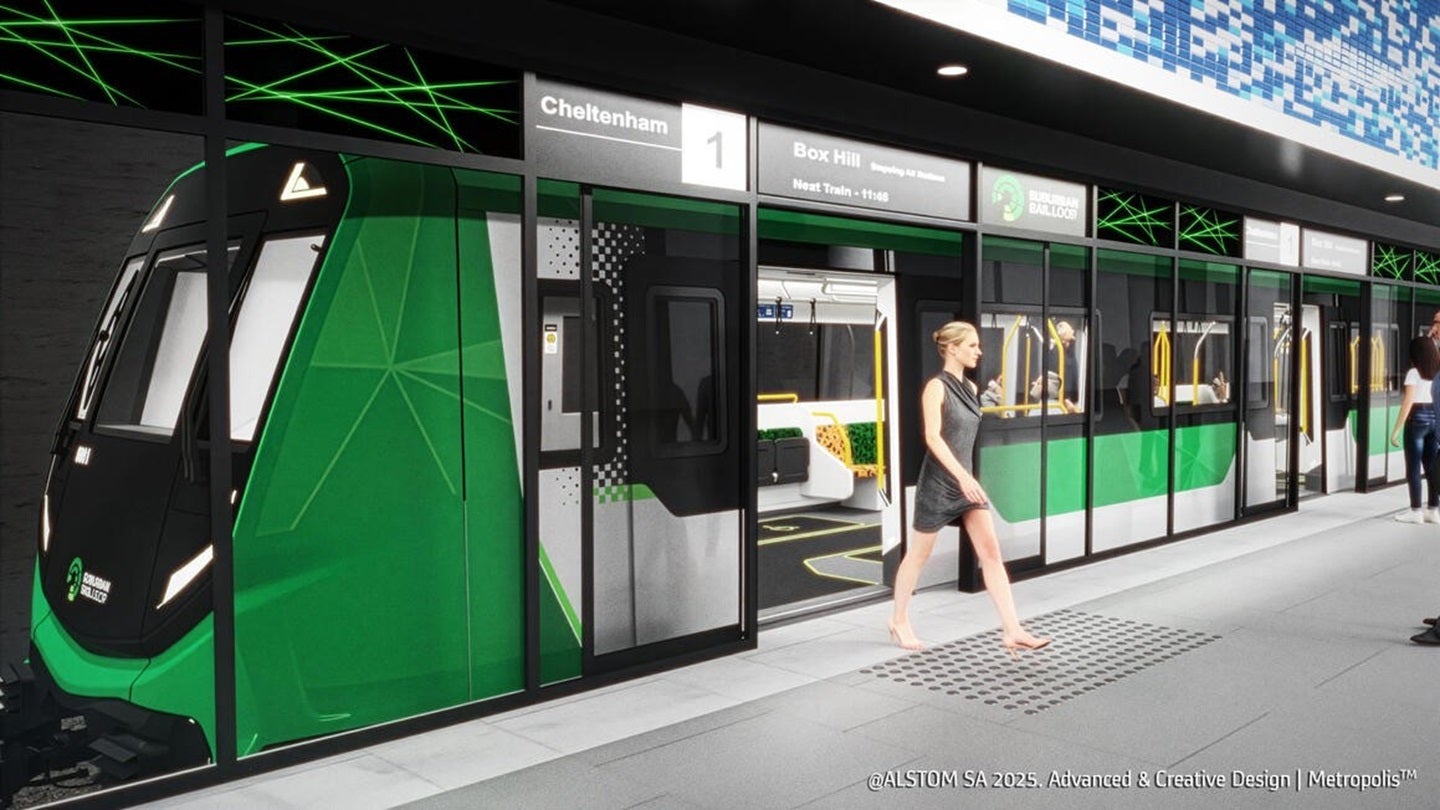
Central to the rollout is the manufacturing of 13 four-car automated Metropolis metro trains. These units will be constructed at Alstom’s Dandenong facility in Victoria, a move that reinforces the government’s commitment to local industry participation and the preservation of high-tech manufacturing jobs within the state.
The trains are designed to operate at Grade of Automation 4 (GoA4)—the highest level of automation for rail systems. This means the trains will be fully unattended, requiring no onboard staff to manage operation, obstacle detection, or emergency response. To facilitate this, Alstom will install its proprietary Urbalis Forward Communications-Based Train Control (CBTC) system, ensuring precise, high-frequency, and safe operation across the new line.
Chronology and Strategic Milestones
The journey toward the SRL East has been marked by rigorous planning and international bidding processes.
- Initial Concept: The Suburban Rail Loop was first proposed as a 90km orbital railway, designed to bypass the congested Melbourne CBD and connect middle-suburban hubs.
- SRL East Definition: The project was refined into stages, with SRL East identified as the priority, covering 26km and six underground stations.
- Consortium Formation: The TransitLinX Alliance was established to bridge the gap between heavy construction, systems integration, and long-term operations.
- Contract Award: The official award of the €4.9bn contract to the Alliance was finalized in late 2025, triggering the start of the design and procurement phases.
- The Future (2035): The official launch date for the first Metropolis trains is slated for 2035, at which point the line is expected to begin transforming cross-suburban travel.
Supporting Data: Infrastructure and Capability
The scale of the project is immense. The 26km SRL East tunnel will connect major employment, health, and education precincts, significantly reducing commute times for residents in Melbourne’s middle suburbs.
Key Technical Specifications:
- Rolling Stock: 13 sets of four-car Metropolis trains.
- Automation Level: GoA4 (Unattended Train Operation).
- Signalling System: Urbalis Forward CBTC.
- Maintenance Commitment: 15 years via the FlexCare Perform solution.
- Maintenance Hub: A dedicated, purpose-built facility in Heatherton, Melbourne.
The FlexCare Perform maintenance solution is a data-driven approach to asset management. By utilizing real-time diagnostics and predictive maintenance algorithms, Alstom aims to ensure maximum availability of the fleet, signalling, and infrastructure, minimizing downtime and optimizing the total cost of ownership for the Victorian government.
Official Perspectives: A Partnership for the Future
The agreement marks a deepening of the relationship between Alstom and the Victorian Government. Pascal Dupond, Managing Director of Alstom Australia and New Zealand, underscored the strategic importance of the collaboration.
"This contract award further deepens our partnership with the Victorian Government to deliver the rail transport priorities of the Victorian Government with leading rail industry partners," Dupond stated. "The Suburban Rail Loop solutions Alstom will provide draw from a range of our leading global technologies across rolling stock, signalling, and services, complemented by our local know-how in Victoria, which we uniquely bring to our customers."
Ling Fang, President of the Alstom Asia-Pacific region, emphasized the global context of the project. "As the world’s leading pure rail player, we bring comprehensive turnkey solutions to meet the needs of our customers in Australia and the wider Asia-Pacific region," Fang remarked. "This project is of global significance in its ambition and scale, and Melbourne joins the ranks of other leading global cities in deploying Alstom solutions to enable advanced rail passenger solutions."
Implications for Melbourne and Beyond
The SRL East project is set to have profound implications for the future of urban development in Australia.
1. The Shift to Driverless Systems
With the implementation of the Metropolis fleet, Melbourne will house Australia’s second driverless train network. The success of the Sydney Metro, which launched in 2019, paved the way for this technology to be adopted at scale. The transition to GoA4 automation offers significant benefits, including improved energy efficiency, increased frequency of service, and the ability to respond dynamically to passenger demand.
2. Economic and Industrial Impact
By manufacturing the trains in Dandenong, Alstom is ensuring that the technical expertise required for such a complex project remains in Victoria. This "local content" strategy is vital for regional economic development, as it fosters a skilled workforce capable of maintaining and evolving the infrastructure for decades to come. The new maintenance facility in Heatherton will also create long-term, high-skilled technical roles.
3. Urban Connectivity
The 90km orbital loop is designed to create a "polycentric" city model. By connecting major suburban hubs, the SRL reduces the reliance on the existing "hub-and-spoke" rail network, which forces most commuters to travel through the city center. This will alleviate pressure on existing lines and decrease congestion on Melbourne’s road networks, contributing to the state’s broader carbon reduction goals.
4. A Benchmark for Global Infrastructure
The scale of the Suburban Rail Loop is being watched by urban planners globally. As cities struggle with the challenges of rapid population growth and the need for sustainable transport, the SRL stands as a blueprint for how to integrate massive orbital transit systems into existing, densely populated urban environments.
Conclusion: A New Era for Victorian Rail
The €1bn award to Alstom is not merely a contract for trains and signalling; it is a commitment to the long-term transformation of Melbourne’s urban fabric. As the TransitLinX Alliance begins the heavy lifting of construction and systems integration, the focus will remain on the 2035 target.
By combining Alstom’s global technological prowess—exemplified by the Metropolis platform and Urbalis signalling—with the specific needs of the Victorian landscape, the Suburban Rail Loop East project is positioned to become a world-class example of modern, automated public transport. As Melbourne continues to grow, this investment ensures that its infrastructure will not only keep pace with demand but will lead the way in providing a sustainable, efficient, and technologically advanced future for its residents.

