

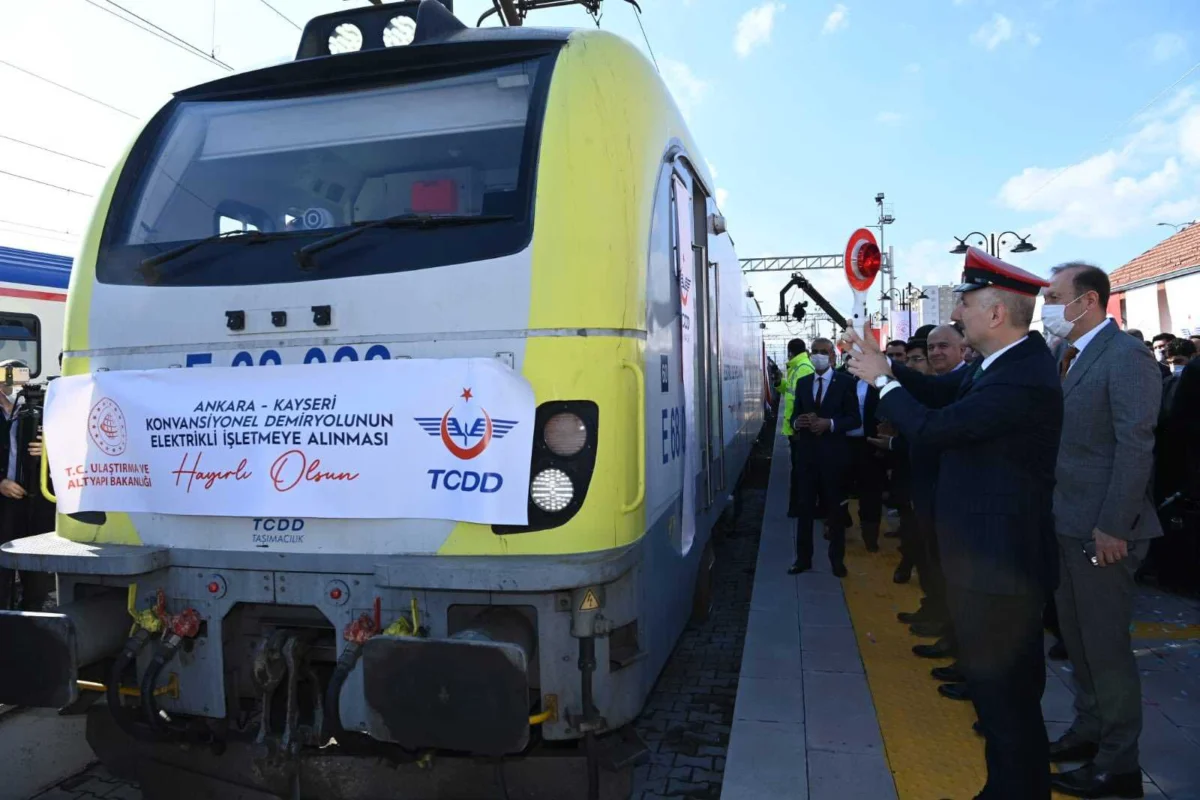
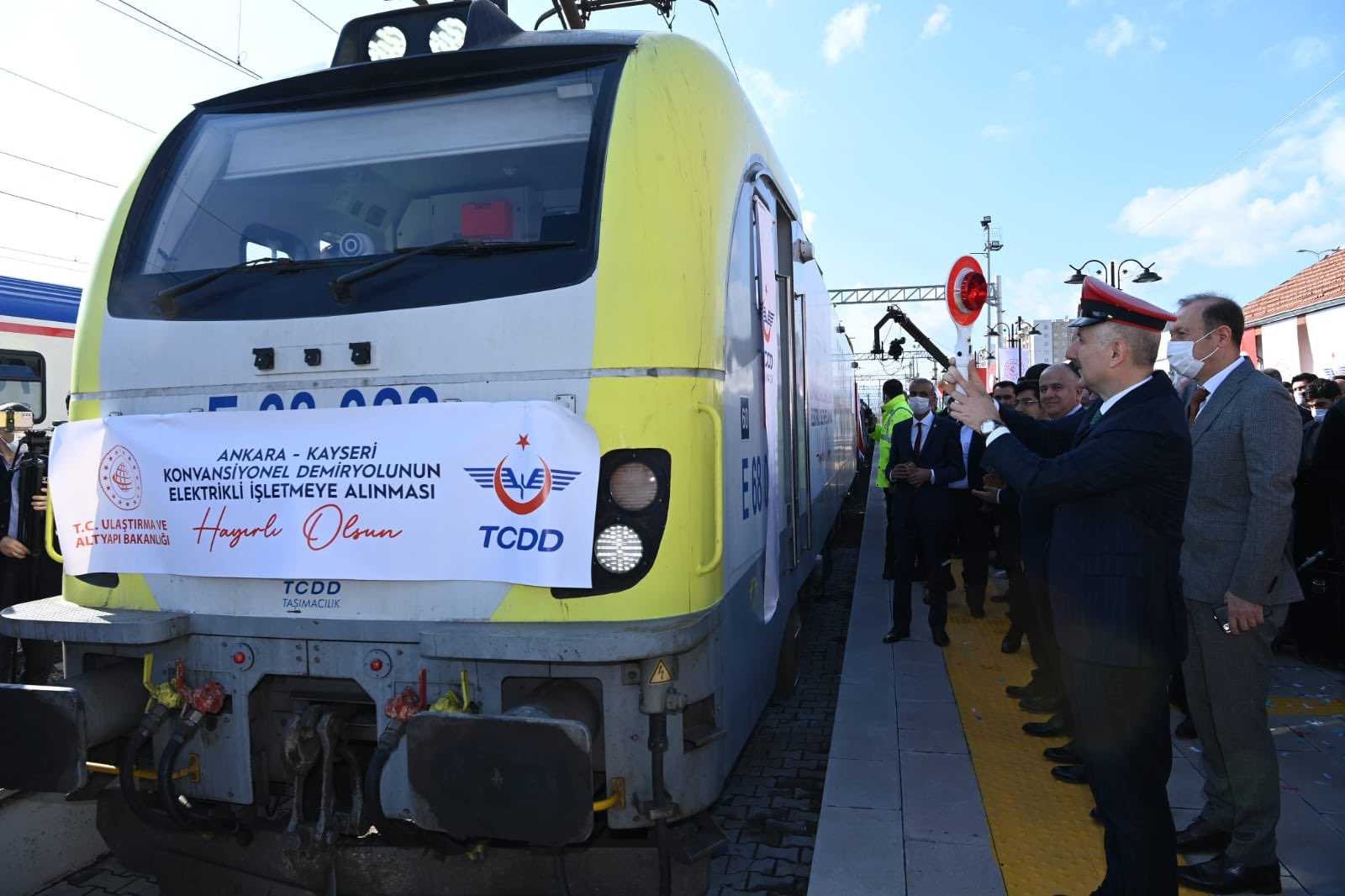
ANKARA — In a landmark step toward sustainable and modernized national transit, Turkey has completed the electrification of the Nenek–Şefaatli rail section and the Tüpraş rail junction. The inauguration, led by Minister of Infrastructure Adil Karaismailoğlu, marks the full electrification of the vital 352-kilometer Ankara–Kayseri conventional railway line.
This infrastructure milestone not only bridges key domestic transport corridors but also aligns with the nation’s broader strategy to slash carbon emissions, optimize freight and passenger logistics, and enhance the overall efficiency of Turkish State Railways (TCDD). With continuous, electrified rail now stretching from west to east, the project is heralded as a cornerstone of Turkey’s green development goals and long-term economic strategy.
Main Facts: The Ankara–Kayseri Electrification
The completion of the Nenek–Şefaatli project removes the final gaps in the 352-kilometer Ankara–Kayseri conventional rail route, enabling seamless electric train operations across the entire corridor.
To achieve this, extensive infrastructural overhauls were required along the route. The project scope encompassed:
- 372 kilometers of newly installed catenary systems.
- 118 kilometers of energy transmission lines.
- 6 dedicated transformer centers to ensure stable and continuous power supply.
Economically and environmentally, the shift from diesel to electric traction on this section alone yields immediate dividends. TCDD projects annual savings of TRY 20 million (approximately EUR 1.44 million), broken down into TRY 9 million (EUR 647,515) in fuel-oil reductions and TRY 11 million (EUR 791,407) in avoided carbon emissions. Environmentally, this translates to an impressive reduction of 35,000 tonnes of carbon emissions annually.
Speaking at the inauguration ceremony, Minister Karaismailoğlu emphasized the logistical flexibility the project unlocks. "Trains coming from the west will now be able to reach the south directly over the Boğazköprü junction," he noted.
Metin Akbaş, Director General of TCDD, further elaborated on the cross-country connectivity: "With the electrification of the Nenek–Şefaatli line, trains from the west will pass to the south via Kayseri. Furthermore, trains departing from İzmir and Edirne will be able to travel seamlessly from Adana to Malatya entirely on electrified tracks."
Building upon this success, Turkey is already planning the next phase of modernization for the corridor: a high-speed, double-track electric line running from Yerköy to Kayseri, designed to support train speeds of up to 200 km/h.
Chronology of Modernization: A Century of Transformation
Turkey’s railway sector is undergoing its most comprehensive reform and expansion phase in nearly a century. To understand the magnitude of the current achievement, it is necessary to examine the historical trajectory and recent milestones of the national network.
- Pre-2003 Legacy: The foundational infrastructure of lines like the Ankara–Kayseri railway was laid nearly 100 years ago. For decades, much of the network suffered from underinvestment, aging infrastructure, and a lack of technological integration.
- 2003–Present Expansion: Recognizing rail as the backbone of sustainable economic transport, the Turkish government initiated a massive rehabilitation and construction program. Since 2003, the nation has built 2,149 kilometers of new conventional lines and 1,213 kilometers of high-speed rail (HSR) connections.
- February 2021: TCDD initiated dynamic trials on the 405-kilometer Ankara–Sivas high-speed line, conducting successful test runs on the Balışeyh–Yerköy–Sivas section. Around the same time, dynamic tests were initiated on the Konya–Karaman section to prepare for commercial service.
- Recent Contracts: The Ministry of Infrastructure signed a landmark USD 1.8 billion contract with China Machinery Engineering Corp (CMEC) for the Aksaray–Ulukışla–Mersin Yenice rail project—a 196-kilometer double-track electrified line designed for speeds up to 250 km/h.
- Current Network Status: TCDD currently operates a sprawling 12,803-kilometer railway network. Historic lines constructed over half a century ago have been systematically overhauled. Crucially, the deployment of advanced signaling systems has increased by 172%, while electrified rail segments have expanded by 180%.
Supporting Data: Infrastructure, Electrification, and High-Speed Growth
Turkey’s financial and physical commitments to its rail sector are reflected in sweeping statistical expansions across passenger services, electrification coverage, and ongoing megaprojects.
Network Electrification and Signaling
- National Electrification Rate: Out of the total 12,803 km network, 5,753 km (45%) is now electrified. With ongoing conventional projects nearing completion, Turkey is on track to electrify 50% of its entire network by 2023.
- National Footprint: The recent completion brings Turkey’s total electrified rail network to 5,931 km, with an additional 847 km of rail sections currently undergoing electrification works.
- Signaling Upgrades: Signaling coverage across the network has risen significantly, with a target to elevate system automation and signaling from 65% to 90% under long-term strategic plans.
High-Speed Rail (HSR) Expansion
High-speed rail has fundamentally altered domestic travel habits in Turkey:
- Current Reach: HSR services currently connect 13 provinces and 44 destinations, granting approximately 4% of the national population direct access to high-speed transit.
- Passenger Milestones: To date, high-speed trains have safely transported 69 million passengers.
- Ankara–Sivas Line: Achieved 95% physical progress. Once fully operational, it will slash travel times between Ankara and Sivas from a grueling 12 hours down to just 2 hours.
- Ankara–İzmir Project: Spanning 503.2 kilometers, infrastructure works have reached 47% completion. Upon finalization, travel times will plummet by more than 10 hours—dropping from 14 hours down to just 3.5 hours—and is projected to carry 13.5 million passengers and 90 million tons of freight annually.
- Bursa–Yenişehir–Osmaneli Line: Infrastructure works have attained 82% physical progress.
- Konya–Karaman–Ulukışla Corridor: Following successful testing on the Konya–Karaman section (102 km), the line is set to support an average of 34 daily passenger and freight trains per direction.
- Aksaray–Ulukışla–Mersin Yenice Project: Backed by the CMEC partnership, this 196 km corridor will feature Turkish-foreign infrastructure collaboration alongside Chinese-supplied signaling, electrical, and communication systems.
Financial Commitments
- Historical Spending: Turkey has already invested TRY 222 billion (USD 16 billion) into its rail renaissance.
- Future Capital: The nation is fully committed to investing a staggering TRY 1.36 trillion (USD 81.78 billion) into rail infrastructure. Investment shares in the transport budget increased by 48% recently, with a projected 63% increase earmarked for 2023.
Official Responses and Strategic Vision
The leadership of Turkey’s Ministry of Infrastructure and TCDD views these railway advancements not merely as engineering feats, but as vital pillars of national sovereignty, industrial competitiveness, and environmental stewardship.
Minister Adil Karaismailoğlu underscored that reforming the rail network through new construction and modernization is the single most important structural shift in Turkish transportation history. "Whatever we do for our country, it is our duty to leave a more livable, greener, carbon-neutral Turkey for our nation," Karaismailoğlu stated, highlighting the sector’s proactive stance on climate action.
TCDD Director General Metin Akbaş echoed these sentiments, pointing directly to the intersection of infrastructural connectivity and sustainability. "The project contributes directly to our green development goals," Akbaş said, noting that the systematic integration of east-west and north-south freight corridors will fundamentally alter how goods move across the country.
Looking far beyond the immediate horizon, the Ministry has formulated a comprehensive Rail Vision for 2071:
- Logistics Integration: Construction of 600 kilometers of new rail junctions to directly connect industrial zones, factories, ports, and major logistics centers.
- Modal Shift: A strategic goal to increase the market share of railways in national logistics to 45%.
- Domestic Manufacturing: A firm mandate ensuring that future railway systems and vehicle components are manufactured locally within Turkey, targeting 80% domestic content.
- Climate Action Plan: The imminent rollout of a dedicated Railway Energy and Climate Change Action Plan to systematically drive down carbon footprints across all operational facets of TCDD.
Implications: Economic Competitiveness and Green Logistics
The completion of the Ankara–Kayseri electrification and the broader national rail expansion carry profound implications for Turkey’s economy, environment, and geopolitical standing as a trade bridge between Europe and Asia.
Economic and Industrial Impact
By modernizing conventional lines and integrating them with high-speed passenger and freight corridors, Turkey is dramatically lowering logistics costs for its manufacturing base. Connecting industrial heartlands directly to coastal ports via electrified, high-capacity rail lines resolves traditional bottlenecks. The involvement of international partners—such as the CMEC contract for the southern corridors—also demonstrates confidence in Turkey’s industrial ecosystem, while local content mandates ensure that capital investments stimulate domestic engineering and manufacturing jobs.
Environmental and Climate Implications
As global economies grapple with climate change, transportation remains one of the hardest sectors to decarbonize. Turkey’s aggressive shift toward electrification—exemplified by the 35,000-tonne annual carbon reduction on the Nenek–Şefaatli line alone—proves that infrastructure investments can yield immediate ecological returns. By shifting freight from carbon-heavy highway trucking to electrified rail networks, and targeting a 45% rail share in logistics, Turkey is positioning itself as a regional leader in sustainable transport.
Ultimately, the modernization of the Ankara–Kayseri line is a microcosm of Turkey’s wider ambition: transforming a historic, century-old network into a high-tech, digitalized, and carbon-neutral transit artery fit for the 21st century and beyond.

