

Introduction: A New Era for Eastern Poland’s Rail Infrastructure
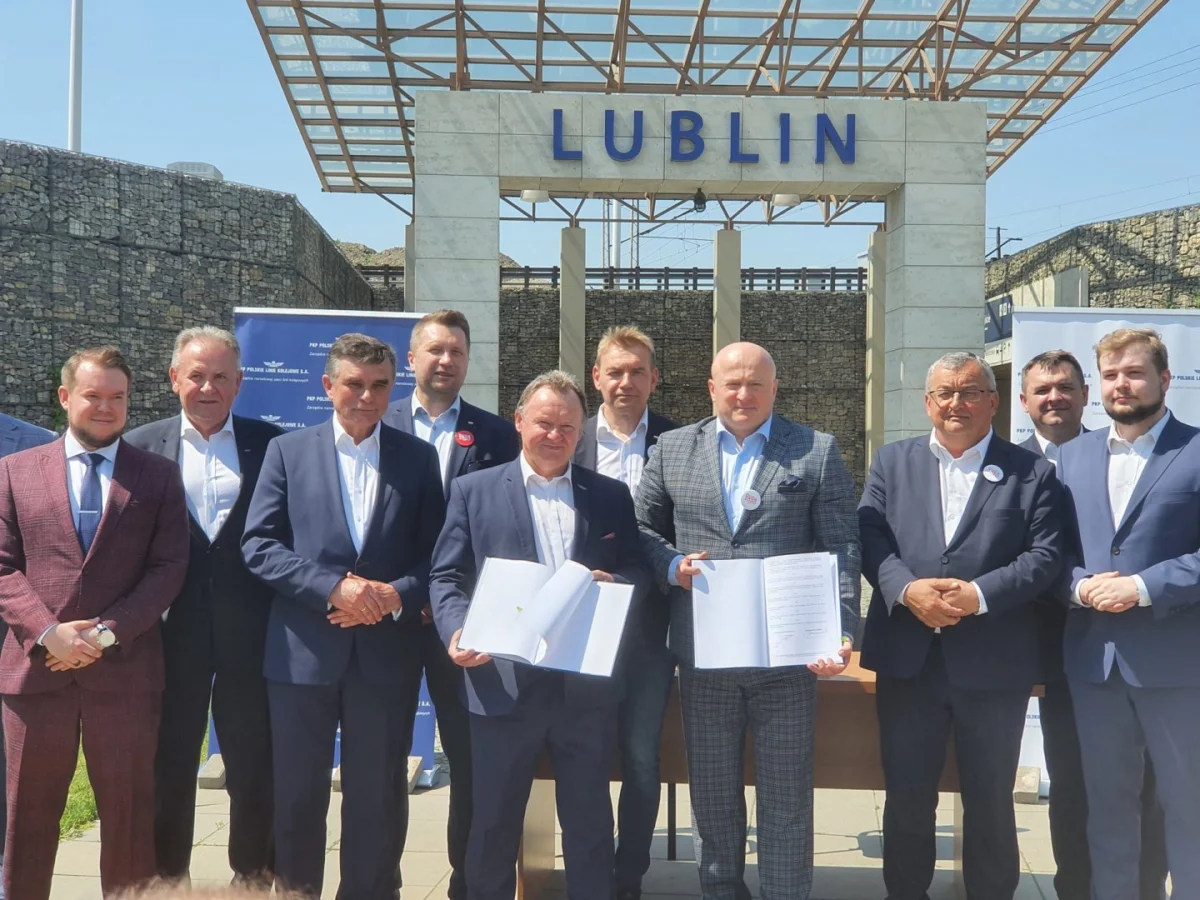
In a landmark move designed to reshape the mobility landscape of Eastern Poland, the Polish railway infrastructure manager, PKP Polskie Linie Kolejowe (PKP PLK), and the government of the Lublin Province have formalized a strategic partnership. This collaboration aims to develop a comprehensive Lublin Rail Agglomeration, a project that seeks to bridge the gap between rural peripheries and the urban core of the regional capital.
By prioritizing high-frequency, efficient, and environmentally sustainable rail services, this initiative reflects a broader national shift toward sustainable transit. As road congestion in major Polish cities reaches critical levels, the integration of regional rail networks stands as the most viable solution for future-proofing transportation.
Main Facts: The Scope of the Lublin Initiative
The agreement serves as a blueprint for the modernization and expansion of railway connections across the Lublin region. The core objective is to provide inhabitants with faster, more reliable access to the city of Lublin from surrounding regional centers.
Key components of the development project include:
- Infrastructure Modernization: Upgrading existing tracks to support higher speeds and increased train frequency.
- Network Expansion: Assessing the viability of new rail lines connecting Szastarki, Janów Lubelski, and Biłgoraj, as well as a direct link between Lublin and Łęczna.
- Strategic Electrification: Evaluating the electrification of the Lublin–Łuków section, a critical move to reduce reliance on diesel traction and enhance operational efficiency.
- Multimodal Integration: Developing a new connection to Lublin Airport from Chełm, ensuring seamless transition between regional rail and international air travel.
- Accessibility Standards: Ensuring all new platforms and stops are fully adapted to the needs of passengers with limited mobility, adhering to modern EU accessibility directives.
Chronology: From Concept to Implementation
The realization of the Lublin Rail Agglomeration follows a structured, multi-year roadmap designed to ensure project viability and financial responsibility.
2019–2020: The Planning Phase
The initiative gained momentum in late 2019 as part of a national push to optimize regional hubs. Following preliminary discussions, the formal agreement between PKP PLK and the Lublin Voivodeship was signed in 2020. This document established the financial and operational frameworks required to move from theoretical concepts to actionable plans.
2020–2021: Design and Feasibility
During this window, the focus shifted to the development of a comprehensive design concept. This phase involved technical studies, environmental impact assessments, and preliminary civil engineering surveys. The cost of this preparatory phase was split equally between the Lublin Voivodeship and PKP PLK, with the latter taking the lead on launching tenders and supervising design output.

2021–2027: Execution and Financial Framework
The project is officially categorized within the 2021–2027 EU financial framework. This period is dedicated to the actual construction and implementation of the infrastructure, with the goal of bringing the new agglomeration services online by the end of the decade.
Supporting Data: The Broader National Context
The Lublin project is not an isolated development but a critical segment of a nationwide strategy to revitalize Polish rail. Under the stewardship of the Ministry of Infrastructure, Poland is investing heavily in the "Rail Agglomeration" model, which has already seen significant activity elsewhere:
- Szczecin and Rzeszów: Currently, the government is actively building out agglomeration railways in these cities, serving as the "proof of concept" for the Lublin project.
- Warsaw: In April 2020, PKP PLK launched a high-profile tender to modernize the Warsaw rail agglomeration, the busiest in the country, to alleviate commuter pressure on the capital’s arterial roads.
- Poznań: In November 2019, a study was commissioned to decide the future development of the Poznań Railway Junction, illustrating a systemic approach to urban mobility across Poland’s major metropolitan zones.
These projects underscore a shift in national priorities: moving from long-distance intercity rail toward the development of high-density, high-frequency regional "commuter" networks that act as the backbone of local economies.
Official Responses: Aligning Policy with Public Need
The project has received significant backing from government officials, who view it as a cornerstone of environmental and economic development.
Minister of Infrastructure, Andrzej Adamczyk, highlighted the project’s environmental credentials during the signing ceremony. "As railway is the most environmentally friendly mode of transport, the government makes efforts to develop the infrastructure across the country. We are currently building an agglomeration railway in Szczecin and Rzeszów. I hope that Lublin will soon join these cities. The establishment of the Lublin agglomeration railway is a chance to reduce road traffic in the center of Lublin," Adamczyk remarked.
Local leaders in the Lublin Province have echoed these sentiments, emphasizing that the project is not just about tracks and trains, but about social cohesion. By connecting cities like Puławy, Parczew, Chełm, and Kraśnik to the capital, the project aims to stimulate labor mobility and prevent the "brain drain" from regional towns toward larger cities.
Implications: A Transformative Future for the Region
The implementation of the Lublin Rail Agglomeration will have far-reaching consequences for the region’s development.
1. Economic Integration
By reducing travel times between the capital and satellite towns, the project creates a unified labor market. Residents in cities like Kraśnik or Chełm will be able to commute to Lublin with ease, widening the scope for employers to attract talent and for workers to access higher-paying opportunities.
2. Environmental Impact
The transport sector is a major contributor to carbon emissions in Poland. By transitioning commuters from private passenger vehicles to electric-powered rail, the region expects a measurable decline in CO2 emissions and local air pollution, particularly in the center of Lublin, where traffic congestion has historically been an issue.
3. Urban Planning and Intermodality
A key feature of the project is the creation of "interchanges" located next to new railway stops. These hubs will integrate rail with local public transport (buses and trams), cycling infrastructure, and pedestrian zones. This "last mile" connectivity is essential for the project’s success; without a seamless transition from the train to the office or home, commuters are likely to default back to their cars.
4. Accessibility and Social Equity
The commitment to adapting platforms for passengers with limited mobility is a significant social win. Historically, aging rail infrastructure in Poland has been a barrier for the elderly and those with disabilities. The new standards ensure that the regional rail system is truly inclusive, promoting independent mobility for all segments of the population.
5. Future-Proofing
The inclusion of a link to Lublin Airport is particularly strategic. As air travel becomes increasingly accessible, the integration of rail as the primary "feeder" for airports reduces the need for large-scale parking facilities and road infrastructure around the airport complex, creating a more sustainable model for regional aviation.
Conclusion: The Road Ahead
The development of the Lublin Rail Agglomeration represents a calculated, long-term investment in the regional infrastructure of Eastern Poland. By combining rigorous engineering, strategic financial planning, and a clear vision for environmental sustainability, the partnership between PKP PLK and the Lublin government serves as a model for how modern states can revitalize their rail sectors.
As the feasibility studies evolve into construction sites, the residents of the Lublin region can look forward to a future where the train is no longer a niche mode of transport, but the most convenient, rapid, and sustainable way to navigate their home province. The 2021–2027 financial framework will be the crucible in which this vision is tested, but if the progress in cities like Szczecin and Warsaw is any indication, the transformation of the Lublin rail network is set to be a landmark success in the history of Polish transportation.

