

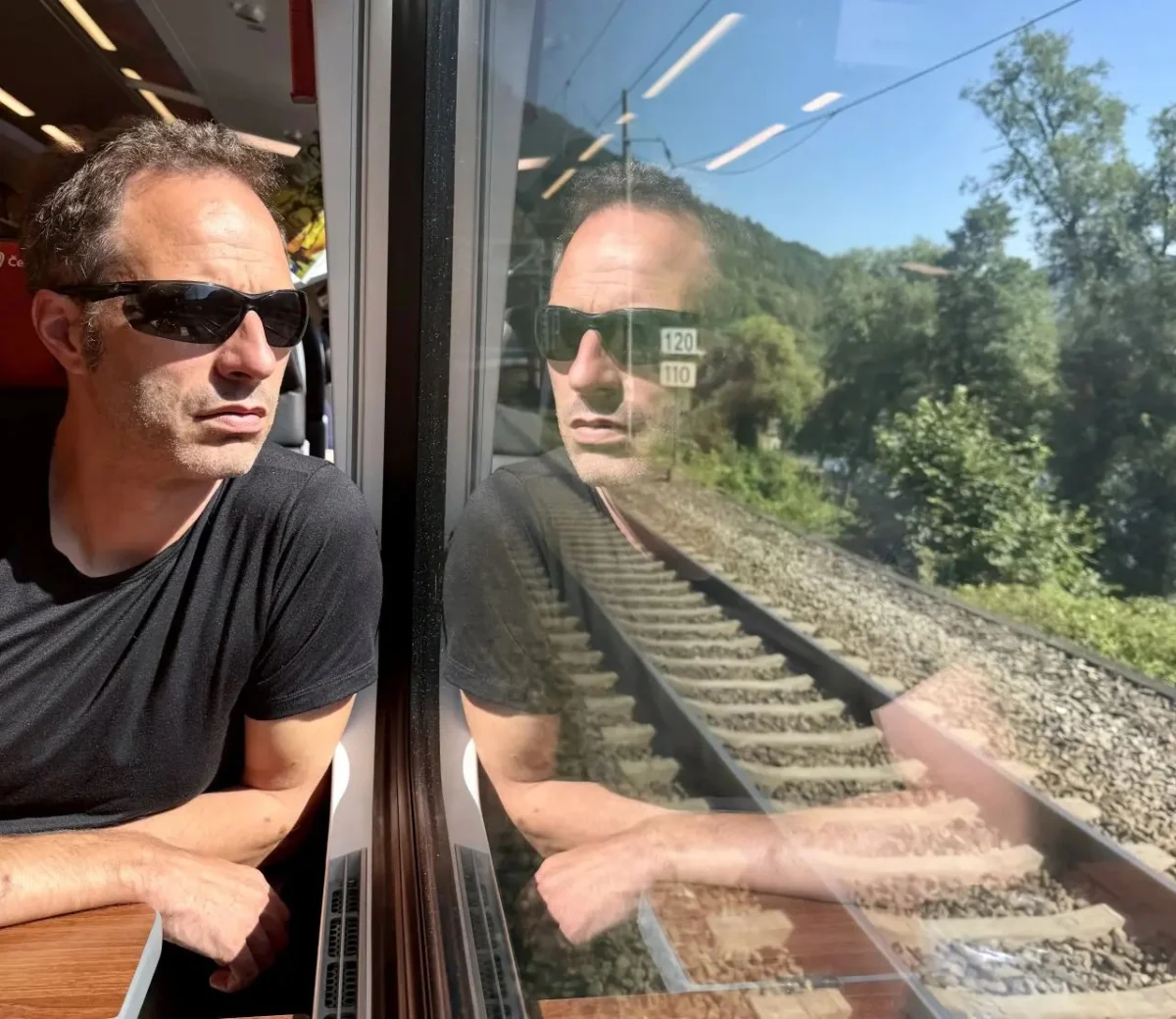
In an era where European integration is often discussed in terms of policy and trade, rail activist and commentator Jon Worth decided to test the physical limits of the continent’s connectivity. In a grueling 125-hour expedition, Worth traversed Europe from the frozen landscapes of Finnish Lapland to the sun-drenched shores of the Portuguese Algarve.
The journey, which stretched from Kemijärvi to Lagos, was more than just an endurance test; it was a high-stakes stress test of the European Union’s rail infrastructure. While the geodetic distance between these two points is approximately 4,000 kilometers, the reality of the rail network—a sprawling, fragmented tapestry of national systems—forced Worth to cover over 6,000 kilometers. By the time he stepped off his final train in Lagos, he had spent over five days in transit, navigated 23 separate trains, and underscored the deep-seated systemic issues that continue to prevent Europe from achieving a seamless, continent-wide rail network.
The Chronology of a Continental Challenge
The expedition was designed as a proof-of-concept for the #CrossBorderRail project, an initiative spearheaded by Worth to document the joys and frustrations of international train travel. The plan was meticulous: a 100-hour and nine-minute itinerary involving 18 trains operated by ten different companies.
The Opening Phase
The journey began in the remote Finnish town of Kemijärvi. The timing was deliberate, capitalizing on the August 2026 resumption of passenger rail services between Tornio, Finland, and Haparanda, Sweden—a vital link that had remained dormant for nearly four decades. This crossing represents the only rail connection between Finland and the rest of the EU passenger network, making it the essential "gateway" for Worth’s mission.
The Collapse of the Schedule
The fragility of the European network became apparent almost immediately. A major disruption at the Haparanda border crossing forced a total recalculation of the itinerary. In a modern rail system, one might expect a seamless rerouting; however, in the context of cross-border rail, a single delay acts as a domino that topples the entire journey. What was intended to be a 100-hour trek quickly spiraled into a 125-hour, 31-minute ordeal.
As Worth navigated through Sweden, Denmark, Germany, France, and Spain before finally reaching Portugal, the "buffer" times he had painstakingly included in his schedule were rapidly consumed. The final tally of 23 trains—five more than initially planned—illustrated the cascading effect of missed connections. Each deviation required navigating new ticket platforms, adjusting to varying national safety protocols, and managing the psychological fatigue of a journey that was, by all metrics, a test of patience as much as a mode of transport.

Supporting Data: The Logistics of Fragmentation
To understand the scale of the challenge, one must look at the administrative burden of such a journey. Under standard operating procedures, booking the original 18-train itinerary would have required 11 separate transactions across nine different websites. This level of complexity is a massive barrier to entry for the average traveler, serving as a deterrent to those who might otherwise choose the train over a flight.
The Financial and Structural Reality
Worth’s financial analysis of the trip offers a damning critique of the current ticketing landscape:
- The Individual Ticket Trap: Purchasing individual tickets for this journey would cost a minimum of €563 for second-class travel. Crucially, this method provides zero protection for the passenger; if a delay causes a missed connection between two different operators, the traveler is left to bear the cost of new tickets and overnight accommodation.
- The Interrail Solution: Worth opted for an Interrail pass, which cost €387 for an adult over 26. While more cost-effective, it does not solve the inherent scheduling issues. Interrail allows for flexibility, but it does not magically create capacity where there is none.
The data confirms that the issue is not a lack of tracks, but a lack of coordination. Throughout his 190,000-kilometer research history across 428 cross-border connections, Worth has identified a recurring pattern: when trains are infrequent—sometimes only once or twice a day—a minor mechanical failure or a slow-moving freight train ahead on the line can result in a 24-hour delay.
The Myth of the "German Bottleneck"
A recurring trope in European rail discourse is the perceived unreliability of Deutsche Bahn. However, Worth’s data provides a counterintuitive insight: Germany, despite its punctuality issues, is actually one of the most resilient parts of the network. Because the German system is dense and highly interconnected, there are almost always alternative routes or subsequent trains available if a connection is missed.
The "real" danger zones, according to Worth, are the peripheral, less-frequently served corridors. In these regions, if you miss your single daily connection, you are effectively stranded. The lack of synchronized scheduling between national operators means that the "European rail network" is, in practice, a collection of disconnected national islands, each operating with its own logic, ticketing, and priorities.
Implications: A Call for Systemic Reform
The implications of Worth’s journey are clear: if the EU is serious about its Green Deal and shifting long-distance travel from aviation to rail, it must address the "software" of the rail network—the timetables, ticketing, and data sharing—rather than just the "hardware" of the tracks.

Beyond Infrastructure
While billions are spent on high-speed rail lines, Worth argues that significant improvements could be achieved with much smaller investments. His recommendations include:
- Unified Ticketing: The creation of a truly pan-European booking platform that treats cross-border travel as a single journey, providing passenger protection regardless of how many operators are involved.
- Timetable Synchronization: Implementing "pulse" scheduling, where trains from different countries are coordinated to meet at major hubs at synchronized times, minimizing transfer waits.
- Data Transparency: Standardizing the way delay information is shared across borders, ensuring that a delay in Finland is instantly reflected in the planning systems in Sweden or Germany.
The Political Response
While the European Commission has expressed a desire for a "Single European Railway Area," progress has been slow. National railway companies remain protective of their monopolies and reluctant to integrate their booking systems with competitors. Worth’s project serves as a "citizen-led audit" of these political promises. By physically demonstrating that a journey from the Arctic Circle to the Atlantic remains an arduous, complex, and high-risk undertaking, he is forcing policymakers to confront the reality that the dream of a "seamless" Europe is currently blocked by bureaucratic and operational friction.
Conclusion: The Value of the Journey
Despite the frustrations, the 125-hour odyssey served a deeper purpose. It showcased the immense potential of the European rail network. From the quiet majesty of the Scandinavian forests to the high-speed corridors of Western Europe and the final arrival at the Portuguese Atlantic, the journey underscored why rail remains the most compelling way to experience the continent.
Jon Worth’s experiment proves that while the infrastructure for a connected Europe exists, the user experience is still stuck in the 20th century. By shifting the focus from simply building more track to improving the cohesion of the existing network, Europe could transform rail travel from a niche, endurance-testing adventure into a standard, efficient, and preferred mode of mass transit. Until then, the route from Kemijärvi to Lagos remains a testament to both the beauty of the European landscape and the stubborn complexity of its borders.

