

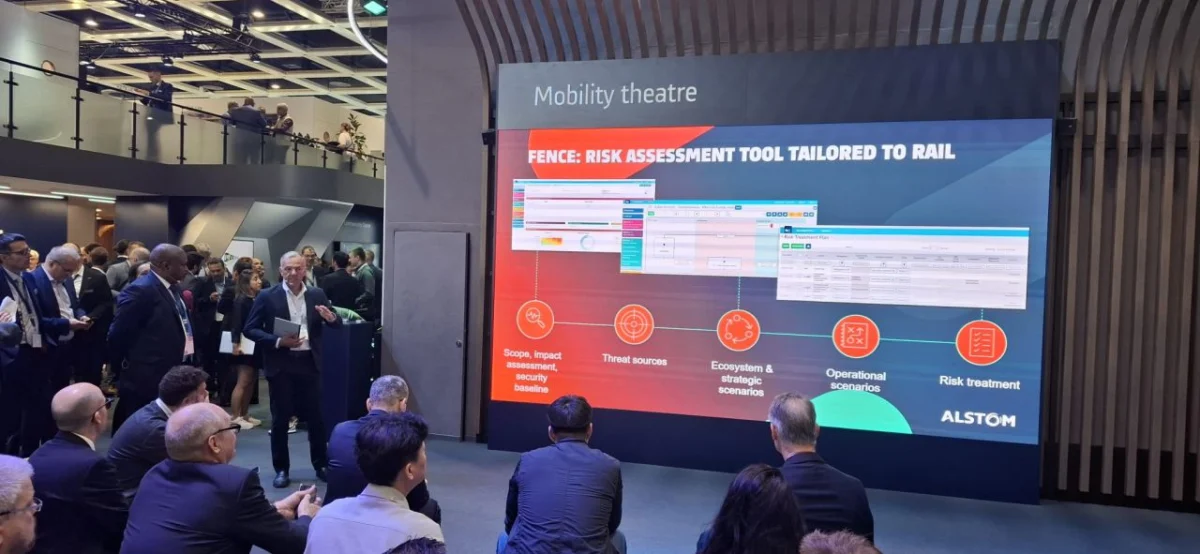
BERLIN – As the global transportation sector pivots toward deeper digitalization, the vulnerability of critical infrastructure has emerged as a paramount concern for governments and private operators alike. At InnoTrans 2024, the world’s leading trade fair for transport technology, a strategic partnership between Alstom and Airbus Protect reached a critical inflection point, unveiling a robust, industry-standardized approach to rail cybersecurity that promises to set a new benchmark for the sector.
The announcement signifies a major leap forward in the cooperation agreement first signed in September 2021, moving from conceptual framework to operational deployment of a comprehensive Risk Assessment Methodology for Industrial Security tailored specifically for the complexities of modern rail.
The Core Mandate: Bridging Industry Expertise
The collaboration between Alstom—a global leader in sustainable mobility—and Airbus Protect, the cybersecurity arm of the aerospace giant, represents a cross-pollination of safety-critical expertise. While rail and aerospace operate in different environments, they share a common requirement: the absolute necessity of system integrity.
By leveraging Airbus Protect’s deep-rooted experience in protecting aeronautical systems—which are subjected to the highest levels of security scrutiny—Alstom is effectively "hardening" the rail network against an era of sophisticated, state-sponsored, and criminal cyber threats. The newly developed methodology is not merely a theoretical framework; it has been rigorously field-tested, ensuring that it translates from the boardroom to the signaling centers and onboard train systems.
Chronology: A Three-Year Trajectory
The journey to this milestone at InnoTrans 2024 has been marked by a deliberate and structured progression:
- September 2021: Alstom and Airbus Protect formalize their global cooperation agreement. The primary objective is to harmonize cybersecurity practices across Alstom’s international projects.
- 2022–2023: The "Pilot Phase." The partners identify key railway assets and test the efficacy of the EBIOS RM risk management framework within the unique constraints of rail operations.
- Early 2024: Refinement and Integration. The methodology is integrated into Fence, the proprietary risk assessment tool developed by Airbus Protect.
- September 2024 (InnoTrans): Official unveiling of the deployed methodology. The partners confirm that the framework is now ready for global rollout across Alstom’s diverse project portfolio.
The Technical Backbone: Fence and International Compliance
Central to this initiative is the deployment of Fence, the risk assessment tool developed by Airbus Protect. Fence serves as the digital repository for the partnership’s methodology, providing Alstom with a centralized, scalable, and secure database.
Why Fence Matters
In the sprawling, multi-jurisdictional world of rail projects, inconsistency is the enemy of security. Fence allows Alstom to:
- Reuse Assessments: By creating a library of previously completed risk assessments, engineers can apply "lessons learned" from a project in Europe to a new build in Asia or the Americas, drastically reducing time-to-market.
- Centralized Knowledge Management: It provides a single source of truth for cybersecurity documentation, which is essential for audit compliance.
- Permission Control: It ensures that sensitive security architecture data is compartmentalized and accessible only to authorized personnel, mitigating insider threats.
Regulatory Alignment
The methodology is specifically engineered to address the "alphabet soup" of international rail standards, ensuring that any Alstom project is "secure by design":
- EBIOS RM: The French-originated risk management framework now widely recognized for its efficacy in assessing complex digital ecosystems.
- IEC 62443: The gold standard for Industrial Automation and Control Systems (IACS) security, which is increasingly mandatory for rail signaling and communication systems.
- CLC/TS 50701: A technical specification specifically tailored for railway cybersecurity, ensuring that the safety-critical nature of rail remains prioritized alongside digital security.
Official Perspectives: Aligning Vision and Execution
Eddy Thesee, Vice President of Digital & Cybersecurity at Alstom
Mr. Thesee emphasized that the digitalization of rail is not an optional evolution but a necessity for sustainability. However, this evolution brings an expanded attack surface.
"In the context of rising cyber risks across all sectors, Alstom is committed to safeguarding the rail assets of our customers," Thesee stated. "Our collaboration with Airbus Protect will ensure the continued success of green mobility worldwide. We are moving beyond simple compliance; we are building a resilient ecosystem that can withstand the evolving threat landscape."
Julien Touzeau, Head of Cyber Consulting at Airbus Protect
Mr. Touzeau highlighted the synergy between aviation and rail, noting that the methodologies used to protect flight control systems are highly transferable to train signaling and fleet management.
"Innovating and collaborating across industries is part of the Airbus Protect DNA," Touzeau remarked. "As specialists in the cybersecurity of industrial systems and mobility solutions, we are proud to be working closely with Alstom, bringing our experience in the aeronautical sector to enhance the security of information systems in the rail sector."
Implications: The New Era of "Hardened" Mobility
The implications of this partnership extend far beyond the technical sphere. As the rail industry embraces the Internet of Things (IoT), cloud-based fleet management, and autonomous operation, the potential for cyber-physical attacks increases.
1. Future-Proofing the Installed Base
One of the most significant aspects of this methodology is its application to legacy systems. Alstom is not only securing new, high-speed rail projects; it is applying these cybersecurity measures to its existing installed base. This retrofitting approach is critical, as legacy infrastructure often represents the "weak link" in national transportation grids.
2. Streamlining Regulatory Compliance
For operators and national governments, the Alstom-Airbus Protect methodology offers a streamlined path to certification. By adopting these standardized protocols, transit authorities can demonstrate to regulators that their systems meet international cybersecurity requirements with a high degree of transparency and evidence-based reporting.
3. Economic and Operational Efficiency
Cybersecurity is often viewed as a cost center. However, by standardizing risk assessments, Alstom is reducing the overhead of repetitive security audits. The efficiency gained through the Fence tool allows for faster deployment of digital signaling, which in turn improves rail capacity and reduces operational costs, ultimately leading to more affordable and reliable passenger services.
Supporting Data: The Digital Value Chain
Alstom’s position as a leader in the sector is defined by its comprehensive digital value chain. The company now offers a suite of solutions that covers:
- Digital Signaling: Ensuring the secure communication between trains and trackside equipment.
- Passenger Information Systems: Protecting public-facing interfaces from digital disruption.
- Predictive Maintenance: Securing the massive flow of diagnostic data from locomotives to maintenance centers.
By integrating cybersecurity into the very foundation of these digital services, Alstom is ensuring that the "greening" of transport—which relies heavily on efficient, digitized rail networks—is not undermined by catastrophic digital failures.
Conclusion: A Paradigm Shift
The collaboration between Alstom and Airbus Protect serves as a clear signal to the rail industry: cybersecurity is no longer an "add-on" or a checkbox exercise. It is a fundamental pillar of modern engineering.
As the world continues to shift toward sustainable transport, the reliance on digital systems will only grow. The partnership showcased at InnoTrans 2024 provides a robust blueprint for how global industrial players can collaborate to protect the infrastructure that keeps the world moving. By marrying the aerospace rigor of Airbus Protect with the rail engineering scale of Alstom, the industry has taken a definitive step toward a more secure, resilient, and efficient future for rail transport.
As we look toward the next decade of mobility, it is evident that the tracks of the future will be paved with code, and thanks to initiatives like this, they will be increasingly resilient against the threats of the digital age.

