

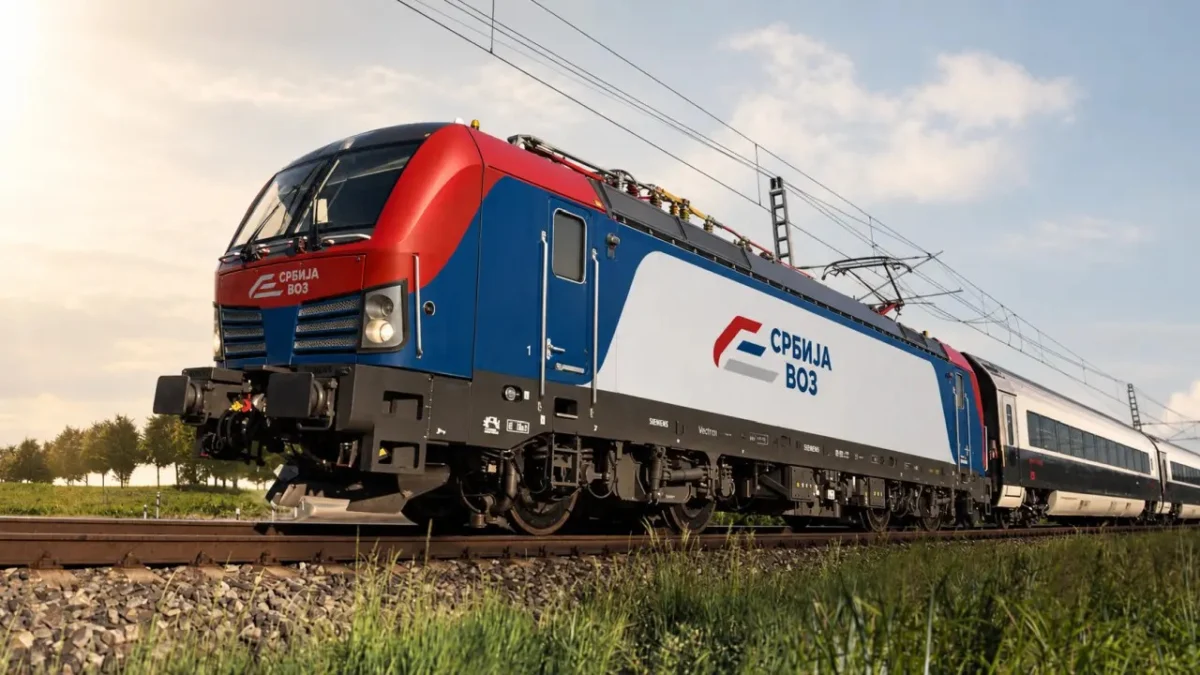
In a significant move to bolster its international rail connectivity, the Serbian national passenger operator, Srbijavoz, has secured a critical EUR 12 million financing package from EUROFIMA. This infusion of capital serves as the inaugural installment of a broader framework agreement aimed at acquiring six state-of-the-art Siemens Vectron A17 electric locomotives. This strategic investment marks a pivotal moment for Serbia as it aligns its national rail infrastructure with the rigorous standards of the European Union, facilitating seamless cross-border travel.
Main Facts: The Vectron Acquisition
The agreement, finalized under the mandate of EUROFIMA—the supranational organization dedicated to financing railway rolling stock—provides Srbijavoz with a ten-year loan facility. The objective is clear: to modernize the aging fleet currently serving international corridors and to replace legacy equipment with high-performance, interoperable technology.
The Siemens Vectron A17 is widely regarded as the "workhorse" of modern European rail. These locomotives are engineered for a maximum power output of 6.4 MW and are capable of reaching commercial speeds of up to 200 km/h. By integrating these units into its fleet, Srbijavoz is not merely upgrading its hardware; it is ensuring that its international services meet the speed and reliability expectations of modern European travelers.
Chronology: A Path Toward Modernization
The procurement of these locomotives is not an isolated incident but the result of a multi-year strategy to integrate Serbia into the European railway network.
- Initial Planning (2022–2023): Srbijavoz identified the urgent need for multi-system locomotives capable of navigating the disparate electrification and signaling environments of Central Europe.
- Negotiations (Early 2024): Discussions between Serbian authorities and EUROFIMA culminated in a comprehensive framework agreement, designed to provide long-term, low-interest capital for rolling stock acquisition.
- The Funding Milestone (Late 2024/2025): The official disbursement of the first EUR 12 million installment allows Srbijavoz to trigger the production orders with Siemens, setting the procurement timeline in motion.
- Future Deployment (2026 and beyond): Following delivery and rigorous testing, the locomotives are expected to enter service, marking the start of a new, faster era for passenger transit between Belgrade and key European hubs.
Supporting Data: Technical Superiority and Cross-Border Interoperability
The primary challenge for any rail operator moving between the Balkans and the European Union is the "border-stop" dilemma. Historically, trains were forced to halt at national boundaries to switch locomotives because different countries utilize varying voltage systems and signaling protocols. The new Vectron A17 fleet effectively eliminates this friction.
Multi-System Capabilities
The locomotives will be fully certified for operation across four distinct national rail networks: Serbia, Hungary, Austria, and Germany. This multi-system capability means that a train departing from Belgrade can traverse these territories without the costly and time-consuming necessity of changing locomotives at each border crossing.
The Role of ETCS Level 2
A defining feature of these locomotives is the factory-installed European Train Control System (ETCS) Level 2. This sophisticated signaling and train protection system is the backbone of modern European railway corridors. By adopting ETCS Level 2, Srbijavoz ensures its trains are compatible with the high-speed networks of Western Europe, providing a higher degree of safety and automated speed control that exceeds the capabilities of legacy systems currently in use.
Economic and Operational Impact
- Power: 6.4 MW, ensuring high tractive effort for heavy passenger consists.
- Top Speed: 200 km/h, essential for competing with road and air travel on key international routes.
- Operational Reach: From the Danube to the Rhine, these units create a seamless transit corridor, significantly reducing total travel times for passengers.
Official Responses: Strengthening European Ties
The partnership between Srbijavoz and EUROFIMA is being hailed as a model for cooperation between regional operators and international financial institutions.
Christoph Pasternak, CEO of EUROFIMA, highlighted the broader significance of the project:

"International passenger rail transport depends on rolling stock that can operate seamlessly across borders. By securing long-term financing for these multi-system locomotives, EUROFIMA is supporting Srbijavoz in renewing its fleet and strengthening the foundation for reliable cross-border services between Serbia and the European rail network."
For the Serbian government and Srbijavoz leadership, this investment is a tangible commitment to the "Green Agenda." Rail travel is significantly more carbon-efficient than short-haul aviation or private vehicle travel. By increasing the frequency and reliability of international rail links, Serbia is actively reducing its transport-related carbon footprint while boosting its tourism and business sectors.
Implications: The Future of Serbian Rail
The arrival of these six locomotives carries significant weight for the regional geopolitical and economic landscape.
1. Integration with the European Market
By aligning its fleet with the technical standards of Germany and Austria, Serbia is positioning itself as a central node in the transit geography of Southeast Europe. This is not just about moving people; it is about signaling to the European Union that the Serbian rail network is ready for deeper technical and operational integration.
2. A Catalyst for Further Investment
The success of this financing model—the use of a framework agreement backed by a supranational entity—provides a blueprint for future infrastructure projects. As Serbia continues to modernize its tracks (such as the high-speed lines connecting Belgrade and Budapest), the presence of modern rolling stock ensures that the infrastructure investment is actually utilized to its full potential.
3. Elevating the Passenger Experience
The "Vectron" brand is synonymous with comfort and punctuality. For the everyday passenger, the shift means fewer delays caused by mechanical failure and faster journeys due to higher speed ratings. This shift is essential for reversing the trend of declining rail ridership, as passengers increasingly demand the reliability of high-tech trains.
4. Strengthening EUROFIMA’s Mandate
Founded in 1956, EUROFIMA has long served as the financial backbone of European rail. With 25 member countries, the organization’s involvement in Serbia underscores the institution’s commitment to expanding its footprint in the Balkans. By facilitating this purchase, EUROFIMA is not just lending money; it is fostering the standardization of the European railway space, ensuring that the continent remains connected, efficient, and mobile.
Conclusion: The Road Ahead
The EUR 12 million loan is a small but vital piece of a much larger puzzle. As Srbijavoz prepares to receive its new fleet, the organization is effectively closing the gap between the Balkan rail network and the sophisticated systems of Western Europe.
With the Siemens Vectron A17 locomotives leading the way, the future of international travel in the region looks faster, cleaner, and more efficient. For Serbia, this is more than just a procurement contract; it is a declaration of intent to remain a vital, connected, and forward-looking player in the modern European landscape. As the locomotives roll off the assembly lines and onto the tracks in the coming years, the benefits of this investment will be felt by thousands of passengers, marking a definitive step forward in the history of Serbian rail.

