

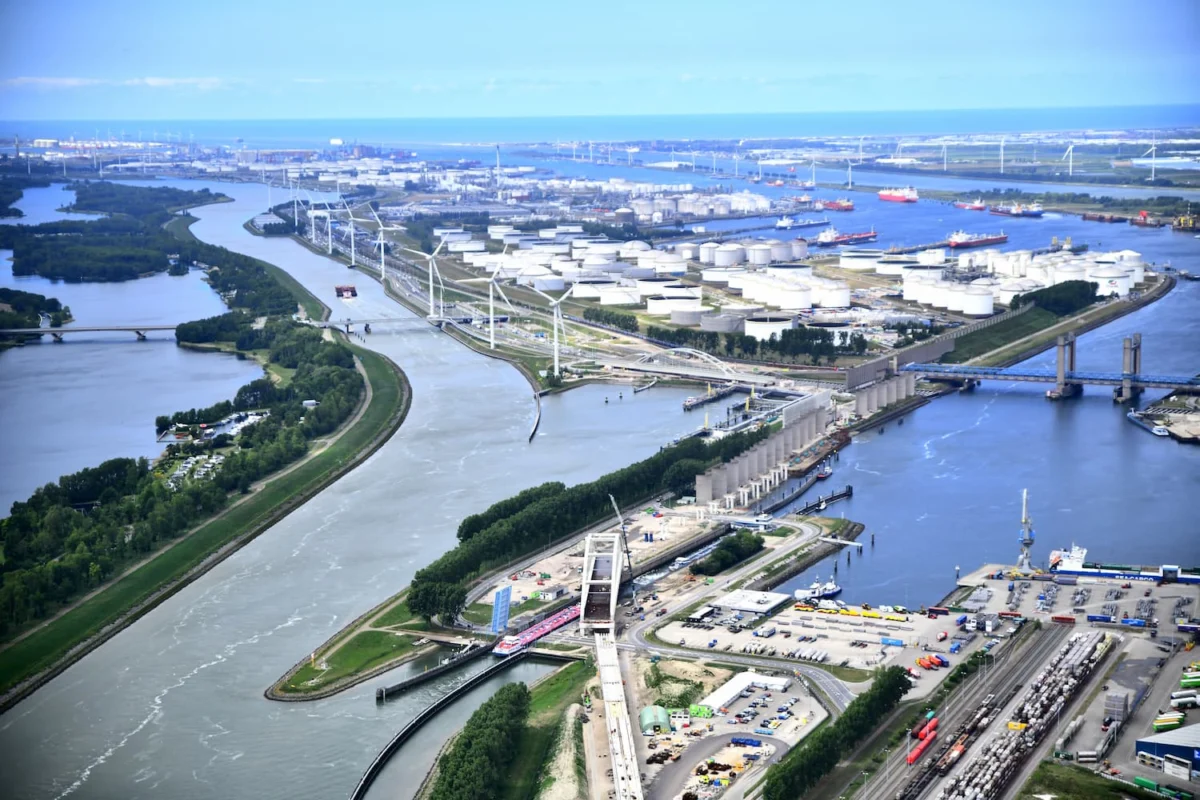
BRUSSELS / ROTTERDAM — In a landmark move to accelerate Europe’s transition toward carbon-neutral transport, the European Commission has awarded a €25 million grant to the Port of Rotterdam Authority and a vast international alliance. Comprising 45 entities—including major port authorities, industry leaders, and prestigious research institutes—the consortium will spearhead a sweeping five-year initiative dedicated to transforming maritime and hinterland logistics into smart, sustainable multimodal hubs.
Known by the acronym MAGPIE (sMArt Green Ports as Integrated Efficient multimodal hubs), the ambitious undertaking unites stakeholders from the Netherlands, Germany, France, Portugal, Denmark, and Sweden. By deploying ten targeted pilot and demonstration projects, the initiative aims to bridge the gap between theoretical green technologies and their large-scale, real-world application in busy European trade gateways.
The funding, channeled through the European Union’s Horizon 2020 Green Deal program, underscores the critical role that ports must play if the continent is to meet its aggressive climate targets, most notably achieving net-zero greenhouse gas emissions by 2050.
Main Facts
The MAGPIE project represents one of the most comprehensive collaborative efforts ever undertaken to green European port operations and their interconnected supply chains.
- The Funding: The European Commission has injected €25 million into the consortium through the Horizon 2020 Green Deal framework, a funding mechanism specifically designed to support innovation that addresses urgent climate challenges.
- The Consortium: Led by the Port of Rotterdam Authority, the alliance includes three other major European port entities—DeltaPort (Germany), Haropa Port (France, encompassing Le Havre, Rouen, and Paris), and the Port of Sines (Portugal). They are joined by 10 research institutes and over 30 commercial enterprises across six European nations.
- Duration: The research and demonstration program spans five years, providing a structured timeline for testing, evaluation, and scaling.
- Core Objectives: MAGPIE focuses on testing untapped aspects of alternative fuels and energy carriers—covering production, transport, storage, distribution, and recharging—while developing advanced automation and digitalization tools.
- The 2050 Master Plan: A primary output of the initiative will be a comprehensive master plan outlining the precise milestones required to achieve completely carbon-free port transport by 2050, complete with interim checkpoints for 2030 and 2040.
Chronology: From Concept to Execution
The realization of the MAGPIE project is the culmination of years of strategic alignment among European port authorities, research bodies, and industrial partners seeking to address the environmental footprint of global trade.
Phase 1: Alliance Formation and Strategic Alignment (2018–2020)
Recognizing that individual ports could not tackle the immense challenge of decarbonization in isolation, the port authorities of Rotterdam, DeltaPort, Haropa Port, and Sines began formalizing a cross-border network. Concurrently, academic and technical research institutes across Northern and Southern Europe were brought into the fold to align industrial needs with cutting-edge scientific capabilities. This period saw the foundational design of a shared vision: creating smart, interconnected multimodal logistics hubs that could serve as blueprints for the rest of the world.
Phase 2: Proposal Development and Horizon 2020 Submission (2020–2021)
As the European Union rolled out its ambitious European Green Deal, the alliance consolidated its research objectives into a cohesive proposal under the Horizon 2020 program. The consortium identified critical gaps in the alternative fuel supply chain—specifically focusing on areas where practical testing had lagged behind theoretical development.
Phase 3: Official Grant Award and Project Kickoff (Mid-2021)
The European Commission formally approved the MAGPIE project and awarded the €25 million funding package. This milestone enabled the formal establishment of the five-year project timeline, granting the 45 partners the financial backing necessary to transition from planning to hands-on testing.
Phase 4: Implementation of Pilot Projects (2021–2025)
Spanning a five-year window, this phase constitutes the core operational period of MAGPIE. Partners are tasked with executing 10 distinct pilot and demonstration projects. These range from the deployment of hybrid battery-electric locomotives in rail yards to the testing of offshore shore-power systems and ammonia bunkering.
Phase 5: Master Plan Delivery and Standardization (2025 and Beyond)
Toward the conclusion of the five-year program, the consortium will synthesize its empirical findings into a definitive master plan. This document will serve as a strategic roadmap for European policymakers, port operators, and logistics providers, detailing the exact technological, infrastructural, and regulatory steps required to sustain zero-emission port operations through 2030, 2040, and ultimately 2050.
Supporting Data and Technological Scope
The transition to sustainable logistics requires a diversified energy portfolio. No single fuel source or technological fix can adequately address the varied demands of deep-sea shipping, heavy-duty hinterland trucking, rail transport, and internal port machinery. Consequently, the MAGPIE research program is examining multiple renewable energy carriers simultaneously.
The Alternative Fuel Matrix
The project is evaluating four primary renewable fuels and energy carriers, each tailored to specific operational niches:
- Green Hydrogen: Considered a vital pillar for heavy-duty transport and industrial processes, hydrogen is being scrutinized for its distribution and storage viability within high-density port environments.
- Large Electric Batteries: Essential for localized port equipment, terminal vehicles, and short-haul logistics, advancements in battery capacity and fast-charging infrastructure are a major focus.
- Ammonia: Increasingly viewed as a promising zero-carbon fuel for long-distance maritime shipping, ammonia presents unique handling and bunkering challenges that MAGPIE aims to resolve safely in a controlled port setting.
- Bio-LNG (Liquefied Natural Gas): Serving as a transitional and immediate drop-in low-carbon fuel, bio-LNG helps reduce emissions in existing vessel fleets while infrastructure for pure zero-emission fuels continues to mature.
Filling the Gaps in the Supply Chain
While certain segments of the alternative energy supply chain—such as initial production or end-consumption—have seen localized testing, significant vulnerabilities remain in intermediate steps. MAGPIE specifically targets the uncharted links in the operational chain:

- Transport and Logistics: Safe movement of volatile new fuels across densely populated port zones.
- Storage Infrastructure: Designing scalable, secure storage facilities for hydrogen, ammonia, and bio-LNG.
- Distribution and Charging Networks: Establishing high-capacity electrical grids and fueling stations capable of servicing massive commercial vessels and fleets simultaneously.
Landmark Pilot Projects in Action
Among the ten specific demonstrations housed under the MAGPIE umbrella, two technical innovations stand out for their potential to revolutionize daily port operations:
- Hybrid Battery-Electric Locomotives: Rail freight is a cornerstone of efficient hinterland logistics. The project is operating an innovative electric battery-powered locomotive that draws power from overhead lines while simultaneously recharging its onboard batteries. This dual-capability allows the locomotive to seamlessly transition into un-electrified areas, such as complex marshalling yards, without burning diesel.
- Offshore Shore Power and Ammonia Bunkering: To tackle maritime emissions at berth, the alliance is testing advanced electrical shore-power systems delivered via mooring buoys to ships anchored offshore. Concurrently, protocols and safety measures for bunkering ammonia as a primary marine fuel are being rigorously tested.
Beyond hardware, the consortium is deeply invested in digitalization and automation. By deploying smart software platforms, the project aims to optimize traffic flows, reduce idling times, and provide real-time data transparency across multimodal transport networks. Furthermore, behavioral and economic research is being conducted to determine how best to incentivize commercial tenants and logistics operators to adopt these green processes voluntarily.
Official Responses and Stakeholder Perspectives
The scale and ambition of the MAGPIE project have garnered widespread praise from European officials, port executives, and industry leaders, all of whom emphasize the collaborative nature of the green transition.
European Commission Representatives highlighted that the initiative aligns perfectly with the core tenets of the European Green Deal. By fostering cross-border cooperation between research institutions and commercial heavyweights, the EU is ensuring that funding translates directly into scalable, market-ready solutions that can be replicated across the continent’s entire transport network.
Speaking on behalf of the coordinating body, leadership from the Port of Rotterdam Authority emphasized the strategic necessity of the project:
"Achieving climate neutrality by 2050 is not an optional aspiration; it is an absolute necessity for the survival and competitiveness of European logistics. MAGPIE allows us to move past the theoretical drawing board and test the practical boundaries of green hydrogen, ammonia, electric rail, and smart automation in real-world conditions. With our partners across Europe, we are building the definitive roadmap for the port of the future."
Representatives from the international co-lead ports—DeltaPort, Haropa Port, and the Port of Sines—echoed these sentiments, noting that environmental sustainability must go hand-in-hand with economic efficiency. They stressed that European ports act as the vital economic lungs of the continent; ensuring they remain clean and efficient safeguards both the environment and the uninterrupted flow of global commerce.
Academic partners within the 10-institute research coalition underscored the unique value of the Horizon 2020 framework. By combining rigorous scientific inquiry with industrial application, the consortium ensures that academic innovations do not remain sequestered in journals, but are actively deployed where they can have the most immediate environmental impact.
Implications for the Future of European Logistics
The implications of the €25 million MAGPIE initiative extend far beyond the immediate geographic boundaries of Rotterdam, Le Havre, Duisburg, and Sines. The project is designed to act as a scalable catalyst for the entire European transport and maritime sectors.
Setting the Global Standard for Green Ports
As international maritime regulations tighten—driven by organizations like the International Maritime Organization (IMO) and the European Union’s own Fit for 55 legislative package—ports worldwide are under intense pressure to decarbonize. The master plan and operational data generated by MAGPIE over the next five years will provide a standardized, battle-tested framework that other ports can adopt. By identifying which fuels work best for specific applications, the project eliminates costly guesswork for the broader logistics industry.
Transforming the Hinterland Supply Chain
Decarbonizing a port is only half the battle; the goods must also move inland sustainably. By optimizing rail solutions—such as the hybrid battery-electric locomotive pilots—and advancing smart multimodal digitalization, MAGPIE ensures that emissions reductions cascade through the entire supply chain, positively impacting road, rail, and inland waterway transport across Western and Southern Europe.
Economic Resilience and Innovation
Critics of aggressive environmental policies often express concern over economic competitiveness. However, the MAGPIE consortium views the green transition as an economic opportunity. By positioning European companies at the forefront of green hydrogen, ammonia bunkering, and port automation, the initiative fosters high-tech job creation, attracts green investment, and secures Europe’s status as a global leader in smart logistics technology.
As the five-year project unfolds through 2026 and beyond, the international maritime community will be watching closely. The success of MAGPIE will not merely be measured in Euros spent or papers published, but in tons of carbon permanently removed from the arteries of global trade, paving a clear, viable path toward a zero-emission future by 2050.

