

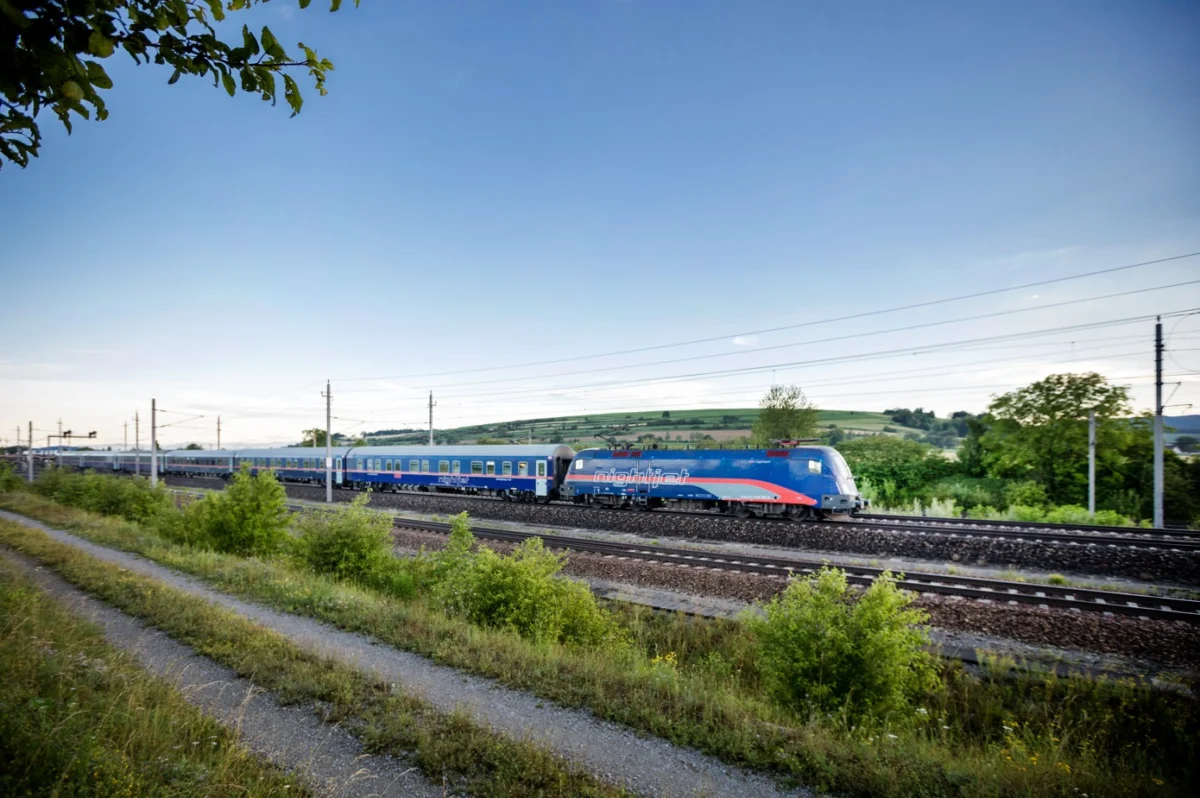
Main Facts
In a landmark decision signaling a decisive shift toward sustainable national infrastructure, the Austrian Council of Ministers officially approved the ÖBB (Österreichische Bundesbahnen) Framework Plan for 2022–2027. Backed by a staggering EUR 18.2 billion investment, this ambitious six-year program is designed to fundamentally expand, modernize, and future-proof the nation’s railway network.
Averaging EUR 3 billion annually, the funding allocation represents a substantial EUR 700 million increase compared to previous multi-year spending cycles. This robust financial injection positions the Austrian rail network not only as a primary instrument for national climate action, but also as a vital economic engine designed to support domestic enterprises, streamline regional and international transit, and enhance the overall quality of passenger and freight services.
The scope of the ÖBB Framework Plan 2022–2027 touches nearly every facet of Austrian rail transport. At its core, the initiative seeks to alleviate network congestion, create greater capacity for both passenger and freight operations, and accelerate transit times between Austria’s major metropolitan hubs. Furthermore, the strategy places significant emphasis on digitalization, incorporating advanced train safety systems, real-time passenger information updates, and the seamless expansion of mobile network coverage along critical rail corridors.
By integrating major corridor upgrades with targeted regional investments, electrification projects, and rolling stock modernization, Austria is setting a benchmark for European rail infrastructure development. The initiative aligns closely with broader national and European Union decarbonization goals, creating a symbiotic relationship between modern infrastructure and affordable public transit incentives such as the nationwide KlimaTicket.
Chronology of Austria’s Modern Rail Strategy
To understand the magnitude of the 2022–2027 framework plan, it is essential to trace the deliberate, step-by-step evolution of Austria’s modern transport policy and capital allocation strategy over recent years.
The Foundation and Long-Term Vision (Pre-2021)
For over a decade, ÖBB and the Austrian federal government have pursued a continuous strategy of network enhancement. Recognizing that legacy infrastructure could not sustainably support growing passenger demand or European freight corridors without substantial intervention, successive governments steadily raised capital expenditure limits. These earlier phases laid the groundwork for major engineering marvels, such as the Koralm Railway and the Brenner Base Tunnel approach routes.
Spring 2021: The Broader Capital Commitment
Earlier in the spring preceding the framework plan’s formal approval, ÖBB announced an even broader overarching investment horizon. The national railway operator outlined a plan to pump EUR 25 billion into the national rail system through 2026. This comprehensive envelope encompassed not strictly infrastructure, but also clean energy projects, major station revamps, and large-scale rolling stock renewal programs—including massive procurement tenders for up to 540 new electric multiple-unit trains.
Late 2021: Council Approval of the EUR 18.2 Billion Blueprint
The formal green light from the Council of Ministers for the 2022–2027 framework plan consolidated these visions into an actionable, legally backed budgetary commitment. With an average of EUR 3 billion dedicated annually, the plan established clear milestones for track expansion, double-tracking initiatives, digital signaling integration, and regional line revivals.
Implementation Phase (2022 Onward)
As the framework plan rolled out starting in 2022, ÖBB initiated heavy civil engineering works, digitalization rollouts, and targeted regional electrification schemes. The phased execution ensures that while long-term megaprojects continue their methodical progression, immediate benefits are delivered to daily commuters through improved punctuality, enhanced digital amenities, and smoother regional connectivity.
Supporting Data and Financial Architecture
The efficacy of the ÖBB Framework Plan 2022–2027 is best understood through the lens of its underlying financial figures, capacity metrics, and infrastructural targets. The allocation of EUR 18.2 billion over six years represents one of the most concentrated periods of infrastructure spending in the modern history of the Austrian Republic.
Financial Breakdown and Comparisons
- Total Program Value: EUR 18.2 billion dedicated explicitly to network expansion and maintenance across the 2022–2027 window.
- Annual Investment Rate: Approximately EUR 3 billion per year, ensuring steady, predictable cash flow for contractors, engineers, and suppliers.
- Budgetary Growth: A EUR 700 million increase compared to the preceding 2020 baseline benchmarks, reflecting rising material costs, expanded project scopes, and an accelerated political timeline for climate targets.
- Broader Corporate Horizon: When viewed alongside parallel initiatives—such as the EUR 25 billion rolling stock and clean energy spending envelope targeting the mid-2020s—total investments in Austria’s rail ecosystem reach unprecedented heights.
Operational and Network Metrics
- Passenger Capacity: The removal of bottlenecks and the construction of additional tracks will allow significantly more train paths, directly addressing overcrowding on high-density commuter lines.
- Freight Competitiveness: Infrastructure adjustments are specifically engineered to accommodate longer, heavier freight trains (often up to 740 meters in standard European formats), enabling rail freight to effectively outcompete road haulage in terms of cost and volume efficiency.
- Digital Infrastructure: 100% of the core network and targeted regional routes are seeing upgrades to advanced European Rail Traffic Management System (ERTMS) standards, alongside widespread deployment of 5G and enhanced 4G mobile repeaters inside passenger carriages.
- Regional Reach: Dozens of kilometers of non-electrified regional track are slated for electrification, directly integrating rural communities into the high-speed national grid.
Official Responses and Stakeholder Perspectives
The rollout of a national infrastructure plan of this scale requires profound political alignment and corporate leadership. Key figures within the Austrian government and ÖBB have underscored the transformative nature of the EUR 18.2 billion framework.
Minister Leonore Gewessler on Climate Action
Highlighting the intersection of transport policy and environmental stewardship, Leonore Gewessler, Federal Minister for Climate Action, Environment, Energy, Mobility, Innovation and Technology, emphasized the societal impact of the program:
"The largest railway expansion package in the republic will be topped up again. (…) This is an important building block for more climate protection. Because a modern network and a cheap KlimaTicket make public transport more attractive than ever before. And every kilometre by train protects our climate."
Minister Gewessler’s remarks point directly to the dual-pillar strategy adopted by the Austrian government: pairing physical infrastructure enhancements (funded via the ÖBB framework) with aggressive demand-side policy measures like the KlimaTicket, a heavily subsidized flat-rate transit pass that has revolutionized public transport adoption across the country.
CEO Andreas Matthä on Efficiency and Regional Inclusion
Echoing the government’s enthusiasm, ÖBB CEO Andreas Matthä focused on the operational and geographical benefits of the master plan for everyday travelers and businesses alike:
"The new master plan will make rail travel in Austria even better and more efficient. Investments in the large main routes bring faster connections between the large metropolitan areas of Austria. In addition to the large main routes, the regional railways will be made even more attractive and electrified. This makes switching to rail more interesting in rural areas as well. This is a gain for the passengers and for the environment."
Matthä’s perspective underscores ÖBB’s commitment to avoiding an urban-centric approach. By coupling high-speed trunk line improvements with the modernization and electrification of regional feeder lines, ÖBB ensures that citizens living outside major metropolitan centers like Vienna, Graz, and Linz enjoy seamless, environmentally friendly transit alternatives.
Implications for Economy, Environment, and Society
The implementation of the ÖBB Framework Plan 2022–2027 carries profound implications that extend far beyond simple transit times. By strategically channeling billions of euros into rail infrastructure, Austria is reshaping its macroeconomic landscape, fulfilling international climate treaties, and redefining the daily travel experience for millions.
Environmental and Climate Impact
Transport remains one of the most stubborn sectors in the global fight against greenhouse gas emissions. Austria’s aggressive capital injection into rail serves as a cornerstone for meeting national carbon reduction targets under the Paris Agreement and EU Green Deal frameworks.
- Modal Shift: By offering faster, more reliable, and digitally integrated train services, the framework plan encourages a large-scale modal shift from private passenger cars to electric rail.
- Green Freight: Upgrading corridors for heavier and longer freight trains removes thousands of heavy-duty trucks from Austrian alpine transit corridors, dramatically cutting particulate emissions, noise pollution, and asphalt wear-and-tear.
- Green Energy Integration: Parallel investments in renewable energy mean that ÖBB—already one of the largest consumers of green electricity in Austria—will increasingly run its expanded network on locally generated hydro, solar, and wind power.
Economic Stimulus and Industrial Competitiveness
Public infrastructure spending acts as a powerful Keynesian multiplier, and the EUR 18.2 billion framework serves as a primary engine for the domestic Austrian economy.
- Job Creation: Civil engineering firms, signaling specialists, rolling stock manufacturers, and maintenance providers benefit from steady, multi-year contracts, securing thousands of skilled jobs.
- Supply Chain Efficiency: For Austrian manufacturing and export industries, reliable and high-capacity rail freight corridors provide a vital competitive edge, ensuring seamless connectivity to major European ports and industrial centers in Germany, Italy, and Eastern Europe.
- Regional Development: Upgrading regional rail connections stimulates local economies by making rural regions more accessible to tourists, remote workers, and commuting professionals, thereby mitigating rural depopulation trends.
Technological Modernization and Passenger Experience
Modern rail travel is defined as much by digital connectivity and punctuality as it is by physical speed. The ÖBB framework addresses modern consumer expectations head-on:
- Digital Transformation: Investments in advanced train safety and automated traffic management systems reduce human error, optimize track utilization, and increase overall network safety.
- Seamless Connectivity: By resolving mobile network dead zones along tricky topography—such as mountain passes and tunnels—ÖBB ensures that passengers can work, study, or relax productively while in transit.
- Up-to-Date Information: Enhanced real-time passenger information systems empower travelers with immediate updates regarding connections, delays, and platform changes, largely eliminating the anxiety traditionally associated with multi-leg journeys.
Conclusion
The ÖBB Framework Plan 2022–2027 represents a masterclass in long-term infrastructure planning. By committing EUR 18.2 billion to network expansion, maintenance, digitalization, and regional connectivity, Austria is not merely building tracks and signaling systems—it is constructing the physical and digital foundation of a sustainable, highly competitive, and socially equitable mobility future. Through the concerted leadership of the federal government and ÖBB, Austria continues to prove that public investment in rail is an indispensable pillar of modern statecraft and environmental stewardship.

