

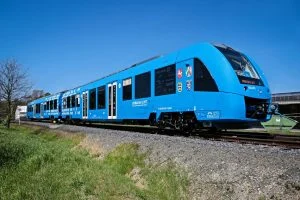
MADRID — In a decisive step toward eliminating carbon emissions from heavy transport, multinational rail technology leader Alstom has officially joined the Spanish Hydrogen Association (Asociación Española del Hidrógeno – AeH2). The move underscores the company’s long-term commitment to sustainable mobility, positioning hydrogen fuel cell technology as a cornerstone in the ongoing decarbonization of society.
As European nations intensify their efforts to meet stringent climate targets, the integration of hydrogen into rail networks offers a viable, zero-emission alternative to traditional fossil-fueled locomotives, particularly on regional and rural non-electrified routes.
Main Facts
The partnership between Alstom Spain and AeH2 brings together one of the world’s foremost manufacturers of rolling stock and the leading voice of Spain’s hydrogen economy. The core objective is to champion hydrogen as a vital energy vector capable of replacing diesel traction across Europe’s vast network of non-electrified railways.
- Strategic Alignment: Alstom’s membership in AeH2 aligns the manufacturer directly with Spain’s national climate strategy, specifically the government-backed "Hydrogen Roadmap" (Hoja de Ruta del Hidrógeno).
- Technological Solution: Hydrogen fuel cells generate electricity through an electrochemical reaction combining hydrogen and oxygen, emitting only water vapor. This makes them entirely emission-free and significantly quieter than diesel engines.
- The Spanish Rail Context: Spain features more than 5,000 kilometers of non-electrified rail lines—accounting for roughly 35% of the national railway network—which currently rely on diesel trains and locomotives for both freight and passenger operations.
- European Footprint: Across Europe, approximately 40% of main railway lines (80,000 kilometers) remain un-electrified, operated by roughly 12,000 diesel vehicles, creating a massive market for hydrogen retrofits and new builds.
Chronology of Hydrogen Rail Development and Association Milestones
The integration of hydrogen into European railway infrastructure is not an overnight phenomenon; it is the result of years of technological maturation, policy shifts, and institutional collaboration.
2002: Establishment of AeH2
The Spanish Hydrogen Association (AeH2) is founded as a non-profit organization. Its mission is to promote, encourage, and drive the technological and industrial development of hydrogen technologies within Spain, serving as a bridge between private enterprise, research institutions, and public authorities.
2018–2020: Commercial Breakthrough with Coradia iLint
Alstom achieves a major global milestone by deploying the world’s first hydrogen-powered passenger train, the Coradia iLint, into commercial trial service in Lower Saxony, Germany. Following a successful year-and-a-half trial, the reliability, safety, and operational feasibility of fuel cells in commercial passenger service are definitively proven. Subsequent trials and sales expand across the Netherlands, Austria, Italy, and the United Kingdom.
October 2020: Approval of Spain’s "Hydrogen Roadmap"
The Spanish Government formally approves the "Hydrogen Roadmap: A Commitment to Renewable Hydrogen." The policy outlines ambitious national targets for 2030, including the deployment of commercial hydrogen trains on at least two regional railway lines in Spain, paving the way for massive public and private investment in green hydrogen production and refueling infrastructure.
Late 2020: Alstom Joins AeH2
Cementing its dedication to the Spanish market and national decarbonization goals, Alstom officially joins AeH2. This membership allows the rail giant to collaborate closely with Spanish institutions, energy providers, and industrial partners to shape the future of clean transport.
2021 and Beyond: Sectoral Agendas and Future Implementation
In the months following Alstom’s entry, AeH2 begins collaborating with the Spanish Ministry of Industry, Trade and Tourism (MINCOTUR) to draft the comprehensive Sectoral Agenda of the Hydrogen Industry. This agenda aims to structure the domestic supply chain, ensuring that the economic and technological benefits of the hydrogen transition directly benefit Spanish society.
Supporting Data and Technical Context
The transition from diesel to hydrogen is supported by robust operational data gathered across Europe, alongside stark metrics regarding the current state of railway infrastructure in Spain and the broader European Union.
Infrastructure and Fleet Breakdown
- Spain:
- Total non-electrified rail lines: >5,000 km (~35% of the network).
- Active diesel traction vehicles: >200 trains and locomotives operating in freight and passenger transport.
- European Union:
- Total non-electrified main lines: 80,000 km (~40% of the European network).
- Total diesel fleet: ~12,000 vehicles, comprising approximately 5,900 diesel passenger trains and 5,800 diesel freight locomotives.
Environmental and Operational Performance
Data gathered from extensive pilot projects—most notably Alstom’s Coradia iLint trials in Germany—demonstrate that hydrogen trains match the performance metrics of conventional diesel multiple units (DMUs) regarding acceleration, passenger capacity, and top speed, but with distinct advantages:
- Zero Direct Emissions: Zero carbon dioxide, nitrogen oxides, or particulate matter emissions at the tailpipe.
- Acoustic Comfort: Noise levels inside and outside the train are dramatically reduced, providing a quieter ride for passengers and lowering noise pollution in urban and rural residential areas alike.
- Operational Range: Modern hydrogen regional trains boast a single-tank operational range of 600 to 1,000 kilometers, making them ideal for long-distance regional routes where electrification is financially or topographically prohibitive.
Official Responses and Stakeholder Perspectives
Industry leaders and association executives have voiced strong optimism regarding the synergy between Alstom’s technological capabilities and Spain’s strategic hydrogen ambitions.
Leopoldo Maestu, Managing Director of Alstom Spain:
"Hydrogen technology is a sustainable, noiseless, and emission-free alternative for non-electrified lines. The hydrogen train is a demonstration of Alstom’s commitment to the development and implementation of innovative sustainable mobility solutions that contribute to the global energy transition and decarbonization of our society."
Maestu emphasized that as railway networks look for immediate solutions to reduce their carbon footprint without undertaking multi-billion-euro overhead electrification projects, hydrogen provides a pragmatic, medium-term bridge to total climate neutrality.
Perspectives from the Spanish Hydrogen Association (AeH2):
Representatives from AeH2 highlighted the critical role that large industrial players like Alstom play in validating hydrogen technologies. Since its inception, AeH2 has worked hand-in-hand with public institutions to foster a robust green hydrogen ecosystem in Spain.
By collaborating with the Ministry of Industry, Trade and Tourism (MINCOTUR) on the upcoming Sectoral Agenda of the Hydrogen Industry, AeH2 and its members—ranging from major energy conglomerates to specialized SMEs—are establishing a comprehensive roadmap to ensure Spain becomes a European leader in hydrogen manufacturing, distribution, and utilization.
Implications of the Alstom-AeH2 Partnership
Alstom’s integration into the Spanish Hydrogen Association carries profound implications for the future of European transport, industrial policy, and environmental sustainability.
1. Accelerating Regional Decarbonization
While high-speed and high-density commuter lines are prime candidates for traditional overhead catenary electrification, low-density regional lines often fail to justify the astronomical capital expenditures required for overhead wiring. Hydrogen trains bridge this gap. By joining AeH2, Alstom positions itself at the forefront of supplying these vital regional corridors, enabling operators to phase out aging diesel fleets without waiting decades for complete grid electrification.
2. Boosting the National Green Economy
The partnership is expected to stimulate local industrial development. Through AeH2’s ongoing coordination with MINCOTUR, the deployment of hydrogen rail solutions will stimulate local supply chains—spanning fuel cell production, hydrogen storage tank manufacturing, and the construction of refueling stations. This localized industrial growth promises to create high-skilled green jobs and retain technological expertise within Spain.
3. Achieving Climate Neutrality Before 2050
Both the European Union and the Spanish Government have set firm targets to achieve net-zero greenhouse gas emissions by mid-century. Spain’s Hydrogen Roadmap specifically targets the operation of at least two commercial hydrogen-powered railway lines by 2030, backed by a 100% renewable electricity system used to generate green hydrogen via electrolysis. Alstom’s engineering expertise ensures that the rail sector will play an active, leading role in meeting these legally binding climate milestones.
4. Setting a Precedent for Cross-Sector Collaboration
The alliance between a multinational rolling stock manufacturer and a national hydrogen association serves as a blueprint for other European markets. As countries like Germany, France, Italy, the Netherlands, Austria, and the United Kingdom continue to expand their hydrogen rail portfolios, cross-sector partnerships will remain essential for harmonizing regulatory standards, sharing technical best practices, and securing public-private financing for hydrogen refueling infrastructure.
In summary, Alstom joining the Spanish Hydrogen Association marks a pivotal moment for sustainable rail transport in the Iberian Peninsula and across Europe. By pairing proven hydrogen propulsion technology with a national commitment to renewable energy, stakeholders are laying the tracks for a cleaner, quieter, and entirely carbon-free future for rail travel.

