

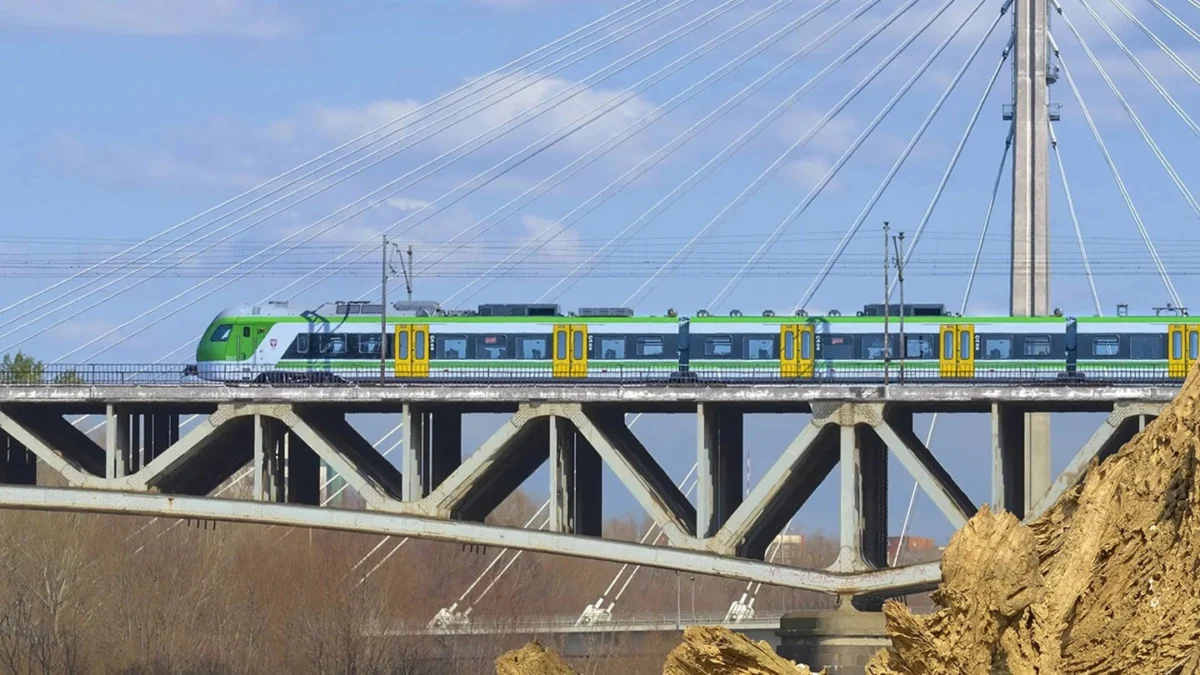
Executive Summary: A Milestone for Polish Regional Rail
In a significant development for the Polish rail sector, Koleje Mazowieckie (Masovian Railways) has officially finalized the procurement process for its most ambitious rolling stock investment programme to date. By signing a contract for 11 additional FLIRT electric multiple units (EMUs) from Stadler Polska, the operator has now fully exercised the options within its existing framework agreement.
This move brings the total order count to 75 units under the current framework, cementing Koleje Mazowieckie’s position as the primary operator of FLIRT technology in Poland. Once the current delivery schedule concludes, the operator will boast a formidable fleet of 146 FLIRT trains, representing a transformative shift in the quality, reliability, and capacity of regional transportation serving the Warsaw metropolitan area and the wider Masovian Voivodeship.
The Path to Modernization: A Historical Chronology
The synergy between Koleje Mazowieckie and Stadler Polska is not a recent phenomenon; it is the product of a two-decade-long strategic partnership that has evolved alongside Poland’s economic growth.
The Foundation (2006)
The collaboration traces its roots back to 2006, when the first generation of FLIRT (Fast Light Innovative Regional Train) units was introduced to the Polish market. These initial trains were deployed on key regional arteries, most notably the Warsaw–Siedlce line. This deployment served as a proof-of-concept for the viability of high-performance, comfortable regional transit in a country then undergoing rapid infrastructure revitalization.
The Era of Rapid Scaling (2020–2023)
Between 2020 and 2023, the partnership transitioned from pilot programs to large-scale fleet integration. During this three-year window, Koleje Mazowieckie successfully integrated 61 new-generation FLIRT trains into its daily operations. This influx of rolling stock was instrumental in replacing legacy equipment and aligning the operator with modern European rail standards.
The Finalization (2024–2025)
With the latest signing of the executive contract for 11 additional units, the framework agreement is now fully utilized. This phase represents the final piece of a jigsaw puzzle that has seen the modernization of nearly every major regional route under the operator’s purview. As of today, 64 of the contracted units are in various stages of production or deployment, with the remaining 11 now officially transitioning from procurement plans to the manufacturing pipeline at Stadler’s Siedlce facility.
Technical Specifications and Passenger Experience
The FLIRT trains selected by Koleje Mazowieckie are engineered to balance high-speed performance with sustainable, cost-effective operation.
Performance and Engineering
Each unit features an advanced aluminium construction, which reduces the overall weight of the train, leading to lower energy consumption—a critical factor in the operator’s environmental sustainability goals. The trains are capable of reaching operational speeds of 160 km/h, ensuring that regional transit remains competitive with private vehicular travel.
Passenger-Centric Design
The interior design of the new FLIRT units reflects a deep commitment to user experience and accessibility. Key features include:
- Climate Control: Advanced air-conditioning systems designed for high-density commuter traffic.
- Connectivity: Full Wi-Fi integration and sophisticated passenger information systems (PIS) that provide real-time updates.
- Safety and Health: Each train is equipped with modern CCTV surveillance and onboard automated external defibrillators (AEDs).
- Universal Accessibility: The design prioritizes the needs of passengers with reduced mobility, offering level-boarding capabilities and spacious, accessible restrooms.
Official Perspectives: Leadership and Economic Impact
Robert Stępień, CEO of Koleje Mazowieckie
Reflecting on the milestone, Robert Stępień emphasized the long-term vision behind the investment. "We are pleased to see the full implementation of the framework agreement for 75 FLIRT trains," he stated. "This marks an important milestone for our company and a further step toward modernizing our fleet. While 64 units have already received the necessary support through EU funding, we are actively preparing applications to secure financial backing for the final 11 units, ensuring that this investment remains fiscally sustainable."
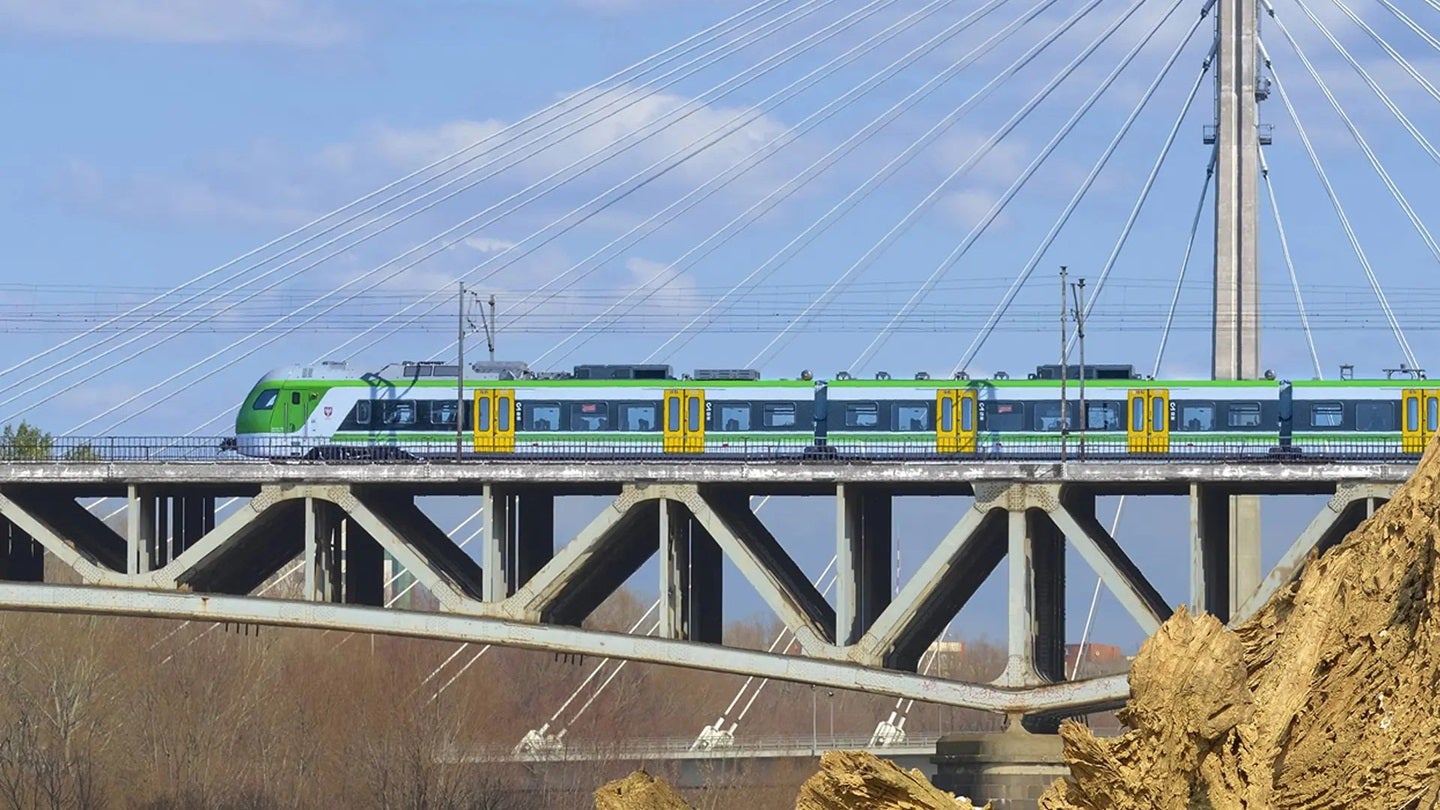
Radosław Banach, CEO of Stadler Polska
For the manufacturer, the contract is as much about regional economic development as it is about rail engineering. "The signing of this final executive contract is a milestone for us," said Radosław Banach. "Completing the full framework agreement allows us to continue expanding our Siedlce operations and strengthening our presence in the region."
Banach highlighted the significant employment ripple effects caused by the order. "This year alone, we have created nearly 400 new jobs at Stadler Polska, and our engineering team has grown to 100 specialists. We are continuing to recruit, and this growth provides a major boost to our local partners and the regional supply chain in Poland."
Strategic Implications for the Polish Rail Market
Economic and Industrial Growth
The decision to manufacture these trains in Siedlce is a strategic move that keeps capital within the Polish economy. By relying on local suppliers for critical components, Stadler Polska is effectively nurturing a domestic rail-industrial cluster. The "Siedlce model" has become a blueprint for how European rail manufacturers can successfully localize production to lower costs while fostering local expertise.
Service Reliability and Capacity
With 146 FLIRT trains eventually serving the network, Koleje Mazowieckie will possess the largest fleet of this type in Poland. This scale offers significant operational advantages:
- Standardization: Having a standardized fleet simplifies maintenance, reduces the inventory of spare parts, and allows for more efficient staff training.
- Increased Capacity: The ability to couple units provides the flexibility to increase capacity during peak commuter hours without requiring extensive infrastructure overhauls.
- Future-Proofing: By investing in high-performance EMUs, the operator is positioning itself to handle the projected increase in rail ridership in the Masovian region over the coming decade.
Maintenance and Lifecycle Support
The agreement extends beyond the delivery of hardware. It encompasses a comprehensive service package, including:
- Technical Training: Ensuring that the operator’s mechanical staff are certified to handle the specific diagnostic needs of the FLIRT platform.
- Repair Packages: A long-term maintenance agreement that guarantees high uptime for the fleet.
- Lifecycle Management: A commitment to long-term technical support, which protects the operator from the risks associated with equipment obsolescence.
Future Outlook: Sustaining the Momentum
As Koleje Mazowieckie looks to the future, the completion of this rolling stock investment program serves as a strong foundation for further network expansion. With the procurement phase now concluded, the focus shifts entirely to the delivery, commissioning, and type-testing of the remaining units.
The current timeline suggests that the final units will enter service over the next several years, fundamentally changing the daily commute for thousands of passengers. The success of this procurement—marked by European funding, local manufacturing, and a clear focus on passenger comfort—serves as a case study for regional rail operators across the European Union.
As Poland continues to pivot toward greener, more efficient rail transportation, the partnership between Koleje Mazowieckie and Stadler Polska stands as a testament to the power of consistent, long-term infrastructure investment. By the time the final train rolls out of the Siedlce factory, the Masovian region will have a rail backbone that is not only modern and reliable but also deeply integrated into the economic fabric of the country.
In conclusion, this agreement is more than a procurement deal; it is a declaration of confidence in the future of regional rail in Poland. As the fleet grows to its full complement of 146 units, the impact on regional connectivity, passenger satisfaction, and environmental sustainability will be felt for decades to come.

