

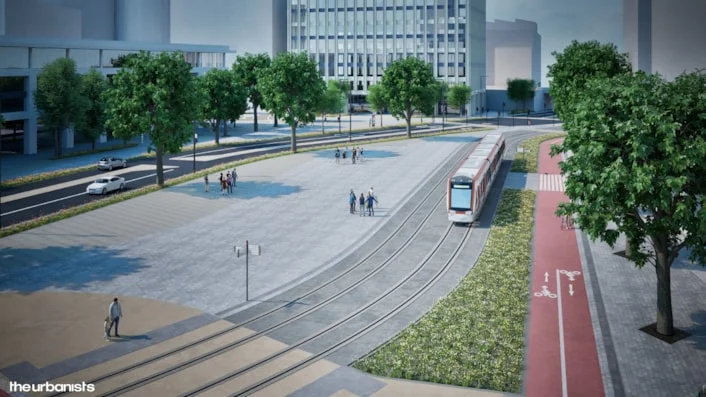
CARDIFF — In a move set to radically transform public transit within the Welsh capital, Transport for Wales (TfW), in close partnership with Cardiff Council, has officially revealed blueprint proposals for a brand-new tramway. This ambitious infrastructure project will establish a direct rail link between Cardiff Central railway station and Cardiff Bay for the very first time in modern history.
Serving as the inaugural phase of the broader Cardiff Crossrail vision, the tramway promises to knit together key urban hubs, alleviate roadway congestion, and lay the foundation for a more integrated, sustainable, and forward-looking South Wales Metro network. As the project enters a critical public consultation phase, transportation authorities are urging residents, commuters, and local business owners to examine the blueprints and contribute their perspectives on how the capital’s transit future should take shape.
Main Facts of the Cardiff Tramway Project
The core of the newly unveiled scheme centers on creating a seamless, high-frequency transit corridor bridging Cardiff Central and Cardiff Bay. While previous travel options required circuitous routes, bus transfers, or lengthy walks, the new tramway will establish a direct, uninterrupted steel highway between these two vital destinations.
Key Infrastructure Components
- Cardiff Central Extension: A brand-new, two-platform station will be constructed within the southern car park of the historic Cardiff Central railway station. This layout has been specifically engineered to offer effortless, accessible interchange for passengers transitioning between mainline heavy rail services and the new tram-train network.
- The Route Alignment: Departing from the Cardiff Central southern car park, the proposed tramway will weave its way through Callaghan Square—a bustling commercial and transit node—before seamlessly merging with the existing Cardiff Bay railway line to complete the journey into Cardiff Bay.
- Expanded Capacity at Cardiff Bay: To accommodate the projected surge in passenger traffic, a third platform is slated for construction at the Cardiff Bay railway station. This addition builds upon the second platform already under construction as part of the broader, ongoing South Wales Metro transformation efforts.
- Cutting-Edge Rolling Stock: The route will be serviced by state-of-the-art tram-trains capable of operating on both traditional heavy rail tracks and street-running tramway environments, ensuring a smooth, modern, and rapid ride for commuters.
Chronology and Public Consultation Timeline
The announcement on September 16, 2024, marks a major milestone in a transit strategy that has been debated and planned by local leaders for decades. Translating this long-held ambition into physical steel and concrete requires a meticulous, multi-staged approach.
The Path to Construction
- Decades of Strategic Ambition: The conceptual framework for a "Cardiff Crossrail" has featured in regional transport strategies for years, envisioned as a generational project to link underserved parts of the city with the primary rail grid.
- South Wales Metro Integration: Preliminary groundworks began with the wider South Wales Metro upgrades, which included laying new tracks along the Cardiff Bay line to prepare for higher-frequency services.
- Launch of Public Consultation (September 16, 2024): TfW and Cardiff Council officially opened a six-week public consultation window, running from September 16 through October 27, 2024. During this period, citizens are invited to scrutinize proposed designs, environmental integrations, and neighborhood connectivity plans.
- Community Engagement Events: Running concurrently with the digital consultation, transport officials have scheduled a series of public drop-in sessions. These events give residents a direct line to project engineers, urban planners, and council representatives to ask questions and review detailed maps.
- Future Phases (Post-2024): Following the close of the consultation and subsequent regulatory reviews, final design adjustments will be made. Subject to funding approval and statutory consents, construction timelines for Phase 1 will be finalized, paving the way for future extensions of the Cardiff Crossrail network toward the city’s northwest and east.
Supporting Data and Technical Scope
The Cardiff Central to Cardiff Bay tramway is not merely a localized aesthetic upgrade; it is a technically sophisticated engineering venture designed to future-proof the capital’s transport infrastructure against population growth and climate imperatives.
Engineering and Integration Metrics
- Intermodal Connectivity: The project deliberately targets major bottlenecks by creating a dedicated pedestrian and rail interchange at Cardiff Central, which handles millions of passenger journeys annually.
- Phase 1 as a Catalyst: While the ultimate vision of the Cardiff Crossrail encompasses a sprawling network stretching from the northwest of the city all the way to a proposed Parkway railway station in the east, transport analysts agree that the Cardiff Central–Cardiff Bay link is the indispensable anchor. Without this foundational phase, the broader network lacks the central spine required to distribute passenger loads effectively.
- Urban Regeneration: Beyond the rails themselves, the consultation explicitly seeks feedback on public realm improvements. Planners intend to use the tramway corridor as an anchor to regenerate neglected urban spaces, planting green infrastructure, widening pedestrian walkways, and establishing safer cycling paths alongside the tracks.
Official Responses and Stakeholder Perspectives
The unveiling of the tramway plans has drawn enthusiastic backing from local government leaders and transportation executives alike, both of whom emphasize the project’s transformative potential for social equity and environmental sustainability.
Cllr De’Ath, Cabinet Member for Climate Change, Strategic Planning, and Transport at Cardiff Council, underscored the profound historical and social significance of the project:
"The Cardiff Crossrail project has been a long-held ambition for a long time and when fully complete will connect some of the most deprived communities in Cardiff to the railway network for the first time. Subject to funding, the Cardiff Crossrail will eventually run from the northwest of the city, all the way to the east of the city connecting with the proposed Parkway railway station.
To start this process, the first phase of the scheme must be built between Cardiff Central and Cardiff Bay. This will finally ensure that Butetown is properly connected to the city centre, through the new tramway, providing further capacity for residents and visitors to access the wide range of attractions that Cardiff has to offer. We want the public to engage in the consultation process, so they can give their feedback on the very first phase of this exciting project."
Echoing these sentiments, Dan Tipper, Chief Infrastructure Officer at Transport for Wales, highlighted the operational advantages and the core mission of encouraging sustainable modal shifts:
"Today, in partnership with Cardiff Council, we’ve shared exciting plans for the delivery of a brand-new tramway between Cardiff Central station and Cardiff Bay station. These plans align with work already underway to build a new track on the Cardiff Bay line, which will allow faster and more frequent services using brand-new tram-trains.
Our ambition is that the new tramway will contribute towards a more sustainable transport network for Cardiff, encouraging more people to leave their cars at home and instead choose more sustainable ways to travel.
We want to hear as many thoughts, opinions and questions on the proposals as possible, which will help to inform key decisions on the scheme. Contributions from our communities will help to shape this project so we can deliver a public tramway that people are proud of."
Implications for Cardiff: Economy, Environment, and Equity
The realization of the Cardiff Central to Cardiff Bay tramway carries far-reaching implications for the economic vitality, environmental health, and social fabric of South Wales.
1. Social Equity and Accessibility
For decades, historical neighborhoods such as Butetown—despite lying geographically adjacent to the bustling heart of the city center—have lacked direct, high-capacity rail connectivity to Cardiff’s primary transit hub. By bridging this gap, the tramway ensures that residents in historically overlooked communities gain seamless access to employment opportunities, educational institutions, healthcare facilities, and cultural amenities across the wider region.
2. Environmental Sustainability and Air Quality
As urban centers across the United Kingdom grapple with stringent carbon reduction targets and persistent air pollution, expanding high-capacity electric rail transit is a vital weapon. The introduction of modern tram-trains offers a compelling alternative to private automobile use. By providing a rapid, reliable, and comfortable service that bypasses road traffic congestion, TfW aims to permanently alter commuting habits, lower urban carbon emissions, and improve local air quality throughout the Welsh capital.
3. Economic Growth and Regeneration
Efficient transport networks act as powerful magnets for private investment and urban renewal. The routing through Callaghan Square and the physical regeneration of surrounding public spaces will breathe new life into commercial corridors, stimulate local businesses, and enhance the overall aesthetic appeal of the city. Furthermore, improved connectivity to Cardiff Bay—a major leisure, residential, and governmental destination—will bolster tourism and support the ongoing waterfront revival.
4. A Template for Regional Expansion
Successfully delivering Phase 1 of the Cardiff Crossrail will establish a proven operational blueprint for subsequent stages of the South Wales Metro. As funding streams evolve and engineering milestones are met, the lessons learned from integrating street-running tramways with legacy heavy rail infrastructure will serve as a valuable reference point for expanding rail connectivity deeper into the valleys and outer suburbs of South Wales.
How to Participate
With the consultation period remaining open until October 27, 2024, local stakeholders, commuters, and interested parties are encouraged to review the comprehensive consultation documents online via the Transport for Wales or Cardiff Council websites. By attending local drop-in sessions and submitting official feedback forms, citizens have a rare opportunity to directly influence the physical layout, operational priorities, and environmental design of a project that will define Cardiff’s transit landscape for generations to come.

