

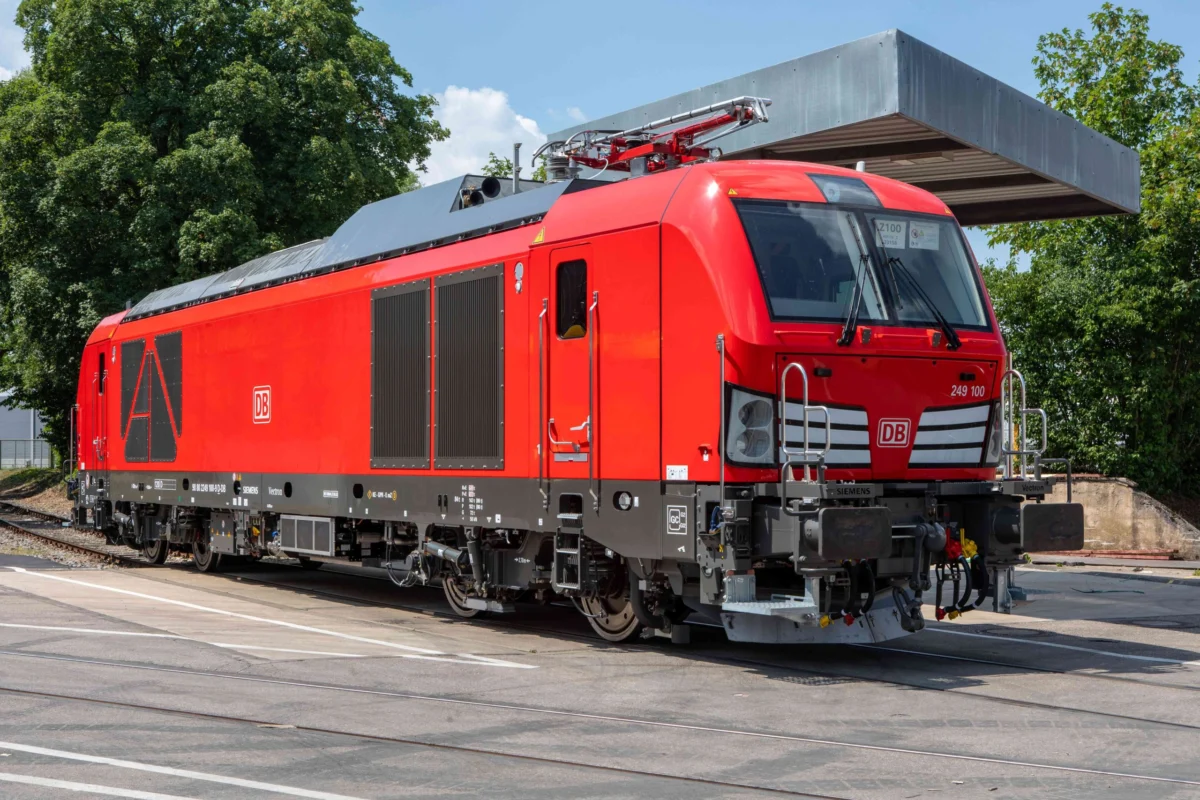
INNOTRANS 2026, BERLIN – As the rail industry gathers at InnoTrans 2026, the global showcase for transport technology, the spotlight has turned toward a cornerstone of modern logistics efficiency: the Siemens Mobility Vectron Dual Mode Light locomotive. Powered by the high-performance Cummins QST30 engine, this fleet has become the poster child for seamless, sustainable rail operations. Following two years of intensive service with Deutsche Bahn (DB) Cargo, the "Zweikraftlokomotive" (ZKL) has not only met expectations but has set a new industry benchmark for reliability, uptime, and operational flexibility.
The Technological Core: Bridging the Electrification Gap
At the heart of the Vectron Dual Mode Light is a strategic engineering philosophy: providing a bridge for rail operators navigating the transition toward full network electrification. Many European rail corridors remain a patchwork of electrified catenary lines and non-electrified "last-mile" branch lines. Historically, this necessitated the time-consuming and costly practice of swapping locomotives at transition points.
The Vectron Dual Mode Light eliminates this friction. Engineered with a strict 21-ton axle weight limit, the locomotive is optimized for versatility, capable of navigating secondary lines that cannot support heavier, traditional freight engines. By pairing a high-capacity electric drive with the compact, Stage V compliant Cummins QST30 engine, Siemens Mobility has created a machine that transitions between power sources without stopping.
When operating under catenary wires, the locomotive delivers an impressive 2,210 kW of power. Once the catenary ends, the Cummins QST30 takes over, providing 950 kW of nominal power at 1,800 rpm. This transition is seamless, ensuring that logistics chains remain uninterrupted regardless of the infrastructure beneath the wheels.
A Chronology of Success: From Prototype to Powerhouse
The journey of the ZKL began in earnest with a clear objective: to modernize DB Cargo’s aging diesel fleet.
- March 2024: The inaugural unit, designated DB Class 249 001—affectionately nicknamed "Emma"—was officially handed over to Deutsche Bahn Cargo. To celebrate the transition from the legacy era to the future, "Emma" was debuted in a unique heritage-inspired livery. The dark red and light red color scheme served as a tribute to the legendary Class 290, 294, 295 (the V 90 family), and the iconic Class 232 "Ludmilla" locomotives, which the ZKL fleet was designed to replace.
- September 2024: Just six months after its deployment, the locomotive made a grand appearance at InnoTrans 2024, where it performed real-world duties, hauling heavy rolling stock onto the outdoor display tracks, effectively proving its mettle in front of the global rail community.
- 2024–2026: Over the subsequent two years, the fleet expanded to more than 100 units. During this period, the locomotives accumulated approximately 125,000 engine operating hours across the German rail network, maintaining what officials describe as "maximum uptime."
Supporting Data: Performance Under Pressure
The success of the QST30-powered locomotive is not merely anecdotal; it is rooted in rigorous technical specifications and data-driven performance metrics.
The Integrated Power Boost
A defining feature requested specifically by Deutsche Bahn is the integrated power boost function. Recognizing that freight operations occasionally encounter steep gradients or high-tonnage hauls, the engineering teams developed a system to extract maximum potential from the QST30.

By raising the engine speed from 1,800 rpm to 1,900 rpm and precisely adjusting the alternator’s excitation, the system provides an additional 18% of power, pushing output to approximately 1,120 kW (1,500 horsepower). This capability ensures that the locomotive remains agile and capable of maintaining schedules even in challenging topographical conditions.
Sustainability and Fuel Flexibility
In an era where environmental, social, and governance (ESG) criteria drive procurement, the Cummins QST30 offers a significant advantage: full approval for the use of Hydrotreated Vegetable Oil (HVO). HVO is a renewable diesel fuel that significantly reduces net carbon emissions compared to conventional fossil fuels. For DB Cargo, this provides a pathway to decarbonize their freight operations immediately, without requiring major modifications to existing engine architecture.
Official Perspectives: Engineering Excellence
Andreas Dammann, Rail Business Manager for EMEA at Cummins and the project lead for the Vectron Dual Mode Light, has been instrumental in the engine’s integration. Speaking from the InnoTrans 2026 floor, Dammann emphasized that the project’s success is a testament to the collaborative synergy between Siemens Mobility and Cummins.
"The performance and uptime results we have seen over the past two years have been nothing short of phenomenal," Dammann stated. "The QST30 was chosen because it delivers the power density required to keep the axle load low, which was a non-negotiable requirement for DB Cargo. While the diesel-mode power is lower than the electric mode, it is a perfectly balanced trade-off. In Germany, the non-electrified stretches are generally short, meaning that the slightly lower top speed in diesel mode has a negligible impact on overall journey times."
Dammann noted that the "total cost of ownership" (TCO) remains the primary driver for operators. By reducing fuel consumption and minimizing maintenance downtime, the ZKL fleet allows operators to achieve a higher return on investment while simultaneously meeting strict European Stage V emission standards.
Implications for the Future of Rail Logistics
The deployment of over 100 Vectron Dual Mode Light locomotives marks a paradigm shift in how rail operators view their fleet composition.
Modernizing the Legacy Fleet
The retirement of the V 90 family and the "Ludmilla" class signifies the end of a long-standing chapter in European rail history. These legacy locomotives, while robust, lacked the digital diagnostics, fuel efficiency, and environmental compliance of modern machines. The ZKL provides a bridge that allows legacy operators to move into the 21st century without the need for a total, overnight overhaul of the national grid.

Efficiency Beyond Electrification
The implications for logistics chains are profound. By removing the need to switch locomotives at the end of catenary lines, operators can save hours per journey. This efficiency gain is compounded by the reliability of the QST30, which has demonstrated that it can handle the stop-start nature of shunting operations just as effectively as long-haul freight transit.
A Blueprint for Global Markets
The "Dual Mode" concept is gaining traction globally. As transit authorities and private rail operators look to reduce their carbon footprint, the ability to utilize existing infrastructure while maintaining the flexibility of a diesel engine is highly attractive. The success of the Cummins/Siemens partnership at InnoTrans 2026 serves as a roadmap for other regions—such as North America and parts of Asia—where "last-mile" electrification remains a significant hurdle.
Conclusion: Looking Toward 2030 and Beyond
As InnoTrans 2026 continues to highlight the innovations of tomorrow, the Vectron Dual Mode Light stands as a proven success of today. With over 125,000 hours of successful operation, the Cummins QST30 has cemented its reputation as a reliable, efficient, and sustainable heart for the modern locomotive.
For rail operators worldwide, the message from Berlin is clear: the future of rail freight does not necessarily require a choice between electric and diesel. Through smart engineering, high-performance power units, and a commitment to sustainability, the industry can have the best of both worlds, driving the global economy forward with unprecedented efficiency.
Interested parties are invited to learn more about the integration of Cummins technology in modern rail infrastructure by visiting the Cummins exhibit at InnoTrans 2026 (Stand 380, Hall 18).

