

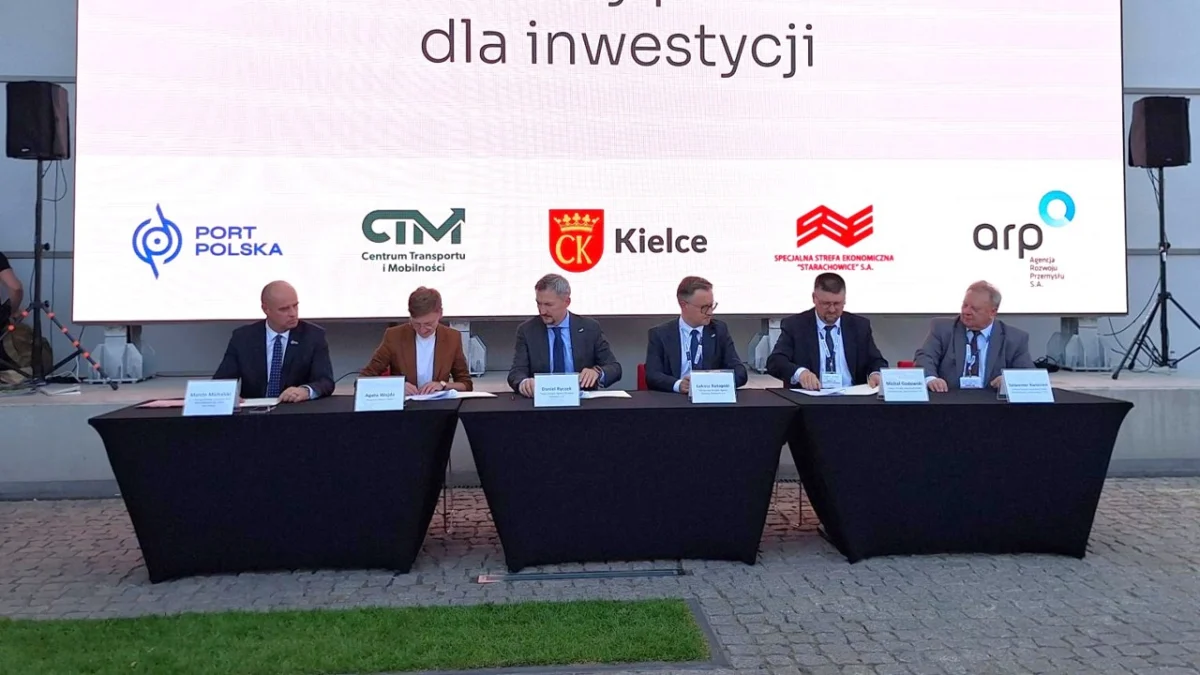
KIELCE, POLAND — In a landmark move designed to reshape the logistics and economic landscape of central Europe, Port Polska and the municipal authorities of Kielce have officially signed a letter of intent to develop a state-of-the-art intermodal rail terminal in Obice. Located approximately 20 kilometers north of Kielce, this ambitious infrastructure project is poised to supercharge freight transport capacity, streamline supply chains, and act as a vital economic catalyst for the Świętokrzyskie region, also known as the Holy Cross Voivodeship.
The collaboration represents a crucial step forward in Poland’s broader strategy to modernize its transport networks, enhance regional connectivity, and position itself as a premier logistics hub on the continent. By bridging local industrial needs with international trade corridors, the Obice terminal is set to become a cornerstone of modern European freight logistics.
Main Facts
The planned Obice intermodal rail terminal is a comprehensive infrastructure initiative designed to meet the growing demands of modern supply chains. Spanning an estimated area of 25 hectares, the facility will be strategically engineered to handle seamless cargo transfers between road and rail networks, significantly reducing transit times and carbon emissions associated with long-distance freight.
- Location: Obice, situated 25 hectares of dedicated land approximately 20 km north of Kielce, Poland.
- Railway Integration: The terminal will be directly connected to railway line No. 73, a critical regional route servicing the Kielce urban area and surrounding industrial zones.
- Strategic Scope: The project includes provisions for dual-use infrastructure, allowing the facility to serve both commercial freight operations and strategic military logistics.
- Geographic Reach: Positioned for international trade, the terminal aims to tap into markets spanning from the Benelux countries and the Baltic states to eastbound routes servicing Ukraine and broader Europe-Asia corridors.
- Institutional Partners: Port Polska and the Kielce City Municipality, backed by expertise from the Port Polska Centre for Transport and Mobility.
Chronology of the Project
The journey toward the realization of the Obice intermodal terminal is rooted in meticulous, long-term regional planning and national transport strategy assessments.
1. Identification via the Integrated Rail Network (ZSK)
The conceptual foundation of the Obice terminal was laid as part of the Integrated Rail Network (ZSK) project, an extensive national initiative developed by the Port Polska Centre for Transport and Mobility. During the drafting of the ZSK, analysts and transport experts identified a distinct structural deficit in intermodal logistics infrastructure within the Świętokrzyskie district. Despite its central geographic location and robust industrial base, the region lacked a high-capacity terminal capable of integrating seamlessly into modern European rail freight corridors.
2. Municipal Site Selection and Feasibility Validation
Following the findings of the ZSK project, the municipality of Kielce launched independent internal reviews to identify potential locations for a major logistics development. The area of Obice quickly emerged as the standout candidate. Thanks to favorable spatial planning conditions, available land reserves, and existing proximity to key regional transportation arteries, Obice was deemed the ideal site for a large-scale terminal investment. Subsequent in-depth analyses conducted by Port Polska experts formally validated the municipal findings, confirming the commercial viability and logistical necessity of placing an intermodal terminal in the Kielce district.
3. Formalization of Intent
The culmination of these preliminary phases occurred with the official signing of the letter of intent between Port Polska and the Kielce city authorities. This milestone agreement formally binds the two entities into a cooperative framework, establishing a shared roadmap for project delivery, technical evaluation, and financial structuring.
Supporting Data and Technical Framework
To ensure the long-term success and operational efficiency of the Obice terminal, the project will undergo a rigorous, multi-faceted analysis phase. Port Polska has committed to providing deep technical expertise, advisory support, and methodological know-how throughout the preparatory stages.
Comprehensive Analytical Scope
Before construction commences, the partner organizations will execute exhaustive feasibility studies covering a broad spectrum of disciplines:

- Transport and Spatial Development Analyses: Assessing regional freight flows, predicting traffic volume growth, and ensuring optimal spatial integration with the surrounding landscape.
- Technical and Engineering Solutions: Evaluating preliminary concepts for railway track layouts, signaling systems, and physical connection points linking the terminal to railway line No. 73 and local road networks.
- Legal and Environmental Assessments: Ensuring full compliance with Polish and European Union environmental standards, securing necessary permits, and addressing potential ecological impacts.
- Economic and Financial Modeling: Determining the optimal implementation model—including potential public-private partnership (PPP) structures—to guarantee cost-effectiveness and attract institutional investment.
Dual-Use Infrastructure Potential
A particularly noteworthy technical dimension under consideration is the dual-use capability of the Obice terminal. Given the evolving geopolitical landscape in Eastern Europe and NATO’s strategic emphasis on military mobility, experts are analyzing how the facility can be engineered to support both commercial freight operations and military logistics. This dual-use functionality would allow the terminal to handle heavy equipment and supply shipments for defense purposes swiftly without disrupting civilian supply chains, adding a layer of national strategic value to the investment.
Official Responses and Stakeholder Perspectives
The agreement has drawn widespread praise from regional leaders, logistics experts, and national transport authorities, all of whom recognize the transformative potential of the Obice project.
Representatives from the Kielce city municipality highlighted the project’s capacity to redefine the city’s economic future. Municipal leaders emphasized that Obice was chosen not only for its physical attributes—such as available acreage and favorable topography—but also for its potential to transform Kielce into a magnet for foreign direct investment (FDI) and logistics-driven enterprises. By lowering transportation overheads for local manufacturers, the terminal is expected to make businesses in the Świętokrzyskie region significantly more competitive on both national and international stages.
Port Polska officials echoed these sentiments, stressing that the collaboration exemplifies the core mission of the Port Polska Centre for Transport and Mobility: bridging strategic national transport policy with localized economic needs. By offering comprehensive advisory services, Port Polska ensures that the Kielce authorities are equipped with top-tier technical insights, mitigating project risks and accelerating the timeline from concept to reality. Industry analysts note that Port Polska’s involvement lends immense credibility to the initiative, reassuring potential investors and financial institutions regarding the project’s viability and governance.
Implications for Regional and International Logistics
The development of the Obice intermodal rail terminal carries profound implications that extend far beyond the borders of the Świętokrzyskie Voivodeship.
Economic Regeneration of Świętokrzyskie
Historically, the Świętokrzyskie region has relied heavily on traditional industries, construction materials, and manufacturing. However, the lack of modern intermodal infrastructure has occasionally constrained the ability of local enterprises to scale their supply chains efficiently. The introduction of a 25-hectare terminal connected to railway line No. 73 will directly alleviate these bottlenecks. Local businesses will gain direct, cost-effective access to international intermodal networks, allowing them to shift freight from congested highways to eco-friendly rail transport. This shift aligns closely with European Green Deal objectives, reducing carbon emissions and supporting corporate sustainability targets.
Strengthening National Supply Chain Resilience
Poland continues to cement its status as the logistics heart of Central and Eastern Europe. Projects like the Obice terminal contribute directly to the resilience of the national transport network. By decentralizing freight handling and creating robust secondary nodes outside major saturated metropolitan areas like Warsaw or Kraków, Poland is building a more flexible and shock-resistant logistics grid.
A Gateway for International and Transcontinental Trade
While the immediate benefits will be felt locally, the Obice terminal possesses a distinct international dimension. Thanks to its strategic geographic positioning within central Poland, the terminal is ideally situated to serve as a transit and consolidation point for several key international trade corridors:
- North-South Axes: Facilitating trade flows connecting the Baltic states in the north with Central European markets.
- West-East Axes: Providing a crucial link for Western European industrial powerhouses—such as the Benelux countries—looking to access markets further east.
- The Ukraine and Asia Connection: Crucially, the infrastructure is being designed with the capacity to handle eastbound transport, including vital trade flows related to the economic reconstruction and integration of Ukraine, as well as broader transcontinental transport routes linking Europe to Asia.
Conclusion
The signing of the letter of intent between Port Polska and the Kielce city authorities marks the birth of a visionary project that marries local economic ambition with international trade strategy. As the comprehensive feasibility studies get underway, the Obice intermodal rail terminal moves steadily from blueprint to reality. When completed, this 25-hectare facility will not only revolutionize freight transport in central Poland but will also stand as a shining example of how strategic infrastructure investment can drive sustainable economic growth, enhance national security through dual-use capabilities, and seamlessly connect regional enterprises to the wider world.

