

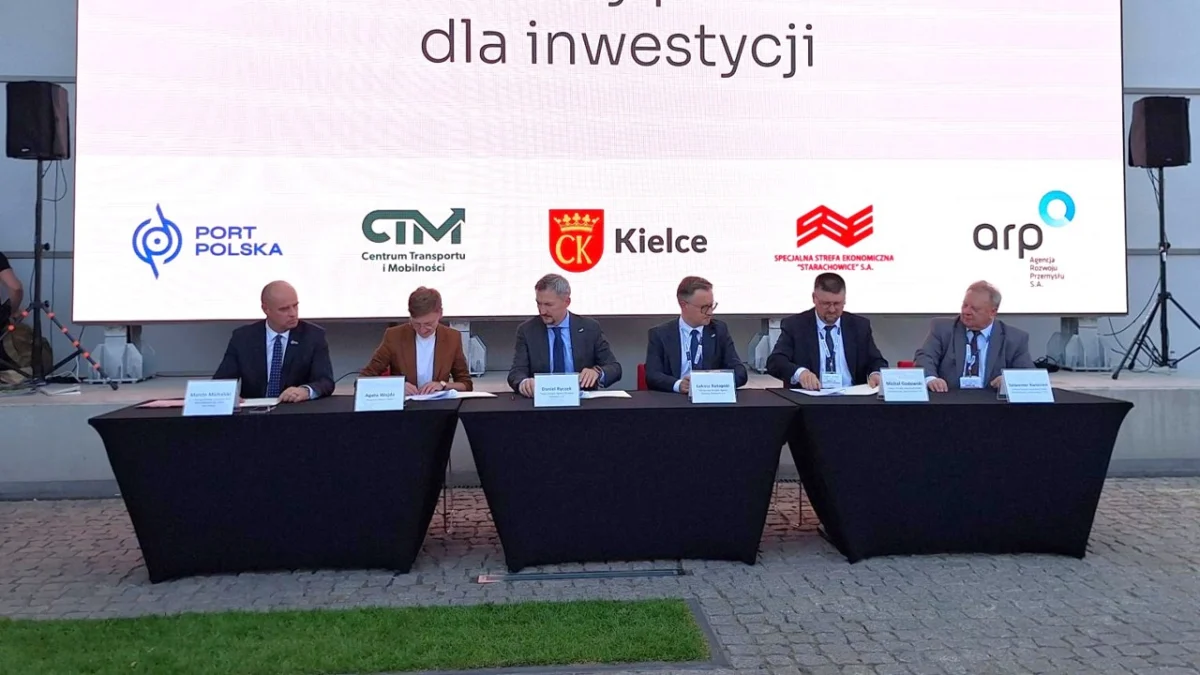
KIELCE, POLAND — In a landmark development designed to reshape the logistics and economic landscape of central Poland, Port Polska and the municipal authorities of Kielce have officially signed a letter of intent. This strategic agreement paves the way for the development of a state-of-the-art intermodal rail terminal in Obice, located approximately 20 kilometers north of Kielce.
The ambitious project is aimed at substantially expanding freight transport capacity, integrating the Świętokrzyskie region (the Holy Cross Voivodeship) into major European and international supply chains, and driving long-term economic growth. By bridging regional infrastructure with global logistics corridors, the Obice terminal is poised to become a vital artery for multimodal commerce, industrial expansion, and potentially strategic defense logistics in Central and Eastern Europe.
Main Facts
The planned intermodal facility in Obice represents a significant capital and infrastructure commitment to Poland’s transportation grid. Key details of the project include:
- Geographic Footprint: The terminal will span an area of approximately 25 hectares in Obice, situated in the Kielce district within the Świętokrzyskie region of central Poland.
- Rail Connectivity: The facility is set to be directly linked to Railway Line No. 73, a critical regional route serving Kielce and surrounding municipalities, thereby ensuring seamless integration into the broader national rail network.
- Strategic Origins: The project stems from recommendations outlined in the Integrated Rail Network (ZSK) initiative, formulated by the Port Polska Centre for Transport and Mobility.
- Dual-Use Potential: Planners are actively analyzing the feasibility of dual-use infrastructure, which would allow the terminal to serve commercial freight operations while simultaneously supporting military logistics when required.
- International Reach: Beyond regional commerce, the terminal is conceptualized to handle international trade corridors, targeting markets in the Benelux countries, the Baltic states, eastbound routes connected to Ukraine, and overarching trade bridges linking Europe with Asia.
- Advisory and Technical Support: Port Polska will provide comprehensive expertise, guiding the Kielce municipality through feasibility studies, technical evaluations, regulatory frameworks, and implementation models.
Chronology of the Project
The journey toward the realization of the Obice intermodal terminal is the result of systematic transport planning, regional assessment, and institutional collaboration.
Phase 1: Identification and Conceptualization (Integrated Rail Network)
The foundational concept for an intermodal terminal in the Kielce district was first identified during comprehensive studies conducted under the Integrated Rail Network (ZSK) project. Developed by the Port Polska Centre for Transport and Mobility, the ZSK initiative sought to map out gaps in Poland’s intermodal infrastructure, particularly outside major metropolitan hubs. Expert analyses highlighted the Świętokrzyskie region as an underutilized logistics node with high potential for intermodal growth.
Phase 2: Site Selection and Municipal Alignment
Following the broad regional assessments, municipal authorities in Kielce conducted internal evaluations to pinpoint an ideal location. After reviewing various land plots, infrastructure footprints, and regional transport intersections, the municipality identified Obice as the optimal site. The area offered distinct advantages, including sufficient available acreage, pre-existing local infrastructure, and favorable arterial transport links.
Phase 3: Formalizing the Partnership (Letter of Intent)
The project transitioned from conceptual planning to formal execution readiness with the signing of the letter of intent between Port Polska and the Kielce city authorities. This agreement establishes a collaborative framework wherein both entities pool their institutional knowledge, administrative reach, and technical capabilities to advance the project from a vision into a reality.
Phase 4: Feasibility and Preliminary Design (Current Stage)
Following the signing ceremony, the partners initiated a comprehensive suite of preparatory analyses. These studies encompass transport logistics, spatial development, and technical, legal, environmental, economic, and financial evaluations. Concurrently, Port Polska’s engineering and logistics experts are drafting preliminary concepts for railway line layouts, terminal yard configurations, and seamless interconnections with local road networks.
Supporting Data and Technical Framework
To understand the transformative impact of the Obice terminal, it is necessary to examine the data and technical parameters guiding its development.
Spatial and Infrastructure Parameters
Covering a sprawling 25-hectare site, the Obice terminal is designed to accommodate high-capacity container handling equipment, temporary storage yards, administrative facilities, and dedicated rail sidings. The direct connection to Railway Line No. 73 allows freight trains to transition smoothly from regional corridors onto Poland’s trunk rail network, managed by PKP Polskie Linie Kolejowe (PKP PLK). Furthermore, the proximity to major roadways ensures that the terminal will function as a true intermodal hub, facilitating swift, frictionless transfers between rail and rubber-tired transport (trucking).
Comprehensive Feasibility Studies
The initial analytical phase is multi-disciplinary, addressing critical variables necessary to secure investment capital and regulatory approval:

- Transport and Spatial Analyses: Assessing freight generation potential, local traffic impact, and land-use compatibility.
- Technical and Engineering Solutions: Designing track layouts, gantry crane placements, and connection spurs to Railway Line No. 73.
- Legal and Environmental Compliance: Navigating zoning laws, environmental impact assessments (EIAs) under Polish and European Union regulations, and land acquisition protocols.
- Economic and Financial Modeling: Evaluating return on investment (ROI), construction expenditure (CAPEX), operational expenditure (OPEX), and potential funding mechanisms, including EU cohesion funds and public-private partnerships (PPPs).
Dual-Use Infrastructure Integration
In an era defined by geopolitical shifts and heightened security awareness across Europe, the inclusion of military logistics in the planning phase is both pragmatic and strategic. Dual-use infrastructure allows civilian transport hubs to be rapidly re-tasked or jointly utilized for the mobilization of allied military equipment, troop supplies, and logistical support. By integrating these capabilities into the Obice terminal from the outset, Poland strengthens its national security infrastructure while maximizing the commercial utility of the asset.
Official Responses and Stakeholder Perspectives
The agreement has drawn widespread support from regional leaders, logistics experts, and municipal authorities, all of whom emphasize the transformative potential of the project for central Poland.
Municipal Leadership in Kielce
Representatives from the Kielce city administration highlighted that the partnership with Port Polska marks a turning point for the local economy. Kielce has long possessed strategic geographic advantages, sitting at the crossroads of major domestic transport routes. However, municipal officials noted that the absence of a modern, dedicated intermodal terminal has historically limited the region’s ability to attract major logistics-dependent enterprises. The selection of Obice is viewed as a decisive step to unlock industrial investments, create high-skilled employment opportunities, and integrate local businesses into international supply chains.
Port Polska and Transport Mobility Experts
Speaking on behalf of the Port Polska Centre for Transport and Mobility, transport experts emphasized that the development of regional intermodal nodes is crucial for balancing Poland’s logistics network. While major hubs in Warsaw, Poznań, Łódź, and Upper Silesia handle vast volumes of containerized freight, secondary regions like Świętokrzyskie require dedicated infrastructure to reduce road congestion, lower carbon emissions, and provide local manufacturers with direct access to global shipping networks. Port Polska’s commitment to providing hands-on expertise—spanning technical solutions, evaluation methodologies, and implementation frameworks—underscores the national significance of the Obice project.
Implications for Regional, National, and International Logistics
The establishment of the Obice intermodal terminal carries profound implications across multiple economic and geopolitical tiers, reshaping how freight moves within and through central Poland.
1. Economic Transformation of the Świętokrzyskie Region
Historically recognized for its natural resources, manufacturing, and traditional industries, the Holy Cross Voivodeship has occasionally lagged behind Poland’s primary metropolitan economic powerhouses in logistics-driven growth. The Obice terminal will act as an economic catalyst. By offering local enterprises direct, cost-effective access to containerized rail freight, regional manufacturers—ranging from construction material producers to machinery and agricultural exporters—can significantly reduce their transport overheads. This cost efficiency is expected to attract foreign direct investment (FDI), encourage the establishment of warehousing and distribution parks around Kielce, and generate hundreds of direct and indirect jobs.
2. Enhancing National Intermodal Capacity and Environmental Goals
Poland, as a central transit nation in the European Union, is committed to the European Green Deal objectives, which mandate a significant modal shift of freight from carbon-intensive road transport to rail. By building a modern 25-hectare terminal connected to Railway Line No. 73, the project directly contributes to national goals of decarbonizing the transport sector. The terminal will absorb heavy freight traffic off regional highways, reducing wear and tear on local road infrastructure while lowering greenhouse gas emissions.
3. Strengthening International and Trans-European Corridors
The strategic location of Obice extends its operational relevance far beyond regional and national borders. In an interconnected European economy, the terminal is envisioned to serve as a pivotal node within broader international trade networks:
- West-East and North-South Corridors: The infrastructure will facilitate smooth trade flows connecting the industrial powerhouse economies of the Benelux countries with the emerging markets of the Baltic states (Rail Baltica integration).
- The Ukrainian Dimension: Given Poland’s critical role as a logistics bridge for Ukraine, the Obice terminal could potentially handle eastbound and westbound freight associated with the economic reconstruction and trade flows of Ukraine, integrating it more deeply into the European Single Market.
- Europe-Asia Land Bridges: As part of evolving Eurasian transport routes, modern regional terminals like Obice provide the necessary buffer capacity and sorting capabilities to manage container flows moving between major Asian manufacturing centers and Western European consumer markets.
Conclusion and Next Steps
The signing of the letter of intent between Port Polska and the Kielce city authorities marks the official commencement of a transformative infrastructure journey. Over the coming months, the multi-disciplinary feasibility studies—covering transport logistics, environmental impact, economic modeling, and technical design—will dictate the precise blueprint of the 25-hectare Obice facility.
As Port Polska continues to lend its specialized expertise to the municipality of Kielce, the project moves steadily closer to breaking ground. By blending regional economic ambition with national transport strategy and international trade readiness, the Obice intermodal rail terminal stands out as one of central Poland’s most crucial upcoming infrastructure investments, promising a more connected, resilient, and economically vibrant future for the Świętokrzyskie region.

