

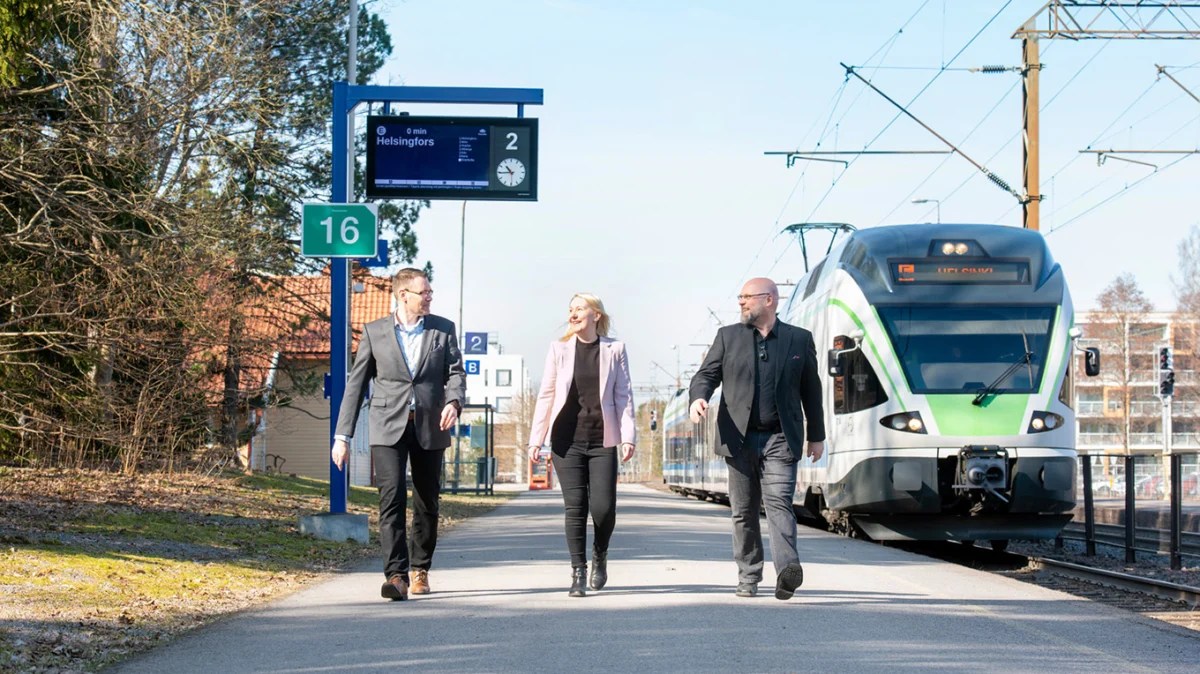
The Finnish rail network is on the cusp of a transformative era. As part of a broader strategy to enhance the Scandinavian-Mediterranean Corridor—a vital artery of the Trans-European Transport Network (TEN-T)—the Finnish Transport Infrastructure Agency (FTIA) has officially set in motion the next phase of the Espoo City Line project. By awarding a EUR 3.8 million design contract to a consortium of engineering powerhouses Ramboll Finland and AFRY Finland, the agency has solidified the roadmap for upgrading one of the most critical railway bottlenecks in the Helsinki metropolitan area.
Main Facts: Unlocking the Helsinki-Turku Bottleneck
The Espoo City Line project is not merely an infrastructure upgrade; it is a fundamental reconfiguration of how the Helsinki-Turku rail corridor functions. Currently, the section between Leppävaara and Kauklahti acts as a significant constraint on national rail performance. Because long-distance services, regional commuter trains, and freight traffic are forced to share the same two tracks, the system experiences frequent delays and limited capacity.
The core of the project involves the construction of two additional tracks, effectively expanding the section into a four-track corridor. Once completed, the division of labor will be clear: two tracks will be dedicated to long-distance and commuter traffic, while the remaining two will handle high-frequency urban train services.
The planning phase, currently being spearheaded by Ramboll and AFRY, focuses on the 14-kilometer stretch from Leppävaara station to the Tuomarila overpass. This segment passes through the densely populated urban fabric of Espoo and Kauniainen, requiring complex engineering solutions that balance modernization with the needs of existing residents and transit users.
Chronology: A Decade of Planning and Vision
The trajectory of the Espoo City Line project has been shaped by years of strategic assessment.
- Initial Conceptualization: Recognizing the Helsinki-Turku line as a vital link between urban nodes and international gateways (including the airports and ports of Helsinki, Turku, and Naantali), the government identified the Leppävaara–Kauklahti section as a primary point of failure for capacity.
- Funding and Approval: Following years of planning and advocacy, the project secured a total budget estimate of EUR 275 million. A significant financial boost was provided by the European Commission via the Connecting Europe Facility (CEF), which allocated EUR 11 million specifically for design works.
- Contract Award (2021): The FTIA signed the EUR 3.8 million design agreement with the Ramboll-AFRY consortium, marking the shift from theoretical planning to actionable construction blueprints.
- Construction Kick-off (2024-2025): With the planning phase finalized, the physical transformation of the landscape is scheduled to begin in 2024, with full operational completion targeted for 2028.
Supporting Data: Financing and Technical Scope
The financial architecture of the project is a testament to the collaborative nature of Finnish infrastructure development. The total cost, estimated at EUR 275 million, is distributed among stakeholders to ensure regional commitment and local buy-in. The City of Espoo bears the largest municipal burden, covering 40% of the costs, while the City of Kauniainen contributes 10%. The remainder is supported by national funding and the significant injection from the European Union, which highlights the project’s strategic importance to the Scandinavian-Mediterranean Corridor.
Technical Infrastructure Requirements
The design scope is exhaustive, reflecting the complexity of working within a dense urban corridor:
- Rail Expansion: Conversion of the 14-km double-track section into a four-track configuration.
- Structural Engineering: Design of five new bridges to accommodate the expanded track layout.
- Station Modernization: Upgrading five existing stations along the route to meet modern safety and accessibility standards.
- Accessibility: Implementation of barrier-free access to all platforms and integration with the surrounding road networks.
- Community Integration: Installation of extensive noise protection walls between Leppävaara and the Tuomarila overpass to mitigate the impact on residents.
- Support Facilities: Construction of a new park facility in Kauniainen adjacent to the existing train station.
Official Responses and Strategic Significance
The Finnish Transport Infrastructure Agency has consistently framed the Espoo City Line as a "Global Project." According to official statements from the agency, the project is essential for the future of the Helsinki metropolitan area’s public transport system. By separating high-speed long-distance traffic from slower commuter services, the agency expects a drastic improvement in the reliability of the Helsinki-Turku connection.
The cities of Espoo and Kauniainen have also touted the project as a catalyst for "active and sustainable mobility." A key feature of the collaborative effort is the implementation of a new cycling corridor—often referred to as a "Baana route"—that will run alongside the rail tracks. This initiative aims to bridge the gap between rail transport and last-mile travel, encouraging residents to choose cycling for short trips within the city.

For the European Union, the project is a piece of a much larger puzzle. As part of the TEN-T core network, the upgrade ensures that Finnish railway infrastructure is compatible with European standards, fostering better connectivity between the Nordic regions and the rest of the continent.
Implications: A Sustainable Future for Urban Mobility
The implications of the Espoo City Line expansion are far-reaching, affecting everything from local daily commutes to international freight logistics.
1. Enhanced Reliability and Capacity
The most immediate impact will be the reduction of the "bottleneck effect." By providing dedicated tracks for commuter traffic, the system can support higher frequencies of urban trains without interrupting the flow of long-distance trains bound for Turku or beyond. This is expected to increase the total throughput of the rail network, providing a viable alternative to road transport for thousands of commuters.
2. Urban Development and Sustainability
The integration of the "Baana" cycling routes and the modernization of stations represent a holistic approach to urban planning. By investing in barrier-free access and safe cycling paths, the project transforms railway corridors from mere transit conduits into the backbone of sustainable city life. This aligns with Finland’s ambitious carbon-neutrality goals, as improved rail connectivity is a primary driver in reducing reliance on private passenger vehicles.
3. Economic Competitiveness
The Helsinki-Turku railway is the heartbeat of Finland’s southwestern economic region. By connecting the airports and deep-water ports, the project strengthens the logistics chain that keeps Finnish exports moving. Businesses in the region stand to benefit from more predictable shipping timelines and reduced transit times for employees traveling between urban centers.
4. Quality of Life for Residents
While construction projects of this scale inevitably cause short-term disruptions, the long-term inclusion of noise protection walls and upgraded station environments demonstrates a commitment to the quality of life for those living along the track. The modernization of stations, including better lighting, safety features, and accessibility, will significantly improve the daily experience of transit users.
Conclusion
The Espoo City Line project is a landmark undertaking that underscores the importance of infrastructure as a driver of social and economic progress. Through the combined expertise of the Ramboll and AFRY consortium, the financial backing of the European Commission, and the strategic foresight of the Finnish government, the project is set to redefine the standards of urban rail in Finland.
As construction progresses toward the 2028 completion date, the project serves as a model for how dense urban environments can accommodate modern transport needs without sacrificing resident well-being. When the final track is laid and the stations are reopened, the Helsinki metropolitan area will possess a rail network that is not only faster and more reliable but fundamentally more sustainable—a vital foundation for the next century of Finnish mobility.

