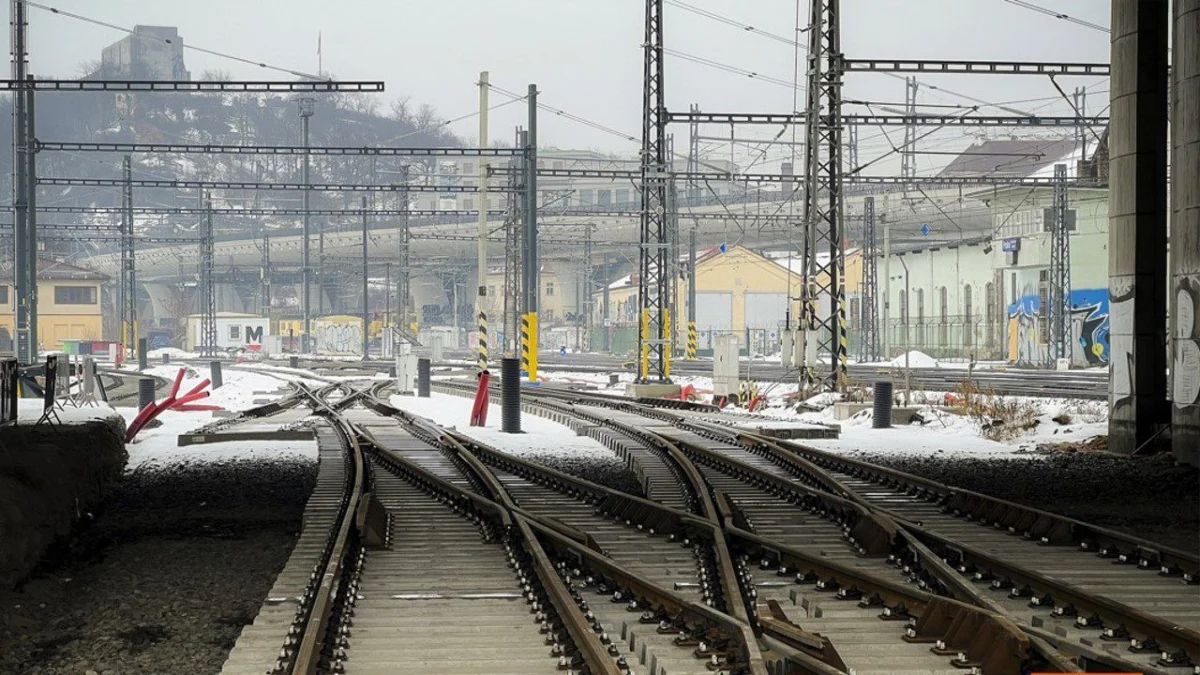
Správa Železnic Unveils Sweeping Structural Transformation to Modernize Czech Railway Sector and Boost Market Competition
Neng Nana
September 26, 2026
8 min read
Share Article
PRAGUE — In a decisive move to overhaul the backbone of the nation’s transportation network, the Czech railway infrastructure administrator, Správa železnic, has announced a comprehensive structural and operational transformation set to take effect in April. Spearheaded by newly appointed Chief Executive Officer Tomáš Tóth, the reform package fundamentally alters the organization’s internal management hierarchy, decentralizes operational functions into modernized central hubs, and dramatically restructures public procurement and tendering protocols.
The primary objective of this ambitious overhaul is to dismantle existing entry barriers, invite a broader spectrum of domestic and international suppliers into the Czech rail market, stimulate healthy competitive bidding, and achieve substantial fiscal savings. According to officials, the restructuring will yield an estimated annual savings of CZK 335.6 million (approximately EUR 14 million)—funds that will be directly reinvested into project preparation and the long-term sustainable development of the Czech rail grid. Crucially, the institutional reorganization has been designed to protect front-line operational personnel, ensuring that workforce reductions target bureaucratic overhead rather than the personnel responsible for daily infrastructure safety and maintenance.
Main Facts
The sweeping transformation of Správa železnic represents one of the most significant administrative overhauls in the modern history of the Czech national rail administrator.
Leadership and Implementation: The reform is directed by CEO Tomáš Tóth, who has moved swiftly to secure internal consensus for the restructuring since taking the helm. The changes officially roll out in April.
Financial Impact: The organization expects to slash operational costs by CZK 335.6 million (EUR 14 million) annually. These savings are driven by a 20% reduction in marketing, IT, and legal expenses, alongside the elimination of 121 administrative positions.
Operational Restructuring: The reform transitions the legacy administrative framework by consolidating 21 fragmented operational regions into unified command structures managed by central dispatch hubs located in Prague and Přerov.
Tendering Overhaul: Procurement rules are being rewritten to remove systemic barriers for small and medium-sized enterprises (SMEs) and foreign contractors. Key strategies include unbundling large megaprojects into specialized components, revising technical standards, and lowering administrative hurdles.
Scope of Safeguards: Front-line operational employees will remain entirely unaffected by layoffs, ensuring that daily railway safety, traffic control, and infrastructure maintenance standards remain uncompromised.
Chronology: The Path to Reform
The journey toward Správa železnic’s structural transformation reflects a growing urgency within the Czech government to optimize public spending amid mounting infrastructure demands.
Late 2024 to Early 2025: Identifying Structural Bottlenecks
For years, industry analysts, government watchdogs, and prospective contractors pointed to persistent inefficiencies within Správa železnic. Critics highlighted a top-heavy management structure, cumbersome and restrictive tender qualification requirements, and an over-reliance on a small oligopoly of large construction conglomerates. These legacy frameworks frequently resulted in inflated project costs, protracted timelines, and limited market competition. Recognizing these systemic vulnerabilities, the Ministry of Transport initiated internal reviews to evaluate how the infrastructure manager could modernize its operations to absorb incoming European Union funds and national capital more effectively.
Leadership Transition and Mandate for Change
The appointment of Tomáš Tóth as CEO marked a critical turning point. Tasked by the government with streamlining the agency, Tóth was given a clear mandate: reduce unnecessary bureaucracy, flatten the administrative hierarchy, and open the infrastructure market to robust competition. Unlike previous incremental reform attempts, the new leadership strategy relied on a top-to-bottom audit of corporate overhead, procurement methodologies, and regional administrative footprints.
Q1 2026: Consensus-Building and Internal Alignment
Heading into the final preparations for the April rollout, leadership engaged in extensive internal negotiations. Given the historically robust and entrenched management structure of the organization, observers anticipated fierce pushback against downsizing and centralization. However, through structured dialogue, the leadership team successfully forged a consensus across the entire management tier.
April 2026 and Beyond: Execution and Market Integration
The formal implementation of the transformation program begins in April. This milestone initiates the phased rollout of revised tender procedures, the integration of regional operations into the Prague and Přerov dispatch centers, and the execution of administrative staff reductions. Over the subsequent months, the rail community will closely monitor how these changes alter market dynamics and project delivery timelines.
Supporting Data and Financial Metrics
The restructuring of Správa železnic is underpinned by meticulous financial planning designed to optimize capital allocation without sacrificing project quality. A detailed breakdown of the fiscal and structural adjustments highlights the scope of the program:
Annualized Savings: CZK 335.6 million (EUR 14 million).
Overhead Reductions: A targeted 20% reduction in discretionary spending categories, specifically encompassing marketing campaigns, enterprise IT services, and external legal counsel fees.
Workforce Optimization: Elimination of 121 non-operational, administrative positions. Front-line workers—including track maintenance crews, signal operators, and station staff—are fully insulated from the downsizing.
Centralization of Procurement: Unification of public procurement and commercial activities that were previously fractured across multiple disparate internal units, eliminating duplicated efforts and internal friction.
Consolidation of Regions: Integration of 21 operational zones previously scattered across various regional directorates into streamlined command structures managed out of central dispatch hubs in Prague and Přerov.
Capital Reinvestment: 100% of the funds saved through administrative trimming will be redirected toward project pipeline preparation, engineering studies, and long-term asset management.
Official Responses and Stakeholder Perspectives
The announcement of Správa železnic’s structural transformation has drawn strong statements of support from government leaders and internal management, who emphasize the critical role of railways in the nation’s socio-economic fabric.
Transport Minister Ivan Bednařík lauded the initiative, framing the reform as an essential step toward fiscal responsibility and infrastructural excellence.
"Railways are the backbone of transport and have a significant impact on the economy and quality of life in the Czech Republic. State funds must be used as efficiently as possible," Minister Bednařík stated.
He further emphasized that the reforms spearheaded by CEO Tomáš Tóth are specifically tailored to strip away legacy bureaucracy.
"The new director will reduce unnecessary bureaucracy and reorganize the company’s operations so that the railway infrastructure is built better, faster, and cheaper."
Reflecting on the internal dynamics of executing such a wide-ranging reform, CEO Tomáš Tóth expressed satisfaction with the cooperative approach demonstrated by his executive team.
"The management structure has been very robust for a long time, so I expected to encounter much greater resistance to change," Tóth noted. "However, from the very first round, we managed to find consensus across the entire management team, which I consider a success, and I thank my colleagues for their approach."
Implications for the Czech Rail Market and Industry
The structural transformation of Správa železnic extends far beyond internal cost-cutting; it fundamentally reshapes how railway construction and modernization projects will be procured, managed, and executed in the Czech Republic for years to come.
Breaking Down Barriers to Market Entry
For decades, smaller domestic enterprises and foreign engineering firms frequently cited prohibitive qualification requirements and complex administrative procedures as insurmountable obstacles when attempting to bid on Czech rail tenders. Under the new procurement framework, Správa železnic is actively dismantling these barriers.
By adjusting qualification thresholds, the agency aims to encourage broader participation. Furthermore, Správa železnic will incorporate more frequent preliminary market consultations, allowing potential suppliers to provide feedback on project parameters before formal tenders are published. To ease the entry of foreign contractors and specialized international suppliers, the organization is also revising technical requirements and taking steps to gradually recognize specific foreign certifications that align with safety and operational standards.
Unbundling Megaprojects for Specialized Suppliers
One of the most impactful shifts in procurement strategy involves the handling of large-scale infrastructure investments. Historically, massive rail modernization initiatives were tendered as monolithic turnkey projects. This approach naturally favored a tiny oligopoly of massive construction conglomerates capable of absorbing enormous upfront financial and logistical risks.
Správa železnic will now systematically divide major investment projects into distinct, specialized components. For example, heavy civil construction work will be cleanly separated from technological equipment installations, signaling systems, and electrification works. This unbundling strategy enables specialized mid-sized firms to bid directly for work within their core competencies. By broadening the pool of eligible contractors, the agency expects to drive down project costs through heightened competitive tension while reducing its systemic dependency on a handful of mega-suppliers.
Increasing Transparency and Embracing ‘Design & Build’
Transparency remains a core pillar of the modernization agenda. Správa železnic has committed to publishing more granular pricing data and detailed breakdowns of bid components, allowing independent observers, auditors, and market participants to scrutinize procurement outcomes.
Additionally, the agency will expand its use of the "Design & Build" project delivery method where project specifications allow. By combining the engineering design and construction phases under a single contractor responsibility model, Správa železnic aims to accelerate project delivery times, minimize adversarial disputes between designers and builders, and shift optimal risk allocation to the private sector.
Long-Term Economic Outlook
Ultimately, these synchronized reforms are expected to yield a modernized, highly agile infrastructure manager capable of handling the massive influx of modernization projects required to upgrade the Czech rail network to European standards. By cutting bureaucratic fat, centralizing operational command, and democratizing the tendering process, Správa železnic is positioning itself as a benchmark for public sector efficiency—ensuring that every koruna of taxpayer and European funding directly translates into safer, faster, and more reliable rail connectivity for the citizens and economy of the Czech Republic.