

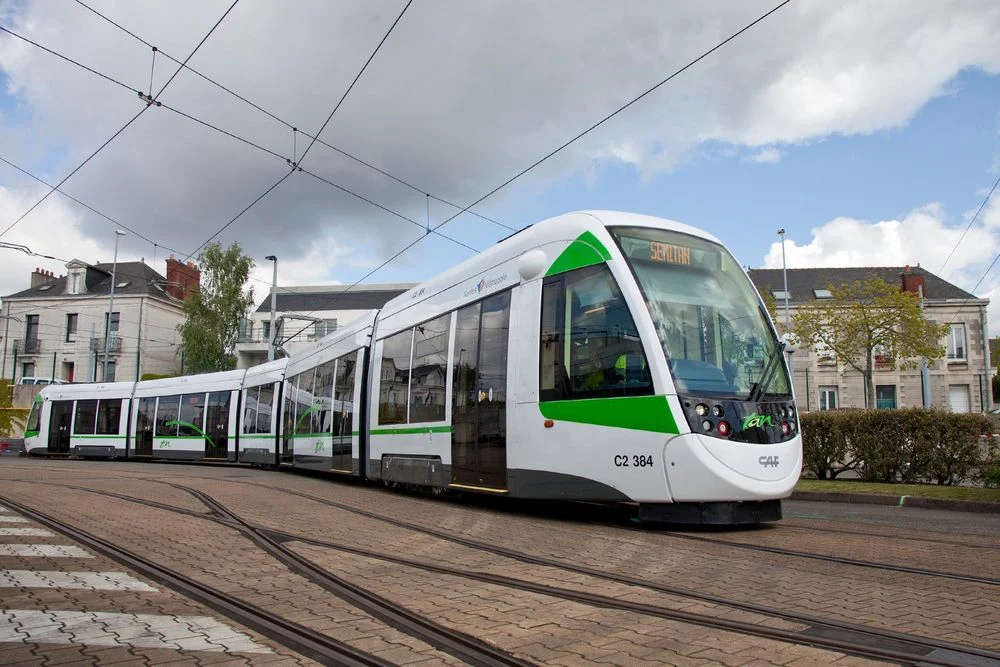
TOURS, FRANCE — In a milestone development for urban mobility in central France, rolling stock manufacturer Construcciones y Auxiliar de Ferrocarriles (CAF) has officially signed a high-profile contract with the Syndicat des Mobilités de Touraine. The agreement mandates CAF to manufacture and deliver a fleet of 19 state-of-the-art Urbos trams destined for the city’s upcoming Tramway Line 2. This crucial transit corridor will link the western suburb of La Riche to Chambray-lès-Tours in the south, passing through the heart of Tours.
Beyond the 19 high-capacity vehicles, the comprehensive contract also encompasses the provision of associated fleet spare parts and specialized maintenance tools, ensuring long-term operational reliability for the local transit authority. This latest victory further solidifies CAF’s growing footprint in the French light rail market, following successful recent fleet selections by major metropolitan areas such as Montpellier and Marseille.
Main Facts
The core of the procurement agreement revolves around the deployment of 19 modern, high-capacity light rail vehicles tailored to the urban and aesthetic demands of Tours.
- The Manufacturer: CAF (Construcciones y Auxiliar de Ferrocarriles), a globally recognized leader in sustainable railway and transit solutions.
- The Client: Syndicat des Mobilités de Touraine, the transport authority overseeing public mobility networks in the Tours metropolitan area.
- The Project: Tramway Line 2, a newly initiated 12.5-kilometer urban transit corridor featuring 22 stations, scheduled to welcome its first passengers in 2028.
- The Route: The line will connect La Riche in the west to Chambray-lès-Tours in the south, serving vital civic hubs, healthcare facilities, and educational institutions.
- The Rolling Stock: 19 CAF Urbos trams, measuring 42 meters in length, featuring a 100% low-floor design, and boasting a maximum capacity of approximately 280 passengers per vehicle.
- Catenary-Free Technology: Equipped with advanced onboard energy storage modules, the trams will navigate a sensitive 2-kilometer stretch through the historic city center—specifically between Tours railway station and Place Choiseul—entirely without overhead catenary wires.
- Interoperability: The new Urbos fleet is engineered to run seamlessly across both the brand-new Line 2 and the city’s pre-existing Line 1 network, maximizing fleet flexibility and maintenance efficiencies.
Chronology of the Project
The realization of Tours’ Tramway Line 2 and the integration of the CAF Urbos fleet represent the culmination of years of urban planning, public consultation, and political consensus. The timeline below outlines the critical milestones leading up to the current fleet contract:
Early Planning and Strategic Vision (2015–2019)
Following the successful launch and steady ridership growth of Tours’ Tramway Line 1—which opened in 2013—local municipal and transport leaders immediately began conceptualizing a second line. The goal was to establish a high-performance transit backbone running on a roughly north-south or transverse axis to complement the existing east-west corridor. Initial feasibility studies evaluated various alignments to determine how best to connect growing residential zones, major employment centers, and university campuses.
Route Selection and Public Enquiries (2020–2022)
After extensive public debates and environmental impact assessments, the Syndicat des Mobilités de Touraine officially settled on the La Riche to Chambray-lès-Tours alignment. Planners meticulously designed the 12.5-kilometer route to bypass or directly serve critical bottlenecks, ensuring minimal disruption to historical landmarks while maximizing passenger catchment. During this phase, urban planners also integrated plans for extensive cycling infrastructure and pedestrian zones alongside the tram tracks to promote multi-modal travel.
Construction Kickoff and Tendering Process (2023–2024)
Civil engineering works and preparatory utility relocations for Line 2 officially broke ground, transforming sections of the metropolitan landscape. Concurrently, the Syndicat des Mobilités de Touraine launched a rigorous, competitive public procurement process for the supply of modern rolling stock. The tender required vehicles that could match the aesthetic continuity of existing infrastructure while incorporating cutting-edge propulsion and accessibility technologies.
Contract Award and Fleet Finalization (Early 2025)
Following a thorough technical and financial evaluation, CAF was selected as the winning bidder. The formal signing of the contract in early 2025 locked in the procurement of the 19 Urbos trams, setting the stage for detailed engineering designs, interior layout finalizations, and manufacturing schedules in the lead-up to the 2028 operational launch.
Supporting Data and Technical Specifications
The technical parameters of the CAF Urbos vehicles destined for Tours reflect modern standards in passenger comfort, environmental stewardship, and engineering efficiency.
Vehicle Dimensions and Capacity
Each of the 19 trams will stretch to an impressive 42 meters in length. Designed with universal accessibility as a primary objective, the vehicles feature a fully low-floor interior layout, eliminating internal steps and enabling rapid, barrier-free boarding for passengers of all mobility levels.
- Passenger Load: Each tram can comfortably transport up to 280 passengers, easing peak-hour congestion on major urban corridors.
- Multipurpose Zones: Recognizing the diverse needs of modern urban commuters, the interior incorporates dedicated, spacious multipurpose areas specifically designed to accommodate strollers, bicycles, and wheelchairs safely without obstructing aisles.
Aesthetic and Fleet Continuity
The new Urbos trams will share striking visual and structural similarities with the rolling stock currently operating on Tours’ Line 1. This aesthetic continuity helps reinforce a unified corporate identity for the city’s light rail network. More importantly, the technical specifications allow the new vehicles to operate interchangeably across both Line 1 and Line 2, providing the Syndicat des Mobilités de Touraine with exceptional operational resilience and streamlined depot management.
Catenary-Free Urban Preservation
One of the most technically sophisticated features of the procurement is the inclusion of onboard energy storage modules. Tours is a historic city renowned for its rich Gothic architecture and its status as the idyllic gateway to the Loire Valley. Preserving the visual integrity of the urban landscape—particularly around sensitive historical zones—was a non-negotiable priority for municipal authorities.
Thanks to CAF’s energy storage technology, the trams will be capable of dropping their pantographs and running entirely on stored energy across a critical 2-kilometer section situated between the Tours railway station and Place Choiseul in the historic city center. This catenary-free operation eliminates the visual clutter of overhead wires and poles against heritage backdrops, significantly reducing long-term visual pollution while cutting infrastructure installation costs in constrained historic streets.
Official Responses and Stakeholder Perspectives
The sealing of the contract between CAF and the Syndicat des Mobilités de Touraine has drawn enthusiastic remarks from civic leaders, transit authorities, and industrial representatives alike.
Municipal and Transport Authority Perspectives
Local leaders have repeatedly emphasized that Tramway Line 2 is not merely a transportation project, but a comprehensive urban regeneration initiative. Representatives from the Syndicat des Mobilités de Touraine noted that selecting CAF ensures the network will benefit from proven, reliable technology that aligns with the region’s strict environmental benchmarks.
"The arrival of these 19 advanced trams marks a transformative chapter for our metropolitan area," a transit authority spokesperson remarked following the signing. "Line 2 will stitch together disparate neighborhoods, reduce our collective carbon footprint, and provide a world-class travel experience that respects our city’s architectural heritage."
Industrial Reactions from CAF
For CAF, securing the Tours contract represents another major victory in its strategic push to expand its market share across France. Over recent years, the Spanish manufacturer has systematically increased its presence in the French rail sector, securing high-profile rolling stock contracts in cities such as Montpellier and Marseille.
Company executives highlighted that the Tours project underscores CAF’s ability to tailor its modular Urbos platform to the specific historical and architectural demands of complex European cities. By combining high passenger capacity with advanced catenary-free propulsion systems, CAF continues to position itself as a trusted partner for municipalities seeking sustainable, aesthetically sensitive public transport solutions.
Implications for Tours: Connectivity, Economy, and Environment
The introduction of Tramway Line 2 and the deployment of CAF’s 19 Urbos trams carry profound implications for the socio-economic and environmental landscape of the Tours metropolitan area.
Enhancing Metropolitan Connectivity
The 12.5-kilometer alignment of Line 2 has been strategically designed to maximize social and economic connectivity. Once operational in 2028, the line will bridge crucial gaps in the urban transport grid, creating a high-speed, reliable artery linking:
- Major regional hospitals and healthcare centers, ensuring swift access for patients and medical personnel.
- Key educational institutions catering to a vibrant student population of nearly 30,000 individuals.
- Diverse cultural, sports, and leisure facilities, boosting local commerce and cultural participation.
Promoting Intermodality and Active Mobility
Tours is leveraging the construction of Line 2 to overhaul its broader public right-of-way philosophy. The project is tightly integrated with regional urban renewal schemes aimed at fostering intermodality—the seamless transfer between different modes of transport.
Bus routes are being systematically restructured to feed into the 22 new tram stations, creating an integrated, ticket-harmonized network. Furthermore, the street redesigns accompanying the tram construction incorporate dedicated infrastructure for cycling and walking, encouraging active mobility and discouraging private car dependency for short urban trips.
Environmental Stewardship and Urban Renewal
By shifting thousands of daily commuters from private automobiles to electric light rail, Tours will significantly reduce greenhouse gas emissions, particulate matter, and urban noise pollution. The catenary-free technology deployed in the historic center ensures that environmental protection goes hand-in-hand with heritage conservation.
As construction progresses toward the anticipated 2028 opening date, the city of Tours stands as a shining example of how medium-sized European metropolitan areas can leverage modern light rail technology to modernize infrastructure, revitalize public spaces, and secure a sustainable, connected future.

