

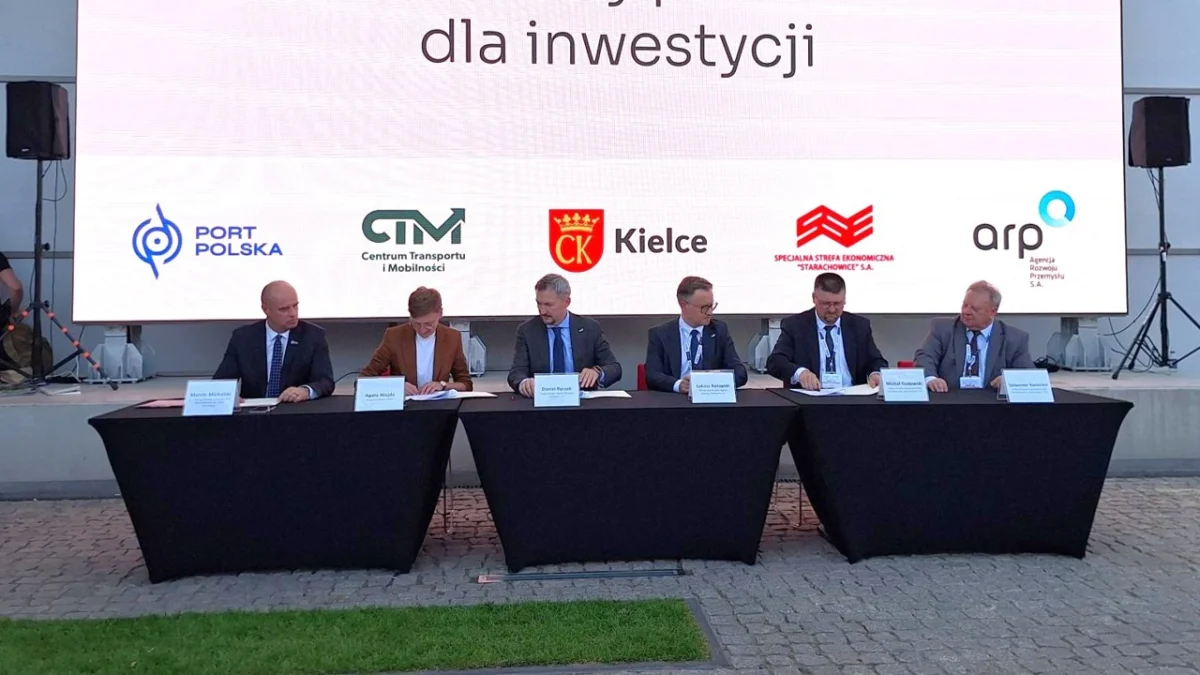
KIELCE, POLAND — In a landmark move designed to reshape the freight transport and logistics landscape of central Poland, Port Polska and the municipal authorities of Kielce have officially signed a comprehensive letter of intent. This strategic partnership paves the way for the development of a state-of-the-art intermodal rail terminal in Obice, situated approximately 20 kilometers north of Kielce.
The ambitious project is poised to drastically expand regional freight transport capacity, stimulate economic growth, and integrate the Świętokrzyskie region—historically known as the Holy Cross Voivodeship—more deeply into both European and international supply chains. By bridging local industrial potential with high-capacity rail corridors, the Obice terminal represents a crucial milestone in Poland’s ongoing modernization of its transportation infrastructure.
Main Facts
The planned intermodal rail terminal in Obice is a multifaceted infrastructure project engineered to address modern supply chain demands, enhance ecological sustainability in freight forwarding, and fortify regional competitiveness.
- Location and Footprint: The terminal will be developed on a sprawling site encompassing approximately 25 hectares in Obice, strategically chosen for its expansive land availability, favorable zoning, and robust existing infrastructure.
- Rail Connectivity: The facility is slated for direct connection to Railway Line No. 73, a critical regional route in central Poland that links Kielce and surrounding municipalities to the broader national rail grid.
- Strategic Dual-Use Potential: Beyond commercial freight operations, project planners are actively analyzing the feasibility of dual-use infrastructure. This would allow the terminal to seamlessly accommodate both civilian logistics and military mobility requirements.
- International Scope: Owing to its central geographic position, the facility is designed to serve as a gateway connecting domestic industries to Western European markets—such as the Benelux countries—as well as the Baltic states. Additionally, it holds the potential to handle eastbound trade routes, including critical logistics corridors linking Europe to Asia and supporting reconstruction and commercial efforts involving Ukraine.
- Institutional Backing: The initiative is spearheaded by Port Polska—specifically through its Centre for Transport and Mobility—in close coordination with the Kielce City Municipality.
Chronology
The genesis of the Obice intermodal terminal project is the result of years of macroeconomic forecasting, logistical planning, and strategic alignment between local and national stakeholders.
Phase I: Identification and Network Integration (2022–2024)
The conceptual foundation of the terminal was laid during the development of the Integrated Rail Network (ZSK) project, an extensive national planning initiative orchestrated by the Port Polska Centre for Transport and Mobility. During this phase, comprehensive analytical studies conducted by Port Polska experts identified a distinct structural deficit in intermodal logistics capabilities within the Kielce district. Despite the region’s central location and robust manufacturing base, it lacked a high-capacity freight hub capable of shifting goods efficiently from road to rail.
Phase II: Site Selection and Municipal Alignment (2024–2025)
Recognizing the economic opportunity presented by the ZSK findings, the municipality of Kielce initiated independent spatial evaluations. Local authorities pinpointed Obice as the optimal location for a major logistics installation. The site offered significant advantages, including unconstrained land reserves, minimal environmental friction, and compatibility with regional transport axes.
Phase III: Formalization and Feasibility (Current Stage)
The signing of the letter of intent marks the transition from conceptual planning to formal project execution. Moving forward, Port Polska and the Kielce city authorities will embark on a rigorous multi-disciplinary feasibility phase. This will involve detailed technical designs, spatial planning adjustments, legal frameworks, and financial modeling to establish the definitive operational parameters of the Obice terminal.
Supporting Data and Technical Framework
To ensure the long-term economic viability and technical excellence of the Obice terminal, Port Polska and the Kielce municipality are deploying a comprehensive evaluation framework. The partnership relies heavily on data-driven insights gathered from national transport corridors and cross-border trade metrics.
Spatial and Infrastructure Parameters
Spanning 25 hectares, the terminal site has been zoned to accommodate high-throughput container handling equipment, heavy-duty storage yards, administrative facilities, and dedicated rail sidings. The integration with Railway Line No. 73 requires extensive signaling upgrades and track-doubling considerations to prevent bottlenecks on the single-track sections of the regional network.
Multi-Disciplinary Feasibility Studies
The initial collaborative phase between Port Polska and Kielce will encompass six critical analytical pillars:
- Transport Analysis: Evaluating freight volumes, modal split shifts, and regional trucking patterns to project baseline and peak-load container throughput.
- Spatial Development: Integrating the 25-hectare footprint into local zoning plans and ensuring harmonious coexistence with surrounding communities.
- Technical Solutions: Developing preliminary geometric concepts for railway track layouts, gantry crane positioning, and road-to-rail transfer zones.
- Legal and Regulatory Framework: Establishing land acquisition protocols, public-private partnership (PPP) frameworks, and operating concessions.
- Environmental Impact Assessment (EIA): Mitigating ecological footprints, managing stormwater runoff, and reducing acoustic impacts on adjacent residential areas.
- Economic and Financial Modeling: Calculating capital expenditure (CAPEX), operational expenditure (OPEX), return on investment (ROI), and potential leverage of European Union structural funds.
Macroeconomic and Geopolitical Integration
The economic justification for Obice extends far beyond the borders of the Świętokrzyskie region. By positioning the terminal as a multimodal nexus, Poland aims to capture rising volumes of East-West and North-South trade. The infrastructure is strategically calibrated to absorb freight originating from or destined for:

- The Benelux Hubs: Facilitating direct block-train connections to major Western European ports such as Rotterdam and Antwerp.
- The Baltic States: Supporting the Rail Baltica corridor initiatives by securing efficient freight handoffs between Central Europe and the Baltics.
- Ukraine and Asia: Providing a reliable staging ground for heavy goods, construction materials, and agricultural products moving via emerging Solidarity Lanes and Eurasian rail routes.
Official Responses
The formalization of the partnership between Port Polska and the Kielce city authorities drew strong statements of support from civic leaders and transport experts, underscoring the transformative nature of the project.
Representatives from Port Polska emphasized the institutional commitment to elevating regional logistics standards:
"The identification of Kielce as a prime location for intermodal development validates our long-term vision under the Integrated Rail Network project. Obice offers the structural prerequisites necessary to build a modern, high-capacity terminal. Our Centre for Transport and Mobility is fully committed to providing the municipal authorities with elite engineering, legal, and economic expertise to guide this project from blueprint to reality."
Municipal leaders from the City of Kielce highlighted the profound local economic benefits tied to the investment:
"Signing this letter of intent marks a historic turning point for Kielce and the wider Świętokrzyskie region. By unlocking the logistical potential of Obice, we are creating an economic magnet that will attract foreign direct investment, lower transport costs for our local manufacturing sectors, and generate high-skilled employment opportunities. This terminal firmly places our region on the modern European transport map."
Implications
The development of the Obice intermodal rail terminal carries wide-ranging implications for the regional economy, national logistics security, and European environmental targets.
Economic Catalyst for Świętokrzyskie
For decades, the Świętokrzyskie region has possessed a strong industrial and manufacturing base—spanning construction materials, machinery, and metallurgy—yet its growth has occasionally been constrained by sub-optimal logistical connectivity. By establishing a world-class intermodal terminal on their doorstep, local enterprises will gain direct access to cost-effective, high-volume rail freight. This will significantly reduce shipping times, lower carbon footprints, and enhance the profit margins of regional exporters, making Kielce a premier destination for industrial investment.
Advancing Modal Shift and Green Logistics
In alignment with the European Green Deal and Poland’s national climate objectives, the Obice project directly supports the strategic imperative of shifting freight from road to rail. Heavy truck traffic along national highways contributes disproportionately to congestion, road degradation, and carbon emissions. By offering an efficient alternative for long-distance container transport, the terminal will remove thousands of heavy goods vehicles from regional roads annually, drastically reducing wear-and-tear on infrastructure and curbing greenhouse gas emissions.
Dual-Use Logistics and National Resilience
In an evolving geopolitical climate, the integration of dual-use infrastructure—capable of serving both commercial supply chains and military mobility needs—has become a top priority for NATO and the European Union. The Obice terminal’s robust rail connections and expansive staging areas offer strategic flexibility, allowing the facility to support allied logistics, humanitarian relief efforts, and the rapid transit of strategic assets when required.
Conclusion
The letter of intent signed between Port Polska and the Kielce city authorities is much more than an agreement to build a terminal; it is a foundational investment in Poland’s future economic resilience. As the detailed feasibility studies commence, the Obice intermodal rail terminal stands ready to transform the Świętokrzyskie region into a vibrant, globally connected logistics powerhouse.

