

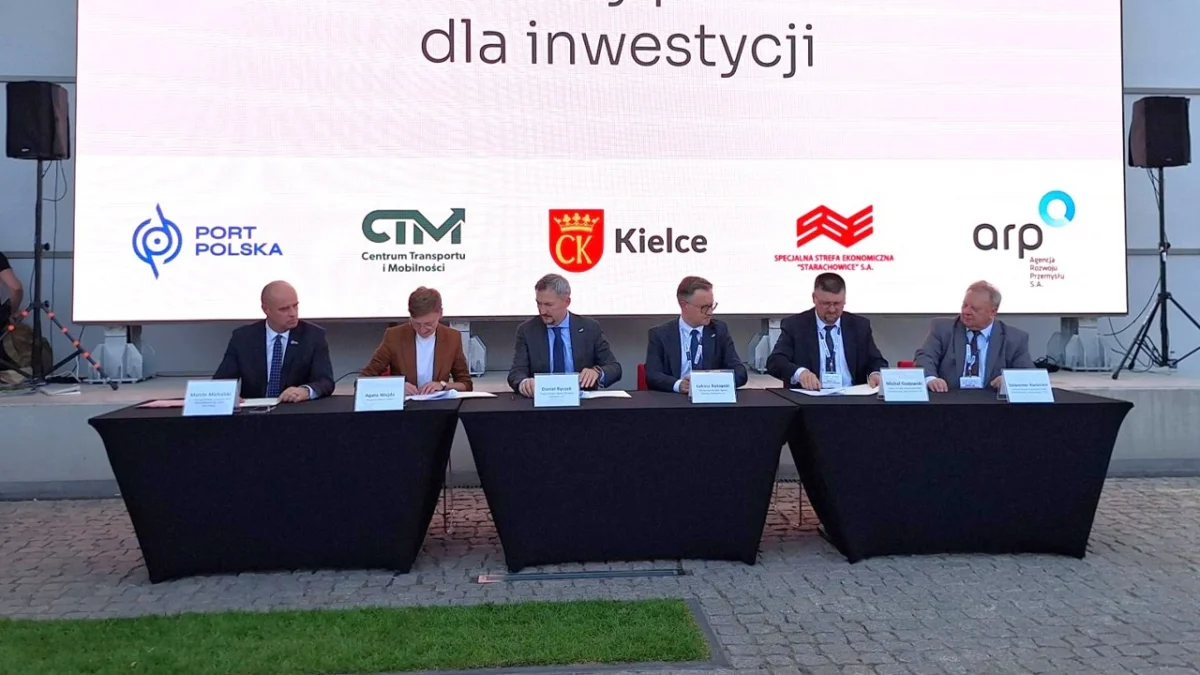
KIELCE, POLAND — In a move poised to fundamentally reshape the logistics landscape of central Poland, Port Polska and the municipal authorities of Kielce have officially signed a letter of intent to develop a state-of-the-art intermodal rail terminal in Obice, located approximately 20 kilometers north of Kielce. This ambitious infrastructure initiative is designed to drastically expand regional freight transport capabilities, streamline supply chains, and act as a powerful catalyst for the economic and industrial modernization of the Świętokrzyskie region (the Holy Cross Voivodeship).
The collaboration brings together national transport strategists and municipal leadership in a shared vision to bridge regional connectivity gaps and integrate central Poland more deeply into both European and transcontinental logistics corridors. Spanning an estimated 25 hectares, the planned Obice facility will serve as a modern multimodal hub, bridging road and rail networks to facilitate the seamless movement of goods across domestic and international markets.
1. Main Facts: The Obice Intermodal Terminal Project
The foundational parameters of the Obice intermodal terminal project highlight its scale, strategic positioning, and technical integration:
- Location: Obice, situated roughly 20 kilometers north of Kielce in the Świętokrzyskie region of central Poland.
- Land Area: Approximately 25 hectares of designated land, offering ample space for terminal operations, container storage, handling equipment, and future logistical expansion.
- Rail Connectivity: The terminal is slated for direct connection to railway line No. 73, a vital regional artery serving the Kielce metropolitan area and neighboring municipal districts.
- Core Objectives: To expand regional freight transport capacity, enhance local corporate access to multimodal logistics, reduce carbon emissions by shifting freight from road to rail, and drive sustainable economic growth across the Holy Cross Voivodeship.
- Strategic Scope: The project includes evaluations for dual-use infrastructure capabilities—accommodating both commercial freight operations and strategic military logistics. Furthermore, the terminal is envisioned to serve international trade corridors, including links to the Benelux countries, the Baltic states, and eastbound routes facilitating trade with Ukraine and Europe-Asia corridors.
- Institutional Collaboration: Jointly driven by Port Polska—via its Centre for Transport and Mobility—and the municipality of Kielce, with Port Polska providing technical, legal, and financial expertise throughout the development phases.
2. Chronology: From Concept to Execution
The journey toward the realization of the Obice intermodal terminal has been shaped by systematic spatial planning, rigorous logistical analysis, and targeted institutional policymaking.
The Genesis: The Integrated Rail Network (ZSK) Project
The groundwork for the Obice terminal was laid during comprehensive studies conducted under the Integrated Rail Network (ZSK) project. Developed by the Port Polska Centre for Transport and Mobility, the ZSK initiative was established to evaluate Poland’s secondary and tertiary rail corridors and identify structural bottlenecks and unrealized capacities in regional freight logistics.
As part of this broader national strategy, transport experts scrutinized the industrial and geographic profile of the Kielce district. Their extensive analyses confirmed that the district possessed untapped potential to serve as a major intermodal node in central Poland, driven by its central geographic location and intersecting transport axes.
Municipal Identification and Site Selection
Simultaneously, the municipality of Kielce was actively evaluating its own economic development vectors. Recognizing the need to attract high-value industrial investments and improve the municipality’s export capabilities, local authorities identified Obice as an exceptionally attractive location for a major infrastructure project. The site offered significant advantages, including available land reserves, favorable topography, and proximity to existing heavy transport corridors, making it a natural fit for a large-scale logistics hub.
The Letter of Intent
The convergence of national strategic planning and municipal ambition culminated in the formal signing of the letter of intent between Port Polska and the Kielce city authorities. This agreement marks the transition from conceptual studies to active project preparation.
Phase One: Feasibility and Preliminary Design
Following the signing ceremony, the project partners initiated a multi-disciplinary analytical phase. This initial stage involves rigorous feasibility studies covering:
- Transport and traffic flow projections
- Spatial and urban development planning
- Technical engineering solutions for rail and road connections
- Legal frameworks and land acquisition strategies
- Environmental impact assessments
- Economic and financial modeling to establish cost-benefit ratios and investment parameters
During this phase, Port Polska’s specialists will draft preliminary layout concepts for the terminal’s internal railway track arrangements, loading yards, and connection interfaces with both railway line No. 73 and local road infrastructure.
3. Supporting Data and Infrastructural Integration
The success of the Obice terminal depends heavily on its technical integration with Poland’s broader rail and transport networks. Transport planners are leveraging existing infrastructure while mapping out necessary upgrades to handle projected freight volumes.
Railway Line No. 73 Integration
The anchor of the Obice terminal’s rail connectivity is railway line No. 73. This regional route plays a crucial role in the transport network of central Poland, linking Kielce with surrounding industrial zones and connecting to major national trunk lines. Upgrading and adapting the connection points along line No. 73 will be essential to ensure that the terminal can handle high-frequency, heavy-axle freight trains without disrupting passenger rail schedules.
Dual-Use Potential: Commercial and Military Logistics
In light of evolving geopolitical realities in Eastern Europe, the project partners are conducting specialized analyses regarding the dual-use capability of the Obice infrastructure. Dual-use transport hubs—those capable of efficiently managing both civilian commercial freight and strategic military logistics—have become a critical priority for Poland and NATO allies.
The integration of military logistics capabilities into the Obice terminal would provide the Polish Armed Forces and allied troops with a secure, highly capable rail-to-road transfer point in central Poland, enhancing national security and rapid deployment readiness.
International Corridors and Trade Flows
While the immediate beneficiaries of the terminal will be local enterprises in Kielce and the Świętokrzyskie region, the long-term vision for Obice extends far beyond domestic borders. Planners have identified several key international trade vectors that could utilize the terminal:
- North-South Axes: Connecting central Poland efficiently with Baltic ports to the north and Central European markets to the south.
- West-East Links: Facilitating trade with the Benelux economic hub, acting as an inland staging ground for Western European goods heading further east.
- The Ukrainian Corridor: Handling rising volumes of cross-border trade with Ukraine, supporting that nation’s economic resilience and integration into European supply chains.
- Eurasian Routes: Positioning Kielce as a secondary node capable of servicing multimodal transit routes linking Western Europe with Asian markets.
4. Official Responses and Stakeholder Perspectives
The agreement between Port Polska and the Kielce city authorities has drawn widespread praise from regional leaders, logistics experts, and business representatives, all of whom emphasize the transformative impact the terminal will have on the local economy.

Municipal Leadership Perspectives
Kielce city officials have long championed initiatives that diversify the local economy and reduce reliance on traditional industries. Speaking on the significance of the agreement, municipal representatives highlighted that the Obice terminal represents a generational investment in the city’s future.
“The establishment of an intermodal terminal in Obice transforms Kielce from a regional administrative center into a genuine logistics powerhouse,” municipal authorities noted during initial briefings. “By providing local enterprises with direct access to modern, environmentally sustainable rail freight networks, we are dramatically improving the competitiveness of our business sector and creating high-paying jobs in supply chain management, engineering, and transport services.”
Port Polska and the Centre for Transport and Mobility
Port Polska, through its specialized Centre for Transport and Mobility, has played a pivotal advisory role in bringing the project to fruition. Transport planners at the centre emphasize that the Obice terminal is a textbook example of how targeted infrastructure investment can unlock regional economic potential.
“Our analytical models consistently demonstrated that the Kielce district was missing a crucial link in its logistical chain,” noted a senior Port Polska strategist. “Through our partnership with the city, we are moving past abstract planning to deliver a concrete, technically sound infrastructure asset. Port Polska is committed to lending its full technical expertise, legal guidance, and planning know-how to ensure that Obice becomes a benchmark for modern intermodal terminal development in Poland.”
Regional Business and Industrial Reactions
Local business chambers and manufacturing associations within the Świętokrzyskie region have welcomed the announcement with immense enthusiasm. For decades, regional producers of building materials, machinery, and consumer goods have relied heavily on road transport, exposing them to rising fuel costs, road congestion, and tightening European environmental regulations.
Industrial leaders point out that the Obice terminal will allow them to optimize their supply chains, reduce carbon footprints, and access European markets with greater reliability. The ability to load goods directly onto intermodal trains in their immediate vicinity is expected to significantly lower logistical overheads for regional manufacturers.
5. Implications for Regional Development and the European Transport Grid
The development of the Obice intermodal terminal carries profound implications that extend across multiple domains, ranging from local economic restructuring to broader European transport policy.
Economic Modernization of the Świętokrzyskie Region
Historically, the Świętokrzyskie region has faced economic challenges related to industrial transition and demographic shifts. The establishment of a 25-hectare logistics hub is expected to act as a powerful economic magnet, attracting secondary investments in warehousing, light manufacturing, assembly plants, and value-added logistics services.
Furthermore, the operational requirements of a modern intermodal terminal will stimulate demand for specialized labor, prompting regional educational institutions to develop targeted training programs in logistics, railway engineering, and supply chain management. This human capital development will help retain young professionals within the region.
Alignment with European Green Deal Objectives
From an environmental perspective, the Obice project aligns perfectly with European Union directives aimed at shifting a significant percentage of freight transport from roads to rail and inland waterways. Road transport remains a primary source of carbon emissions and traffic congestion across Poland.
By providing a modern, efficient alternative for freight forwarders, the Obice terminal will help reduce heavy truck traffic on regional highways, lower overall greenhouse gas emissions, and contribute to Poland’s national decarbonization targets. Intermodal transport combines the flexibility of trucking for first- and last-mile delivery with the high-capacity, low-emission advantages of rail for long-haul journeys.
Strengthening Poland’s National Logistics Backbone
On a national scale, projects like the Obice terminal reinforce Poland’s position as the primary logistics gateway of Central and Eastern Europe. As trade routes shift and diversify in response to global supply chain restructuring, having a decentralized network of modern intermodal terminals ensures that bottlenecks are minimized and national resilience is maximized.
By integrating Obice into the broader Integrated Rail Network (ZSK) framework, Polish transport planners are ensuring that central Poland is not bypassed by major international freight corridors. Instead, Kielce and the Świętokrzyskie region are anchoring themselves firmly onto the map of modern European logistics.
Conclusion
The signing of the letter of intent between Port Polska and the Kielce city authorities marks the official beginning of an exciting chapter for central Polish infrastructure. With a clear strategic vision, rigorous preliminary analysis, and strong institutional backing, the Obice intermodal rail terminal is well-positioned to progress smoothly from the planning boards to active construction.
As the project partners finalize their technical, environmental, and financial assessments over the coming months, the stakeholders involved are laying the groundwork for a facility that will modernize regional transport, empower local industries, enhance national security through dual-use capabilities, and secure Kielce’s place in the future of European and global logistics.

