

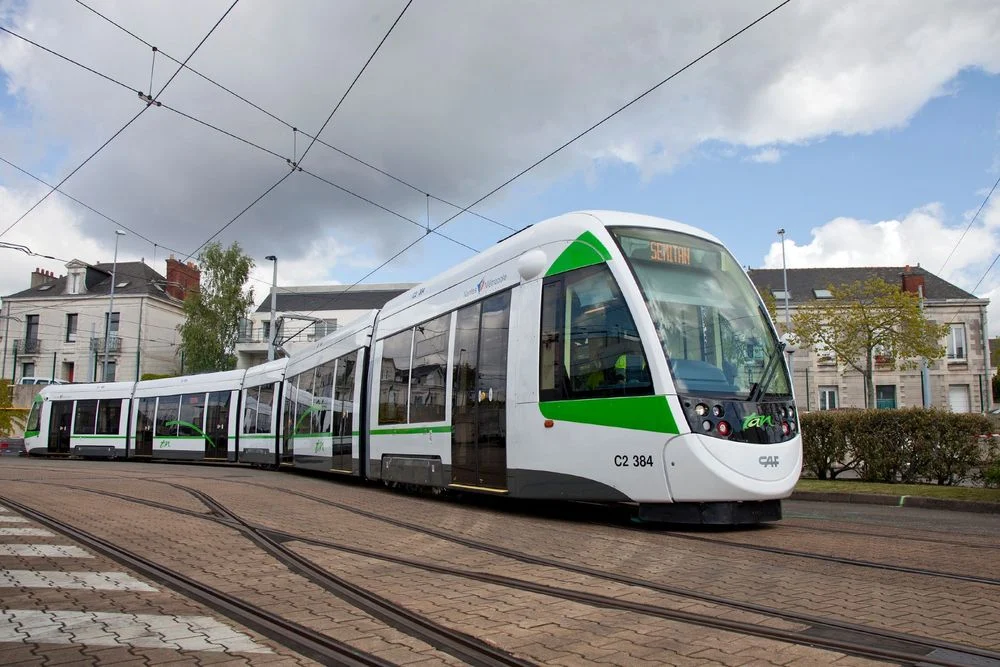
TOURS, FRANCE — In a landmark development for French public transport infrastructure, rolling stock manufacturer Construcciones y Auxiliar de Ferrocarriles (CAF) has officially signed a high-profile contract with the Syndicat des Mobilités de Touraine. The agreement dictates that CAF will manufacture and supply a fleet of 19 state-of-the-art Urbos trams destined for the city’s eagerly anticipated tramway Line 2. This strategic transit corridor will seamlessly connect La Riche to Chambray-lès-Tours, cutting straight through the heart of the historic metropolitan landscape.
Beyond the delivery of the 19 high-capacity vehicles, the comprehensive contract encompasses the provision of associated fleet spare parts and specialized maintenance tools, ensuring long-term operational sustainability for the local transport authority. This latest win further solidifies CAF’s formidable expansion footprint within the French urban rail market, following closely on the heels of major municipal tramway contracts secured in Montpellier and Marseille.
Main Facts: The Project, the Fleet, and the Technology
The centerpiece of this multi-million-euro transit expansion is CAF’s proven, highly adaptable Urbos tram platform. Engineered to integrate seamlessly into the existing urban fabric, the new vehicles will bear a strong visual and structural resemblance to the trams currently operating on Tours’ Line 1, ensuring a unified corporate identity and streamlined maintenance protocols across the metropolitan network.
Vehicle Specifications and Accessibility
Measuring an impressive 42 meters in length, each bi-directional tram is designed to maximize passenger throughput, boasting a maximum capacity of approximately 280 commuters per journey. To cater to modern urban mobility standards, the fleet features a fully low-floor interior architecture, guaranteeing unhindered, step-free access for passengers with reduced mobility (PRM), the elderly, and families with young children.
Furthermore, the interior layouts incorporate spacious multipurpose zones explicitly designated for strollers, bicycles, and wheelchairs, acknowledging the multi-modal lifestyles of modern urban commuters.
Catenary-Free Technology and Urban Preservation
One of the most technically sophisticated aspects of the new rolling stock is its advanced propulsion system. The CAF Urbos trams destined for Tours will be equipped with cutting-edge onboard energy storage modules. This technology enables the vehicles to operate entirely without traditional overhead catenary wires along a sensitive 2-kilometer stretch traversing the historic city center—specifically between the Tours central railway station and Place Choiseul.
By eliminating the need for overhead wires and unsightly support poles in this historically protected zone, the city preserves the aesthetic integrity of its Gothic architecture and picturesque urban vistas while simultaneously mitigating long-term infrastructure installation costs. The trams will dynamically recharge their onboard storage systems during regular station stops or via regenerative braking, demonstrating a harmonious blend of high-capacity transit and historical heritage preservation.
Chronology: The Evolution of Tours’ Tramway Network
The journey toward Tours’ modern light-rail renaissance spans over a decade of careful municipal planning, engineering studies, and public consultations.
- 2013 (The Dawn of Modern Light Rail): Tours successfully inaugurated its first modern tramway line (Line 1), transforming the city’s approach to public transit. Spanning 15 kilometers from Lycée Jean Monnet to Vaucanson, Line 1 proved immediately popular, registering massive ridership figures and proving that high-capacity rail could thrive in a medium-sized French urban center.
- Late 2010s (Conception of Line 2): Building on the undeniable success of Line 1, the Syndicat des Mobilités de Touraine initiated comprehensive feasibility studies for a second east-west tram corridor. Public debates focused on routing alternatives, environmental impacts, and how best to connect underserved medical and academic hubs.
- 2020–2022 (Route Finalization and Approval): Following extensive public hearings, the definitive 12.5 km route for Line 2 was locked in, establishing a vital axis connecting La Riche in the west to Chambray-lès-Tours in the south via central Tours.
- 2023–2024 (Groundbreaking and Early Civil Works): Construction officially commenced. Early phases focused on complex utility relocations, subterranean engineering, and preparing the ground for the extensive civil works required along the multi-station corridor.
- March 2025 (The CAF Contract Award): Following rigorous competitive bidding procedures, CAF was formally announced and contracted to supply the 19 Urbos trams and supporting infrastructure tools, securing the rolling stock backbone for the upcoming line.
- 2028 (Projected Inauguration): Line 2 is scheduled to open its doors to the public, marking a monumental leap forward in regional connectivity and setting the stage for future public transport milestones in the Loire Valley.
Supporting Data: Infrastructure, Demographics, and Economic Impact
To fully appreciate the scope of the CAF contract, one must examine the hard data underpinning the construction of Line 2 and the demographics it intends to serve.
Route and Station Metrics
- Total Length: 12.5 kilometers of dedicated double-track alignment.
- Number of Stations: 22 modern, accessible stations designed to integrate smoothly with the urban landscape.
- Catenary-Free Zone: 2 kilometers through the historic heart of Tours (between Tours railway station and Place Choiseul).
- Fleet Size: 19 CAF Urbos 42-meter trams.
- Passenger Capacity: Up to 280 passengers per tram.
Socio-Economic and Intermodal Integration
Tours is globally renowned for its rich Gothic architecture, medieval history, and its vital status as the commercial and tourism gateway to the picturesque Loire Valley. However, modern Tours is also a bustling hub of higher education, healthcare, and employment.
The 12.5 km Line 2 has been meticulously planned to anchor a comprehensive restructuring of the metropolitan transport network. Key data points regarding the line’s catchment area include:
- Student Population: The route directly services higher education institutions catering to nearly 30,000 students.
- Healthcare Access: The line connects major regional hospitals and medical facilities, ensuring rapid, reliable transit for patients, medical staff, and emergency workers.
- Active Mobility Integration: Alongside the physical rails, the project incorporates substantial urban redevelopment, promoting cycling and walking through dedicated, protected bike lanes and pedestrian-friendly public squares.
- Intermodality: The network is engineered to create seamless transfer points between the new tramway, existing bus lines, regional rail services (SNCF), and active transit infrastructure.
Official Responses and Stakeholder Perspectives
The partnership between the Syndicat des Mobilités de Touraine and CAF has been met with widespread enthusiasm from civic leaders, transport executives, and industrial stakeholders alike.
Municipal and Transport Authority Perspectives
Representatives from the Syndicat des Mobilités de Touraine emphasized that selecting CAF was the culmination of a rigorous evaluation process focused on technological reliability, passenger comfort, financial prudence, and environmental sensitivity.
"The introduction of Line 2 is not merely an infrastructure project; it is the backbone of our region’s ecological transition," noted a senior transport authority spokesperson. "We needed a rolling stock partner capable of delivering vehicles that respect our UNESCO-recognized historic streetscapes through catenary-free innovation, while simultaneously offering the high capacity and absolute reliability required by our growing student and workforce populations. CAF’s Urbos platform checked every box."
Industry and CAF Reactions
For CAF, securing the Tours Line 2 contract represents another major milestone in its aggressive and successful strategy to capture significant market share in France. Over recent years, the Basque-headquartered rolling stock manufacturer has systematically expanded its French footprint, highlighted by major tramway supply contracts in Mediterranean powerhouses like Montpellier and Marseille.
Corporate statements from CAF underscored the company’s pride in contributing to French urban mobility transformations:
"We are deeply honored by the trust placed in us by the Syndicat des Mobilités de Touraine," a CAF corporate representative stated. "Bringing our advanced Urbos technology to Tours—a city that expertly balances historical heritage with forward-looking dynamism—is a privilege. Our engineering teams are fully committed to delivering a fleet that enhances passenger experience, integrates flawlessly with the city’s architectural identity, and supports the region’s ambitious sustainable mobility goals."
Implications: Reshaping the Metropolitan Landscape of Tours
The deployment of 19 CAF Urbos trams on the forthcoming Line 2 carries profound implications for the future of Tours, setting a benchmark for medium-sized European metropolitan areas aiming to decarbonize their transport networks.
Environmental and Climate Goals
Transport emissions remain one of the most stubborn challenges facing urban planners across Europe. By offering a high-capacity, electric alternative to private automobile usage, Tours’ expanded tramway network will significantly reduce urban carbon emissions, particulate matter pollution, and traffic congestion. The inclusion of onboard energy storage modules further burnishes the project’s environmental credentials, ensuring that the visual pollution of overhead wires is avoided while maximizing energy efficiency through modern power management systems.
Urban Regeneration and Placemaking
The construction of Line 2 acts as a catalyst for comprehensive urban renewal. Along the 12.5 km corridor, streets are being entirely redesigned. Asphalt is giving way to green trackbeds (lawn-covered tram tracks that reduce urban heat island effects and noise pollution), widened sidewalks, and modern cycling corridors. This holistic approach to streetscape engineering transforms transit corridors into vibrant, human-centric public spaces rather than mere thoroughfares for cars.
Economic and Educational Connectivity
By directly binding together residential zones like La Riche and Chambray-lès-Tours with the vital organs of the city—universities, hospitals, cultural hubs, and sports complexes—the tramway acts as an equalizer of opportunity. Students, healthcare workers, and everyday citizens will enjoy faster, more reliable, and more predictable commutes, untethered from the unpredictability of road traffic.
A Strengthening Industrial Footprint in France
On a macro-industrial level, CAF’s continuous string of victories in France—moving from southern hubs like Montpellier and Marseille northward to the Loire Valley with Tours—cements the company’s status as a primary tier-one supplier in Western Europe. As French municipalities increasingly turn toward light rail to solve their urban congestion and climate mandates, manufacturers who can offer proven, customizable, and environmentally sensitive solutions like the Urbos platform are uniquely positioned to dominate the market for decades to come.
As ground works continue along the 12.5 km route and anticipation builds toward the grand opening in 2028, Tours stands as a shining example of how historical cities can successfully embrace ultra-modern, sustainable mobility without sacrificing their unique cultural soul.

