

At MWC Barcelona 2026, the global telecommunications industry gathered to witness a paradigm shift in digital infrastructure. While the spotlight often shines on 5G and 6G, a quiet revolution has been unfolding at the foundational layer of global connectivity: the Optical Transport Network (OTN). Huawei, long a dominant force in optical transmission, has unveiled its next-generation, AI-integrated OTN architecture, effectively transforming passive data conduits into intelligent, self-healing, and ultra-secure platforms.
For critical sectors such as power grids, railway networks, and government services, this evolution represents more than a speed upgrade—it is a fundamental reimagining of what an optical network can do.
The Evolution of Connectivity: Main Facts and Strategic Vision
Traditionally, OTNs have served as the "silent workhorses" of the digital age. Their mandate was simple: move massive volumes of data from point A to point B with absolute reliability. They were high-performance pipelines, but they were largely static and passive.
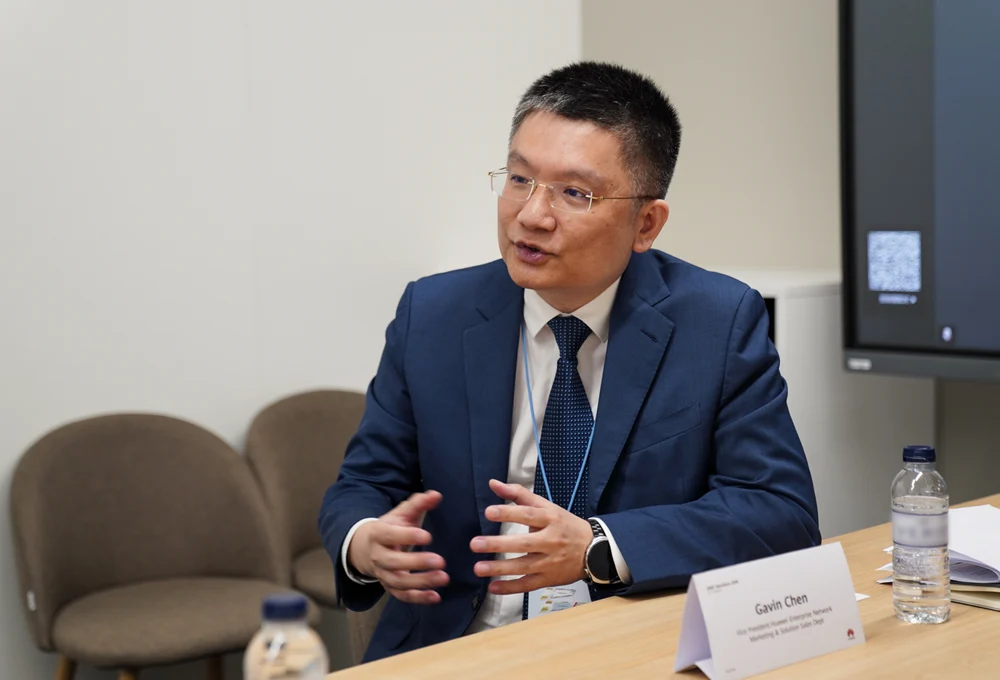
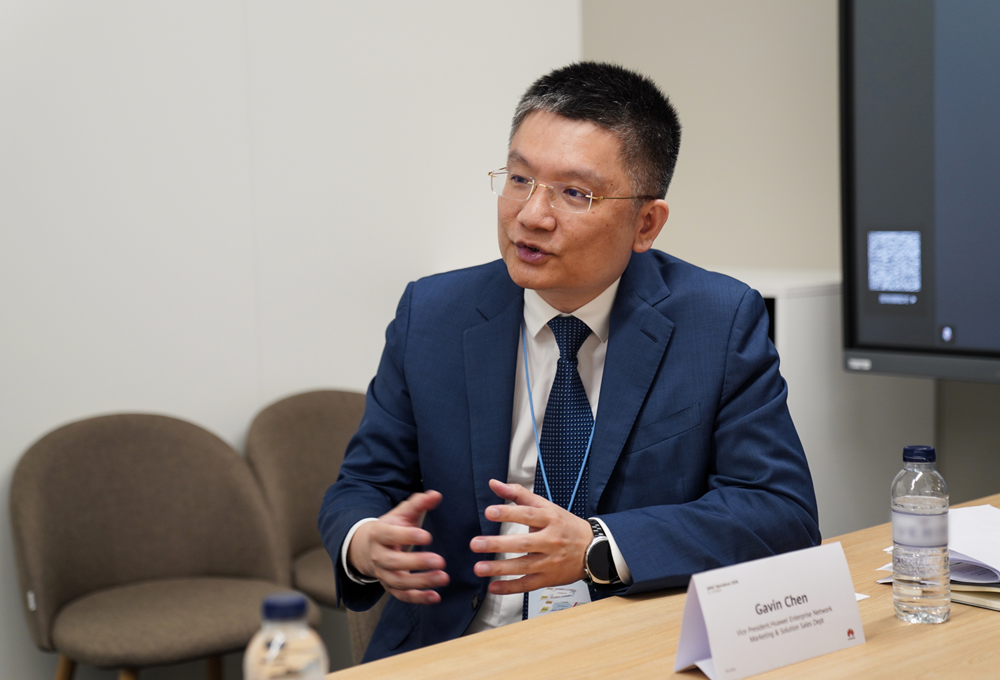
Gavin Chen, Vice President of Huawei Enterprise Network Marketing & Solution Sales Department, argues that this model is insufficient for the AI era. "Huawei has been leading the optical transmission field for 17 years straight," Chen noted during an exclusive media briefing at MWC 2026. "We aren’t just leading in market share; we are leading in industry thinking. With over 8,000 R&D experts and a portfolio encompassing 30% of core industry patents, we have shifted our focus from simply moving bits to creating an intelligent, autonomous infrastructure."
The core of this strategy is the integration of AI directly into the physical and logical layers of the optical network. By embedding AI computing power into network devices, Huawei is enabling transmission systems that can sense, secure, and maintain themselves in real-time.
Chronology: From fgOTN to AI-Native Intelligence
To understand the magnitude of this shift, one must look at the recent trajectory of Huawei’s R&D:
- 2024 (MWC Barcelona): Huawei launched the fgOTN (fine-grained OTN) solution. This was a pivotal moment, as it introduced the ability to provide hard-pipe, deterministic bandwidth for various services, laying the necessary groundwork for granular network control.
- 2025: Throughout the year, Huawei accelerated the integration of AI models into network management systems (NCE-T), focusing on predictive maintenance and automated service provisioning.
- 2026 (MWC Barcelona): Huawei officially unveiled its full-scale "AI-Powered OTN" ecosystem. This iteration moves AI from the management layer down into the optical hardware itself, introducing conversational O&M (Operations & Maintenance) via the NOEMate assistant and native Quantum Key Distribution (QKD) capabilities.
The Three Pillars of Intelligence: Sensing, Security, and Operations
Huawei’s new architecture delivers breakthroughs in three specific domains, moving the OTN far beyond its traditional role as a mere pipe.
1. The Fibre as a Sensor
Perhaps the most innovative aspect of the new platform is the use of optical fibre as a sensory organ. By utilizing OTDR (Optical Time-Domain Reflectometer) signals and applying advanced AI analysis, the network can detect minute changes in temperature, vibration, and physical stress along the fibre route.
"We are turning the network into a sensing platform without adding a single piece of external sensing equipment," Chen explains. This capability allows operators to detect unauthorized physical access, monitor the structural integrity of a rail line, or pinpoint the location of a fault with surgical precision before a service outage occurs.
2. Quantum-Grade Security
Security is no longer a bolt-on feature; it is now native to the hardware. Huawei has integrated Quantum Key Distribution (QKD) directly into the OTN chassis. By co-existing with traditional service traffic on the same fibre—using wavelength isolation to ensure quantum keys are generated and distributed securely—Huawei is making quantum encryption commercially viable.
This is not a theoretical experiment. The system is currently in operation at the China Southern Power Grid’s Shenzhen Power Supply Bureau, where it supports critical relay protection services. Deployment times have plummeted from months to mere weeks, proving that high-security, high-complexity encryption is finally ready for the field.
3. AI-Driven O&M: The NOEMate Assistant
Complexity is the enemy of reliability. As networks grow, manual troubleshooting becomes impossible. Enter NOEMate, a "talking O&M assistant" that utilizes a Large Language Model (LLM) interface to communicate with network engineers.
Instead of searching through thousands of lines of logs, engineers can now ask the network about its status or request root-cause analysis for a specific fluctuation. Coupled with AI-driven proactive maintenance, the system can identify potential risks—such as fiber aging or co-cable interference—and suggest optimizations before failures occur.
Supporting Data: Operational Impact
The efficiency gains reported by Huawei are substantial. By shifting to an AI-powered, self-diagnostic architecture, the company has observed:
- Proactive Fault Prevention: AI-driven models help prevent up to 40% of potential network faults by identifying degradation early.
- Troubleshooting Speed: Root-cause analysis that previously took hours or days is now performed in minutes.
- Manpower Efficiency: Automation and conversational O&M have reduced the human intervention required for maintenance tasks by over 70%.
- Deployment Velocity: The integration of QKD into existing OTN boards has reduced the time to secure critical infrastructure by nearly 90% compared to legacy, dedicated quantum systems.
Official Responses and Industry Implications
The shift toward AI-powered optical networks has profound implications for industries where "downtime" is not an option. In the power sector, where relay protection requires microsecond-level latency and zero packet loss, Huawei’s fgOTN backbone—already deployed at State Grid Liaoning Electric Power—is becoming the industry benchmark.
"Reliability, security, and intelligence are non-negotiable for private networks," says Gavin Chen. "Our mission is to lower the Total Cost of Ownership (TCO) while simultaneously increasing the resilience of the nation’s digital spine."
The implications for government and transportation are equally significant. As rail operators transition to autonomous systems and governments integrate smart city sensors, the network underlying these services must be capable of adapting to changing traffic patterns and environmental conditions on the fly. Huawei’s vision of an "adaptive infrastructure" suggests a future where the network is no longer a static utility, but a responsive, intelligent participant in the operational success of the enterprise.
Conclusion: The Future of the Optical Layer
Huawei’s presentation at MWC 2026 sends a clear message: the optical network has reached a state of maturity where it can no longer afford to be "dumb." By infusing the network with AI, quantum security, and sensory capabilities, Huawei is positioning the OTN as the nervous system of the digital economy.
As these technologies continue to scale, the industry can expect to see a rapid migration toward these intelligent platforms. For operators and enterprise clients, the choice is becoming clear: stay tethered to passive infrastructure, or embrace an AI-native optical future that offers not just connectivity, but an unprecedented level of control, security, and insight. The transition from pipeline to platform is not just underway—it is defining the next era of global digital transformation.

