

At MWC Barcelona 2026, the global telecommunications community witnessed a pivotal shift in the architectural philosophy of digital infrastructure. Huawei, a long-standing leader in optical transmission, unveiled a vision that moves beyond the traditional role of optical transport networks (OTNs). No longer just silent, passive data pipelines, these networks are being re-engineered as intelligent, integrated, and self-optimizing platforms. This evolution, spearheaded by Huawei’s latest innovations, is set to provide the foundational reliability required by power grids, national rail networks, and government services in an era defined by AI.
The Core Transformation: From Passive Pipeline to Intelligent Backbone
For decades, the OTN has served as the bedrock of global connectivity. Its mandate was clear and singular: transport massive amounts of data from point A to point B with high reliability and low latency. However, as AI applications permeate every sector, the demands on these networks have grown exponentially.
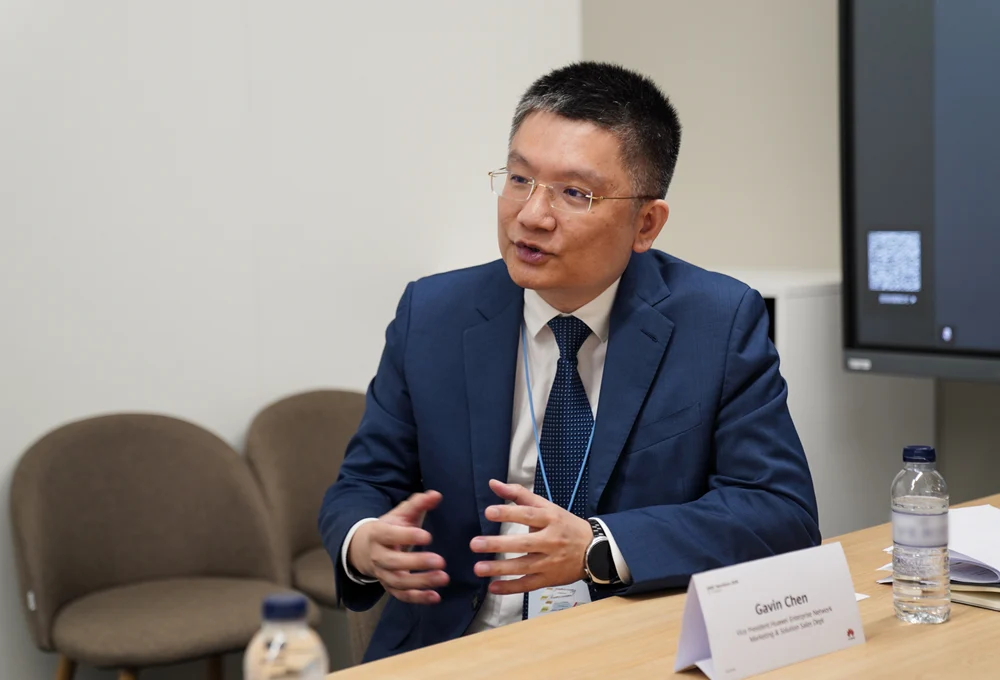
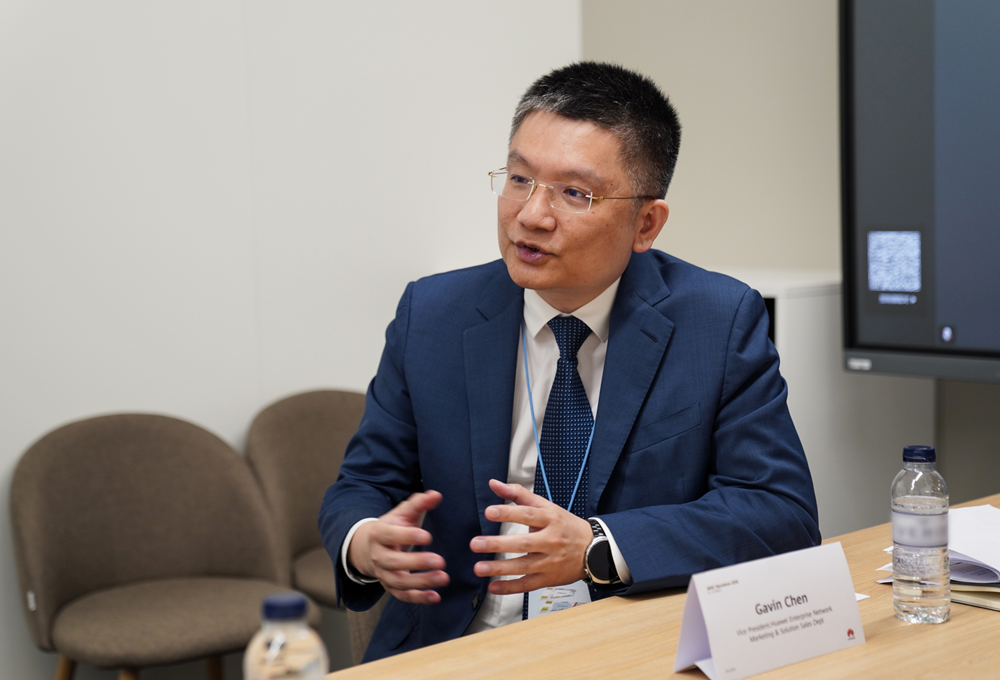
During an exclusive media briefing at MWC Barcelona 2026, Gavin Chen, Vice President of Huawei’s Enterprise Network Marketing & Solution Sales Department, outlined the company’s roadmap for the next generation of infrastructure.
"Huawei has led the optical transmission field for 17 years, not just in market share, but in shaping the industry’s intellectual direction," Chen stated. With an innovation engine powered by over 8,000 R&D experts and a portfolio holding 30% of the industry’s core patents, Huawei is shifting its focus from throughput to intelligence.
"We are embedding AI computing directly into network devices," Chen explained. "We are weaving it throughout transmission, sensing, and operations. This is not just an upgrade; it is a fundamental shift that addresses the explosive growth in terminal connections and the rising demand for edge computing power."
A Chronology of Innovation: From fgOTN to the AI Integration
The trajectory of this technological leap can be traced back to MWC 2024, where Huawei first introduced the fgOTN (fine-grained OTN) solution. This served as the crucial first step in modularizing the optical network, allowing for finer control over bandwidth and service isolation.
- 2024: The launch of fgOTN provided the granular, deterministic pipe architecture necessary for mission-critical industrial services.
- 2025: Huawei accelerated the integration of AI models into the management layer, focusing on predictive maintenance and automated network quality analysis.
- 2026 (MWC): The formal unveiling of AI-embedded hardware and "native" quantum-secure OTN solutions marks the transition into the "Intelligent Infrastructure" era.
This progression reflects a deliberate move to make the network "aware" of its own environment, its security state, and its maintenance requirements.
Triple Breakthroughs: Sensing, Security, and Operations
Huawei’s current strategy focuses on three pillars that redefine how optical networks interact with the physical and digital worlds.
1. The Fiber as a Sensor
Perhaps the most innovative aspect of the new architecture is the ability to repurpose optical fiber infrastructure. By utilizing the fiber itself as a sensor, Huawei can monitor temperature fluctuations, physical vibrations, and mechanical stress in real-time.
"We don’t need to install extra sensing equipment," Chen noted. "By applying AI to analyze OTDR (Optical Time-Domain Reflectometer) signals, the network monitors external conditions along the route." This capability allows operators to pinpoint cable disturbances, detect unauthorized physical access, or identify structural risks in underground conduits before they lead to service outages.
2. Native Quantum Security
While quantum key distribution (QKD) has long been discussed as the holy grail of data security, it has historically been hindered by the need for dedicated, separate fiber paths. Huawei has successfully bypassed this barrier by embedding QKD as a native capability within the OTN chassis.
Through wavelength isolation—using one band for services, another for quantum signals, and a third for key negotiation—Huawei allows quantum-secured traffic to share the same fiber as standard data traffic. This integration is supported by AI-powered digital signal processing (oDSP) that suppresses errors caused by environmental noise, ensuring stability that was previously unachievable.
3. AI-Driven O&M (Operations & Maintenance)
The third pillar addresses the human element of network management. Huawei has introduced NOEMate, a "talking O&M assistant" that utilizes a conversational interface to bridge the gap between complex network data and human operators. By leveraging the NCE-T management system, NOEMate allows engineers to query the state of the network in natural language, reducing the skill barrier and accelerating fault resolution.
Supporting Data: Efficiency and Reliability Metrics
The transition to AI-integrated OTNs is not merely theoretical; the economic and operational benefits are quantifiable:
- Proactive Fault Prevention: By utilizing optical network quality analysis models, Huawei systems can identify potential risks in advance, successfully preventing up to 40% of standard network faults.
- Troubleshooting Velocity: In the event of an incident, AI-driven fault feature mapping and chain-of-thought reasoning reduce the time required to locate a root cause from hours to mere seconds.
- Manpower Optimization: The integration of AI tools and automated provisioning has been shown to reduce the need for manual O&M intervention by more than 70%.
- Deployment Speed: In a practical application at China Southern Power Grid’s Shenzhen Power Supply Bureau, the deployment cycle for quantum-enhanced OTN was slashed from months to less than two weeks.
Official Perspectives and Industry Implications
The implications for "vertical" industries—power, rail, and government—are profound. For these sectors, downtime is not just an inconvenience; it is a critical failure.
"For power grids and railways, reliability and security are non-negotiable," Chen emphasized. The adoption of these technologies by entities like the State Grid Liaoning Electric Power and EDM in Mozambique demonstrates that these solutions are ready for the rigors of the field.
The shift toward AI-powered OTNs also addresses the "Total Cost of Ownership" (TCO) challenge. By consolidating functions that previously required disparate systems—such as sensing, encryption, and diagnostic management—into a single, unified hardware and software platform, Huawei is lowering the barrier to entry for high-end, secure digital infrastructure.
The Road Ahead: The Future of Autonomous Networks
As Huawei continues to refine the AI models behind these networks, the goal remains the creation of a "self-optimizing" foundation. The vision is for a network that doesn’t just transport information but understands it, protects it, and adapts to the physical environment surrounding it.
The integration of quantum-ready security and AI-driven troubleshooting represents the next wave of digital transformation. By turning the static, passive pipes of the past into the dynamic, intelligent infrastructure of tomorrow, Huawei is positioning the optical network as the primary nervous system for the global digital economy. As industry standards continue to evolve, the lessons learned from these MWC 2026 breakthroughs will likely define the benchmark for global connectivity for the remainder of the decade.
For operators and enterprise stakeholders, the message is clear: the era of the passive pipe is over. The era of the intelligent, self-aware, and ultra-secure network has begun.

