


In the landscape of modern governance, the definition of a "smart city" is undergoing a profound metamorphosis. For over a decade, urban centers worldwide have relied on the digitization of infrastructure—deploying sensors to track water usage, traffic flows, and air quality. However, as populations burgeon and urban challenges grow in complexity, mere data collection is no longer sufficient. The current imperative is to transition from static digitization to dynamic, proactive intelligence.
This paradigm shift was the central theme at the recent Global Government AI CITY Innovation Summit, held during Huawei Connect 2026 in Shanghai. Bringing together over 500 policymakers, technologists, and urban planners, the summit served as a global laboratory for the “AI City” vision—a future where digital foundations are augmented by AI agents that do not just observe, but predict, recommend, and act.
The Evolution of the AI City: From Reactive to Proactive
The core philosophy presented at the summit is that cities must move beyond the "smart" label toward "intelligent" governance. While smart cities provide information, AI cities provide solutions.
Simon Zhou, Vice President of the Government Public Services Digitalization BU at Huawei, underscored this transition by highlighting how artificial intelligence is rewriting the playbook for urban resilience. A primary case study was the deployment of Long Xiao Er, an AI-native governance agent, in Shenzhen, China. When Typhoon Noul approached the coast last July, the city did not rely solely on human observation. Instead, Long Xiao Er synthesized weather telemetry, sensor data, and real-time public reports.

By analyzing over 740,000 on-site images, the agent identified more than 900 potential hazards across low-lying districts. This allowed emergency services to dispatch over 2,800 proactive warnings to frontline staff before the storm made landfall. This shift from "reactive rescue" to "proactive prediction" represents the gold standard for the modern AI city, turning disaster management from a desperate scramble into a coordinated, automated response.
Chronology of Transformation: Building the Foundation
The path to an AI-integrated city is not a sprint, but a systematic build-up of infrastructure. The summit outlined a clear progression for governments aiming to modernize:
- Unified Digital Foundations (The First 2–3 Years): Before AI can flourish, data silos must be dismantled. Guangzhou, China, serves as a benchmark here, having spent two years establishing "eight unifications"—a set of standardized protocols that allow diverse government departments to share a single technical architecture.
- Infrastructure Scaling (The Growth Phase): Once data is interoperable, cities move toward a device-edge-cloud model. Huawei has already assisted more than 30 cities in deploying public cloud and Ascend-powered computing platforms to act as the "brain" of the city.
- Agent-Based Deployment (The Current Frontier): With the infrastructure in place, cities are now deploying "AI agents." Guangzhou, for example, has moved from zero to 20 active agents, with a target of 50 by the end of 2026. These agents now manage everything from office automation to complex public service ticketing.
- Ecosystem Expansion (The Collaborative Era): The launch of the Global AI City Innovation and Development Ecosystem Alliance at the summit marks the current stage, where governments and tech partners formalize the sharing of best practices and pre-built, reusable AI solutions.
Data-Driven Performance: Measuring Success
The transition to AI is not merely theoretical; the efficiency gains are quantifiable. The case of Guangzhou provides a compelling dataset for the efficacy of AI-augmented governance:
- Ticket Processing: The city’s new AI-powered hotline agent has slashed ticket dispatch times from one hour to mere seconds.
- Service Resolution: First-contact resolution rates have stabilized above 69%, demonstrating that AI can handle complex citizen inquiries without human intervention.
- Administrative Efficiency: Data governance and cataloging agents have achieved workload reductions of 80% and 90%, respectively, allowing public servants to move away from mundane data entry and toward high-level policy implementation.
- Internal Productivity: The city’s "Smart Office" agent now serves 55 government agencies and 26,000 public servants, having processed over 5 billion token invocations, proving that AI is as effective for internal operations as it is for public-facing services.
Diverse Paths to Innovation: International Perspectives
The summit highlighted that there is no "one-size-fits-all" approach to AI governance. Each nation is applying AI through the lens of its unique socioeconomic requirements.

Angola: Prioritizing Citizen-Centric Needs
Meick Afonso, General Director of Angola’s Administrative Modernization Institute (IMA), emphasized that with a median age of just 17 and a population set to double by 2050, Angola’s primary driver for AI is demographic pressure. His advice to peers was sobering: do not automate chaos. "Redesign procedures and establish connected, interoperable platforms first," Afonso urged. For Angola, the focus is on creating a clean digital baseline that can support the rapid scaling of services for a youthful, tech-native population.
Saudi Arabia: The Power of Closed-Loop Governance
Mohammed Ashgar, CEO of the Center for Monitoring City Operations in Saudi Arabia, spoke on the necessity of "closing the loop." His work with the Kingdom’s National Command Control Center focuses on municipal issues like road maintenance and waste management. He noted that AI is frequently misapplied as a reporting tool rather than an action tool. By centralizing detection—linking AI video analysis directly to field-team dispatch—the Kingdom has eliminated duplicate reports and ensured that officials have full visibility into whether an issue has been definitively resolved.
Ethiopia: Extending Reach Through Digital Inclusion
For Ethiopia, the focus is on accessibility. Melaku, Director of Coordination at the Modern Ethiopian Service for Organized Benefits (MESOB), discussed the challenges of serving diverse, often remote communities. By launching mobile service buses and a unified digital application, Ethiopia is using AI not just for efficiency, but for equity. The goal is to make government services "visible, predictable, and easier to navigate," ensuring that the benefits of the digital age reach beyond the capital city and into the furthest reaches of the nation.
Official Responses and Strategic Implications
The overarching consensus from the summit was that technology is rapidly outpacing the administrative boundaries of the past. Simon Zhou emphasized that "technology keeps breaking city boundaries, bringing inclusive services to everyone."
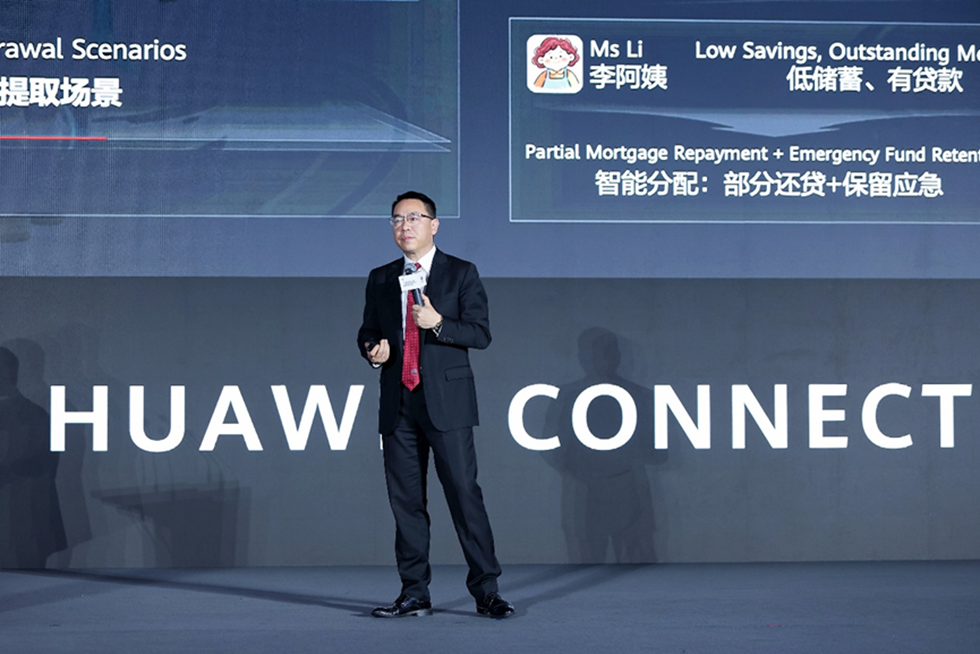
However, the path forward is not without risks. The discussions made it clear that "trust" is the currency of the future city. For AI to be accepted, it must be transparent. Whether through chatbots that help citizens navigate financial services or robotic systems that monitor urban health, the technology must prioritize human agency.
The launch of the Global AI City Innovation and Development Ecosystem Alliance signifies a turning point in international cooperation. By partnering with 14 foundational members, Huawei aims to standardize the three pillars of future urban success:
- Computing Power: Ensuring every city has the silicon backbone to run complex models.
- Data Quality: Moving away from fragmented, low-quality data toward "AI-ready" data structures.
- Scenario Innovation: Encouraging a marketplace of pre-built agents that can be "plugged in" by cities regardless of their geographic location.
Conclusion: The Horizon of Intelligent Urbanism
The transformation from a digital city to an AI city is an inevitable trajectory for global urban centers facing the pressures of climate change, population growth, and resource scarcity. As evidenced by the successes in Shenzhen, Guangzhou, and beyond, the technology is no longer the bottleneck; the challenge now lies in the organizational willpower to standardize, the patience to build robust foundations, and the commitment to design systems that prioritize the citizen.
As the Global AI City Innovation and Development Ecosystem Alliance begins its work, the message to global governments is clear: the era of the AI-augmented city has arrived. Those who invest in these digital foundations today will be the ones who define the urban quality of life for the next generation. The future of government is not just digital—it is intelligent, proactive, and inherently collaborative.

