

At MWC Barcelona 2026, the global telecommunications stage witnessed a fundamental shift in how digital infrastructure is perceived. Huawei, a long-standing leader in optical transmission technology, unveiled a vision that moves beyond the traditional concept of "data pipelines." By infusing Artificial Intelligence (AI) directly into the fabric of Optical Transport Networks (OTNs), Huawei is transforming static, passive connectivity into a dynamic, intelligent, and self-optimizing ecosystem.
This transition marks a departure from the industry’s historical reliance on simple "point A to point B" data transmission, moving toward an era where optical infrastructure serves as an active, sensing, and highly secure foundation for critical sectors, including government services, power grids, and railway infrastructure.
Main Facts: The AI-Powered OTN Paradigm
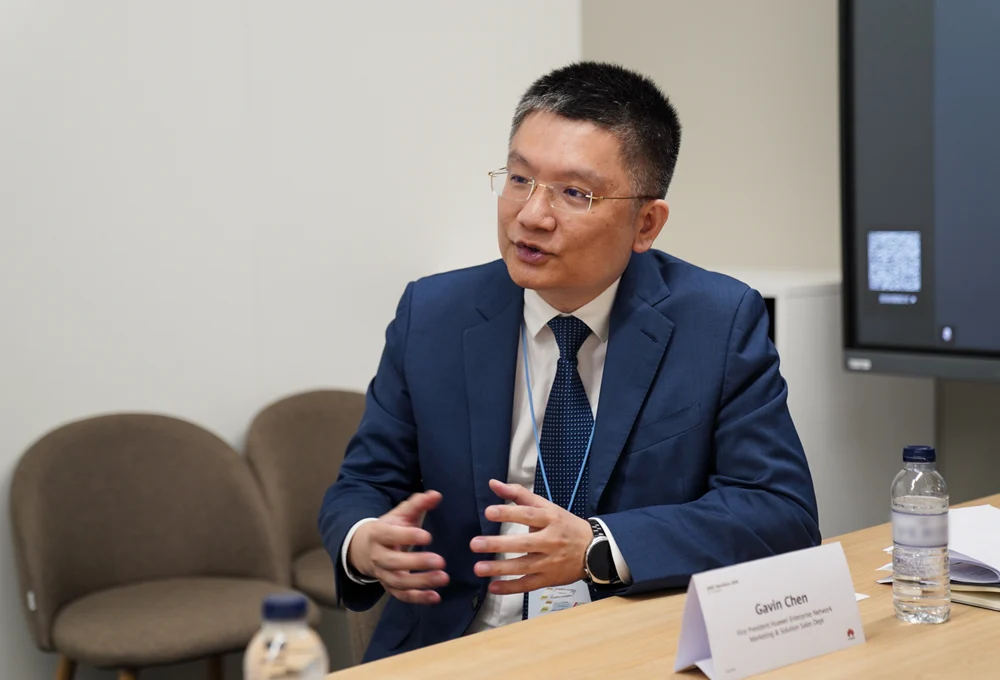
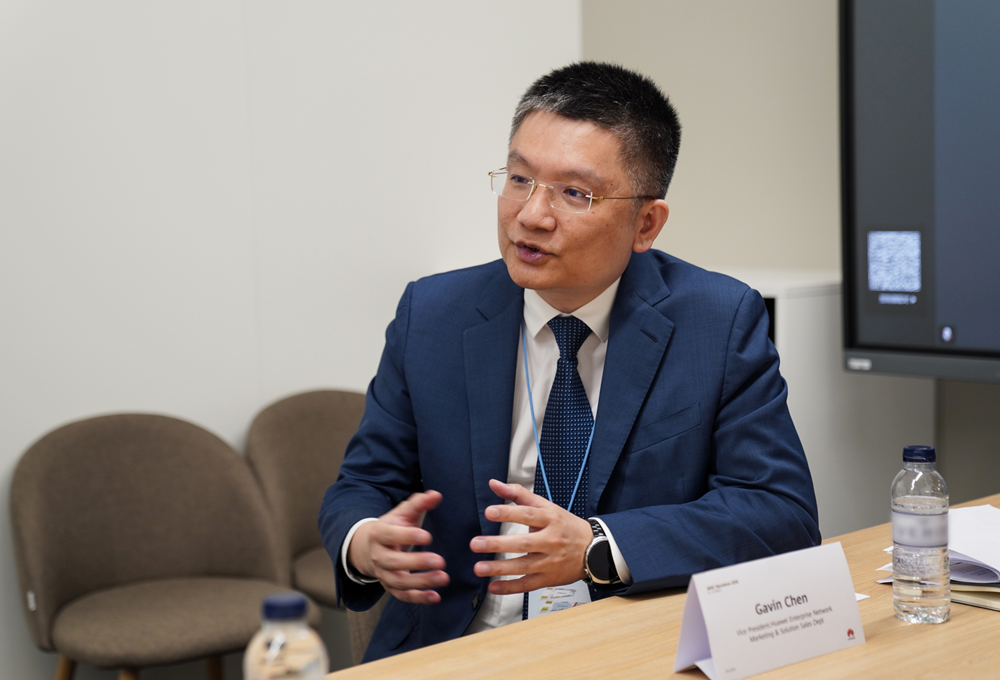
The core of Huawei’s latest announcement is the integration of AI at every level of the optical stack—transmission, sensing, and operations. Gavin Chen, Vice President of Huawei’s Enterprise Network Marketing & Solution Sales Department, emphasized that this evolution is not merely an incremental update but a structural reimagining of fiber optics.
Huawei’s strategy rests on three technological pillars:
- Integrated Sensing: Utilizing existing optical fiber as a distributed sensor to monitor physical environmental changes without the need for additional hardware.
- Quantum-Native Security: Moving beyond software-based encryption by embedding Quantum Key Distribution (QKD) directly into the hardware of the OTN, ensuring absolute security for high-stakes data.
- Autonomous O&M: The introduction of NOEMate, a conversational AI assistant designed to handle network diagnostics, maintenance, and complex troubleshooting, effectively lowering the barrier for entry for field engineers.
These innovations address the dual pressure currently facing network operators: the explosive growth in bandwidth demands fueled by generative AI applications and the increasing requirement for low-latency computing at the network edge.
Chronology: A Trajectory of Optical Innovation
Huawei’s dominance in the optical field is not a recent development. For 17 consecutive years, the company has led the global market, not only in volume but in defining the standards that govern modern transmission.
- The Foundation (Pre-2024): Huawei built a substantial innovation engine, currently employing over 8,000 R&D experts dedicated exclusively to optical technologies. Their influence is evidenced by their contribution to over 100 industry standards and their ownership of 30% of all core patents in the optical transport space.
- The Launch of fgOTN (MWC 2024): Two years ago, Huawei introduced the fgOTN (Fine-grained Optical Transport Network) solution. This was the foundational step that allowed for the fine-slicing of bandwidth, creating the modularity required to support the complex, diverse services of private networks.
- The AI Breakthrough (MWC 2026): Building upon the fgOTN framework, Huawei has now integrated AI into the core. This move represents the culmination of a decade of research into optical signaling and machine learning algorithms.
- Commercial Validation: The technology is no longer theoretical. Successful deployments at the State Grid Liaoning Electric Power in China and the EDM in Mozambique have demonstrated that this AI-powered infrastructure can survive the harsh, demanding environments of modern utility grids.
Supporting Data and Technical Breakthroughs
The move to integrate QKD (Quantum Key Distribution) into the OTN is arguably the most significant technical breakthrough for security-sensitive industries. Historically, quantum encryption was deemed impractical due to the need for dedicated dark fiber and separate, fragile management systems.
Breaking the Quantum Barrier
Huawei’s QKD system overcomes these hurdles through three specific technical feats:
- Shared Infrastructure: By using wavelength isolation, the QKD board and service boards coexist in the same chassis, using the same G.652 fiber. This eliminates the need for expensive, redundant fiber runs.
- Unified Management: Integration into the NCE-T intelligent management system means that quantum security is managed via the same interface as traditional traffic, reducing the training burden on O&M staff.
- Industrial Hardening: Unlike lab-grade quantum equipment, Huawei’s modules are ruggedized with vibration resistance and thermal controls, allowing them to function reliably in power substations or rail-side cabinets.
The Power of NOEMate
At the operational layer, NOEMate serves as the human-machine interface. By leveraging the NCE-T (Network Cloud Engine for Transport), the system provides a conversational window for engineers. Data suggests that this proactive, AI-driven approach can prevent up to 40% of network faults before they occur by identifying degradation patterns in fiber quality. When a fault does occur, the system utilizes chain-of-thought reasoning to identify root causes in seconds, leading to a reported 70% reduction in required manual troubleshooting labor.
Official Responses and Strategic Perspectives
During an exclusive media briefing at MWC Barcelona, Gavin Chen articulated the necessity of this shift. "Huawei has been leading the optical transmission field for 17 years straight," Chen stated. "We are not just focusing on market share; we are focused on shaping the industry’s trajectory. By embedding AI into the pipeline itself, we are solving the fundamental conflict between the need for massive data throughput and the requirement for absolute, uncompromised security."
Chen further elaborated on the economic impact for enterprise customers: "What used to require multiple independent systems—sensing systems, encryption systems, and management platforms—is now natively built into AI-powered networks. That means significantly lower complexity and reduced Total Cost of Ownership (TCO). For sectors like power and rail, where reliability is non-negotiable, this is a game changer."
Implications: The Future of Digital Infrastructure
The implications of Huawei’s AI-powered OTN extend far beyond the telecommunications industry.
1. The Rise of "Sensing Networks"
By turning every fiber optic cable into a distributed sensor, utilities can now monitor the structural integrity of their infrastructure in real-time. Vibration analysis can detect unauthorized excavations near buried cables or structural stress on power lines, turning the network into an "all-seeing" safety mechanism for critical infrastructure.
2. Democratizing Complex Operations
The shift toward conversational AI (NOEMate) is perhaps the most profound implication for the workforce. As network infrastructure grows more complex, the skill gap becomes a critical bottleneck. By providing an interface that can "explain" network behavior and suggest optimizations, Huawei is lowering the operational barrier, allowing existing staff to manage significantly more complex environments with greater confidence.
3. A New Standard for Private Networks
For governments and global enterprises, the "passive pipeline" era is effectively over. The future of private networking lies in "Active Infrastructure"—networks that are aware of their own health, capable of defending against quantum-level threats, and able to automatically reroute or repair themselves.
Conclusion
As the world moves toward an AI-driven economy, the underlying transport layer must be as intelligent as the services it carries. Huawei’s presentation at MWC 2026 suggests that the optical transport network is no longer a silent carrier of data; it is becoming the intelligent brain of the modern industrial enterprise. By blending fiber optics, quantum physics, and artificial intelligence, Huawei has established a blueprint for the next decade of digital transformation, proving that the most advanced technology is often the kind that works invisibly, reliably, and autonomously in the background.

