

Introduction: A Milestone in Sustainable Mobility
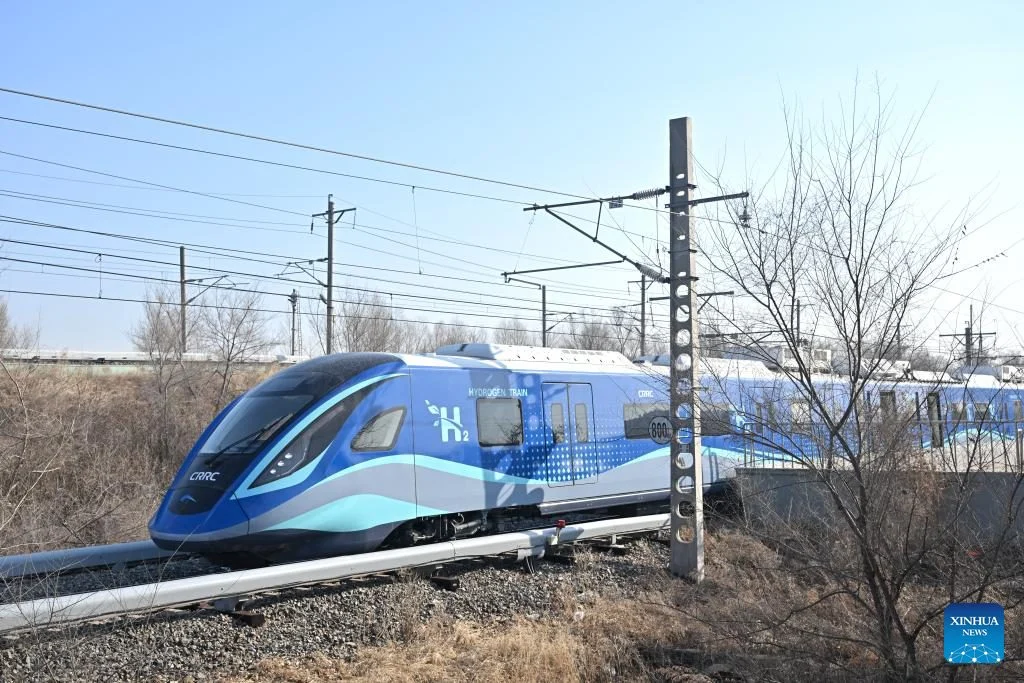
In a monumental stride toward global decarbonization, China has officially successfully tested its first domestically developed hydrogen-powered urban train. This breakthrough, achieved in the industrial heartland of Jilin Province, represents a paradigm shift in how metropolitan areas might conceive of mass transit. By hitting a verified speed of 160 kilometers per hour (km/h), this train does more than simply move passengers; it shatters the glass ceiling for hydrogen technology in heavy rail transport, positioning China as a dominant force in the race to replace fossil-fuel-reliant infrastructure.
Developed by CRRC Changchun Railway Vehicles, a subsidiary of the state-owned China Railway Rolling Stock Corporation (CRRC), the train serves as a testament to the nation’s aggressive pursuit of carbon neutrality. As urban populations continue to swell, the pressure to reduce the carbon footprint of public transportation has never been higher. This new hydrogen platform provides a compelling alternative to traditional diesel locomotives and energy-intensive catenary-based electric lines.
The Main Facts: Performance and Engineering Excellence
The test, conducted this past Thursday on a company-owned track, was not merely a ceremonial run; it was a rigorous, full-scale performance evaluation. The train demonstrated stability and reliability across a variety of simulated operational scenarios, ensuring that the hydrogen-electric propulsion system could handle the demands of a modern, fast-paced urban rail network.
Key Specifications:
- Top Speed: 160 km/h, setting a new benchmark for hydrogen-powered rolling stock.
- Propulsion System: Advanced onboard hydrogen fuel cell technology.
- Operational Range: Over 1,000 kilometers on a single charge.
- Energy Efficiency: Average consumption of 5 kilowatt-hours (kWh) per kilometer.
The train’s ability to achieve a 1,000-kilometer range is perhaps its most significant engineering feat. For context, this exceeds the range of many current electric regional trains and places it in direct competition with the gold standard of the industry, such as Alstom’s Coradia iLint. The efficiency metrics—5 kWh per kilometer—align the Chinese model with the most advanced sustainable transit systems currently operating in Europe and Asia, proving that domestic manufacturing is now operating at the global technological frontier.
Chronology: From Concept to High-Speed Reality
The development of this hydrogen train is the culmination of years of strategic planning and research. The journey toward this Thursday’s test can be broken down into several distinct phases:
Phase I: Research and Design (2018–2021)
Following the global trend toward green energy, CRRC Changchun initiated an intensive R&D program. Engineers focused on the challenge of integrating fuel cells into an urban train chassis without compromising passenger space or structural integrity. This period involved thousands of hours of computer modeling and sub-component testing.
Phase II: The Prototype Stage (2022)
By early 2022, the first full-scale prototype was assembled. Unlike the experimental, low-speed hydrogen trams seen in previous years, this model was designed from the outset to meet the requirements of intercity and urban express lines.
Phase III: System-Wide Validation (2023–Early 2024)
Throughout late 2023, the train underwent a "meticulous performance evaluation." This included "all-scenario" testing, where engineers simulated extreme weather conditions, high passenger loads, and emergency braking scenarios. The goal was to validate the system-wide integration of the fuel cell management system, battery storage, and the electric drive train.
Phase IV: The Breakthrough (March 2024)
On the day of the successful high-speed trial, the train hit the 160 km/h milestone, confirming that the power output of the hydrogen fuel cells is sufficient to sustain high-velocity travel over long durations without degradation of performance.
Supporting Data: Why Hydrogen?
To understand the significance of this test, one must look at the limitations of current rail infrastructure. Conventional trains generally fall into two categories: those powered by diesel engines and those powered by overhead catenary lines.
Diesel trains are high-emission polluters, contributing significantly to urban air quality issues. Catenary systems, while efficient, require massive upfront capital expenditure for the installation of overhead wires and electrical substations. In many remote or suburban areas, the cost of electrifying a line is prohibitive.
Hydrogen technology offers a "middle way." By generating electricity onboard through the chemical reaction of hydrogen and oxygen, the train creates its own power. The only byproduct is water vapor, making it a zero-emission solution. Furthermore, the 1,000-kilometer range allows for regional connectivity that doesn’t require the train to stop for refueling, a massive logistical advantage for operators.

The data gathered during the testing in Changchun confirmed that the hydrogen storage system remains stable even at high speeds, and the energy conversion rate is within the expected range of 5 kWh per kilometer. This indicates that the thermal management systems—which keep the fuel cells at an optimal temperature—are highly effective, preventing the energy loss often associated with hydrogen conversion.
Official Responses and Industry Sentiment
The success of the test was widely celebrated by Chinese state media and industry analysts. According to the Xinhua News Agency, this development is a "remarkable breakthrough" that signals a new chapter in the nation’s "Green Rail" initiative.
CRRC representatives have been vocal about the implications of the project. A spokesperson for the company noted, "This is not just about building a train; it is about building an ecosystem. We have proven that hydrogen can be as reliable as electricity and as flexible as diesel."
Internationally, the rail community has watched this development with interest. As countries like Germany, France, and Japan continue to experiment with hydrogen-powered passenger lines, the entry of a Chinese-made, 160 km/h hydrogen train changes the competitive landscape. Industry analysts suggest that this will likely drive down the cost of hydrogen rail components globally, as China’s massive manufacturing capacity comes into play.
Implications: The Future of Transit
The implications of this successful test extend far beyond the borders of Jilin Province. There are several key areas where this technology will likely trigger profound change:
1. Decarbonizing Regional Rail
Many regional rail networks around the world are still reliant on diesel because they are not profitable enough to justify full electrification. Hydrogen trains provide a way to decarbonize these lines without the need for billions of dollars in infrastructure investment.
2. Export Potential
CRRC is one of the world’s largest rail equipment manufacturers. With a proven, high-speed hydrogen platform, China is now positioned to export this technology to emerging markets in Southeast Asia, Africa, and South America, where energy transition is a high priority but grid infrastructure is underdeveloped.
3. Energy Security
By moving away from fossil fuels, national rail operators can reduce their vulnerability to global oil price volatility. Hydrogen can be produced domestically through water electrolysis, utilizing excess renewable energy (like wind or solar), thereby creating a circular, self-sustaining energy economy.
4. Technical Standardization
This test provides a vital data set for the global rail industry. As more countries adopt hydrogen, the standardization of refueling protocols, storage tank safety, and fuel cell efficiency will be crucial. China’s transparent approach to this testing process will likely help in establishing these international standards.
Conclusion: A Turning Point
The arrival of a 160 km/h hydrogen train marks the end of the "pilot project" era for hydrogen rail. It is no longer a niche technology for low-speed heritage lines or experimental trams; it is a viable, high-performance solution for modern urban and regional transport.
As CRRC Changchun prepares for the next stages of development—likely involving commercial deployment and further range optimization—the world is witnessing a fundamental change in how we power the machines that move our society. The successful test in China serves as a clarion call to the global transport sector: the future of rail is not just electric; it is hydrogen-electric.
With its combination of high speed, long range, and zero emissions, this train is not just a triumph of engineering—it is a harbinger of a cleaner, more efficient, and more sustainable century of travel. As the data is finalized and the technology moves toward mass production, the world will be watching to see how this innovation reshapes the map of modern mobility.

