

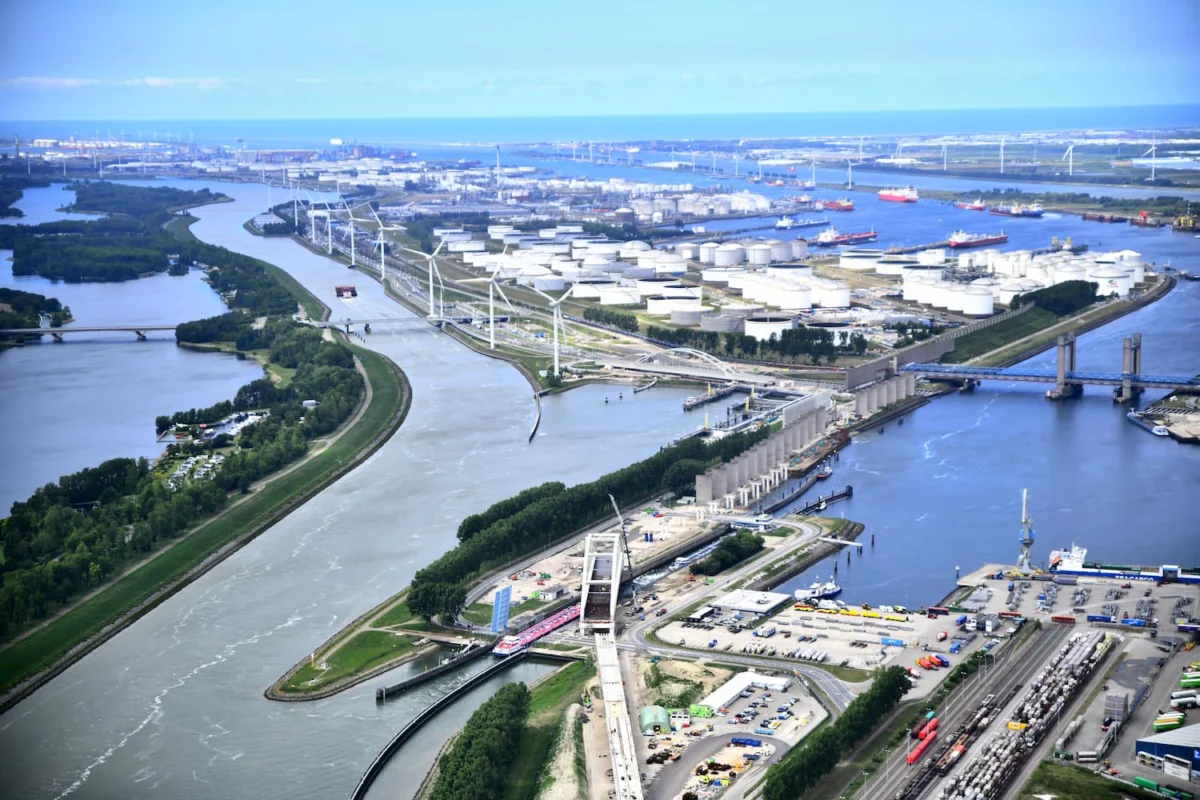
In a landmark move to decarbonize the backbone of global trade, the European Commission has awarded €25 million in funding to the Port of Rotterdam Authority and an expansive international consortium. This financial injection, drawn from the Horizon 2020 Green Deal programme, is set to catalyze the "MAGPIE" (sMArt Green Ports as Integrated Efficient multimodal hubs) project—a five-year endeavor aimed at redefining the ecological footprint of maritime and inland port operations.
The initiative brings together a powerhouse coalition of 45 entities, including port authorities, leading knowledge institutes, and more than 30 private sector companies across the Netherlands, Germany, France, Portugal, Denmark, and Sweden. Together, they are tasked with implementing 10 pilot and demonstration projects that serve as a blueprint for the future of sustainable, smart logistics.
Main Facts: The MAGPIE Blueprint
The core objective of the MAGPIE project is to transform European seaports from traditional logistical nodes into integrated, zero-emission hubs. The project is not merely an academic exercise; it is a pragmatic, hands-on roadmap toward carbon neutrality.
The Master Plan for 2050
Central to the consortium’s output is the development of a comprehensive master plan. This strategic document will delineate the precise trajectory required to achieve carbon-free transport in, to, and from ports by 2050. By breaking down the transition into critical milestones for 2030 and 2040, the project provides a scalable framework that other global ports can emulate.
Key Technological Pillars
The project focuses on the production, transport, storage, and distribution of renewable fuels. By investigating energy carriers such as green hydrogen, large-scale electric batteries, ammonia, and bio-LNG, the consortium is stress-testing which fuels are most viable for specific logistical segments—whether for long-haul maritime shipping or short-distance hinterland distribution.
Chronology: A Five-Year Strategic Roadmap
The MAGPIE project is structured to ensure that research translates rapidly into real-world application.
- Phase 1 (Initial Setup & Baseline Analysis): The first year focuses on evaluating existing logistical bottlenecks and establishing the infrastructure requirements for the testing of new energy carriers.
- Phase 2 (Pilot Deployment): Years two and three mark the implementation of the 10 demonstration projects. This includes the deployment of battery-electric locomotives and the construction of ammonia-bunkering facilities.
- Phase 3 (Scaling and Digital Integration): Years four and five are dedicated to the roll-out of automation and digitalization tools, alongside the rigorous analysis of pilot data to refine the 2050 master plan.
- The Horizon 2020 Context: The funding is part of the European Commission’s broader Green Deal, which prioritizes the reduction of greenhouse gas emissions in high-impact sectors like maritime transport and logistics.
Supporting Data: The Logistics of Decarbonization
The transition to green logistics is not a one-size-fits-all solution. The MAGPIE consortium has identified that each energy carrier possesses distinct advantages and limitations.
Energy Carrier Suitability
- Green Hydrogen: Viewed as the frontrunner for heavy-duty shipping and long-haul trucking, hydrogen offers high energy density but requires significant infrastructure investment in cryogenic storage.
- Electric Battery Power: Ideal for short-range operations, such as shunting locomotives in marshalling yards or short-sea shipping. The project includes the development of locomotives capable of drawing power from overhead lines while simultaneously charging internal batteries.
- Ammonia: A promising zero-carbon marine fuel that is currently undergoing safety and bunkering trials, making it a critical focus for deep-sea transport vessels.
- Bio-LNG: Offers a bridge solution for existing combustion engines, reducing emissions immediately while the infrastructure for pure zero-carbon fuels matures.
Practical Pilot Examples
Among the 10 pilot projects, two stand out for their technical complexity:

- Dual-Mode Electric Locomotives: By utilizing overhead lines for primary traction and battery power for off-grid operations (such as shunting or last-mile port delivery), the project aims to eliminate the need for diesel-powered locomotives in port environments.
- Offshore Shore Power: Expanding the reach of renewable energy by providing electrical power to ships moored at offshore buoys, effectively silencing auxiliary engines that typically run on heavy fuel oil while waiting for a berth.
Official Responses and Collaborative Synergy
The strength of the MAGPIE project lies in its cross-border collaboration. By linking the Port of Rotterdam with DeltaPort (Germany), Haropa Port (France), and Sines (Portugal), the consortium creates a "corridor" effect.
"This is not just about local innovation; it is about setting a European standard for the next generation of maritime trade," stated a spokesperson for the Port of Rotterdam Authority. The collaboration between port authorities and research institutes is designed to bridge the "valley of death"—the period where a technology has been proven in a lab but lacks the commercial scale for widespread adoption.
Industry leaders participating in the consortium have emphasized that digitalization is as important as the fuel itself. By automating logistics, ports can optimize berth schedules, reduce waiting times, and minimize fuel consumption, creating a "smart" ecosystem that complements the "green" transition.
Implications: The Future of Global Trade
The MAGPIE project represents a shift in how the European Union views the role of ports. No longer seen merely as transit points, ports are now being repositioned as "Energy Hubs" that produce, store, and distribute renewable energy.
Economic and Environmental Impact
The environmental implications are profound. With the maritime sector responsible for approximately 3% of global greenhouse gas emissions, the shift to ammonia, hydrogen, and electrification could save millions of tons of CO2 annually. Economically, the project positions Europe as a global leader in green maritime technology, potentially creating a new export market for smart logistics software and renewable fuel infrastructure.
The Challenge of Scalability
While the €25 million funding is significant, the consortium acknowledges that the real challenge lies in the "middle mile"—the transition from demonstration to commercial adoption. Encouraging private companies to invest in expensive new technology remains a hurdle. To address this, MAGPIE includes a work package specifically focused on business models and policy incentives to encourage companies to adopt sustainable and smart logistics processes.
A Legacy for the Future
The master plan developed by the consortium will serve as a living document. By 2030, the project expects to have operational "green corridors" between the participating ports. By 2040, the focus will shift to full-scale infrastructure deployment. By 2050, the goal is a fully carbon-neutral logistics chain.
In conclusion, the MAGPIE initiative is a critical step forward in the European Green Deal. It leverages the diversity of the European port landscape to solve the most pressing logistical challenges of our time. By integrating renewable energy production, state-of-the-art battery technology, and digital automation, the Port of Rotterdam and its partners are proving that the logistics of the future can be both efficient and environmentally responsible. The project serves as a beacon, signaling to the global maritime industry that the era of carbon-intensive port operations is drawing to a close, replaced by a smarter, cleaner, and more resilient future.

