

SACRAMENTO, CA – In a move that signals the most significant transition in the history of American rail infrastructure, the California High-Speed Rail Authority (CHSRA) has officially selected the consortium tasked with bringing the nation’s first true high-speed rail system to life. The contract, valued at approximately USD 3.5 billion, represents a pivot from heavy civil engineering and earthworks to the sophisticated installation of the technology and hardware required to operate trains at speeds exceeding 220 mph (354 km/h).
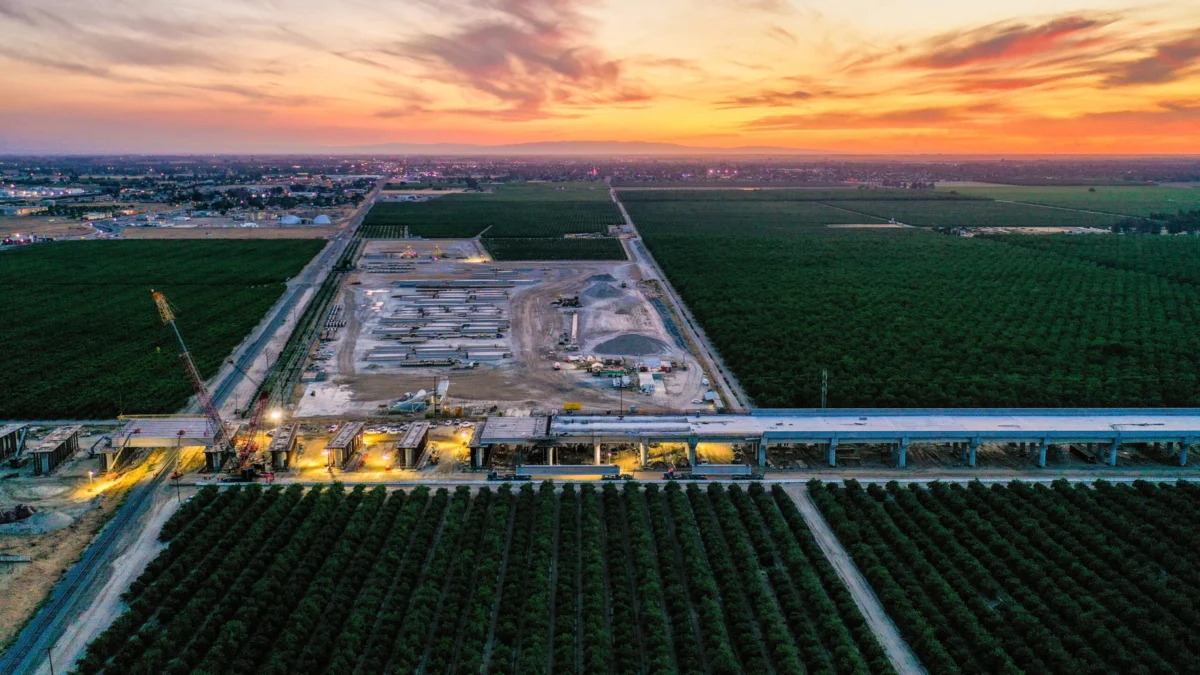
The selection of the joint venture—comprising American infrastructure giants Kiewit, Stacey Witbeck, and Herzog—marks the end of a decade-long focus on viaducts, bridges, and trenches, and the beginning of the "Track and Systems" era. This phase will transform the skeletal concrete structures currently dotting the Central Valley into a functional, electrified, and automated high-speed corridor.
Main Facts: A $3.5 Billion Leap into the Future
The "Track and Systems" contract is widely regarded as the most complex and critical procurement in the project’s history. Unlike previous contracts that focused on localized civil works, this agreement covers the comprehensive integration of all elements necessary for train movement.
The Winning Consortium
The Authority selected a powerhouse trio of American firms:
- Kiewit: One of North America’s largest and most respected construction and engineering organizations.
- Stacey Witbeck: A leader in complex transit projects and rail system integration.
- Herzog: A specialist in railroad construction, operations, and maintenance.
Together, these firms will be responsible for the design and construction of the track-work, the Overhead Contact System (OCS) that provides electric power, the sophisticated signaling infrastructure, and the cutting-edge train control and communications equipment.
Scope of Work
The initial phase of the contract focuses on the 191-kilometer (119-mile) segment currently under active construction in California’s Central Valley. However, the contract is designed with scalability in mind. It includes provisions to extend these systems to the future extensions toward Merced to the north and Bakersfield to the south, eventually encompassing the full 275-kilometer (171-mile) initial operating segment.
Key deliverables include:
- Track Installation: Precision-engineered rails designed for 220 mph operations.
- Electrification: High-voltage overhead lines to power the zero-emission trainsets.
- Signaling and Control: Positive Train Control (PTC) and automated systems to ensure safety at high velocities.
- Maintenance Facilities: Specialized depots for the upkeep of the rail systems.
Chronology: From Blueprint to Ballast
The journey to this $3.5 billion milestone has been decades in the making, characterized by political debates, engineering hurdles, and a steady progression of physical construction.
The Foundation (2008–2015)
The project gained its primary momentum with the passage of Proposition 1A in 2008, where California voters approved a nearly $10 billion bond to initiate the system. By 2015, the project officially broke ground in Fresno, beginning a period dominated by "heavy civil" work—building the massive viaducts and underpasses required to separate high-speed tracks from existing roads and freight lines.
The Procurement Pivot (2023–2025)
Recognizing that the civil works were nearing completion in several segments, the Authority began preparing for the systems phase. In November 2025, the formal procurement process for the Track and Systems contract was launched. This was a strategic move to ensure that as soon as the "concrete was dry" on the viaducts, the rail-laying teams could mobilize immediately.
The Logistics Breakthrough
A critical precursor to the contract award was the completion of the massive rail logistics hub in Kern County. This facility serves as the project’s "beating heart," acting as the primary reception and distribution center for the hundreds of thousands of tons of rail, concrete sleepers (ties), and ballast required for the Central Valley segment.
Current Status and Immediate Future
With the consortium now selected, the project moves into an "accelerated installation" phase. The Authority has already pre-purchased long-lead materials, such as thousands of miles of steel rail and concrete sleepers, to mitigate supply chain risks and ensure that Kiewit, Stacey Witbeck, and Herzog can begin work without delay.
Supporting Data: By the Numbers
The scale of the California High-Speed Rail project is often difficult to grasp without looking at the underlying data. The project remains the largest green infrastructure undertaking in the United States.
Construction Progress
- Total Route Length (Planned): 795 km (approx. 500 miles) from San Francisco to Los Angeles/Anaheim.
- Environmentally Cleared: 745 km (463 miles) have received full environmental approval, meaning the project is "shovel-ready" for nearly its entire length.
- Active Construction/Design: 275 km (171 miles) between Merced and Bakersfield.
- Completed Infrastructure: 129 km (80 miles) of civil works are already finished.
- Major Structures: 60 structures, including massive viaducts like the Hanford Viaduct, are fully built.
Economic and Social Impact
The project is not just a transportation initiative but a massive economic engine for the Central Valley:
- Small Business Participation: The new contract mandates a 25% goal for small business participation.
- Microbusiness Target: Within that 25%, there is a specific 3% carve-out for microbusinesses.
- Veteran-Owned Businesses: A further 3% goal is set for businesses owned by disabled veterans.
- Job Creation: To date, the project has created over 13,000 construction jobs, with a significant percentage going to residents of disadvantaged communities.
Technical Performance
- Design Speed: 354 km/h (220 mph).
- Operational Goal: Travel from San Francisco to Los Angeles in under 2 hours and 40 minutes.
- Sustainability: 100% powered by renewable energy.
Official Responses: Moving from "If" to "When"
The leadership of the California High-Speed Rail Authority has framed this contract award as a definitive answer to critics and a promise kept to the public.
Ian Choudri, Chief Executive Officer of the Authority, emphasized the symbolic and practical importance of the transition. "Bringing on board the team that will build the railway track and systems marks the moment this programme moves from major civil works to delivering an operational railway," Choudri stated. "With the logistics facility now completed and many critical materials already under contract, we are accelerating the installation of the first true high-speed rail line ever built in the Western Hemisphere in a way that is both rapid and cost-effective for California."
Choudri’s sentiment reflects a broader strategy of "de-risking" the project. By purchasing materials in advance and selecting a consortium with deep domestic experience, the Authority aims to avoid the delays and cost overruns that have plagued the earlier civil engineering phases.
Industry analysts have also noted that the selection of three major American firms—Kiewit, Stacey Witbeck, and Herzog—strengthens the project’s standing within the "Buy America" framework, making it more eligible for continued federal funding from the Biden-Harris administration’s Bipartisan Infrastructure Law.
Implications: A New Era for American Transit
The awarding of this $3.5 billion contract has implications that reach far beyond the borders of California. It serves as a litmus test for the future of high-speed rail across the North American continent.
1. The Death of "Vaporware" Skepticism
For years, critics labeled the project "the train to nowhere." However, the installation of actual steel tracks and electrical systems makes the project tangible. Once the tracks are laid, the project ceases to be a construction site and begins to look like a railway. This is expected to boost public confidence and political support for the final segments connecting to the Bay Area and Southern California.
2. Setting the Standard for US HSR
The "Track and Systems" phase will establish the technical standards for future US projects. From the tension of the overhead wires to the specific alloy of the rails, the Kiewit-led consortium is essentially writing the manual for American high-speed rail. Other emerging projects, such as Brightline West (connecting Las Vegas to Southern California) and the Texas Central project, will likely look to California’s implementation as a blueprint.
3. Environmental and Urban Transformation
By converting 191 km of the Central Valley into an electrified corridor, California is taking a massive step toward its 2045 carbon neutrality goal. The shift is expected to revitalize downtown Merced, Fresno, and Bakersfield, turning these cities into transit hubs that could eventually see a "reverse migration" from the high-cost coastal cities.
4. Global Competitiveness
With the Western Hemisphere currently lacking a "true" high-speed rail system (defined as purpose-built tracks supporting speeds over 200 mph), this contract puts California in direct competition with the rail networks of Europe and East Asia. Success here would signal that the United States is finally ready to diversify its transportation portfolio beyond highways and short-haul flights.
Conclusion
The selection of the Kiewit, Stacey Witbeck, and Herzog consortium is more than a financial transaction; it is the "point of no return" for California High-Speed Rail. As the project moves into this $3.5 billion systems installation phase, the focus shifts from moving earth to moving people. For the residents of the Central Valley and the millions of future passengers across the state, the dream of 220 mph travel is no longer a distant vision—it is an impending reality.

