

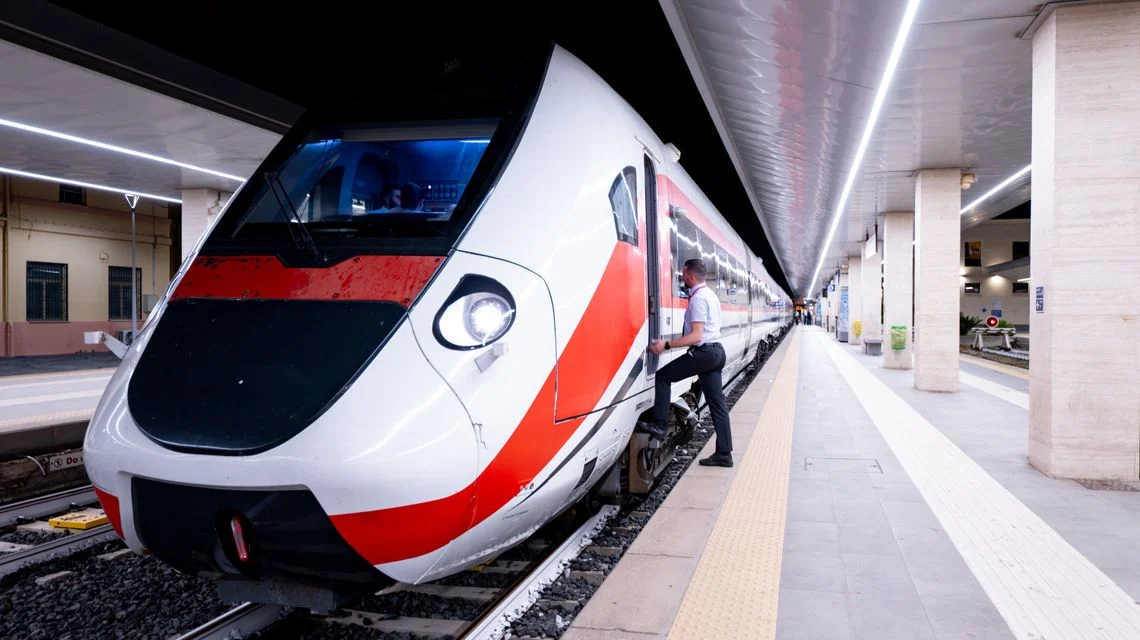
CAGLIARI, Sardinia – In a significant leap forward for regional transport, the FS Group, in close collaboration with the Autonomous Region of Sardinia, has successfully concluded the initial phase of test runs for the new ATR 465 train. Manufactured by Spanish rolling stock giant CAF, these state-of-the-art Diesel Multiple Units (DMUs) are equipped with active tilting technology, poised to redefine rail travel across the island. The rigorous trials, conducted on the demanding Cagliari–Olbia–Cagliari route, represent a crucial milestone in the journey towards integrating these advanced trains into commercial service, promising faster, safer, and more comfortable journeys for Sardinian residents and visitors alike.
The ATR 465’s introduction is more than just an upgrade to rolling stock; it symbolises a comprehensive commitment to modernising Sardinia’s often-challenging railway infrastructure. With an investment exceeding EUR 50 million, this project aims to align the island’s rail network with national standards, fostering greater efficiency and connectivity in a region where geographical complexities have historically posed significant hurdles to transportation development. The successful completion of these initial tests lays a robust foundation for a new era of rail transport, setting the stage for transformative changes across the island’s economic and social landscape.
Main Facts: A New Dawn for Sardinian Railways
The core of this transformative project is the ATR 465 train, a cutting-edge DMU specifically designed for regional services, now undergoing comprehensive testing in Sardinia. These trains, acquired by the Autonomous Region of Sardinia from CAF, represent a significant investment in the island’s future mobility. The recent test runs, spanning the vital Cagliari–Olbia–Cagliari corridor, were a collaborative effort involving key entities of the FS Group – Rete Ferroviaria Italiana (RFI), Trenitalia, and Italcertifer – alongside the Region of Sardinia and the manufacturer CAF.
At the heart of the ATR 465’s advanced capabilities is its active tilting technology. This innovative feature allows the train to navigate curves at speeds up to 20% higher than conventional trains without compromising passenger comfort or safety. For an island like Sardinia, characterised by its undulating terrain and numerous winding rail routes, this technology is not merely an enhancement but a strategic imperative. It offers a cost-effective and efficient alternative to extensive and prohibitively expensive infrastructure overhauls, allowing existing lines to operate at higher performance levels. The tests meticulously verified the train’s safety protocols, operational reliability, and overall technical performance under real-world conditions, albeit without intermediate stops and in a dedicated operational window to ensure maximum scrutiny. This rigorous approach underscores the commitment of all parties to delivering a rail service that is both modern and impeccably safe.
Chronology: Paving the Way for Advanced Rail Travel
The journey to this pivotal testing phase has been a meticulously planned and executed process, spanning several years of strategic planning, investment, and technical preparation. The timeline of the ATR 465 project highlights a concerted effort by all stakeholders to bring advanced rail technology to Sardinia.
Early Planning and Investment (Pre-2025): The genesis of the project lies in the Autonomous Region of Sardinia’s strategic vision for modernising its transport infrastructure. Recognising the limitations of the existing network and the need for enhanced connectivity, the Region allocated substantial funds, culminating in an investment exceeding EUR 50 million. This financial commitment underpinned the framework agreement with RFI, which was tasked with implementing the necessary infrastructure adaptations and certifications. The decision to procure trains with active tilting technology was a strategic one, specifically tailored to address Sardinia’s unique topographical challenges, opting for smart technological solutions over massive civil engineering projects.
Arrival and Preparatory Phase (September 2025): The physical presence of the ATR 465 trains on Sardinian soil marked a tangible step forward. Since September 2025, Trenitalia’s workshop facilities have served as the base for housing and preparing the new rolling stock. This period was crucial for conducting static tests, preliminary checks, and familiarisation procedures for the technical teams. Trenitalia also played a vital role in providing the management and operational staff essential for the subsequent on-track testing phases, demonstrating its deep operational expertise within the FS Group.
Infrastructure Adaptations and Certification (Ongoing up to Tests): Concurrently, RFI undertook extensive technical adaptations to the existing rail infrastructure. This involved ensuring that tracks, signalling systems, and other critical components were fully compatible and certified for the higher speeds and dynamic capabilities of the tilting trains. Collaborating closely with Trenitalia and Italcertifer, RFI navigated the complex approval process for both the rolling stock itself and the innovative active tilting system, ensuring compliance with stringent safety and operational standards.
The Inaugural Test Runs (Recent Conduct): The recent test runs on the Cagliari–Olbia–Cagliari route represent the culmination of these preparatory efforts. These trials were designed to rigorously assess the ATR 465’s performance under operational conditions. The train traversed the entire 230-kilometre route without intermediate stops, achieving a maximum speed of 150 km/h and completing the journey in an impressive 2 hours and 15 minutes. This specific timeframe, while indicative of the train’s capability, is distinct from future commercial service schedules, which will incorporate multiple stops and operational considerations. The controlled environment of the test runs, with no other trains in operation on the line, allowed for precise data collection on safety, reliability, and technical performance. Italcertifer, acting as the independent testing authority and conformity assessment body, played a central role in coordinating these intricate testing campaigns, managing the authorisation procedures with ANSFISA (the National Agency for Railway Safety and Road and Highway Infrastructure in Italy) and ensuring compliance with both Technical Specifications for Interoperability (TSIs) and national legislation.
Future Phases (September and Beyond): The success of this initial testing phase is a significant achievement, but the journey is not yet complete. A new round of testing is scheduled for September, which will likely involve further fine-tuning, integration with existing operational systems, and potentially more extensive evaluations under varying conditions. Following these additional tests, the project will move into its final evaluation stages, leading ultimately to the official authorisation for commercial service. This phased approach ensures that every aspect of the new trains’ operation is thoroughly vetted before they begin serving the public.
Supporting Data: The Mechanics of Modernisation
The revitalisation of Sardinia’s rail network is underpinned by substantial investment, advanced technology, and meticulous technical execution. Understanding these elements provides a clearer picture of the project’s scope and ambition.
Investment and Funding: The project’s financial backbone is a robust investment of over EUR 50 million, primarily funded by the Autonomous Region of Sardinia. This significant capital outlay reflects the Region’s strategic priority to upgrade its public transport infrastructure. The framework agreement with RFI ensured that these funds were channelled effectively into both infrastructure adaptations and the rigorous certification processes required for the new trains. This level of investment underscores a long-term commitment to sustainable and efficient mobility solutions for the island.
The ATR 465 and Active Tilting Technology:
The ATR 465 is a Diesel Multiple Unit (DMU), meaning it is a self-propelled train that does not require a separate locomotive. DMUs are typically preferred for regional services due to their flexibility, efficiency, and suitability for lines with less frequent electrification.
The standout feature of the ATR 465 is its active tilting technology. This sophisticated electro-hydraulic system automatically adjusts the train body’s angle as it enters and exits curves. Unlike passive tilting (where centrifugal force causes the train to lean), active tilting uses sensors to detect the curvature of the track ahead, calculating the optimal tilt angle and activating hydraulic cylinders to tilt the car bodies into the curve. This counteracts the centrifugal force experienced by passengers, allowing the train to maintain higher speeds through bends – up to 20% faster than non-tilting trains – without compromising comfort. Passengers experience a smoother ride, akin to travelling on a straight section of track, free from the lateral forces that can cause discomfort.
For Sardinia, with its naturally winding topography and a rail network featuring numerous curves, this technology is invaluable. It enables significant reductions in journey times without the colossal expense and environmental impact of building entirely new, straighter lines or undertaking extensive re-alignment of existing tracks. This smart technological application maximises the utility of the current infrastructure, delivering modern performance on an older network.
The Strategic Cagliari–Olbia–Cagliari Route: The chosen test route, Cagliari–Olbia–Cagliari, is not arbitrary. It connects the island’s capital and largest city, Cagliari, in the south, with Olbia, a major port city and gateway to the popular Costa Smeralda in the northeast. This corridor is economically vital, serving both business travellers and the burgeoning tourism sector. Enhancing connectivity along this route has profound implications for inter-regional trade, tourism development, and the daily commutes of thousands of Sardinians. The ability to complete this journey in 2 hours and 15 minutes during tests, albeit without stops, highlights the potential for dramatic reductions in commercial travel times.
The Collaborative Ecosystem: The project’s success is a testament to the seamless collaboration between multiple specialised entities:

- Rete Ferroviaria Italiana (RFI): As the national railway infrastructure manager, RFI’s role was paramount in adapting the existing network for the new trains. This included technical upgrades, safety assessments, and the crucial certification of lines to handle the ATR 465’s capabilities. Their expertise ensures the physical infrastructure is robust and compliant.
- Trenitalia: The primary train operating company in Italy, Trenitalia, contributed its operational know-how and logistical support. Providing workshop facilities since September 2025 and deploying skilled management staff for the tests demonstrates their commitment to the successful integration and future operation of the trains.
- Italcertifer: This company acted as the independent testing authority and conformity assessment body. Their expertise was critical in coordinating the entire testing campaign, managing the complex authorisation procedures with ANSFISA, and certifying the vehicle against both the rigorous Technical Specifications for Interoperability (TSIs) – which ensure seamless operation across European networks – and relevant national legislation. Their impartiality guarantees the highest standards of safety and compliance.
- ANSFISA (National Agency for Railway Safety and Road and Highway Infrastructure in Italy): As the regulatory body, ANSFISA’s authorisation for conducting on-track testing was essential. Their oversight ensures that all safety protocols and national regulations are met throughout the testing and eventual operational phases.
- CAF (Construcciones y Auxiliar de Ferrocarriles): The manufacturer of the ATR 465, CAF brings its global expertise in rolling stock design and production. Their advanced engineering is at the core of the active tilting technology and the train’s overall performance.
- Autonomous Region of Sardinia: As the principal investor and visionary behind the project, the Region’s commitment to modernising its public transport system is the driving force. Their foresight in funding and initiating this program will yield long-term benefits for the island.
This intricate web of collaboration, pooling expertise from infrastructure management, operations, certification, manufacturing, and regional governance, underscores the complexity and strategic importance of the ATR 465 project.
Official Responses: Voices of Progress and Vision
The successful test runs have been met with enthusiasm and optimism from all involved parties, underscoring the strategic importance of the ATR 465 project for Sardinia and the broader national rail network.
A spokesperson for the Autonomous Region of Sardinia articulated the island’s ambition: "These test runs are more than just a technical exercise; they are a tangible demonstration of our unwavering commitment to modernising Sardinia’s public transport infrastructure. The ATR 465, with its innovative tilting technology, is set to revolutionise travel times and comfort for our citizens and visitors. This investment of over EUR 50 million is a clear signal of our dedication to a faster, more efficient, and more sustainable future for Sardinia, directly impacting our economy, tourism, and quality of life."
From the FS Group, representatives highlighted the collaborative spirit and technical prowess involved. A joint statement from Rete Ferroviaria Italiana (RFI), Trenitalia, and Italcertifer emphasised: "The collaborative effort across RFI, Trenitalia, and Italcertifer has been instrumental in reaching this critical juncture. From infrastructure adaptations and safety certifications by RFI, to operational support from Trenitalia, and the stringent independent validation by Italcertifer, every aspect has been meticulously managed. The ATR 465 represents the forefront of regional rail technology, and its successful integration into Sardinia’s network will not only enhance local connectivity but also serve as a benchmark for similar challenging geographies across Italy. We are particularly proud of the technical achievement in certifying the active tilting system, which will allow for significant performance improvements on existing lines."
A CAF spokesperson expressed pride in their contribution: "We are immensely proud to see the ATR 465 performing so successfully during its test runs in Sardinia. This train embodies CAF’s commitment to delivering advanced, reliable, and comfortable rolling stock tailored to the specific needs of our clients. The active tilting technology is particularly well-suited for Sardinia’s railway profile, demonstrating how smart engineering can overcome geographical challenges to deliver superior passenger experience and operational efficiency. We look forward to the ATR 465 entering commercial service and making a real difference to daily travel on the island."
Officials universally stressed that while the 2 hours and 15 minutes recorded during the test runs for the Cagliari-Olbia route is impressive, it is not indicative of commercial travel times. "The final schedule will be carefully determined based on a comprehensive analysis of all operational factors, including intermediate stops and network integration," clarified a project representative, assuring the public that while speed is a benefit, reliability and punctuality in commercial service remain paramount. These responses collectively paint a picture of a project driven by vision, precision, and a shared commitment to a more connected and prosperous Sardinia.
Implications: A Transformative Impact on Sardinia and Beyond
The introduction of the ATR 465 trains and the accompanying infrastructure modernisation program carry far-reaching implications, promising a transformative impact on Sardinia’s economic, social, and environmental landscape, while also setting a precedent for national rail development.
Enhanced Connectivity and Reduced Travel Times: The most immediate and tangible benefit will be significantly reduced travel times across key routes, particularly on the Cagliari–Olbia axis. The active tilting technology, allowing higher speeds on curved sections, will make rail travel a far more competitive option against road transport. This improved efficiency will not only make commuting easier for residents but also foster greater inter-regional cohesion within Sardinia, breaking down geographical barriers that have historically fragmented the island.
Economic Boost and Tourism Development: Faster and more comfortable rail links are a boon for Sardinia’s economy. Enhanced connectivity between major urban centres and tourist destinations like Olbia will undoubtedly stimulate tourism. Tourists arriving at Cagliari or Olbia will have quicker, more appealing options to explore different parts of the island, potentially extending their stays and diversifying their itineraries. Furthermore, improved transport links facilitate business travel and goods movement, supporting local industries and fostering economic growth across the region. The project positions Sardinia as a more accessible and attractive destination for investment and leisure.
Environmental Sustainability and Modal Shift: By offering a faster and more appealing alternative to private car travel, the ATR 465 trains are expected to encourage a significant modal shift from road to rail. This shift has crucial environmental benefits, including reduced carbon emissions, lower fuel consumption, and decreased road congestion. In line with broader European and national sustainability goals, this modernisation project contributes to a greener transport system for Sardinia, aligning with efforts to combat climate change and improve air quality.
Improved Passenger Experience and Quality of Life: Beyond speed, the active tilting technology ensures a smoother and more comfortable ride, even at higher speeds through curves. This enhanced passenger comfort, combined with modern amenities expected from new rolling stock, will significantly improve the overall travel experience. For daily commuters, this translates to less stressful and more productive journeys. For all passengers, it means a higher quality of public transport service, directly improving their quality of life.
Alignment with National Standards and Future Investments: The successful integration of the ATR 465 trains and the associated infrastructure upgrades will bring Sardinia’s rail network into closer alignment with national and European railway standards. This harmonisation is crucial for future interoperability, potential for further national and EU funding, and the overall strategic development of Italy’s transport network. It positions Sardinia not as an isolated island network, but as an integral and modern component of a larger national system. This could open doors for further investments in electrification, digital signalling, or even extensions to the network in the long term.
Technological Showcase and Regional Leadership: Sardinia’s adoption of active tilting technology, particularly tailored to its challenging terrain, serves as a significant technological showcase. It demonstrates how innovative solutions can be applied to existing infrastructure to achieve substantial performance gains. This positions Sardinia as a leader in smart rail modernisation within Italy, potentially inspiring similar projects in other regions with complex geographies.
In conclusion, the successful test runs of the ATR 465 trains are far more than a technical achievement; they are a profound statement about Sardinia’s future. They signal a commitment to a modern, efficient, and sustainable transport system that will profoundly benefit its people, economy, and environment for decades to come. The island stands on the cusp of a new era of connectivity, driven by innovation and strategic investment.

