

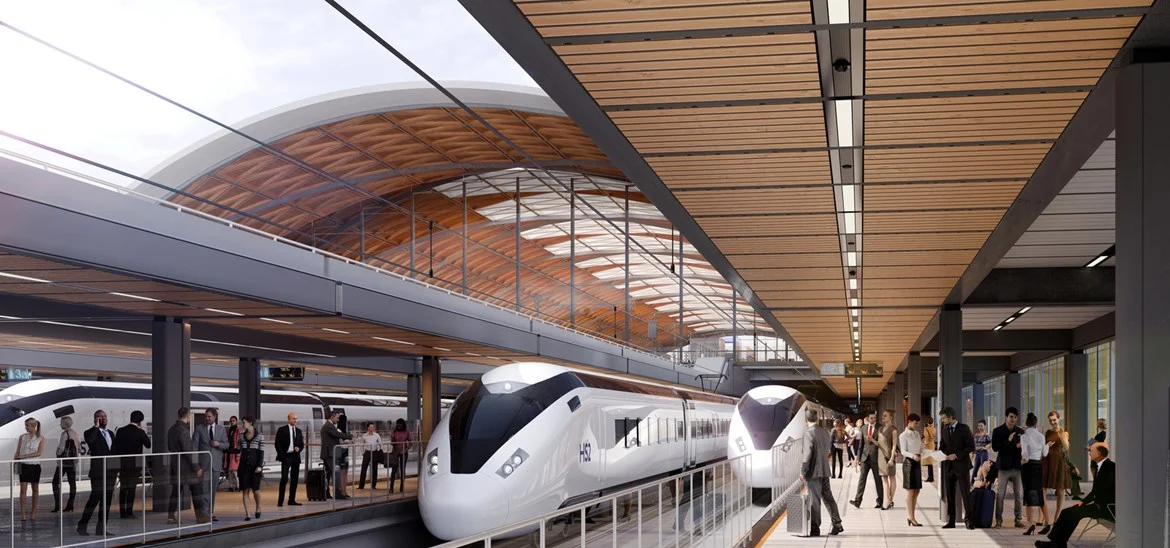
The United Kingdom’s ambitious infrastructure landscape has reached a pivotal milestone. The Department for Transport (DfT) has officially issued the "Notice to Proceed" (NtP) for High Speed 2 (HS2), the massive rail network project designed to revolutionize travel between London and the North. This formal approval serves as the green light for main construction works, transitioning the project from years of rigorous design and bureaucratic planning into the tangible, physical reality of heavy engineering.
Following the British government’s commitment in February to continue with the project despite historical budgetary concerns and political debate, this directive allows four major civil engineering contractors to mobilize fully. The mandate covers the detailed design and full-scale construction of Phase One—a 225-kilometer high-speed line connecting London to the West Midlands.
The Chronology of a Landmark Project
The journey to this Notice to Proceed has been fraught with challenges, intense scrutiny, and significant milestones. Understanding the timeline of HS2 is essential to grasping the magnitude of this week’s announcement.
- 2010–2012: Initial plans for HS2 are unveiled, conceptualizing a Y-shaped network connecting London to Birmingham, Manchester, and Leeds.
- 2013–2016: The project undergoes extensive parliamentary scrutiny, leading to the High Speed Rail (London – West Midlands) Act 2017.
- July 2017: HS2 Ltd awards the primary civil engineering contracts for Phase One to four joint ventures, totaling billions in value.
- 2019: The Oakervee Review is commissioned to assess the project’s viability, ballooning costs, and potential delivery timelines.
- February 2020: Prime Minister Boris Johnson confirms that the government will proceed with the project, citing its necessity for "levelling up" the UK economy.
- April 2020: The Department for Transport issues the "Notice to Proceed," moving the contractors from the design stage into the construction phase.
The Scope of Work: Phase One Engineering
The "Notice to Proceed" is not merely a symbolic gesture; it is a contractual trigger that unlocks the full resources of the four joint ventures awarded contracts back in 2017. The primary focus of this phase is the 225-kilometer line that will act as the spine of the new network.
The construction efforts are categorized into four distinct geographical packages, each handled by leading international consortia. These teams are tasked with the most complex civil engineering challenges in the country, including the construction of major tunnels, viaducts, and bridge structures required to accommodate trains capable of reaching speeds of 225 mph (360 km/h).
Beyond the track itself, the contractors are mandated to begin immediate site preparation, the procurement of complex materials, and the finalization of detailed engineering designs. This process involves sophisticated Building Information Modelling (BIM) to ensure that the infrastructure integrates seamlessly with the existing, often centuries-old, British rail network.
Official Responses: A Boost for the Industry
The government’s decision to issue the NtP during a period of global economic uncertainty—marked by the broader context of the 2020 health crisis—was framed as a vital economic stimulus.
HS2 Minister Andrew Stephenson noted the strategic timing of the announcement: "Following the decision earlier this year to proceed with the project, this next step provides thousands of construction workers and businesses across the country with certainty at a time when they need it, and means that work can truly begin on delivering this transformational project."
Mark Thurston, CEO of HS2 Ltd, echoed this sentiment, emphasizing the long-term strategic value of the railway. "In these difficult times, today’s announcement represents both an immediate boost to the construction industry—and the many millions of UK jobs that the industry supports—and an important investment in Britain’s future: levelling up the country, improving our transport network and changing the way we travel to help bring down carbon emissions and improve air quality for the next generation."
Supporting Data and Strategic Implications
Economic Connectivity and "Levelling Up"
The core argument for HS2 has always been the "levelling up" agenda. Currently, the West Coast Mainline is one of the most congested and capacity-constrained rail corridors in Europe. By segregating high-speed passenger services from slower local and freight traffic, HS2 is projected to unlock massive capacity on the existing network.

The project is slated to serve over 25 stations, connecting approximately 30 million people. By facilitating faster, more frequent travel, the rail link aims to bridge the economic productivity gap between London and the northern cities, such as Manchester, Liverpool, and Leeds.
Environmental Impact and Sustainability
One of the most frequently cited benefits of HS2 is its role in the UK’s net-zero transition. By shifting long-distance domestic travel from cars and short-haul flights to a high-capacity electric rail network, the project is expected to significantly reduce carbon emissions. Furthermore, the efficiency of the new rail line will improve air quality for the next generation by reducing the reliance on road haulage and individual car commutes.
Infrastructure Integration
Phase One will see the construction of a new terminus at London Euston and a hub north of Birmingham. At the Birmingham hub, the line will re-join the existing West Coast Mainline, allowing seamless connectivity for passengers traveling to destinations such as Glasgow, Preston, Wigan, and Manchester. This integration is critical, as it ensures that the benefits of the high-speed line are felt far beyond the immediate construction corridor.
Addressing the Challenges Ahead
While the "Notice to Proceed" is a cause for celebration among engineers and policymakers, the project remains under intense public and parliamentary watch. Critics have long pointed to the rising costs, which have seen several revisions since the project’s inception.
The task for the contractors and HS2 Ltd is to demonstrate disciplined project management. The transition from design to "full detailed construction" is the phase where budget overruns are most common. Consequently, the government has implemented stricter oversight, with the expectation that the project will be delivered on a more rigorous schedule than previous infrastructure endeavors in the UK.
Furthermore, the construction phase brings the challenge of environmental and community impact. The route passes through sensitive landscapes and densely populated areas, necessitating high standards of mitigation, noise reduction, and biodiversity net gain. The industry is currently under pressure to ensure that these works act as a gold standard for sustainable construction.
Conclusion: A New Era for British Rail
The issuance of the Notice to Proceed for HS2 is a defining moment for 21st-century British infrastructure. It represents a shift in philosophy, moving away from short-term fixes toward a long-term investment in national connectivity.
As the contractors break ground, the project will begin to employ tens of thousands of skilled workers, ranging from tunnel engineers and heavy machinery operators to data analysts and environmental scientists. The ripple effect of this investment will be felt in the supply chains, manufacturing hubs, and regional economies across the UK.
While the path to completion remains lengthy, the formal approval to proceed signifies that the "point of no return" has been passed. HS2 is no longer a concept on a map; it is a live construction project. For the millions of commuters and travelers who will one day benefit from faster journeys, reduced congestion, and a cleaner transport network, the formalization of these works marks the beginning of a transformative chapter in the history of the United Kingdom’s transport system.
The focus now turns to execution: delivering the promised high-speed infrastructure on time, within budget, and to the high standards of safety and sustainability that such a national asset demands. As the nation looks toward a post-pandemic recovery, HS2 stands as a cornerstone of the government’s strategy to build back better, faster, and more connected than ever before.

